Wah gwaan Jamaica?
First thoughts: Bob Marley, coffee and Cool Runnings
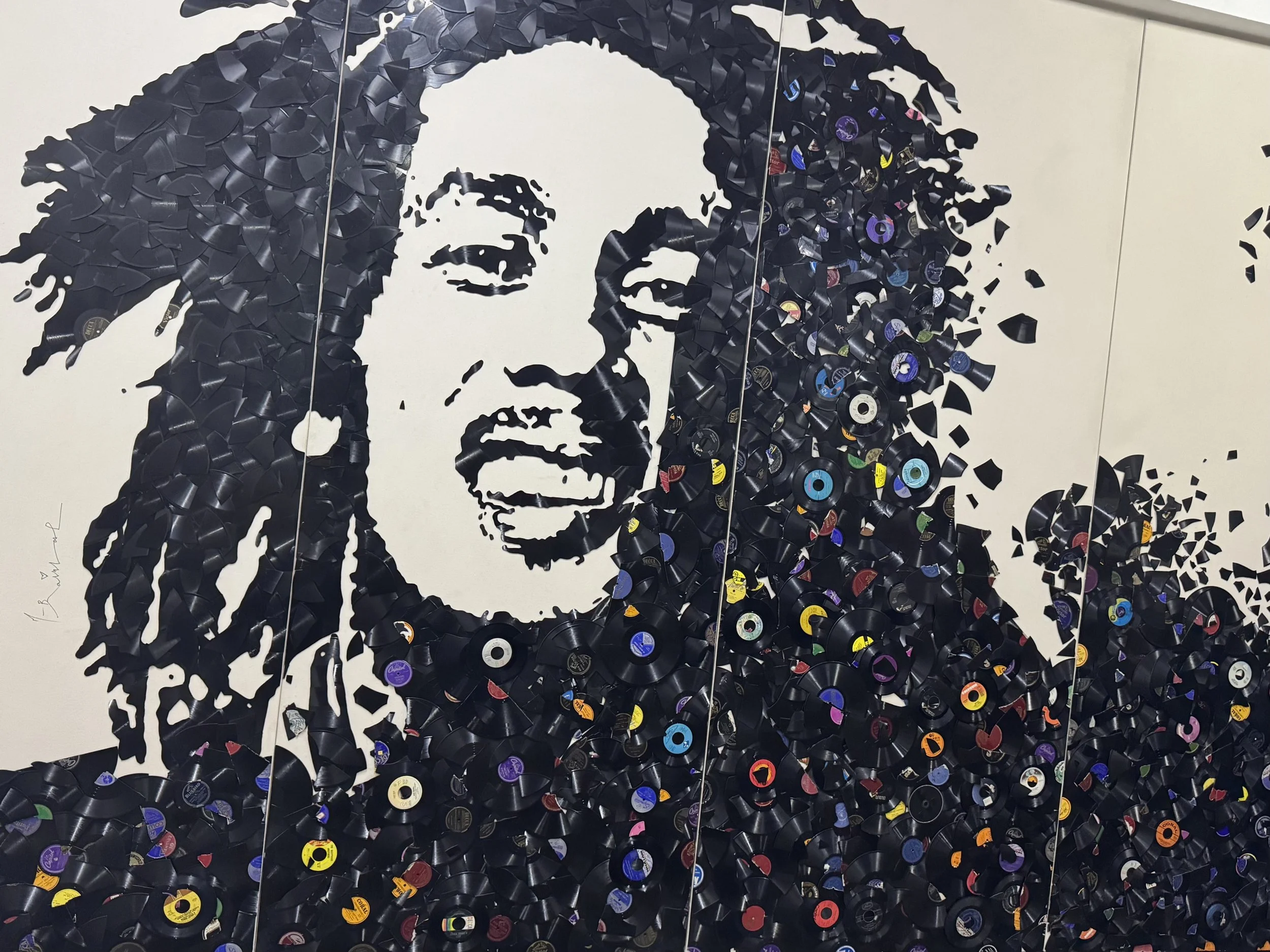
Once it’s confirmed that we’re stopping off in Jamaica, a few things immediately spring to mind. First things first: listen to Bob Marley. As I gaze at the Blue Mountains, they remind me of the coffee I’ve never tried in Austria because of its high price. Ines thinks of Cool Runnings and, as soon as we get online, we check whether there really was a Jamaican bobsleigh team. Lo and behold: the story is at least partly true, even if Disney did embellish it a bit. We think of all sorts of stories about how dangerous it’s supposed to be, especially in Kingston.
Arrival in Port Antonio
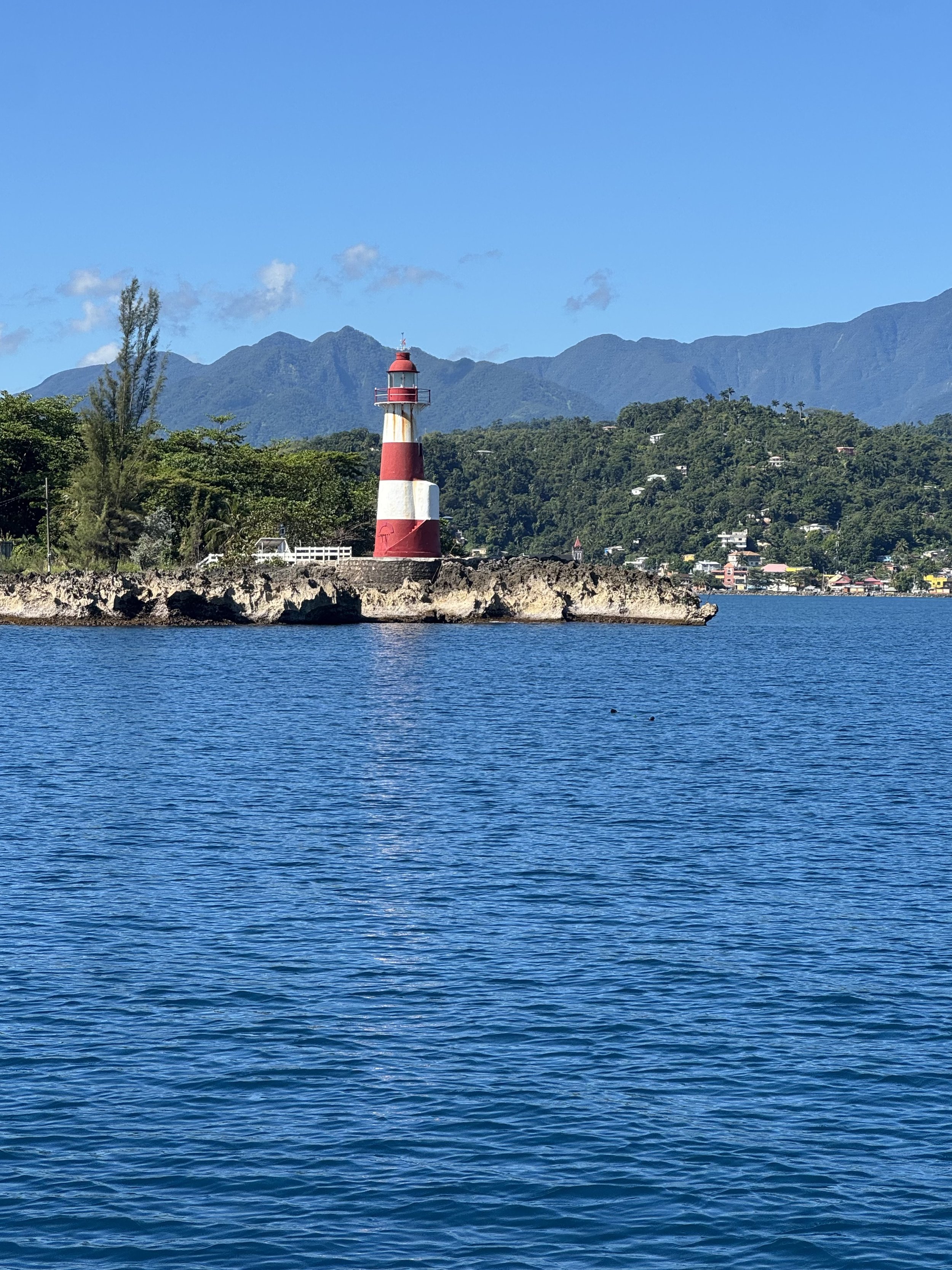
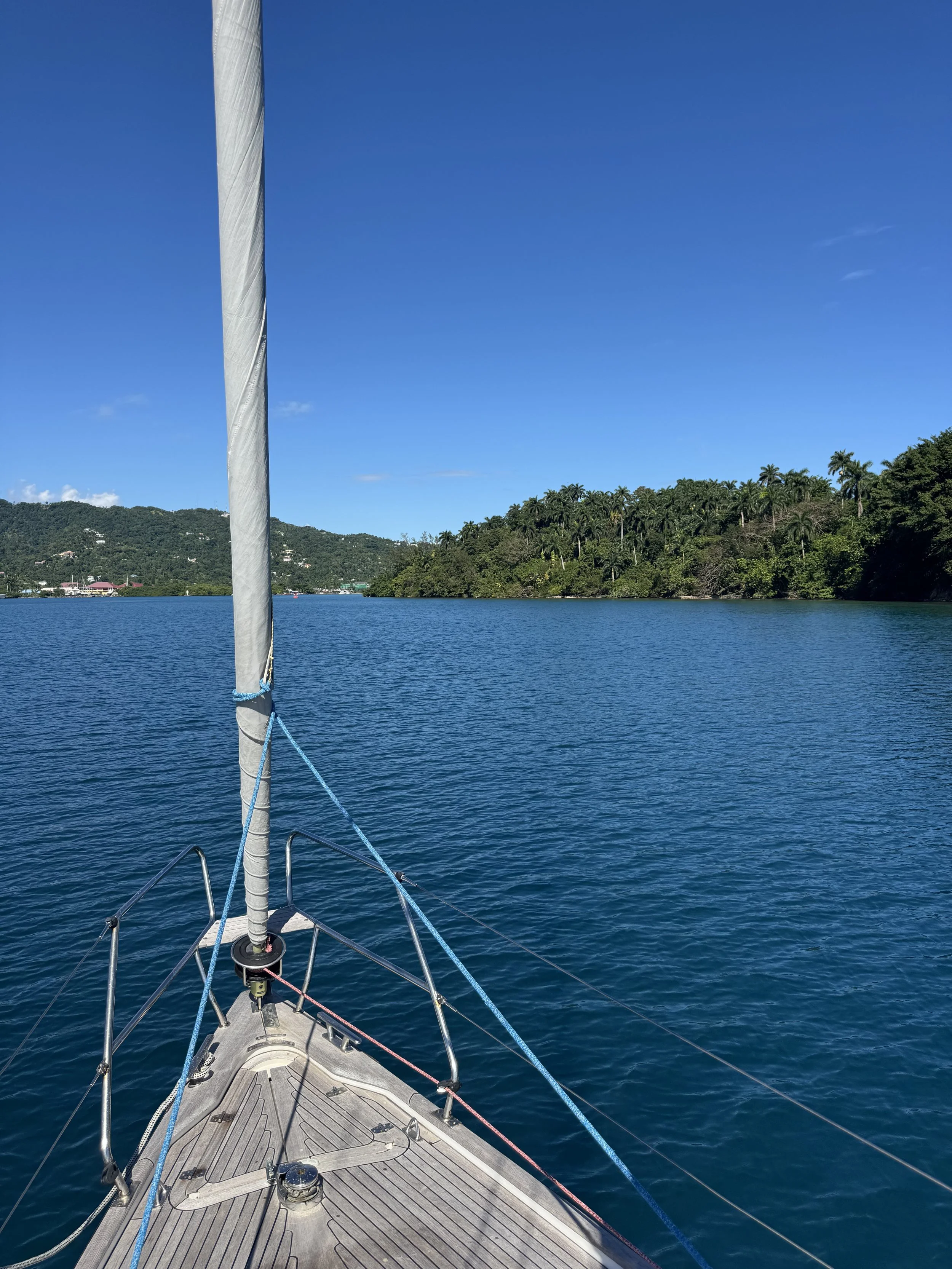
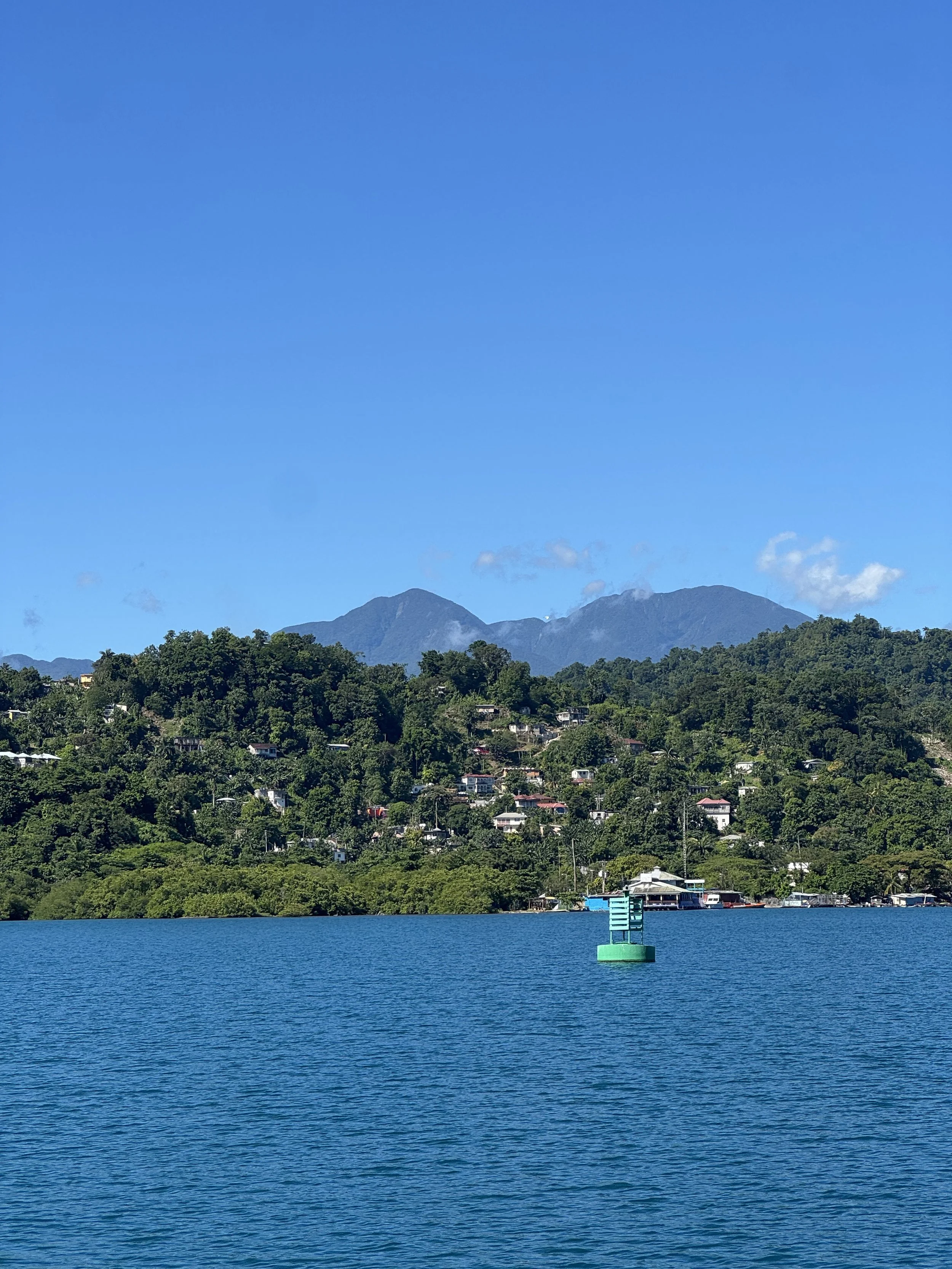
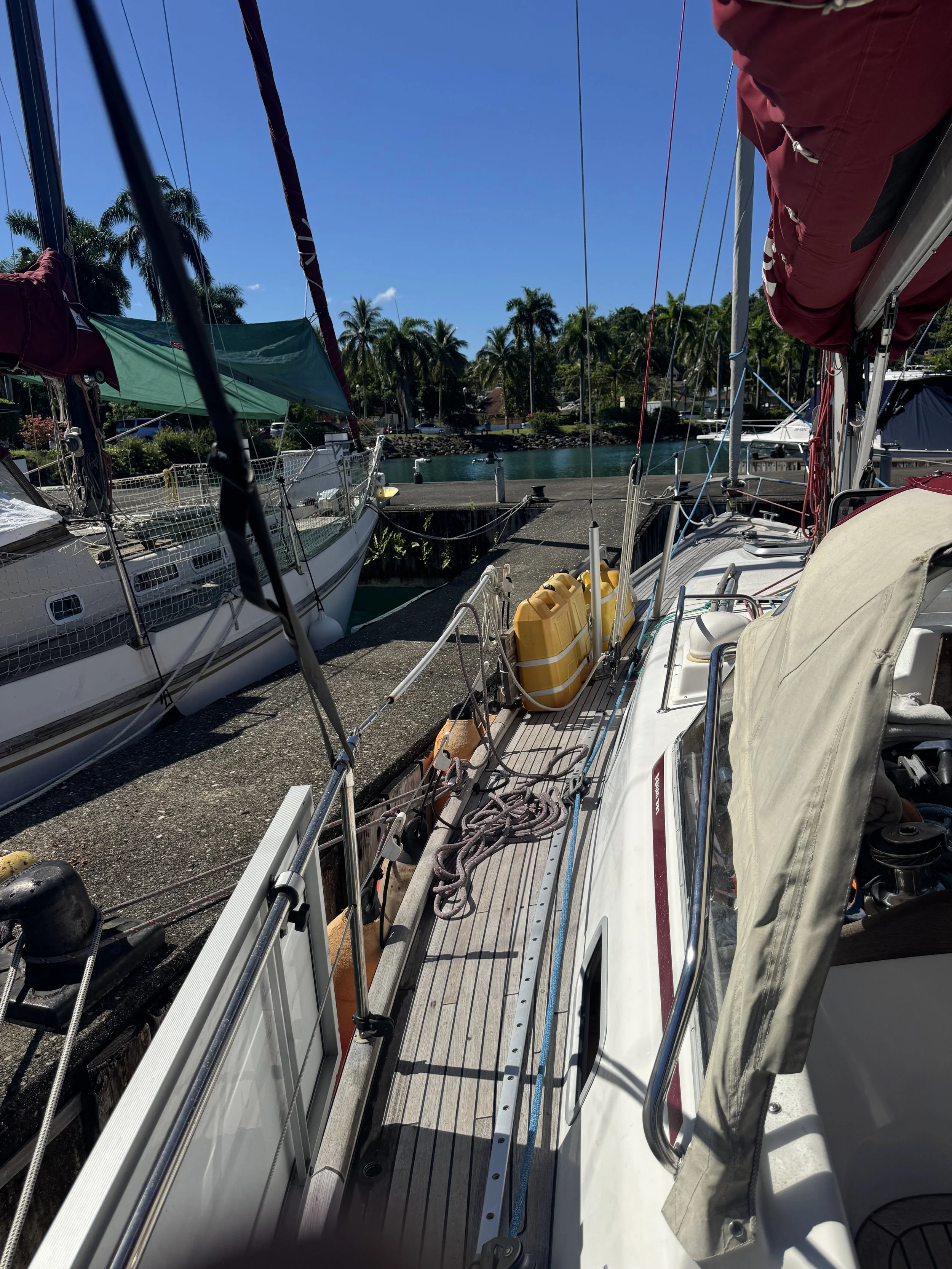
As daylight breaks, we’re just cruising along the north-east coast. It features a few holiday homes ranging from kitsch to charming, until we finally turn into Port Antonio Bay. The entrance is marked by a spotlessly maintained red-and-white-striped lighthouse and buoys. The landscape is rocky and green. In the marina, we are greeted by an inviting mix of colonial-style buildings and lush vegetation.
The welcome is warm; the authorities board the boat in the following order: health inspection, customs and immigration. We hear “Welcome to Jamaica!” several times. Apart from at weekends, the whole process is completely free if you’re just visiting a port. A cruising permit for the country would cost 150 USD – a real bargain compared to many other Caribbean destinations.
Boat problems and initial repairs
First of all, we’ve got quite a bit of work ahead of us. After our first long crossing in over a year, all sorts of tasks have piled up. When mooring at the dock, reverse gear wasn’t working properly; the whole boat was vibrating terribly. Fortunately, we were moving slowly and were able to stop the boat with a line, thus preventing us from crashing into the jetty.
Whilst underway, we noticed that our fresh water pump kept kicking in – a sign of a leak. A quick look in the engine compartment reveals a nearly detached hose for the salt water intake, low oil levels, and on top of that, we still need to fetch 80 litres of diesel from the local petrol station and do some laundry.
Jerk chicken and Jamaican atmosphere
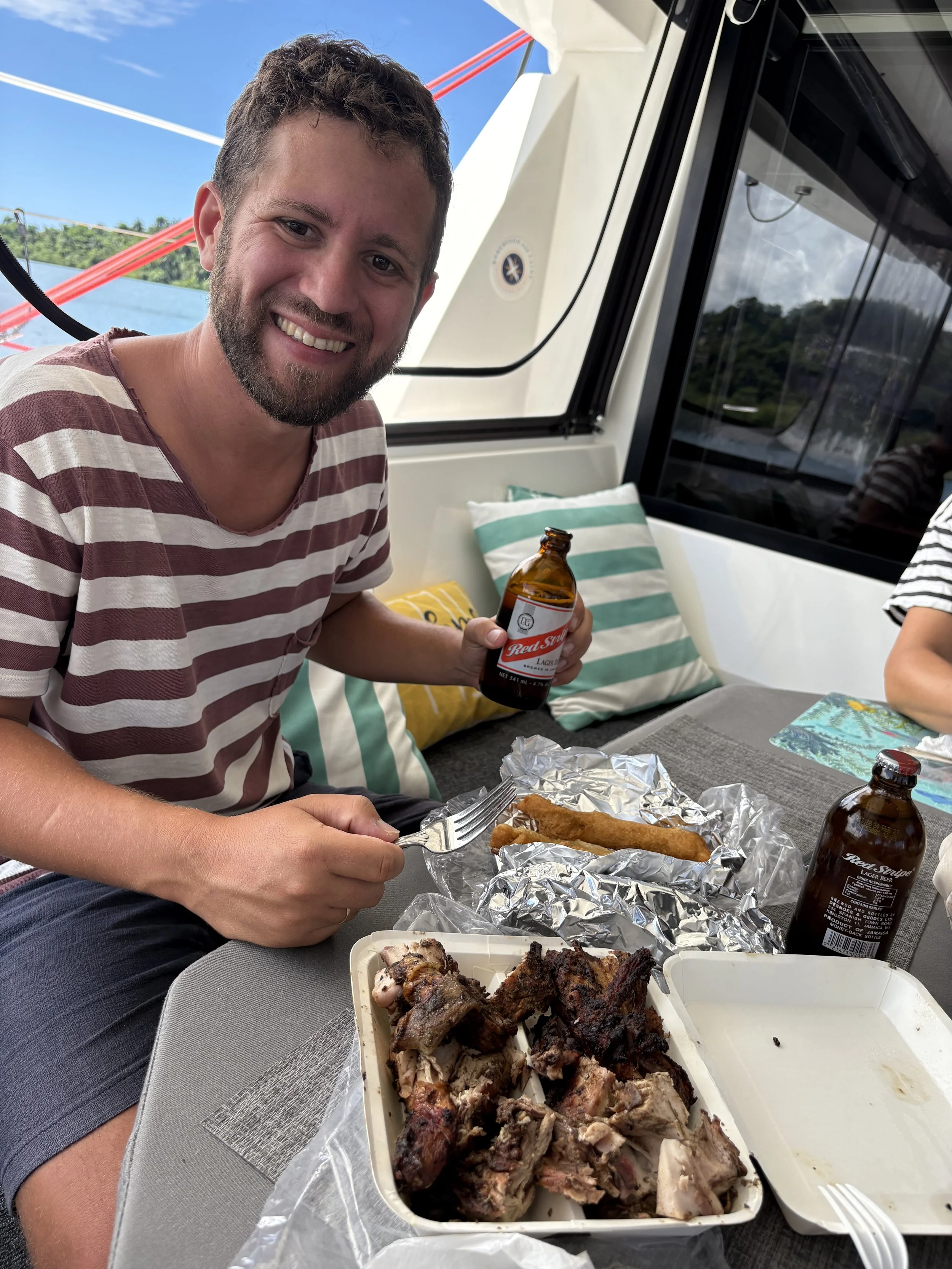
We are invited to lunch by Iris and Jeff, two young Dutch people who have kindly reserved a spot for us. Together with them and our neighbours from the USA, we head to the village’s most popular jerk chicken stall.
On the way there, things become more like we imagined: chaotic, a bit dirty and noisy. Here, in keeping with Rastafarian culture, marijuana is more of a ‘herb’ than a drug. You can smell it on every corner and it’s offered to you everywhere. Nevertheless, most people are friendly. You get chatted up here and there, but then left in peace again.
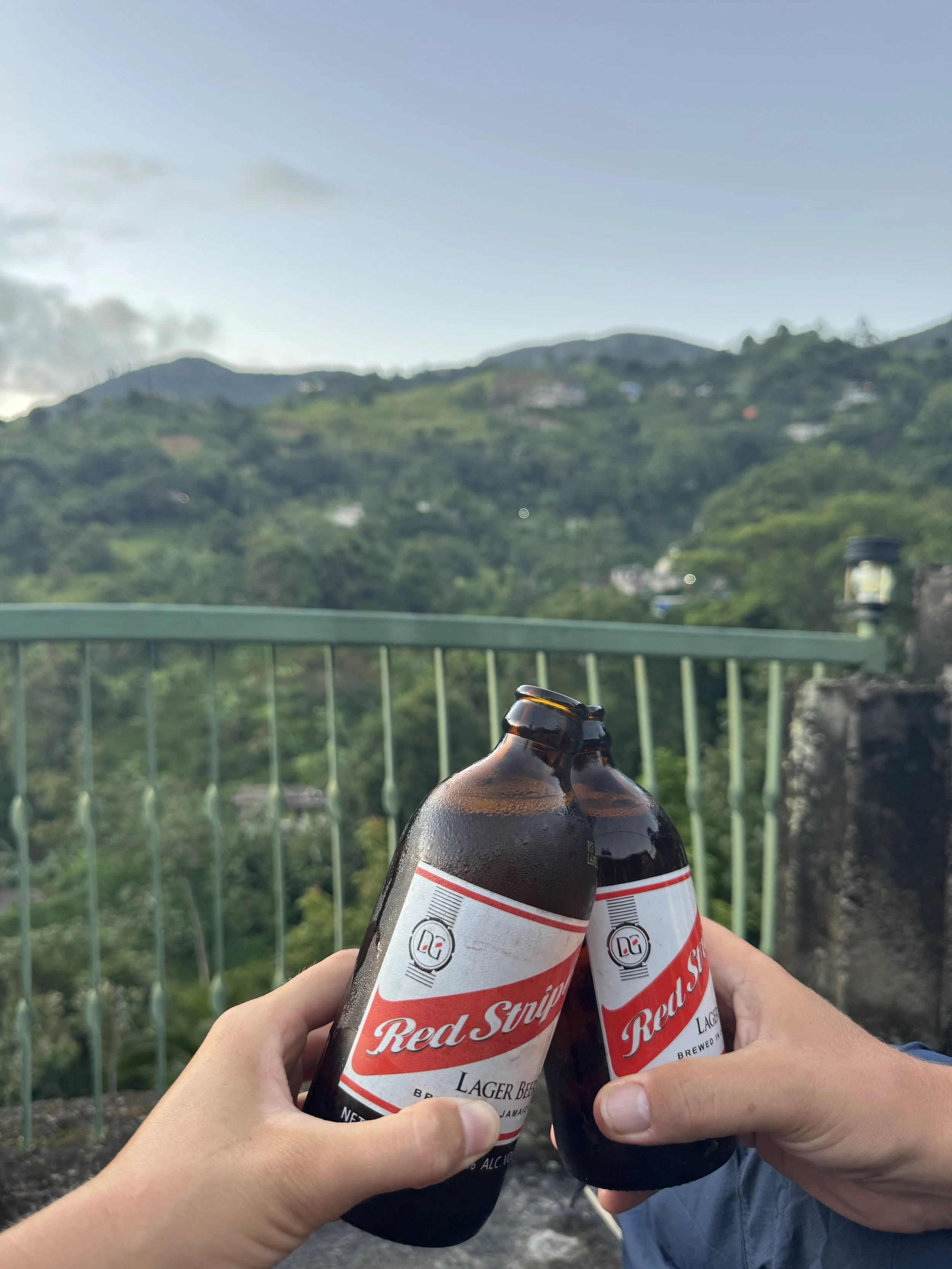
I really enjoy the jerk chicken – a grilled chicken dish with a special seasoning, invented in Port Antonio – though the others find it a bit too spicy. We wash it down with two cold Red Stripes, the local beer.
Boatwork
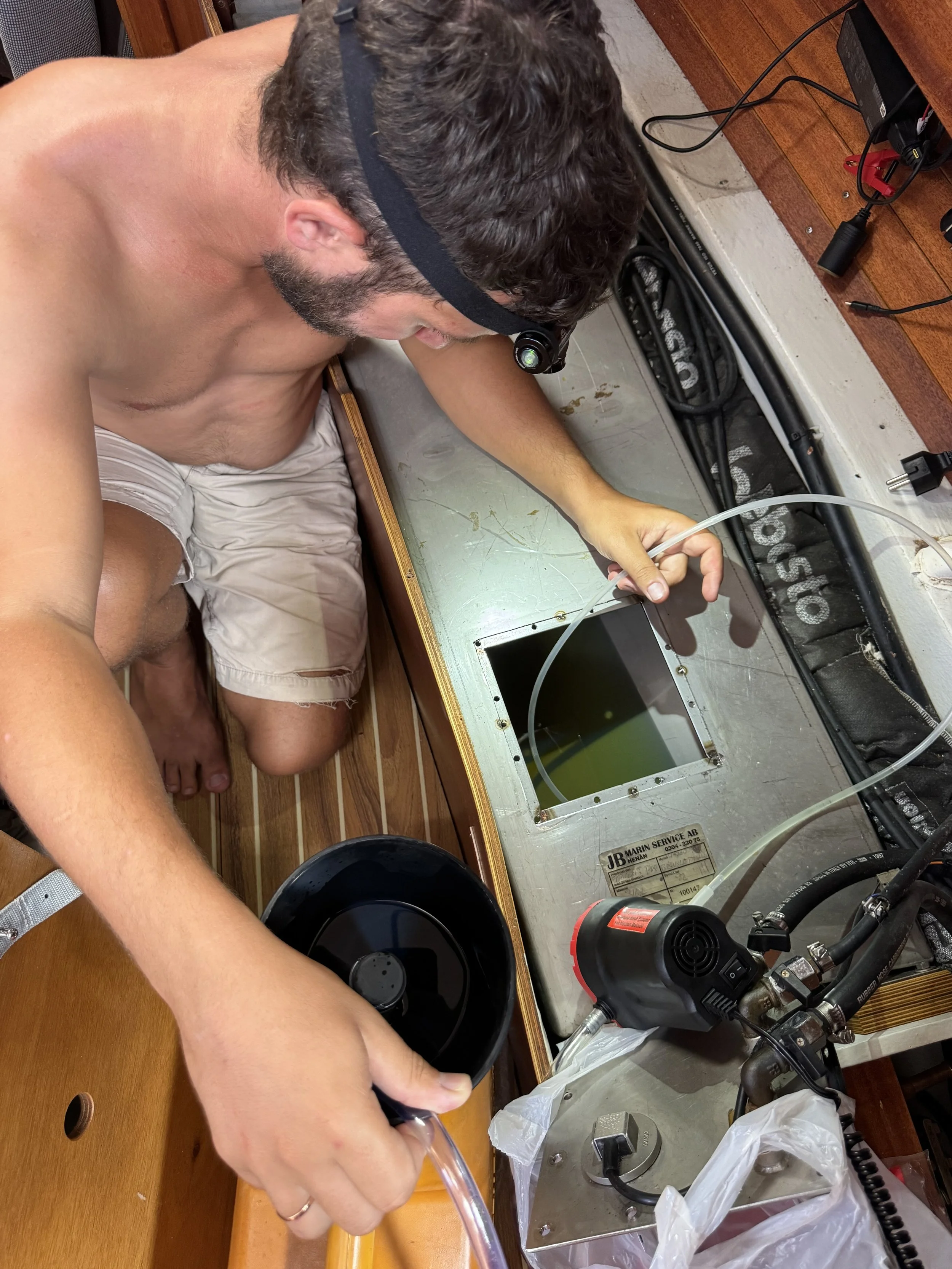
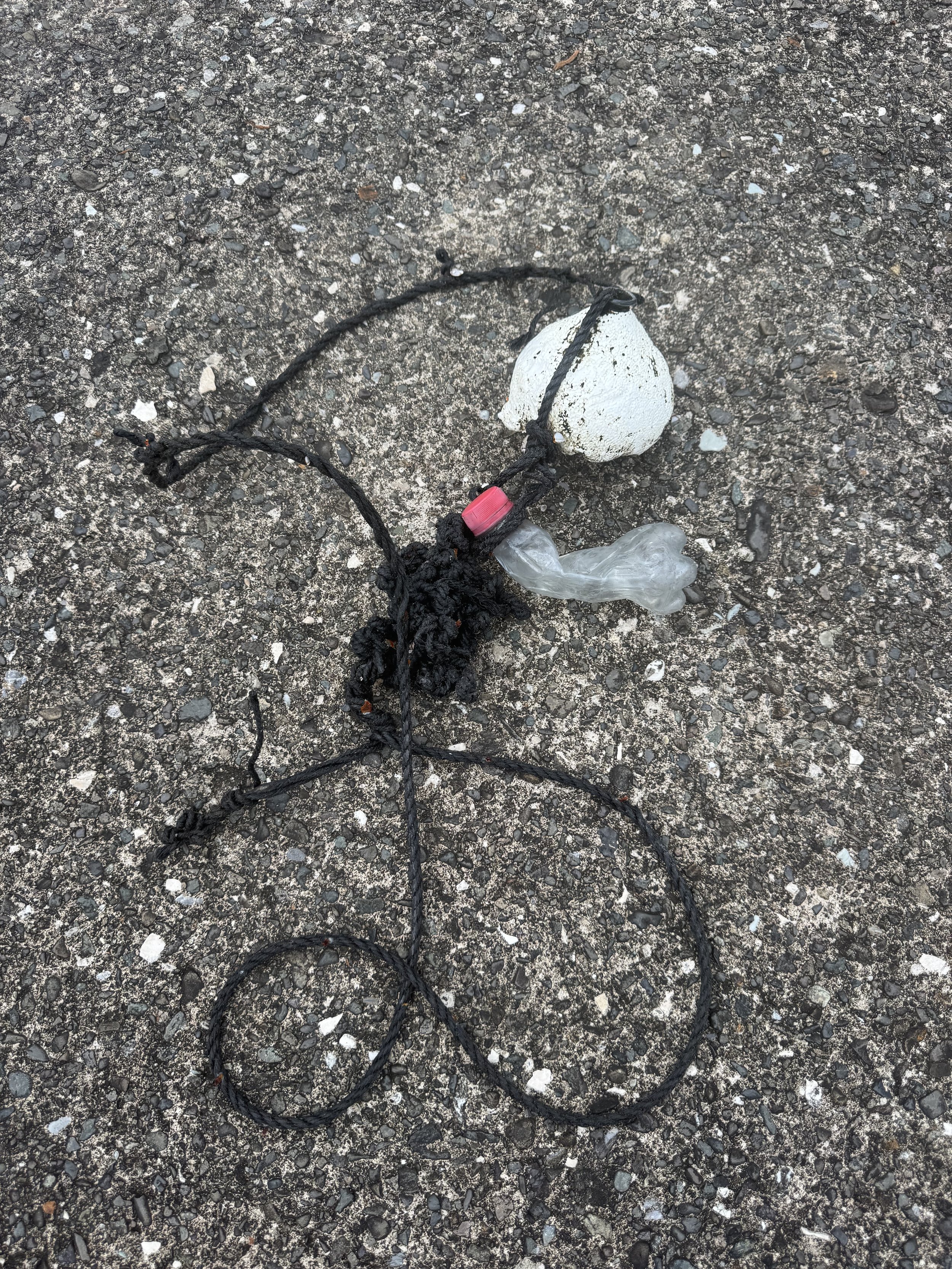
Over the next few days, we get on with our boat work. The water in the marina – actually, it’s more of a jetty in a natural harbour – is so clear that working on the propeller and cleaning the hull is really enjoyable. We discover that we’ve snagged a fishing buoy, which is why we were having trouble with reverse gear. We fix our water leaks, clean the almost empty diesel tank and refill it.
Driving to the Blue Mountains
Adventurous roads and stunning scenery
We decide to hire a car with our new Dutch friends, Iris and Jeff, and spend Thursday to Sunday exploring the Blue Mountains and Kingston. In our slightly ageing Suzuki Baleno, we escape the chaotic city traffic of Port Antonio.
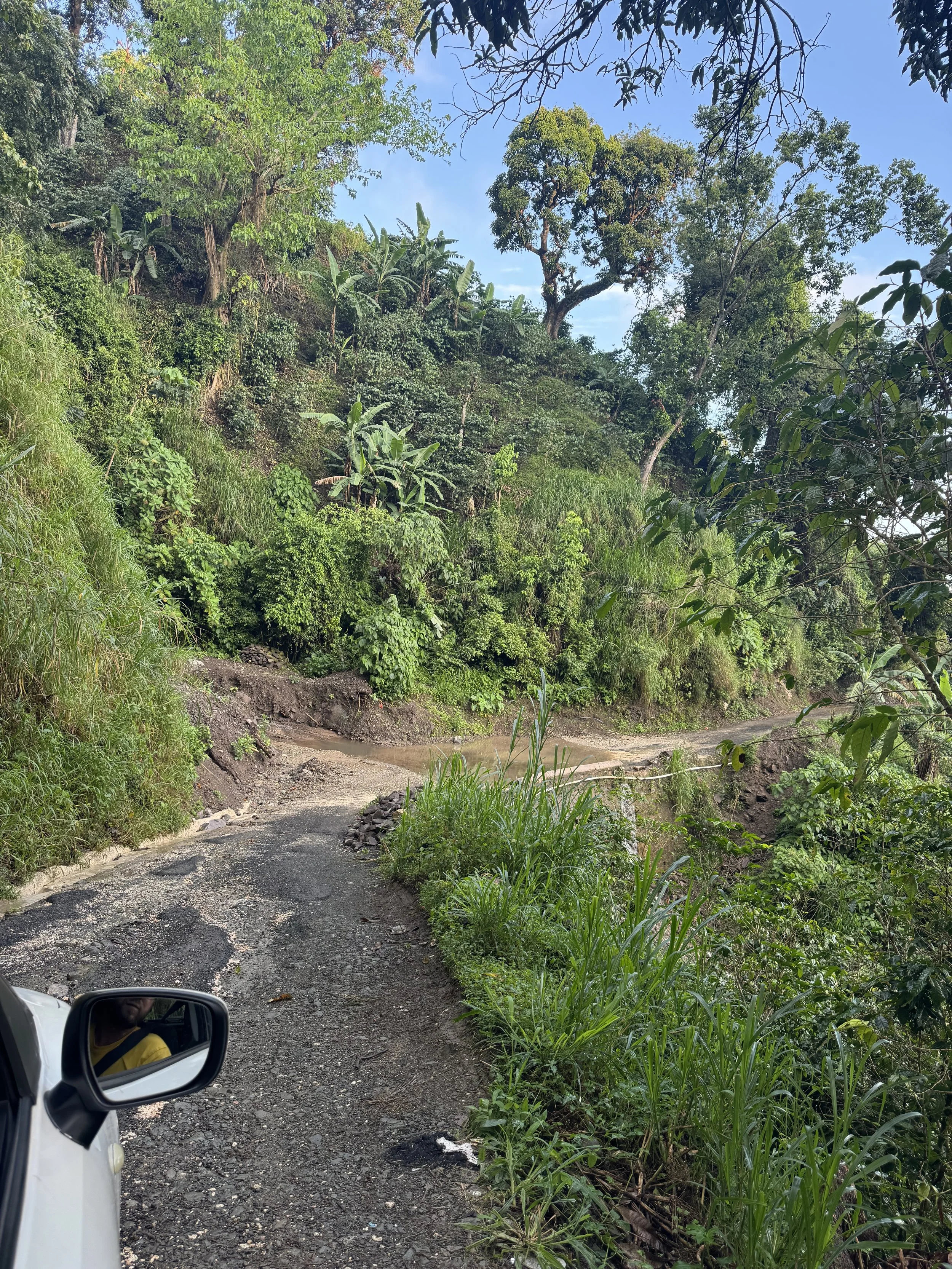
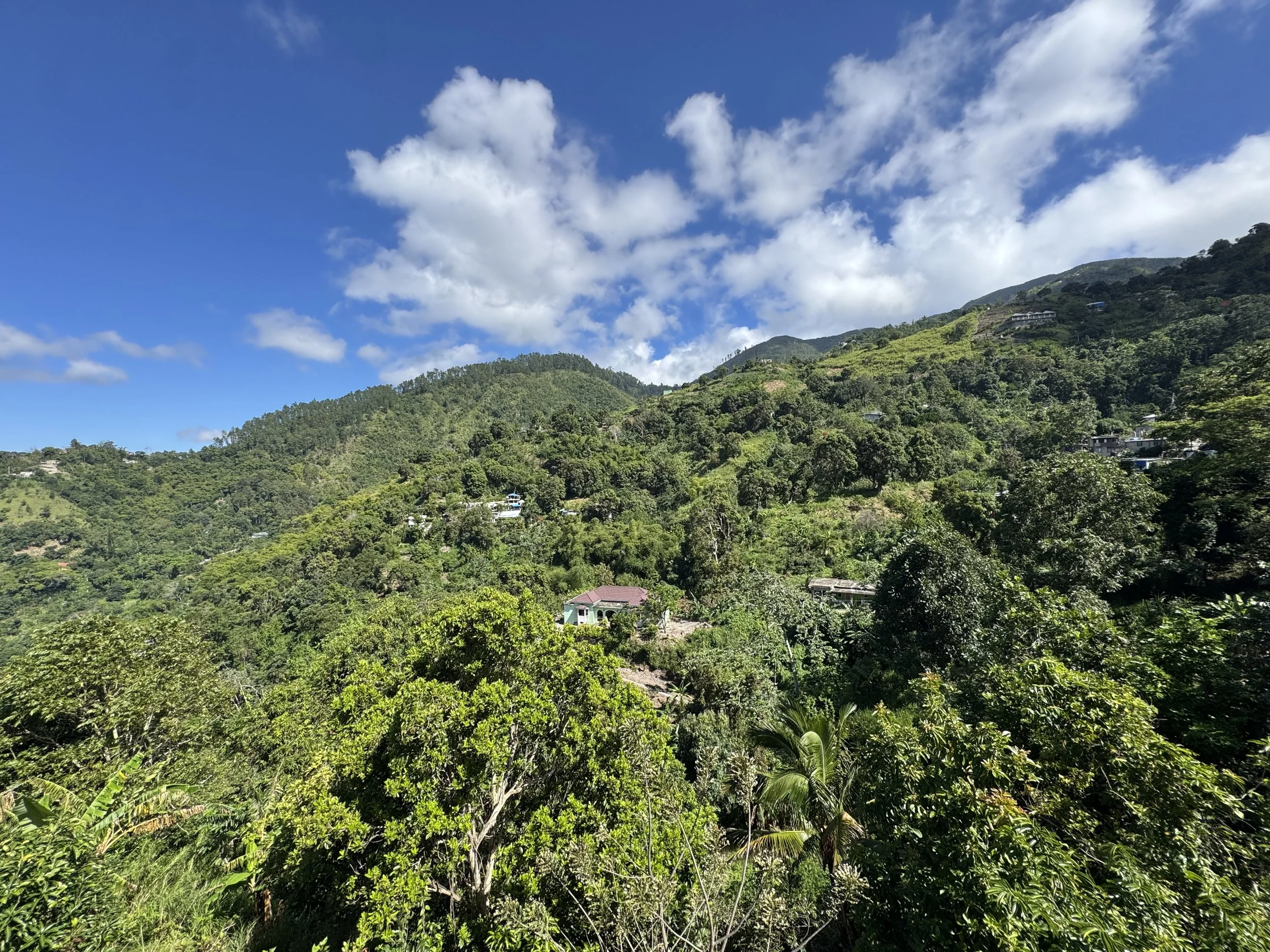
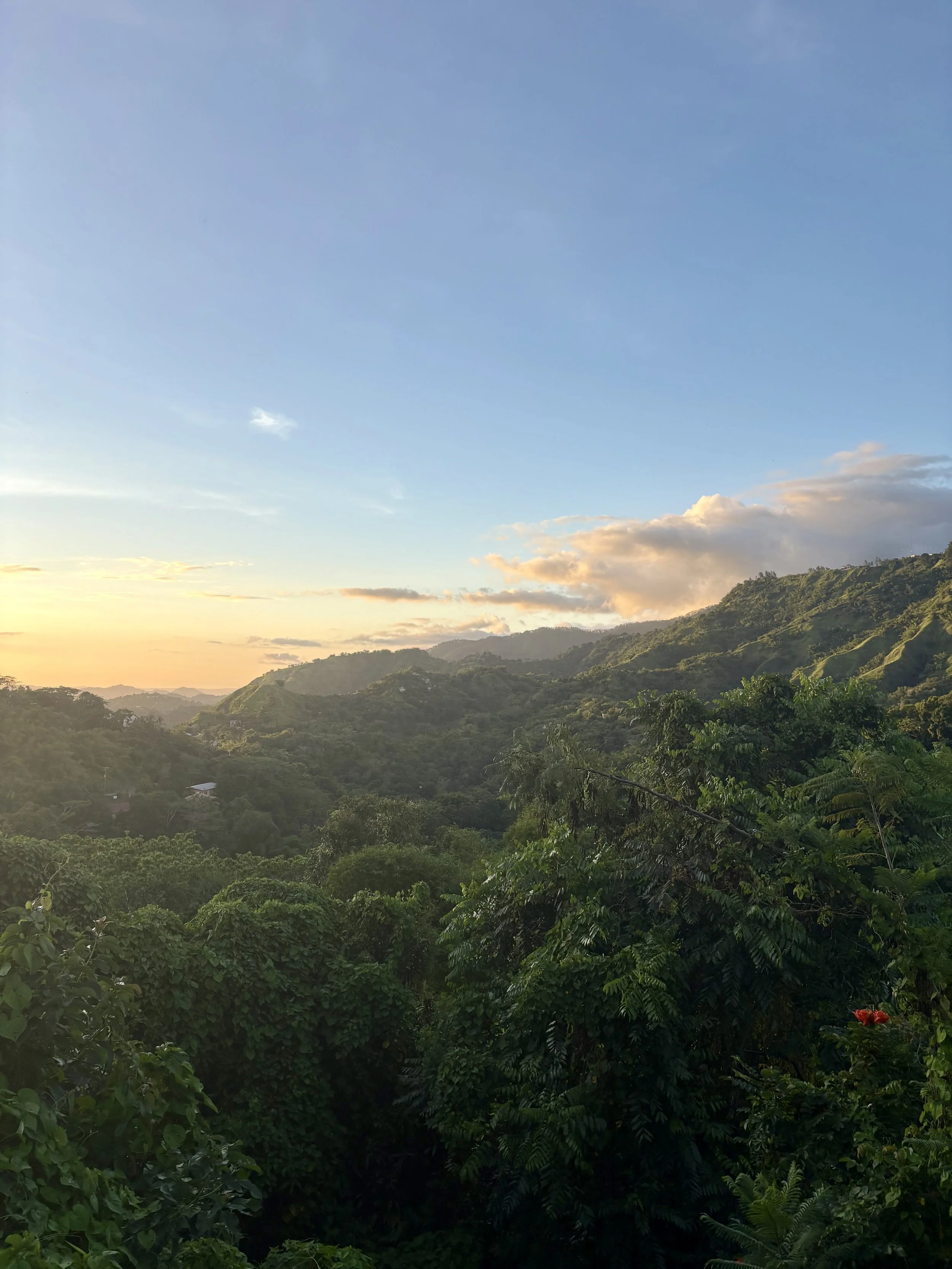
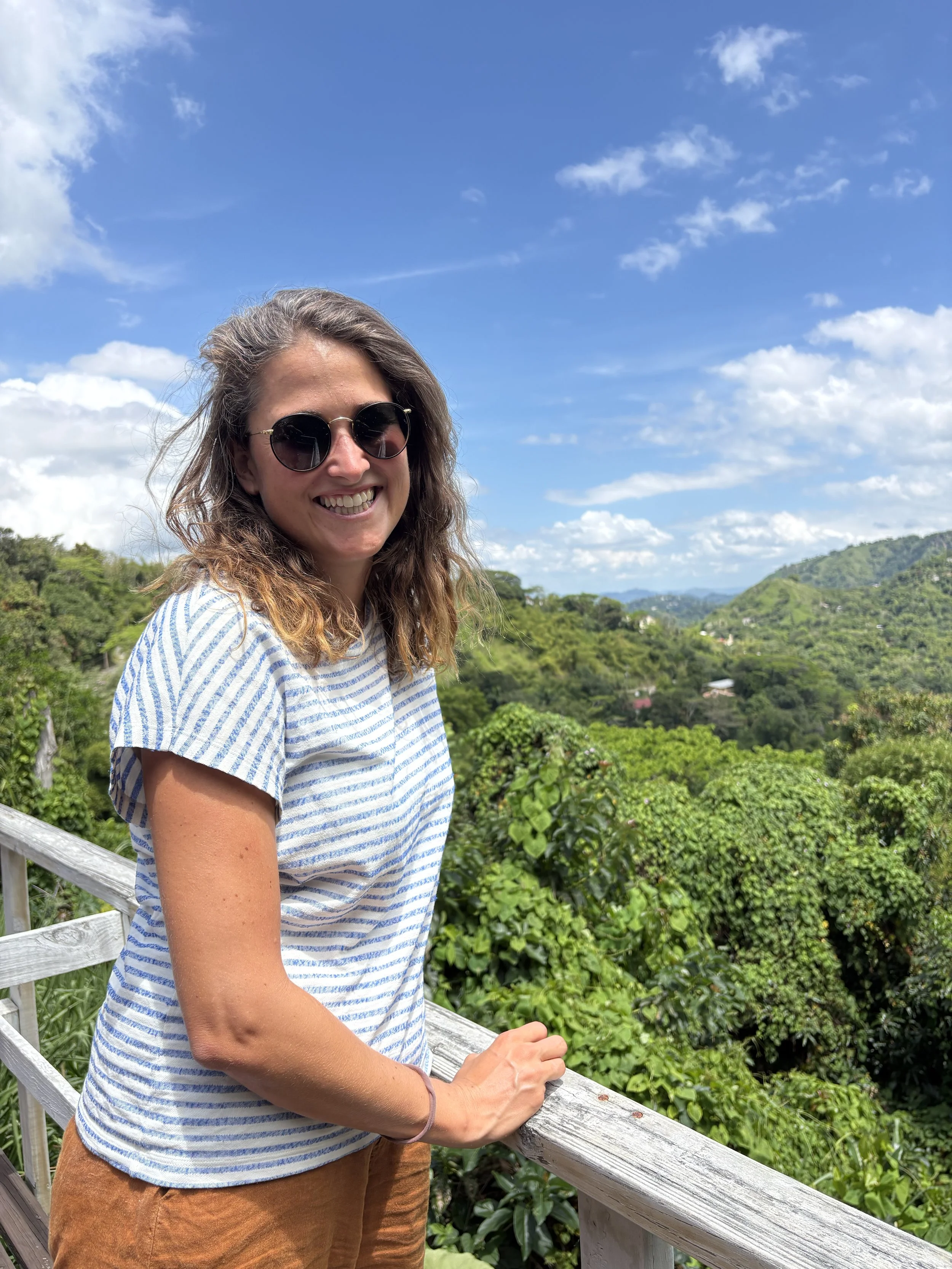
The coastal road is initially in unexpectedly good condition, then we head towards Kingston via the Blue Mountains Road. This quickly becomes an adventure and we make very slow progress. The scenery, however, is fantastic. We wind our way along the potholed road, up and down the hills, through dense greenery and alongside a river. Time and again we pass small settlements, where we are usually greeted warmly.
The way to our guesthouse
We’ve booked two rooms at the Prince Valley Guesthouse. Google Maps doesn’t show a route there, and the messages from the host, Bobby, are not very helpful. When we ask if there’s a road to the guesthouse and if we can stay an extra night, we only get a “Both yes”, but no further explanation of the route.
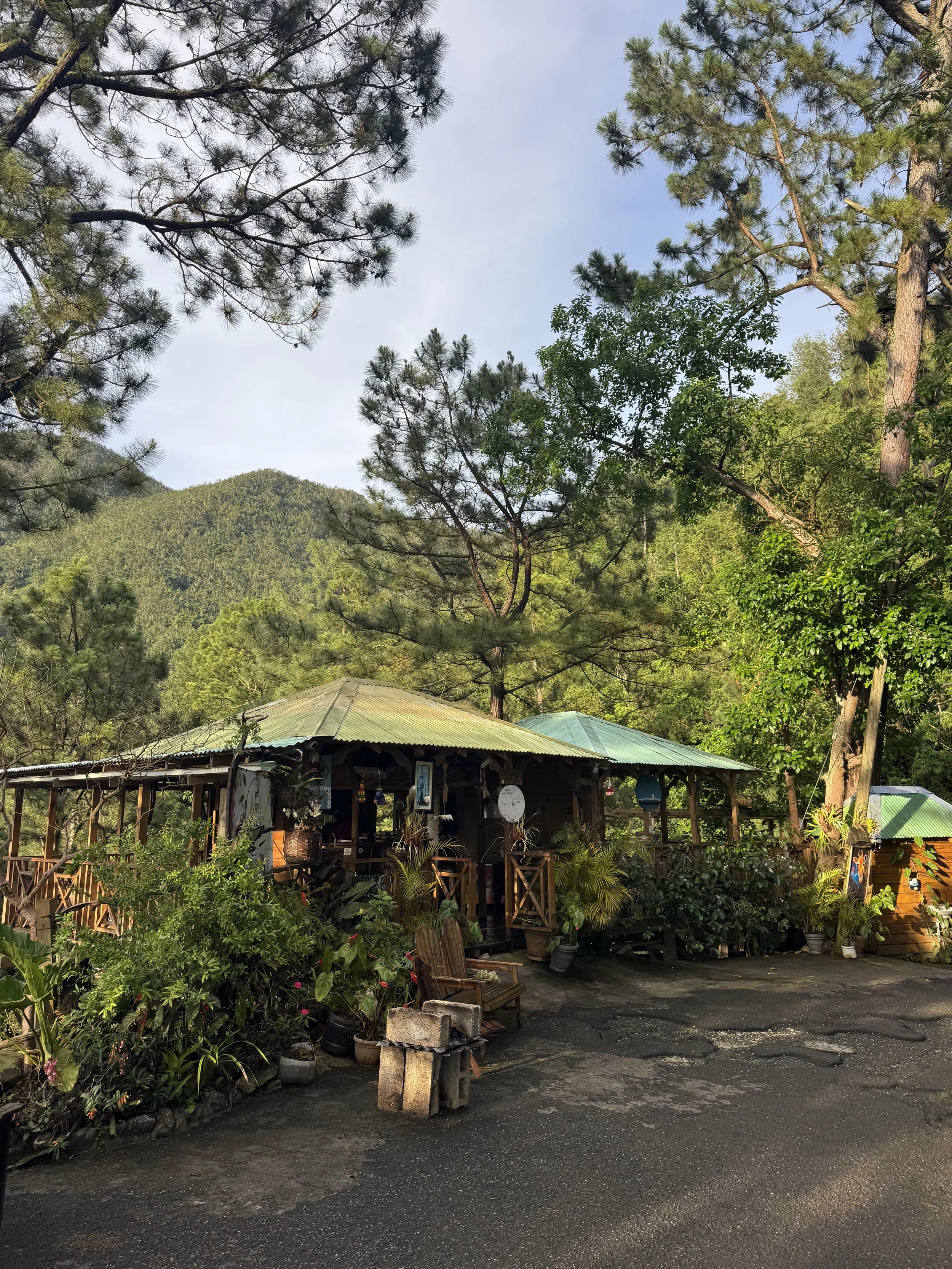
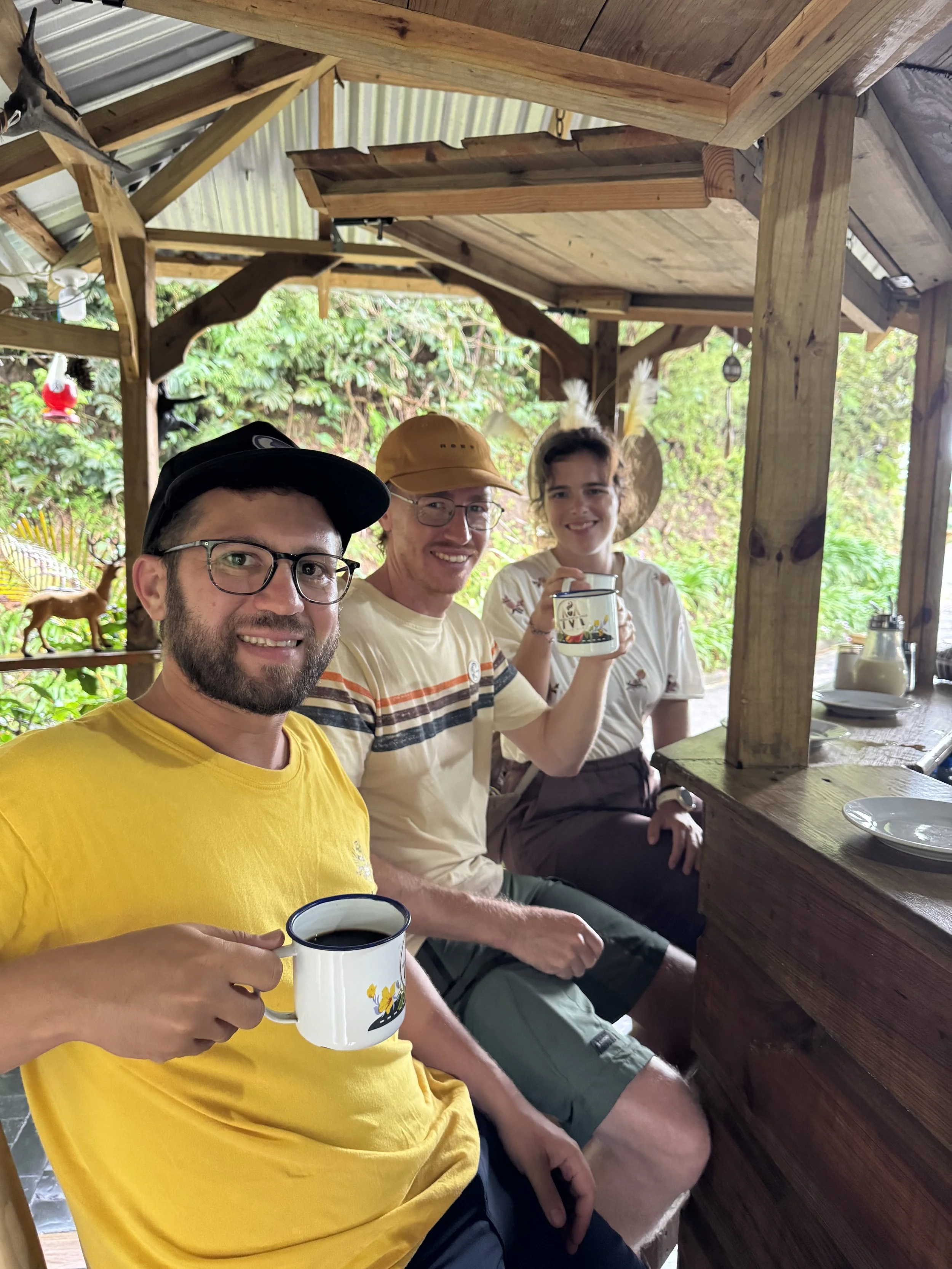
We don’t make much of it and head to the Middleton Café, the first inviting café near the accommodation. There we meet the host and a worker. We’re served Blue Mountain coffee from the garden and given an introduction to the most important vocabulary of Jamaican English
“Wah gwaan?” basically means “What’s up?”
“Awa!” roughly translates as “Get lost!”
Instead of “Thanks”, people often just say “Blessin”.
The only other guest, a labourer, is busily smoking “herb” and tells us he was actually on his way to work, but then decided he couldn’t be bothered.
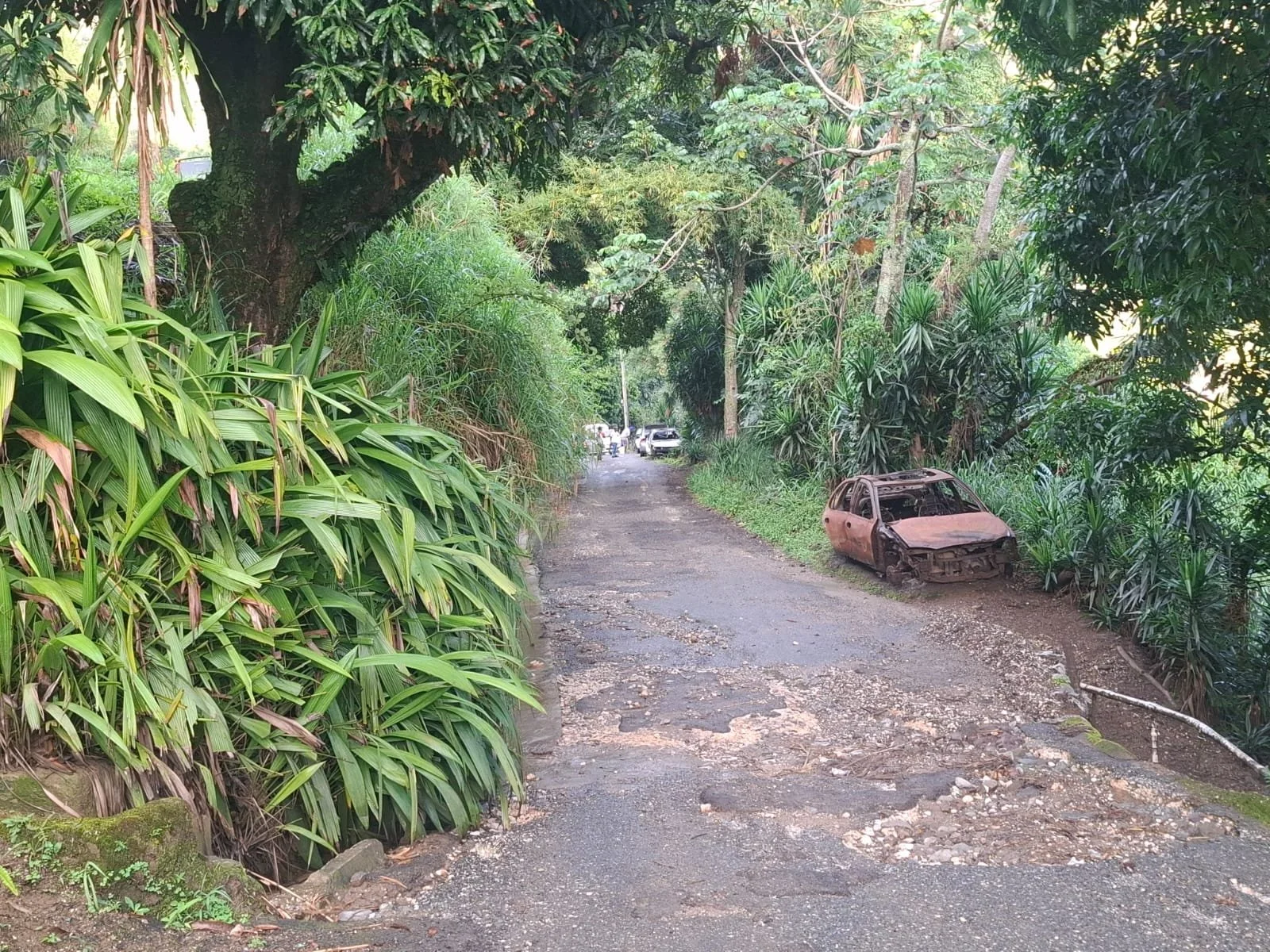
The host explains the way to the Prince Valley Guesthouse to us something like this: “Ya lookin’ for Bobby? Ya go down the street next to the bubbling bar. Just ask for Bobby.” The last quarter of an hour’s drive shows itself once again from its most adventurous side: it’s steep and the road is, at best, only 20 per cent intact. With our newly acquired knowledge, however, we at least manage to get by with the locals. Depending on which side of the road we meet someone, Jeff or I ask: “Wah gwaan, is this the road to Bobby’s?” This usually earns us a puzzled look, directions, and then laughter.
Bobby and life in the mountains
It’s only once we’re at the hotel that we realise Ruth, the host’s wife (who’s British), had been trying to contact us via Booking.com to make sure we’d arrived safely.
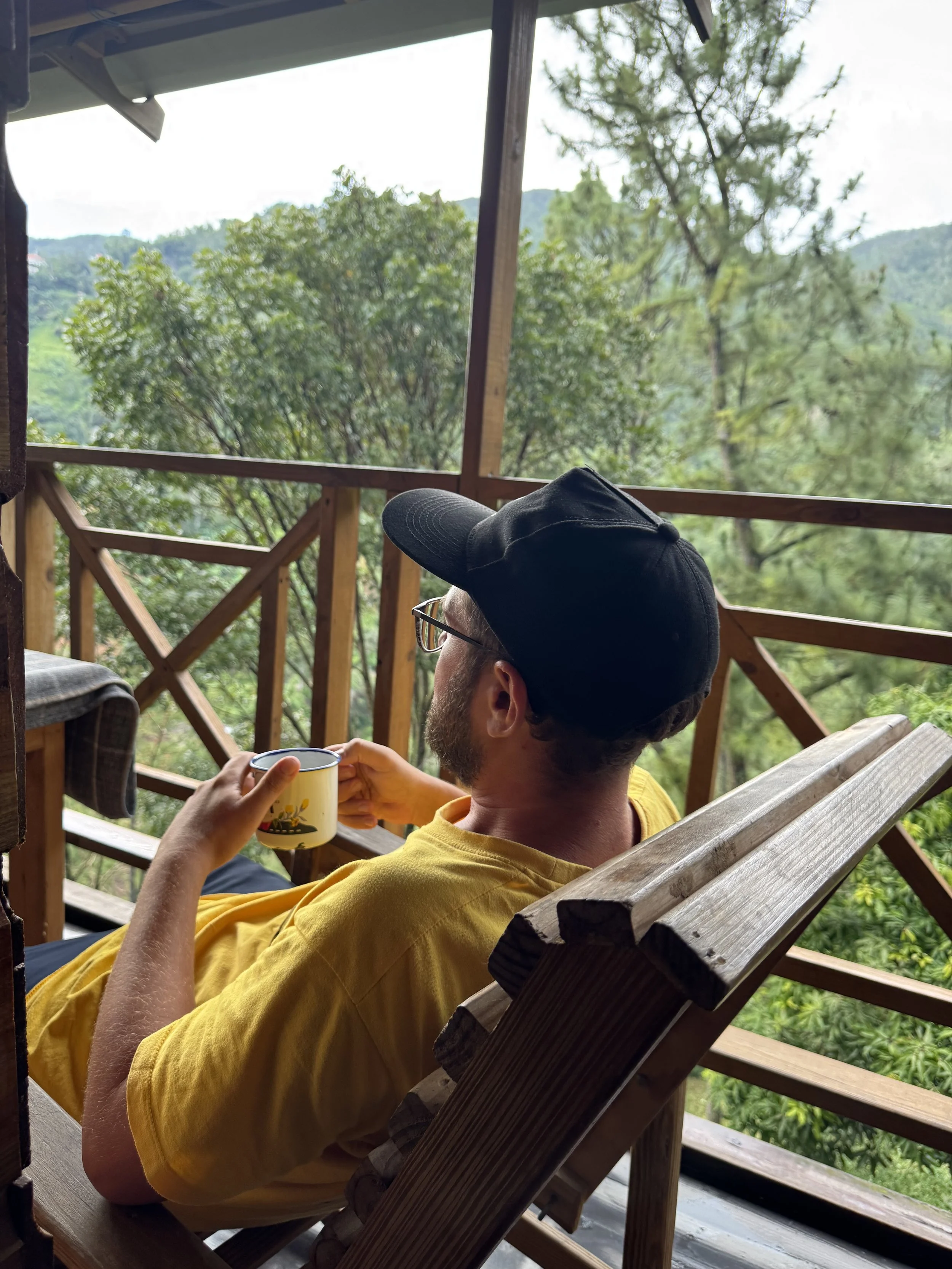
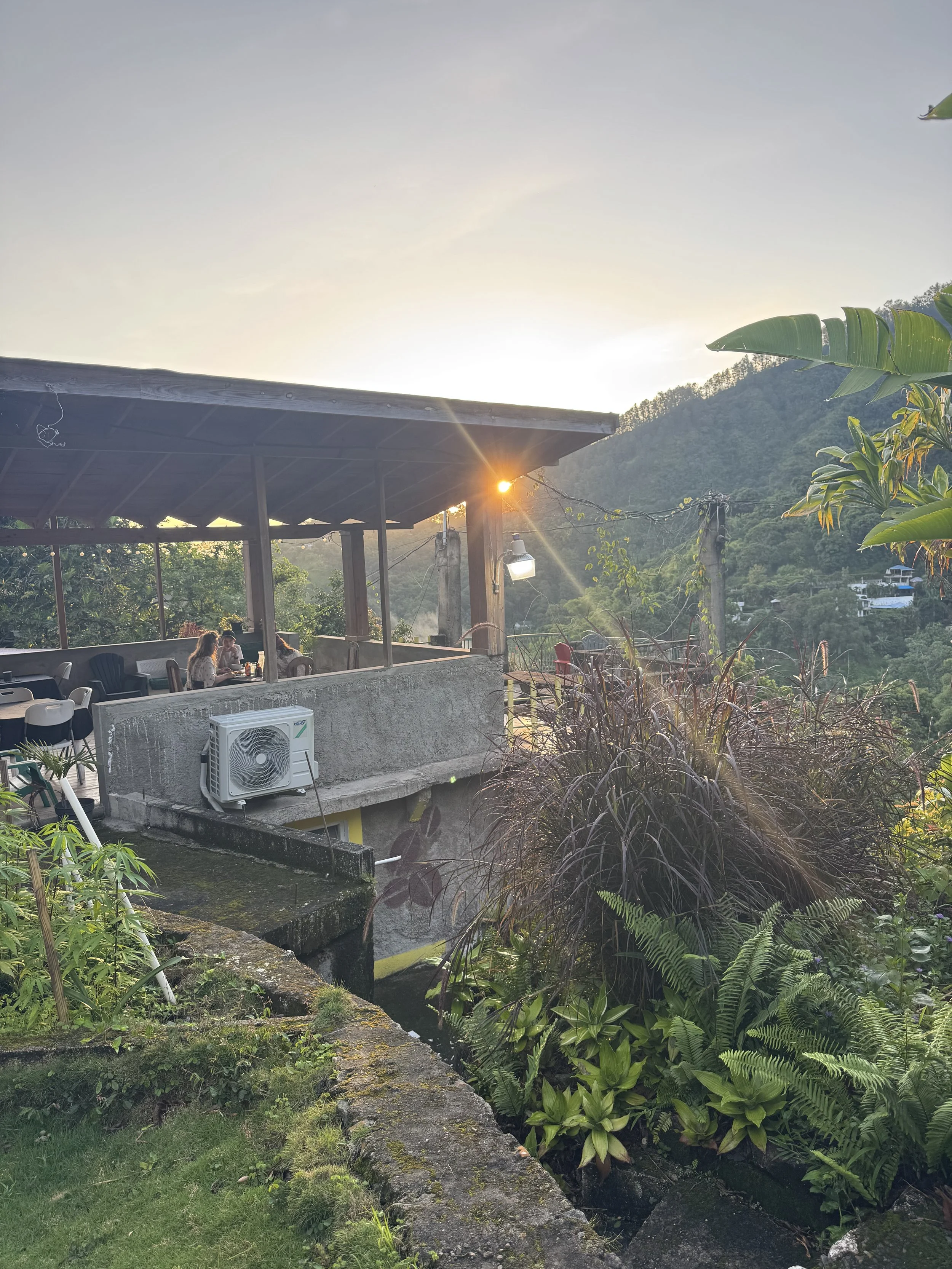
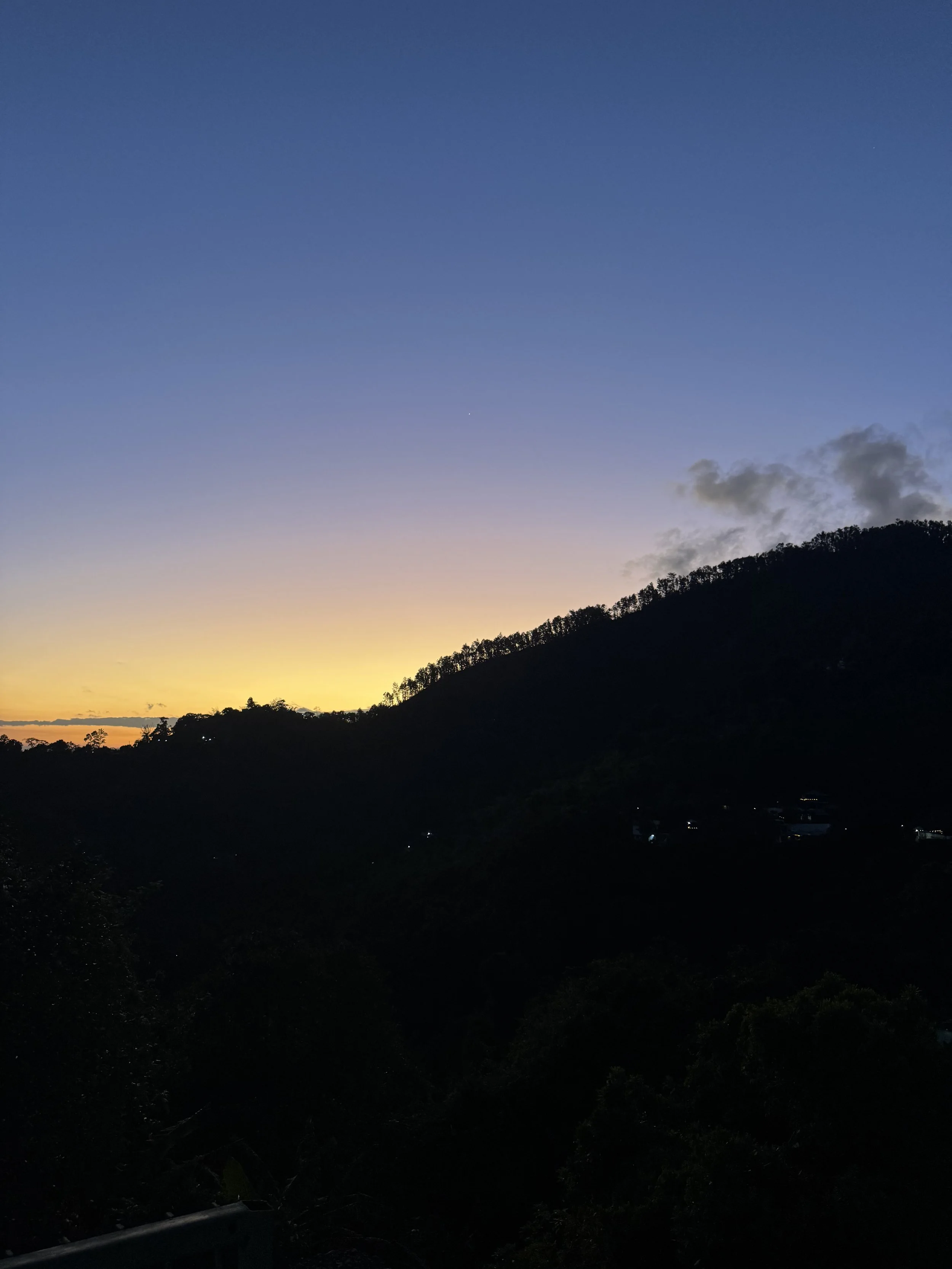
Bobby is a Jamaican straight out of a picture book. Long grey dreadlocks hang down; you’ll usually find him sitting on his terrace, smoking a Herb, next to a sign featuring a frog and a cigarette with ‘No Smoking’ written on it. Bobby is relaxed, friendly and yet very direct. We’re served chicken for dinner and enjoy the view over the valley from Bobby’s terrace with a couple of Red Stripes.
Bobby’s legendary directions
As the drive to the guesthouse is quite an adventure, we want to do something without having to start the car. Over breakfast, we discuss it with Bobby’s assistant and then decide to walk to Craighton Estate and take a guided tour of the coffee plantation there.
There’s also a nice café nearby that Iris had spotted the day before and which has been tempting us ever since with pictures of cakes.
Bobby describes the route so vividly that, although we all follow along mentally during the explanation, afterwards we can’t really picture the instructions in our minds. A classic herd mentality problem: four people are listening and everyone thinks someone else will remember it.
A few things do stick in our minds, though:
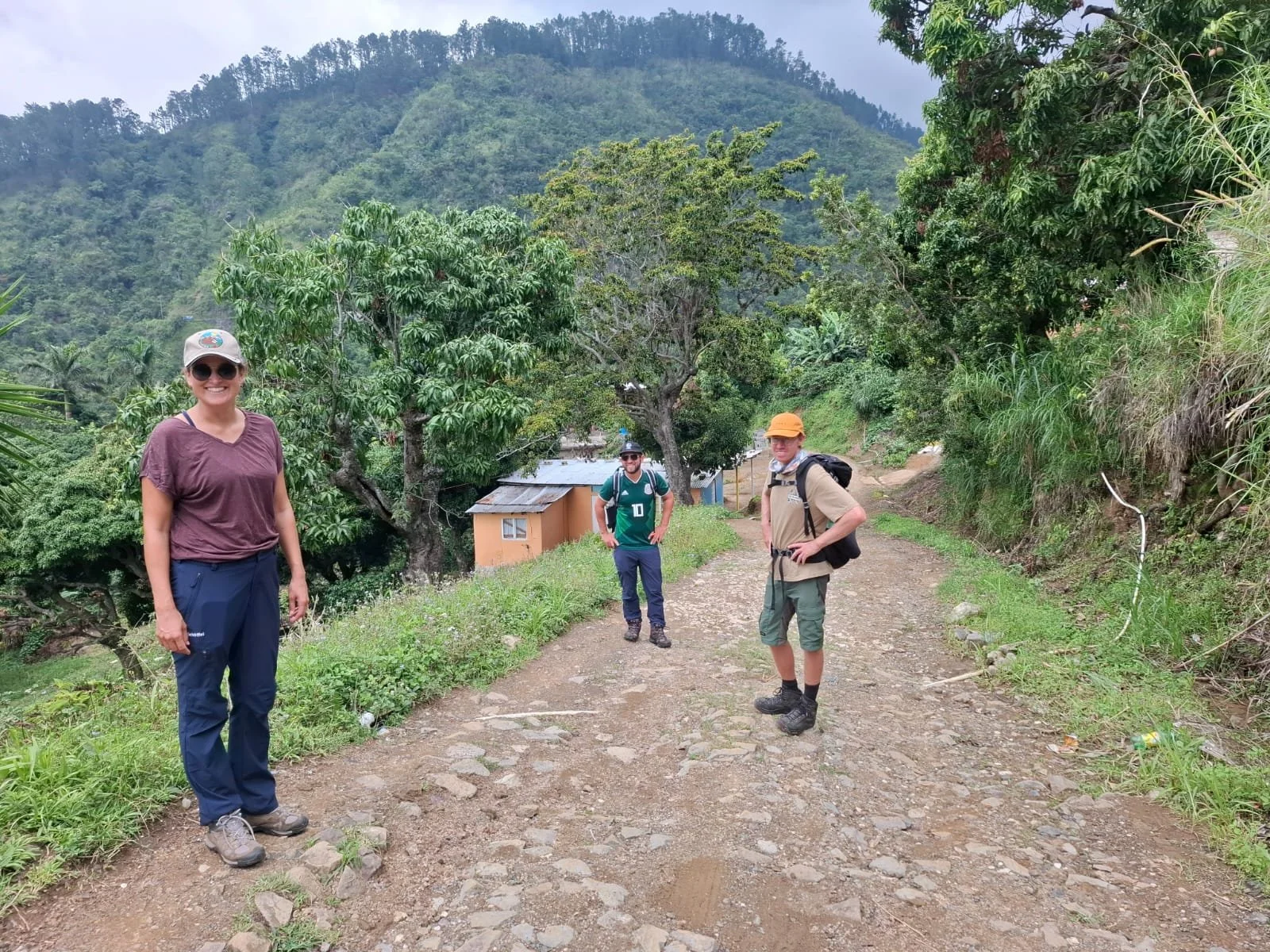
„Yuh gwaan straight pass di burn up cyar, pass di blue cyar…“
„At Serendipity yuh go up, nuh down.“
„At di pink building, yuh gone too far.“
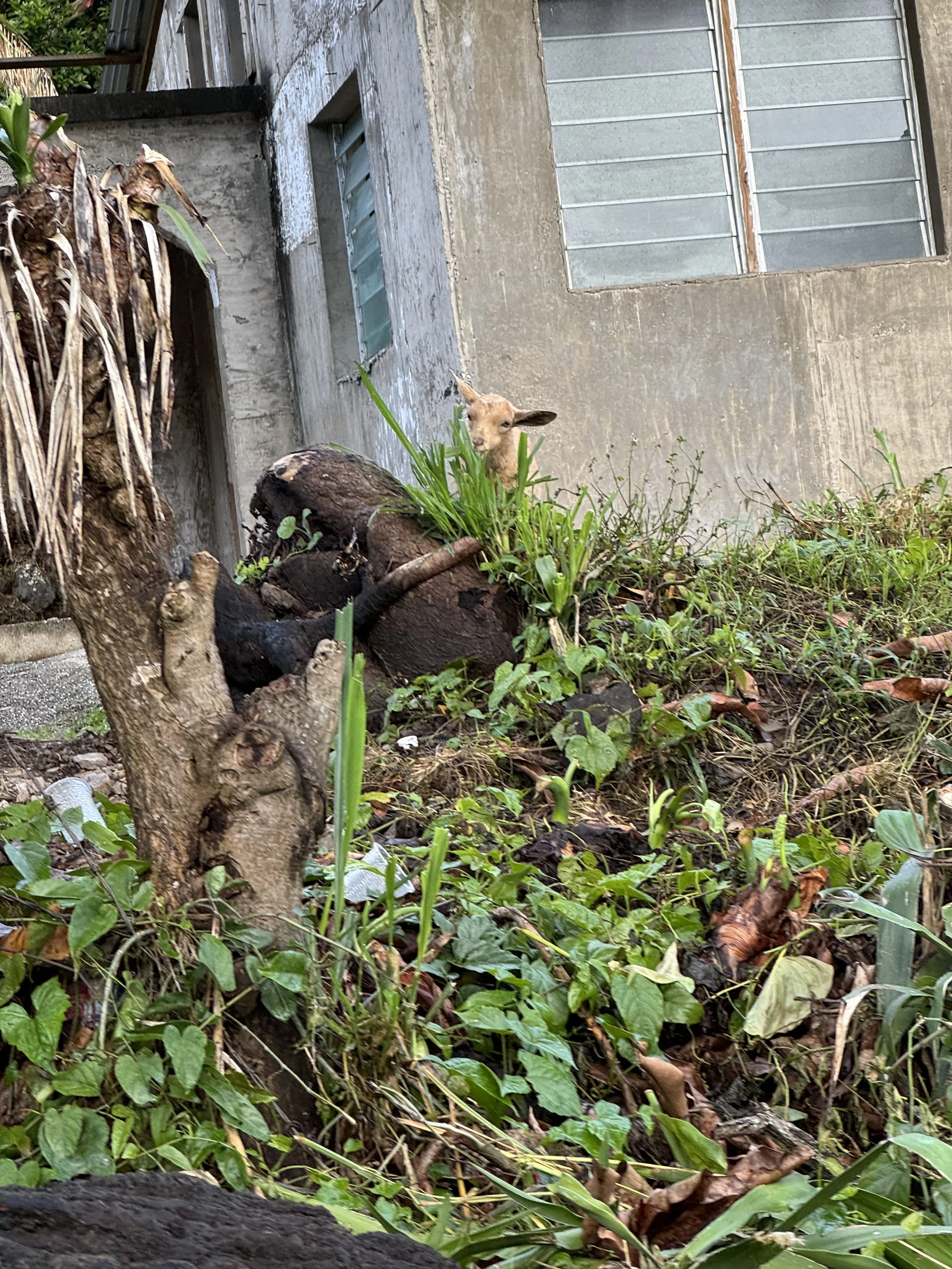
Walk to the coffee plantation and the waterfall
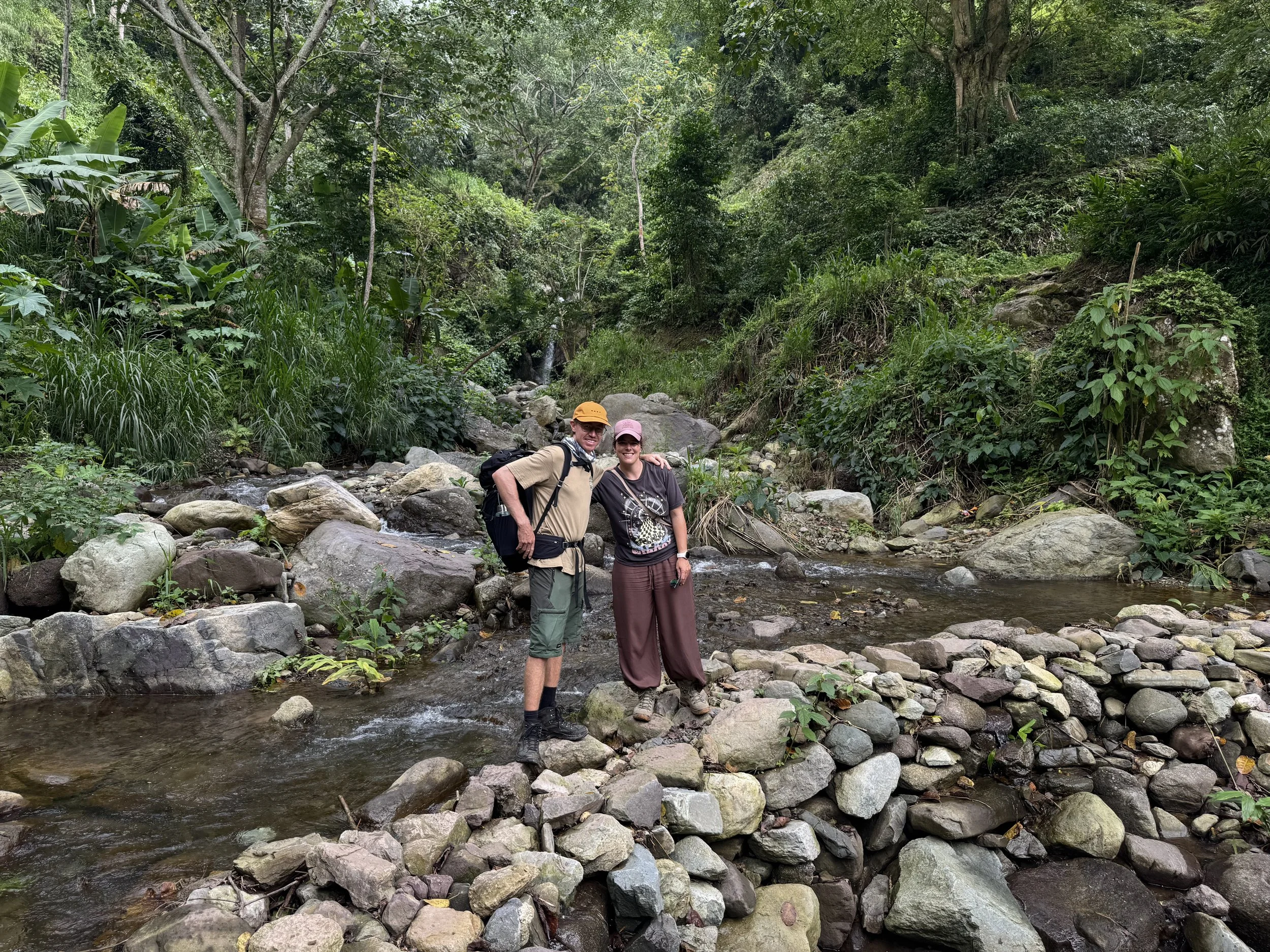
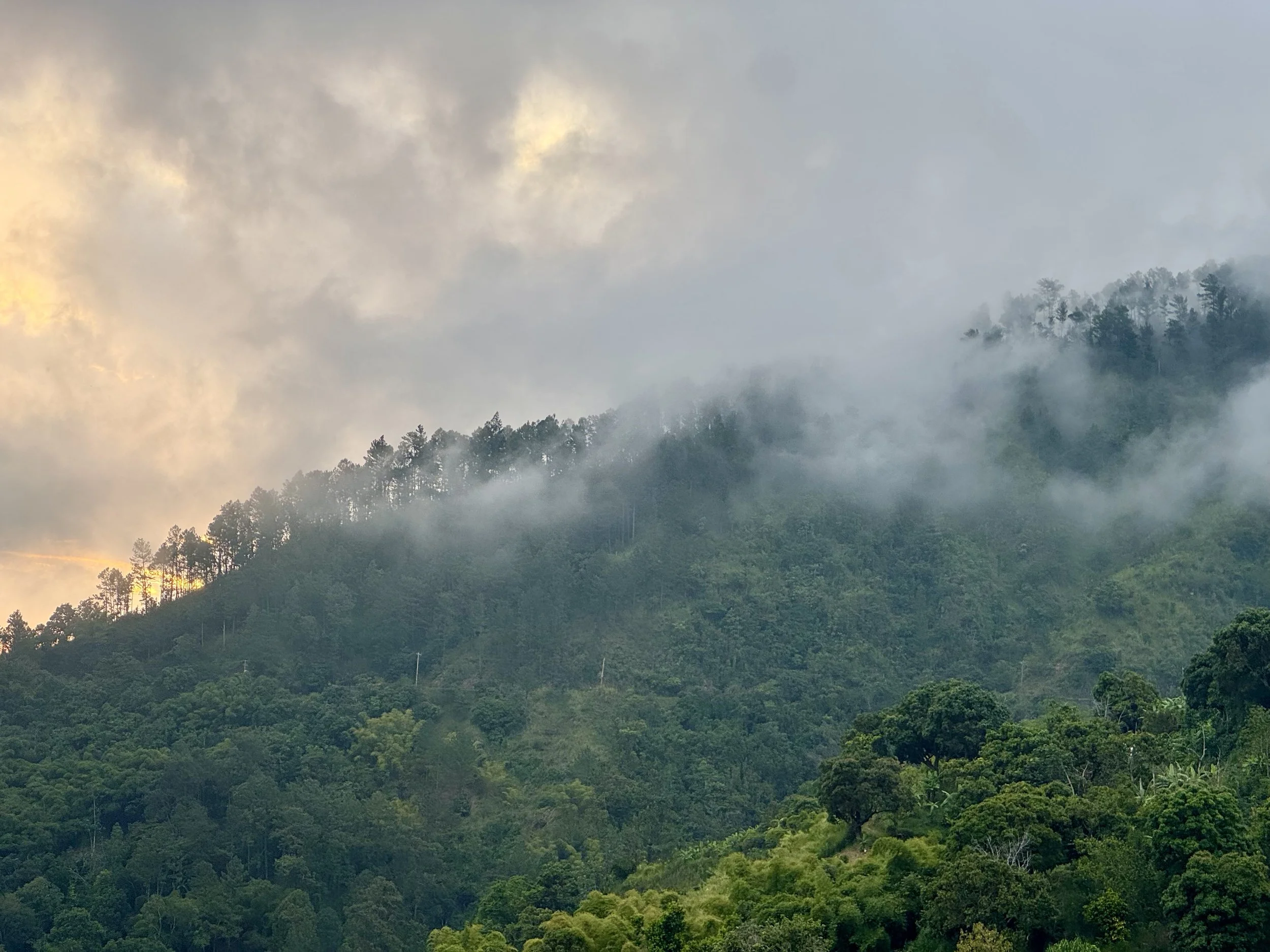
We set off anyway and decide to do the same as the day before and ask for directions. We start by walking along the rough road and then make our way through the valley over hill and dale, through woods and past houses, hotels and guesthouses of varying degrees of activity, until we arrive at Craighton Estate. There, we are promptly given a guided tour. It begins with a tasting on the terrace of the old manor house, and we are also told a little about the history of Blue Mountain coffee and the estate.
For some time now, the plantation has been owned by a Japanese company, which exports the majority of the harvest. In Jamaica itself, Blue Mountain coffee is rather rare due to its price; if you do find it, it’s usually in coffee houses. In the supermarket, at best, you usually find blends containing a proportion of Blue Mountain coffee. The tour is a bit lacklustre. After the explanation about the coffee, we take a short walk through the plantation to a viewpoint overlooking Kingston, then we are given a rather terse tour of the estate. We learn nothing more than that the British lived here until the late 1970s and that Americans subsequently began growing coffee.
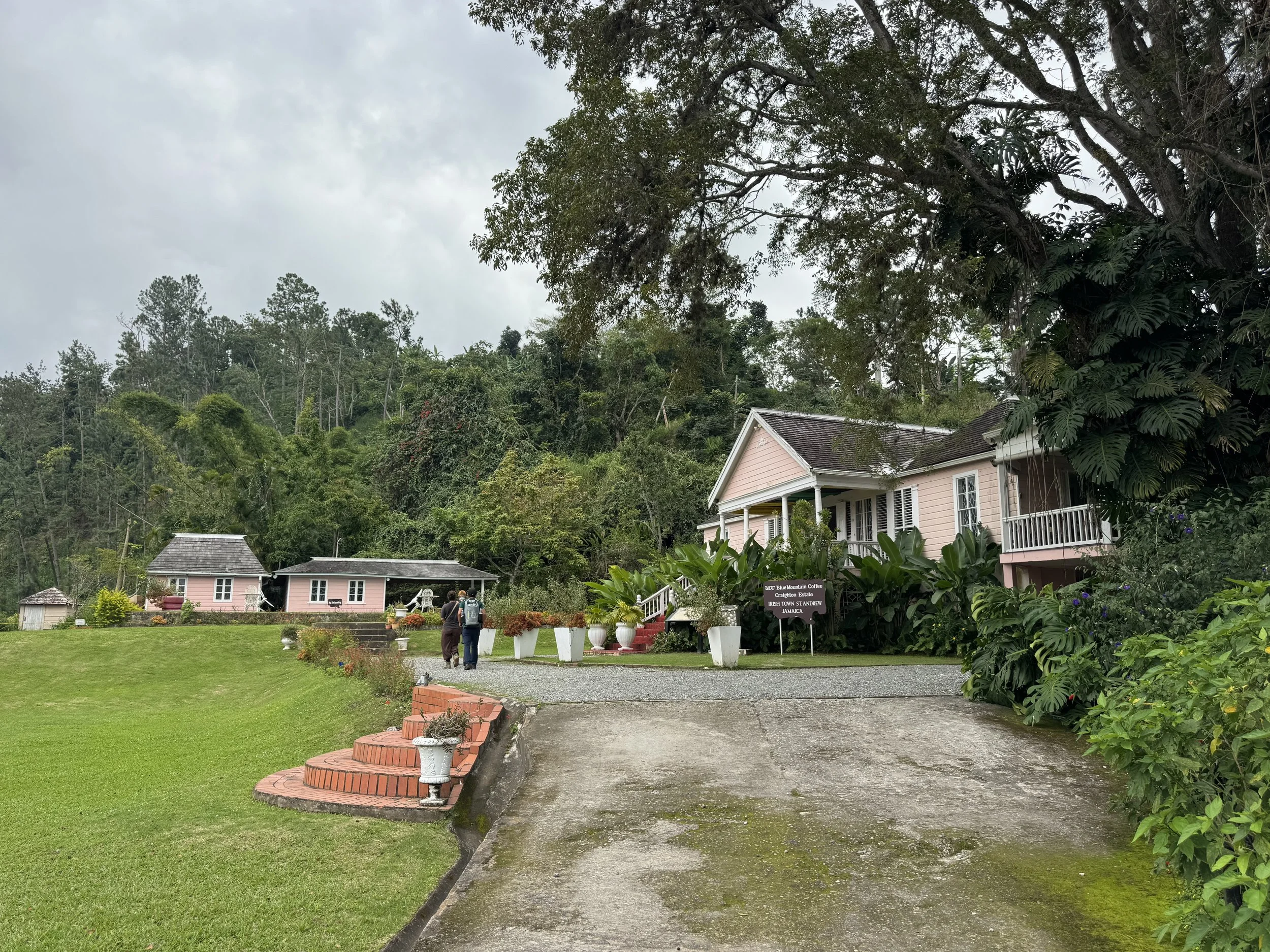
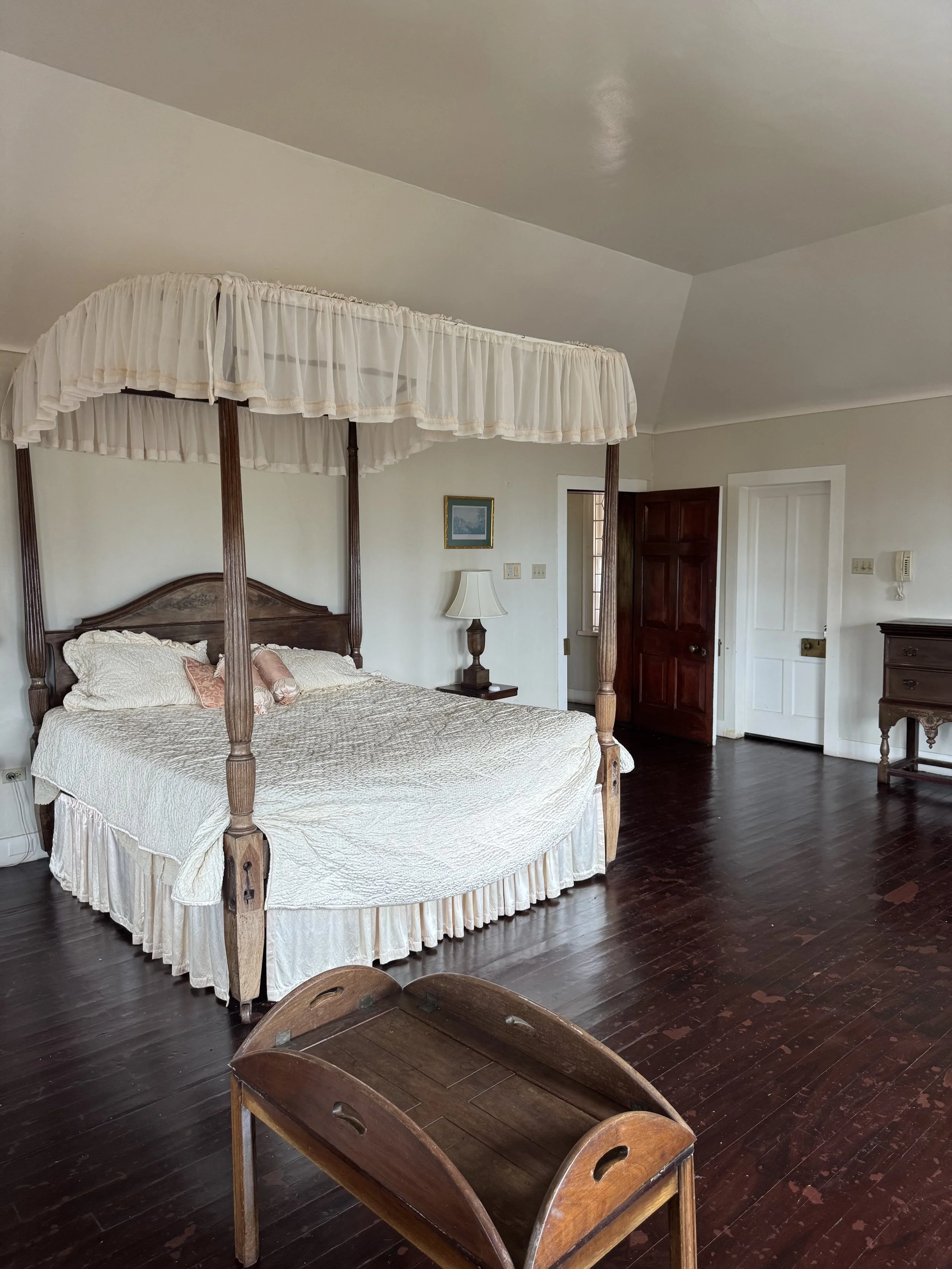
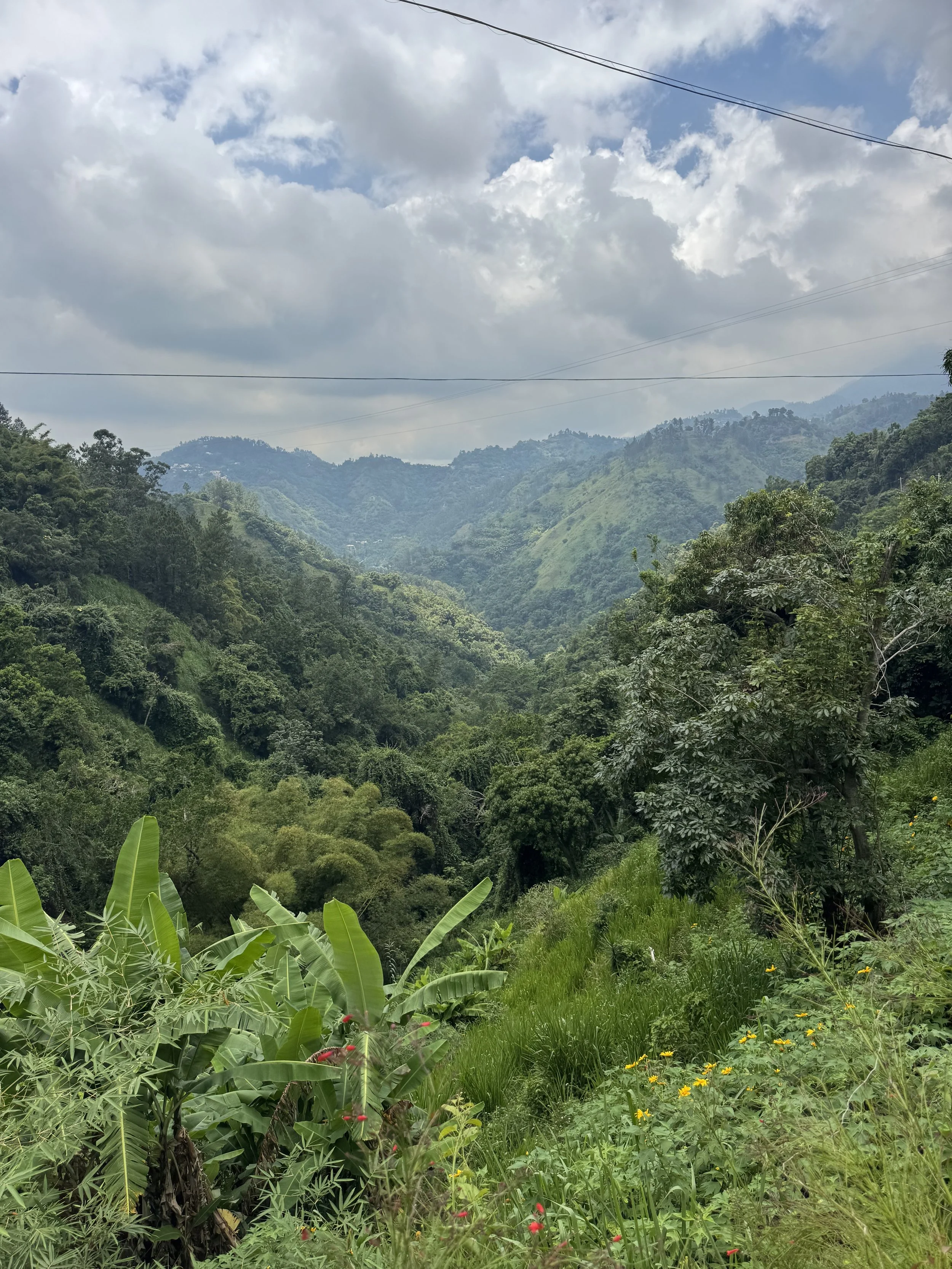
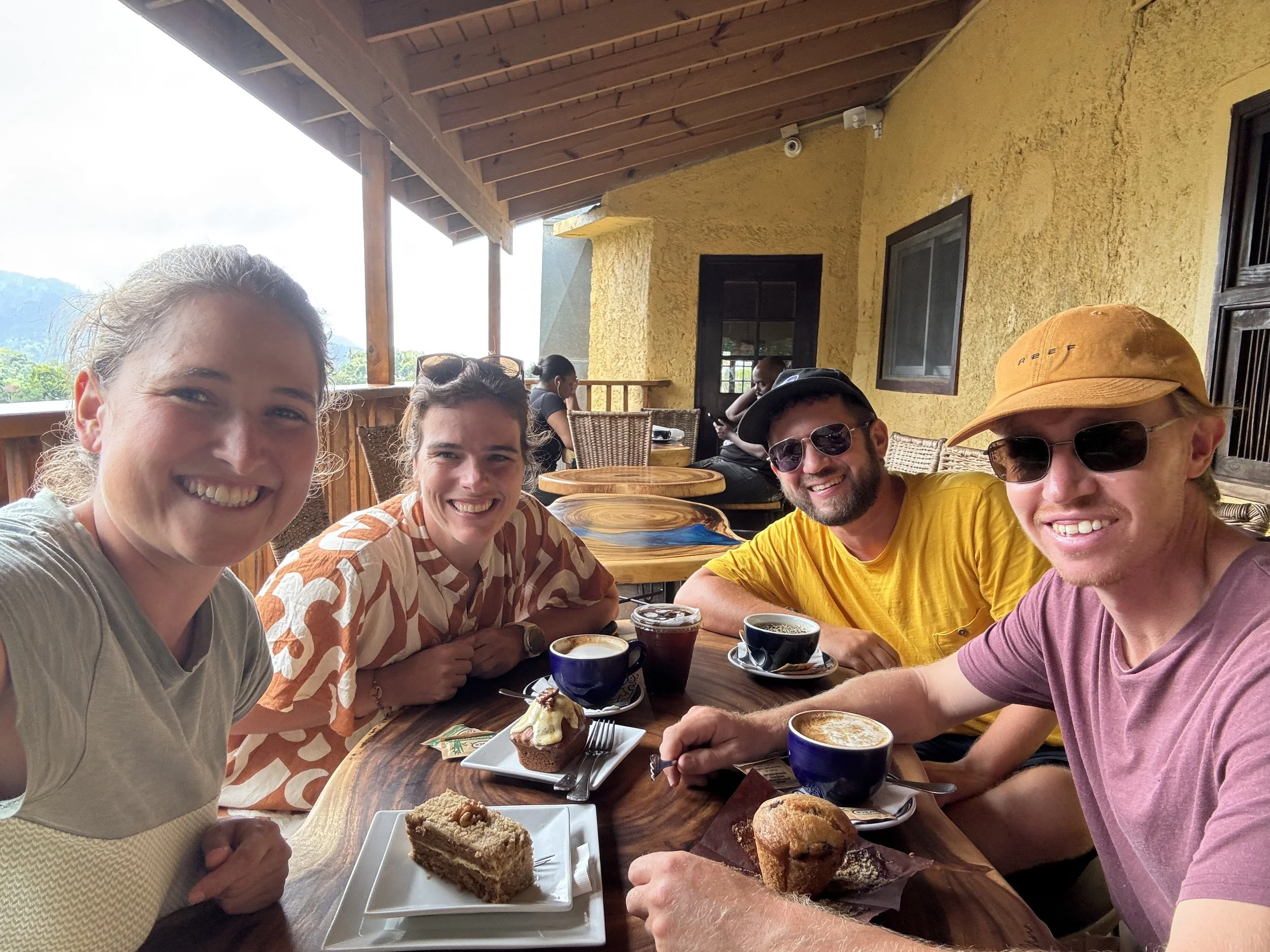
We head on to Café Blue. There, we’re greeted by a magnificent view, as well as food and drink of European standard. We sample a bit of everything on the menu: sandwiches and cakes, accompanied by coffee and iced tea.
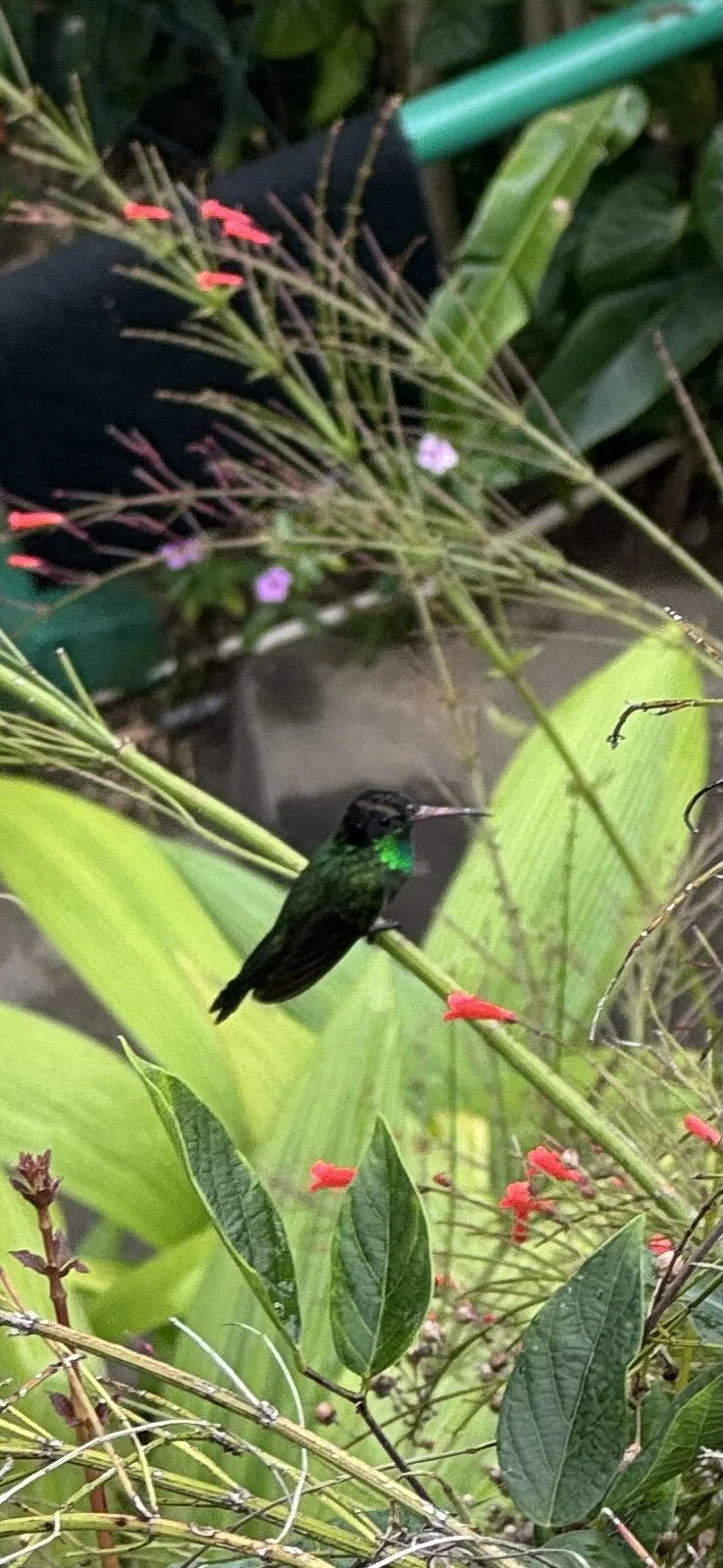
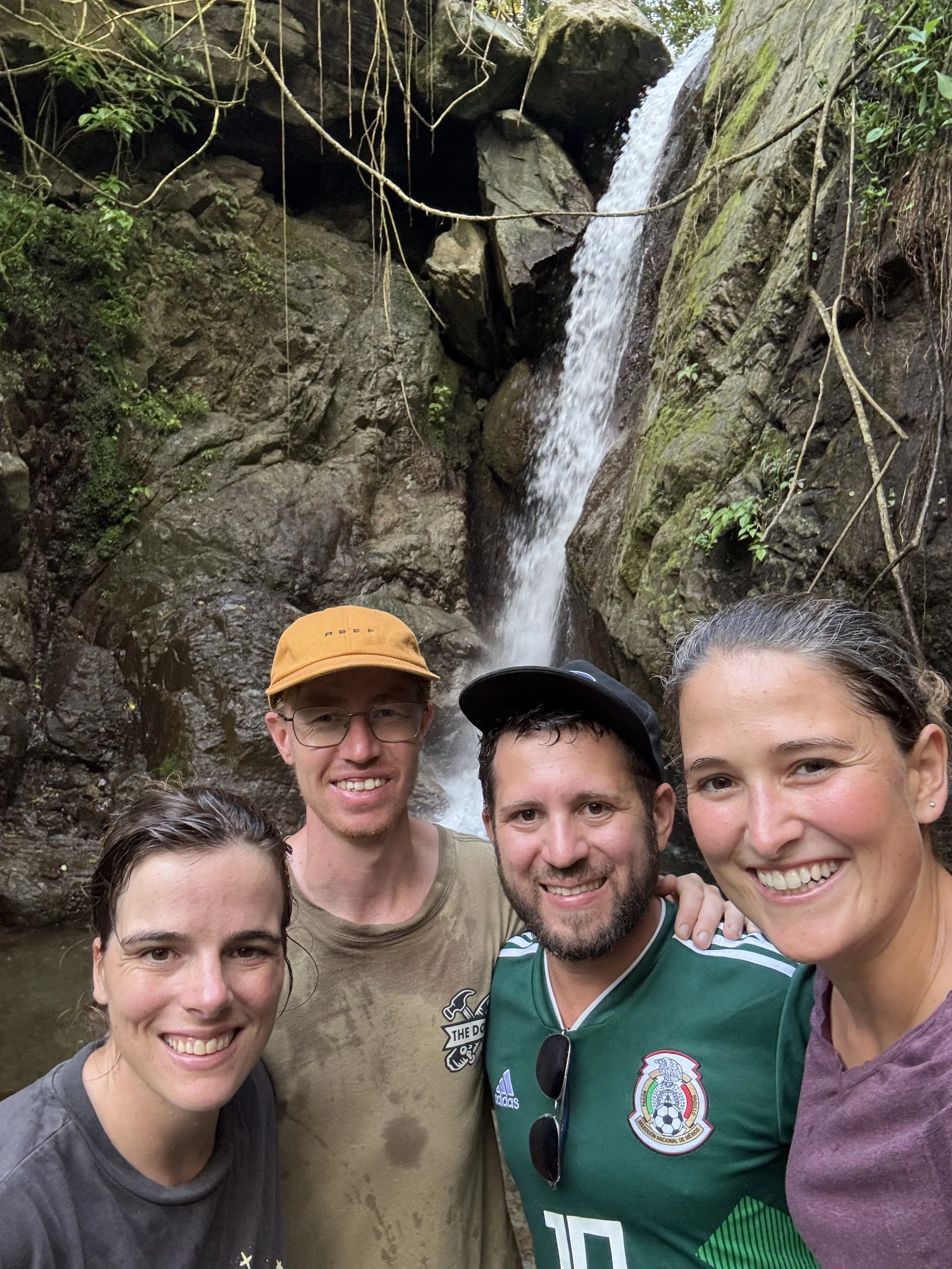
With our bellies full, we stroll back and make a quick detour to a waterfall along the way. No one really fancies a swim; it’s already late and cloudy. Apart from the mosquitoes, the atmosphere is still worth it. We also spot Jamaica’s national bird, the Red-billed streamertail. We can tell straight away that it’s a female, as the male has two extra-long tail feathers.
We round off the evening back on the terrace at the guesthouse. For supper, everyone except Ines has fried chicken and chips – a ‘lekker, lekker’ children’s meal, as our Dutch friends would say, although we’re all struggling a bit with it after the hearty afternoon meal. Ines has opted for stir-fry tofu, which is simply too much to manage. As the Rastafarians mainly follow a vegan or vegetarian diet, there is a wide range of authentic options available.
Kingston and Bob Marley
A visit to the Bob Marley Museum
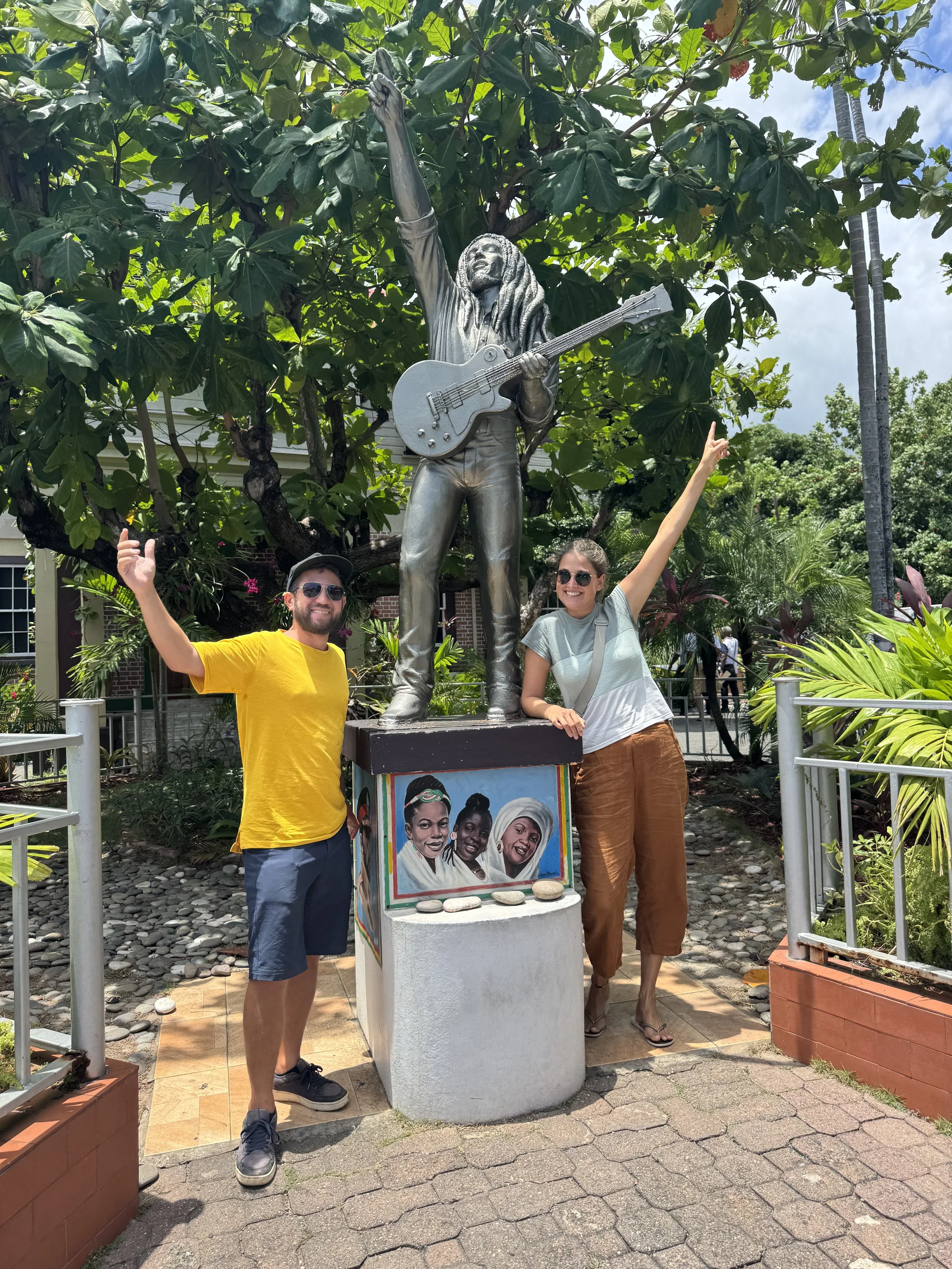
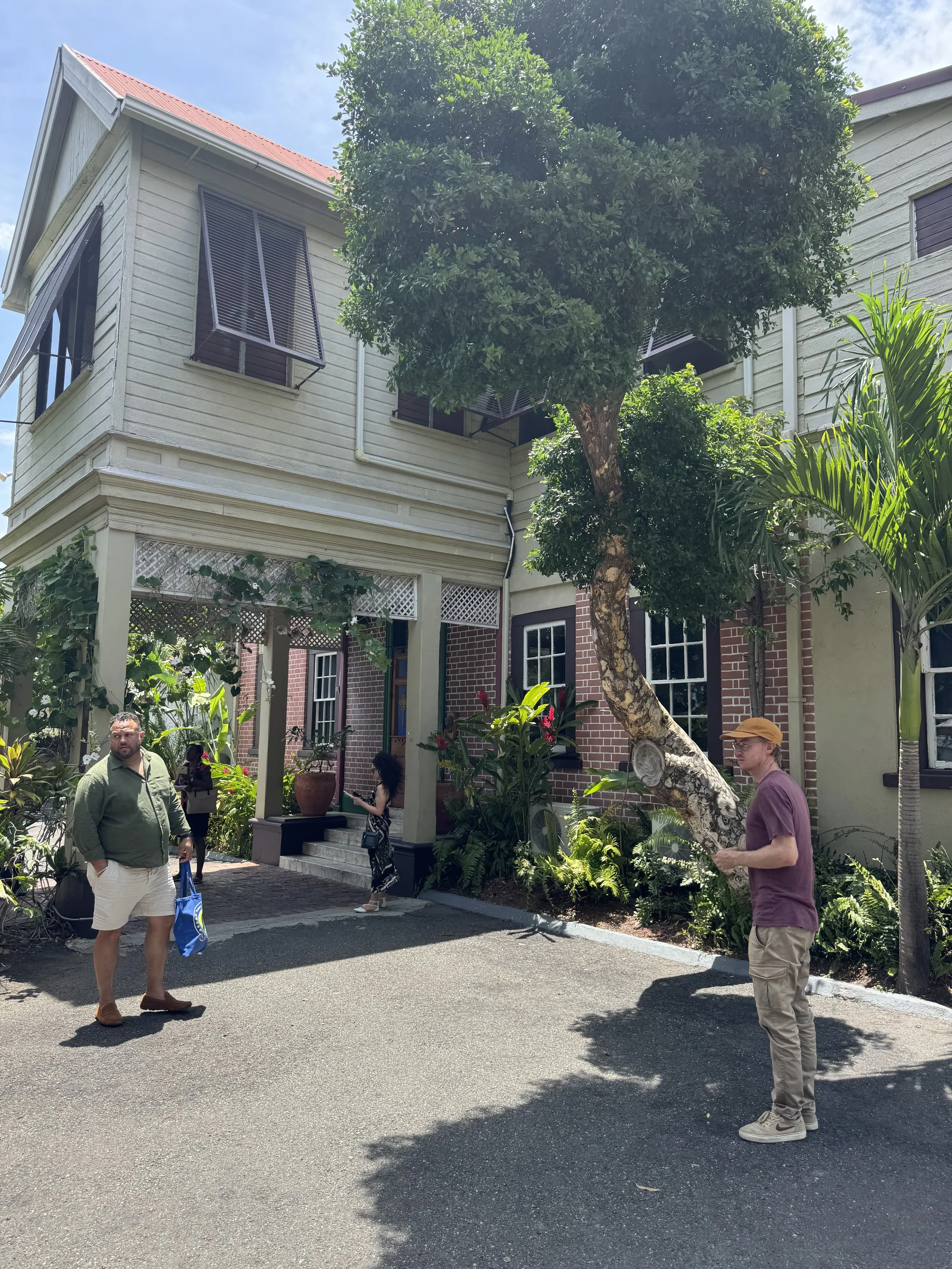
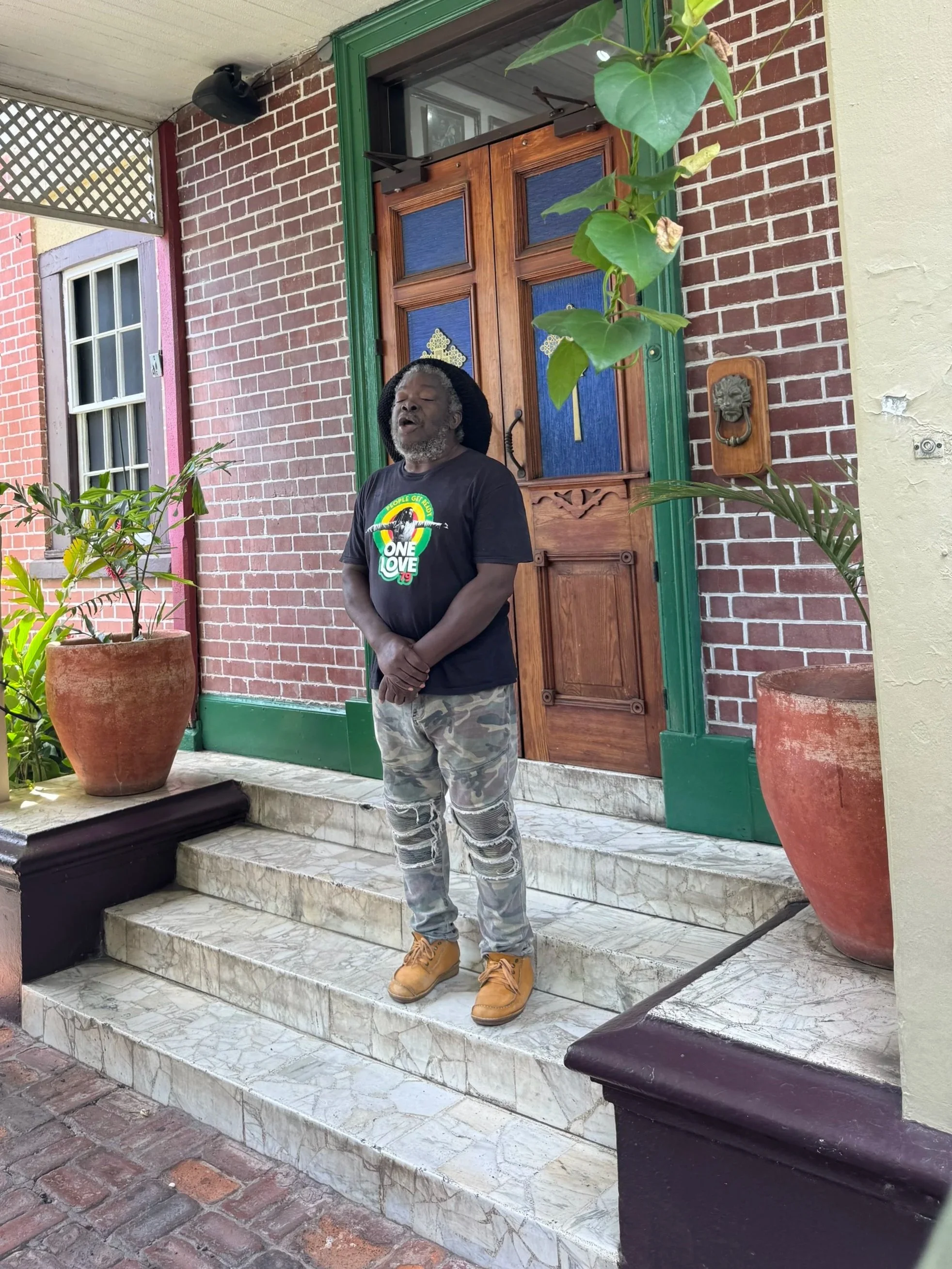
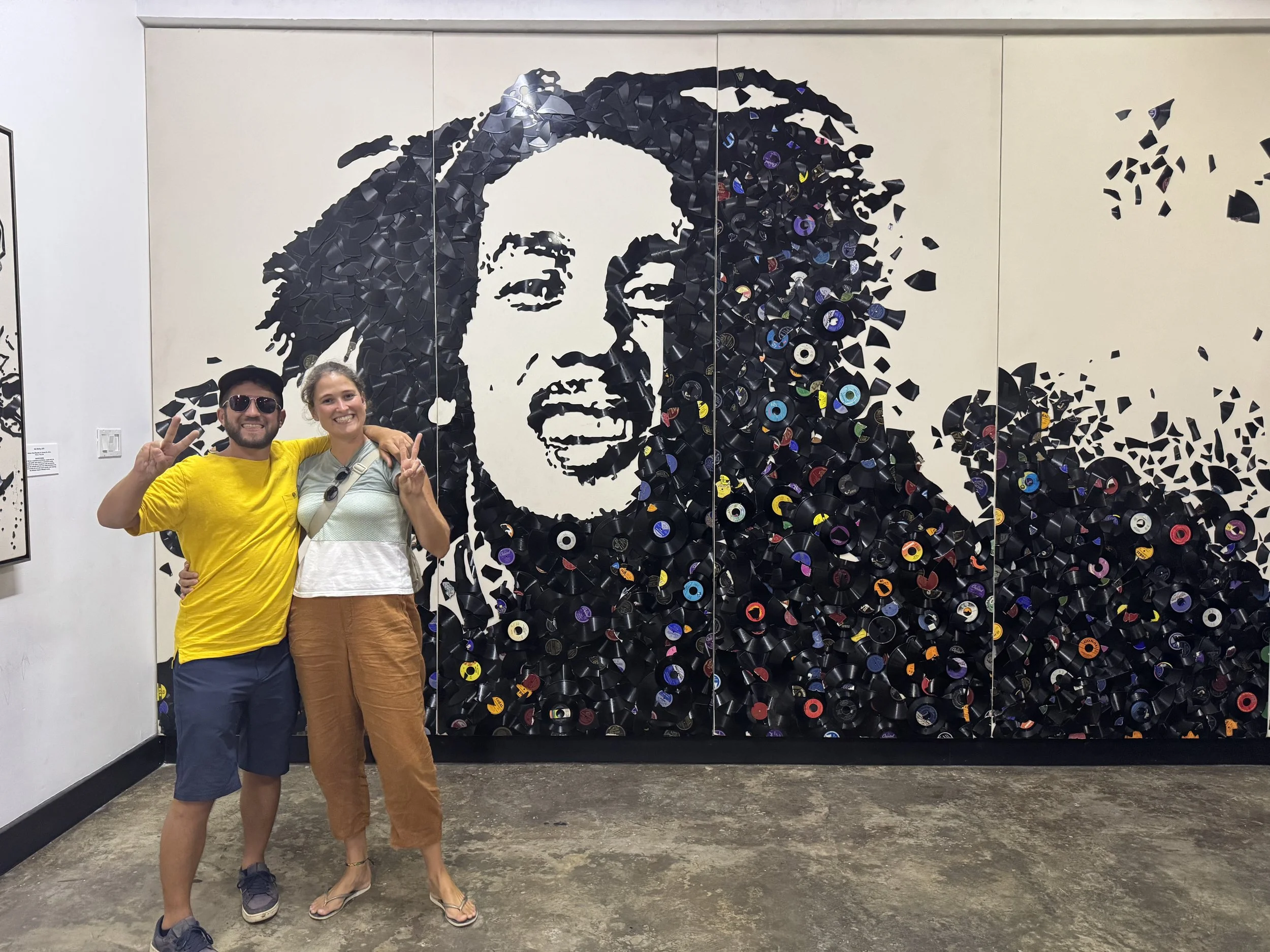
The next day, we head back up the winding road and then, after a quick second breakfast at the Blue Café, on to Kingston. There, we take a tour of Bob Marley’s later home, which also housed his studio. We’re quite a large group, but our tour guide manages to captivate everyone. In the very first room, we all join in singing ‘One Love’, and thanks to the enthusiastic tour group from Ghana, our singing actually sounds surprisingly rhythmic and really good.
The tour is really very interesting and well put together. We walk through the studio, as well as the bedrooms, the kitchen and the office. On the outer wall, we see the bullet holes from the assassination attempt on 3 December 1976 – just two days before the ‘Smile Jamaica’ peace concert organised by the Social Democratic Party – on Bob Marley, his wife Rita and his manager Don Taylor. Taylor and Marley’s wife were seriously injured, but later made a full recovery. Bob Marley suffered only minor injuries to his chest and arm and was able to perform at the 90-minute concert. Outside, we all sing “Three Little Birds” together.
During the tour, we also learn about the Rastafarian religion and that the Ethiopian Emperor Haile Selassie I is regarded in the Rastafarian faith as a divine figure, or the second coming of the Messiah. Many Rastafarians see his coronation as Emperor of Ethiopia in 1930 as the fulfilment of a prophecy about a black king who would bring liberation and hope to people of African descent. That is why he became a central spiritual symbol of the Rastafarian movement.
Political violence and Bob Marley’s influence
Jamaica did not gain independence from the United Kingdom until 1962. The early years of independence were marked by political unrest between two rival parties. Shootings occurred regularly. In addition to the shooting of Bob Marley, his wife and his manager, the well-known reggae artist Peter Tosh was also shot dead.
It is worth noting here the significant influence Bob Marley had on the reconciliation process. Despite the assassination attempt, he played a peace concert just a few days later in 1976. He then went into self-imposed exile in England. Upon his return in 1978, the rival parties reconciled with a publicly symbolic handshake on the stage of one of his concerts.
Devon House and Kingston
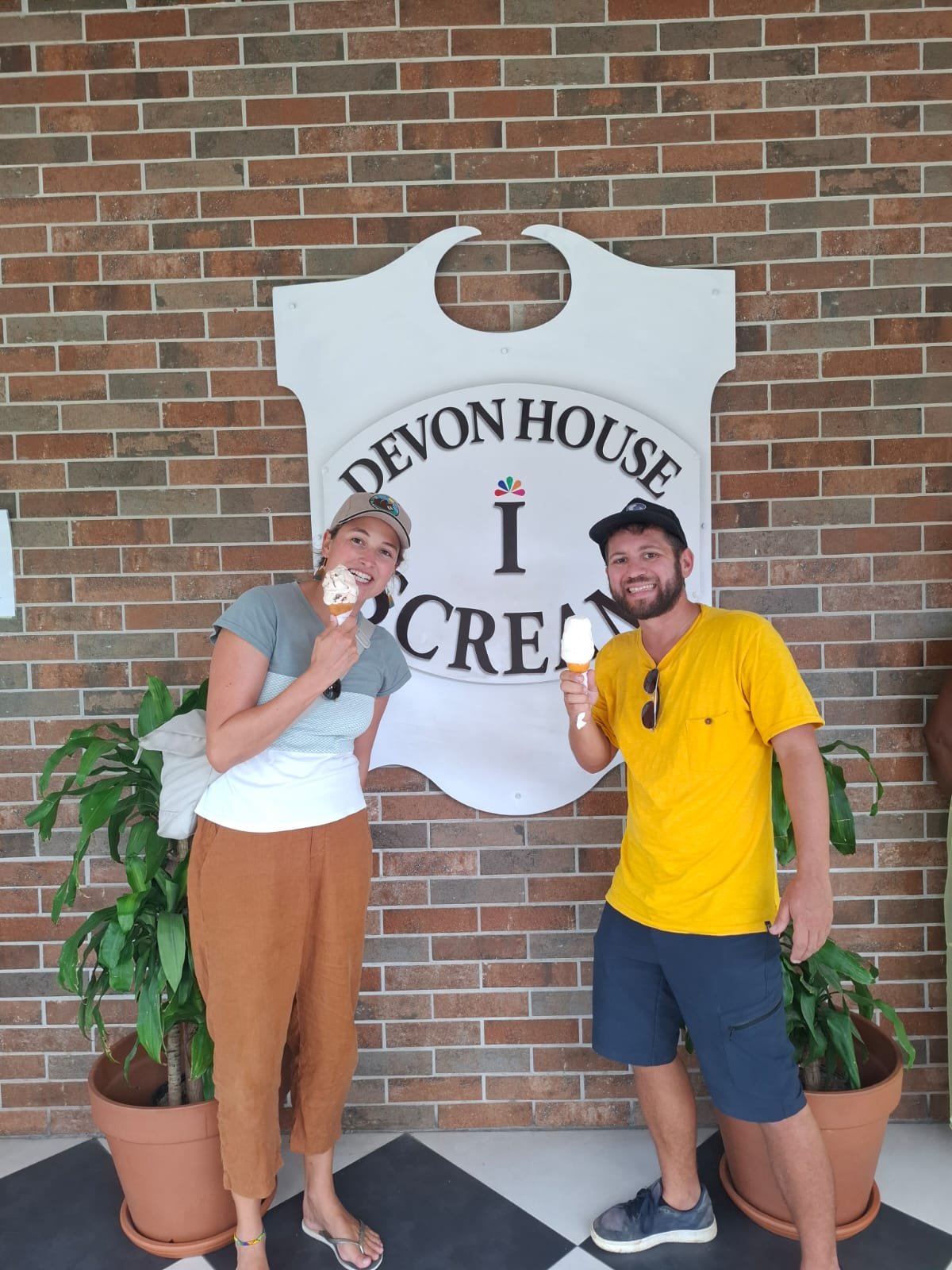
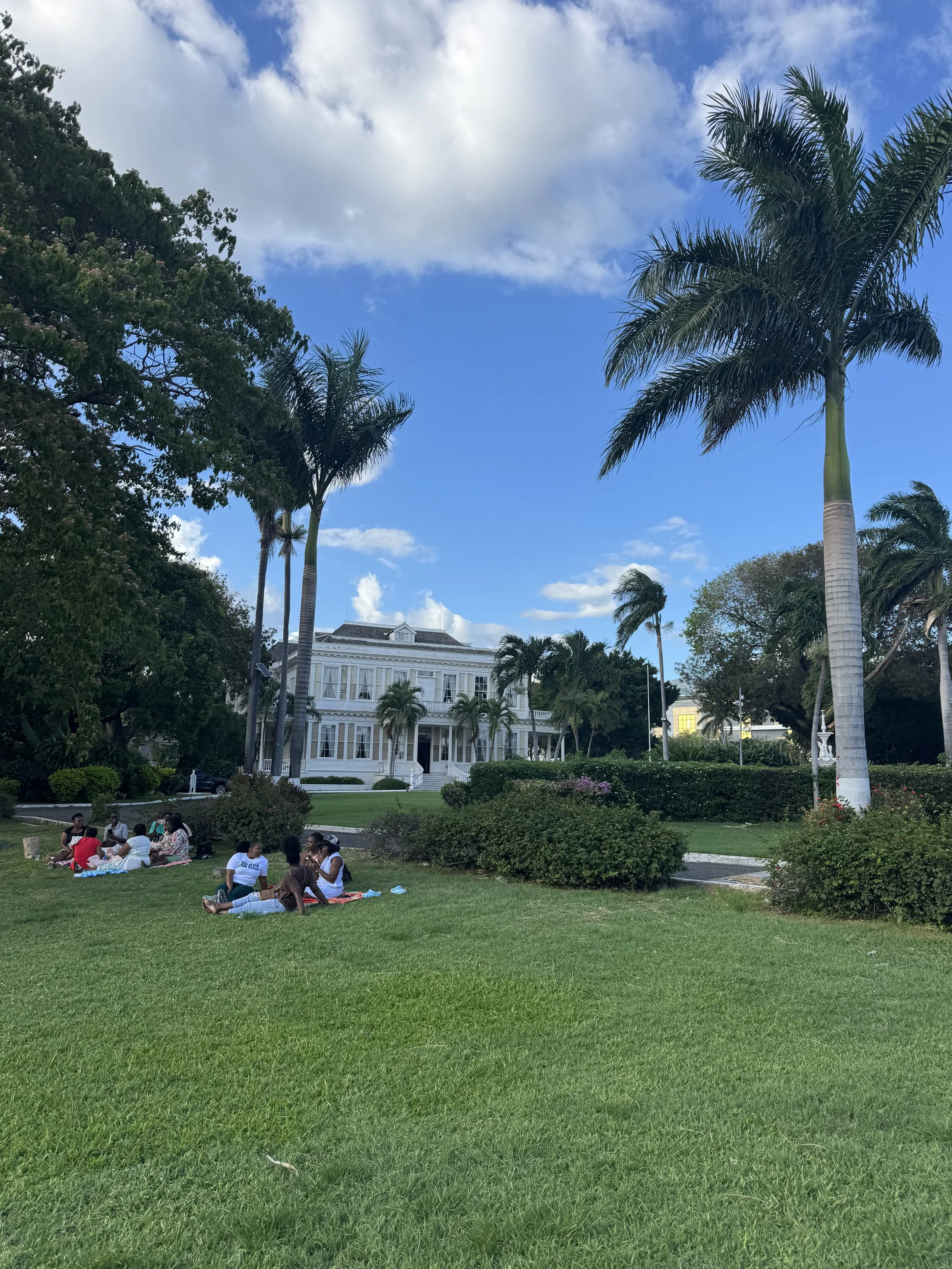
After that, we head to Devon House, the estate of one of the first black millionaires. We don’t visit the lovely house itself, but make do with ice cream from ‘I Scream’ and eat it alongside plenty of locals – after all, it’s Saturday in the park surrounding the house.
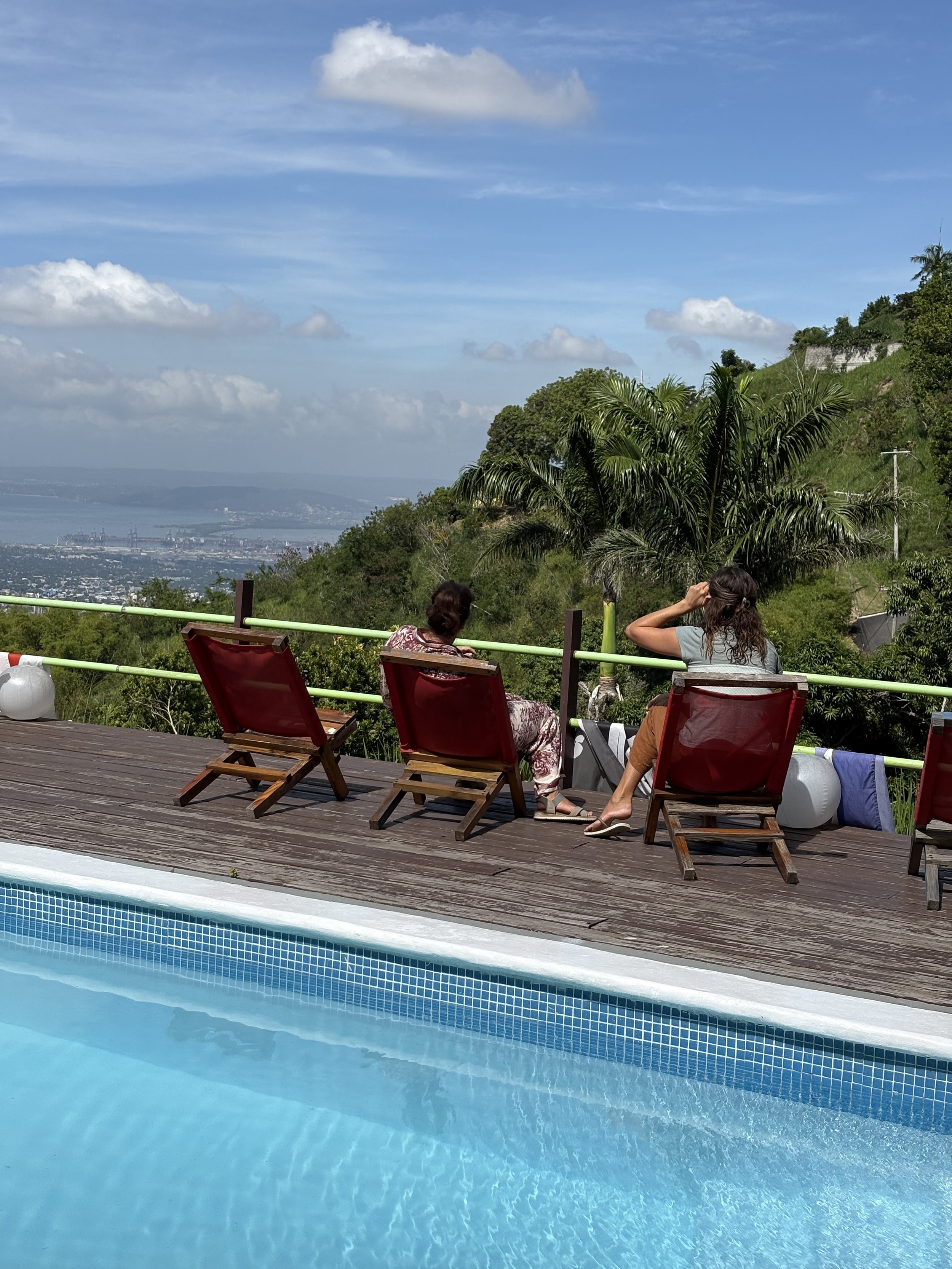
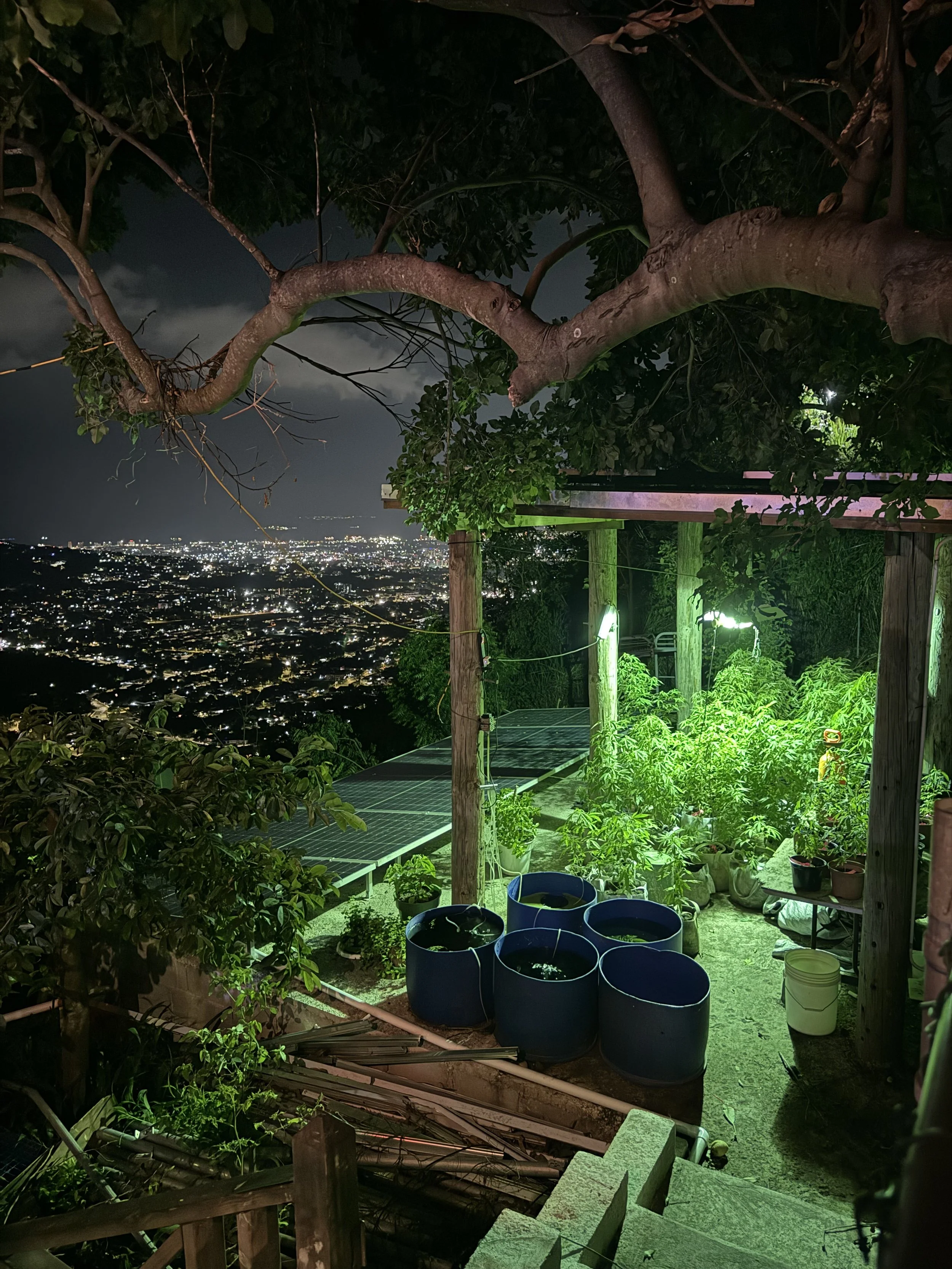
We’re staying at Jack’s Hill on the outskirts of town. It’s nice enough, with a magnificent view of the city, though the walk to dinner is a bit of a trek and the owner is quite a character. He certainly isn’t blessed with natural hospitality. He does, however, enjoy telling long stories, some of them more exciting than others.
Pirates, earthquakes and a colonial past
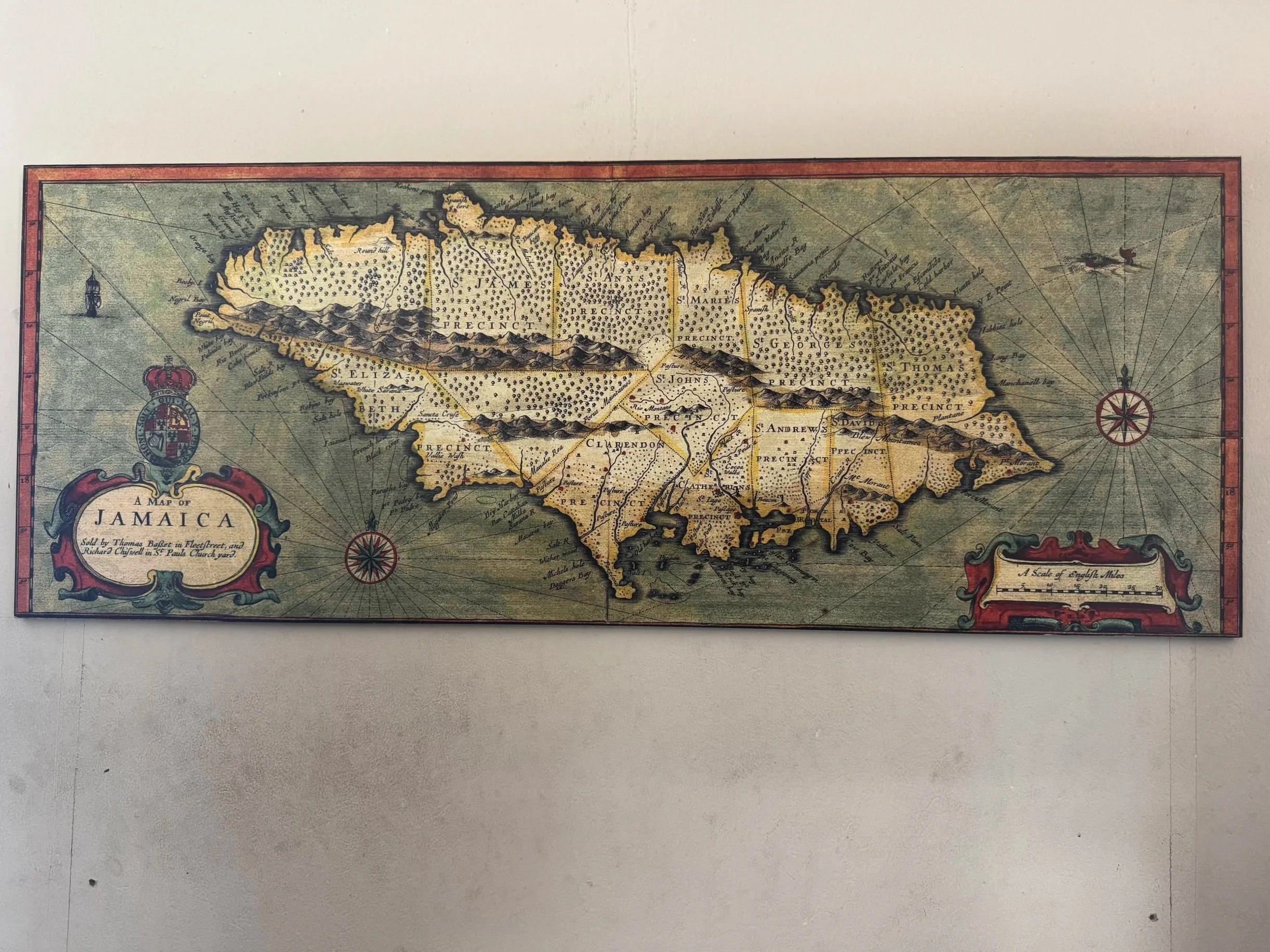
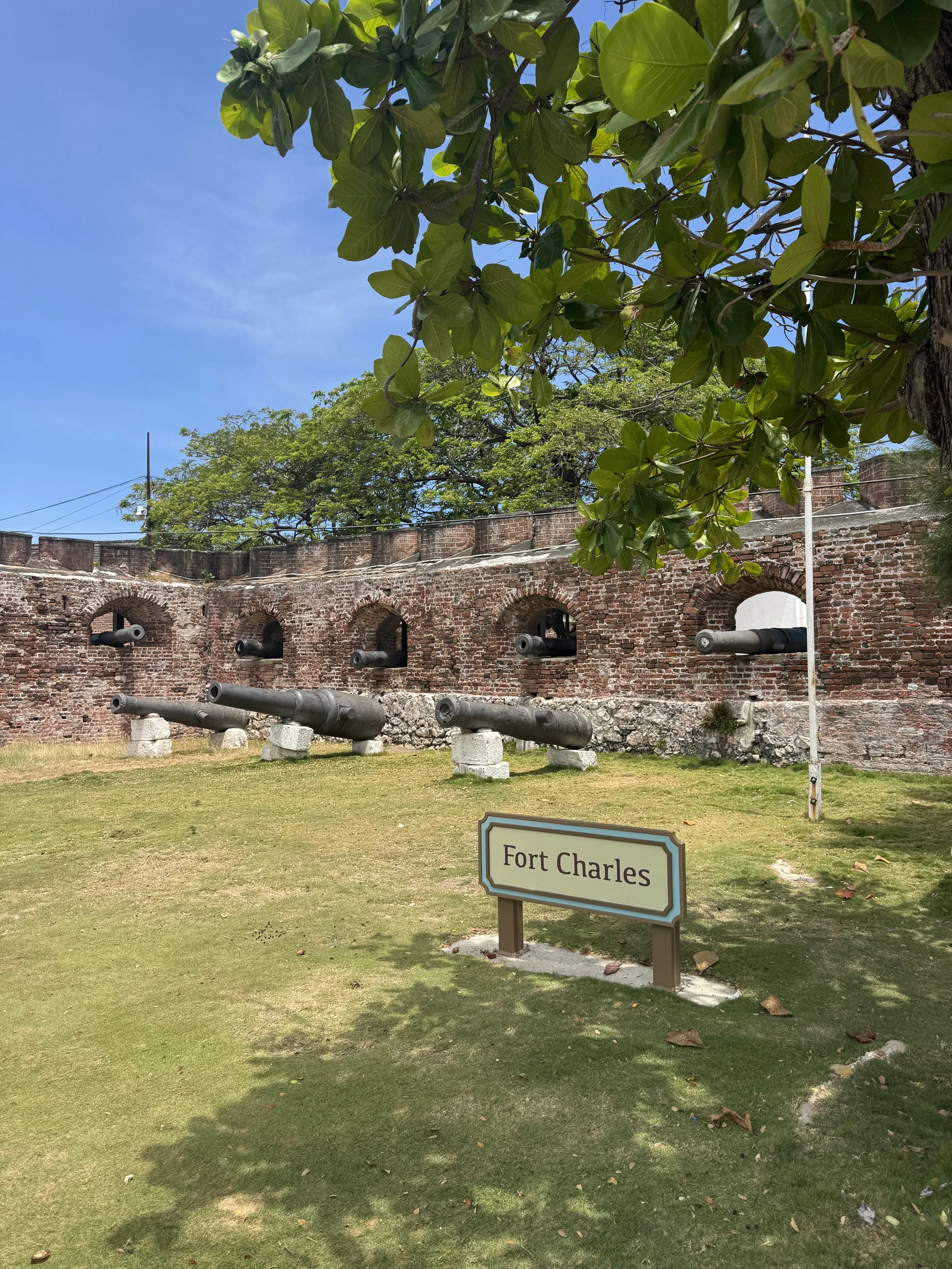
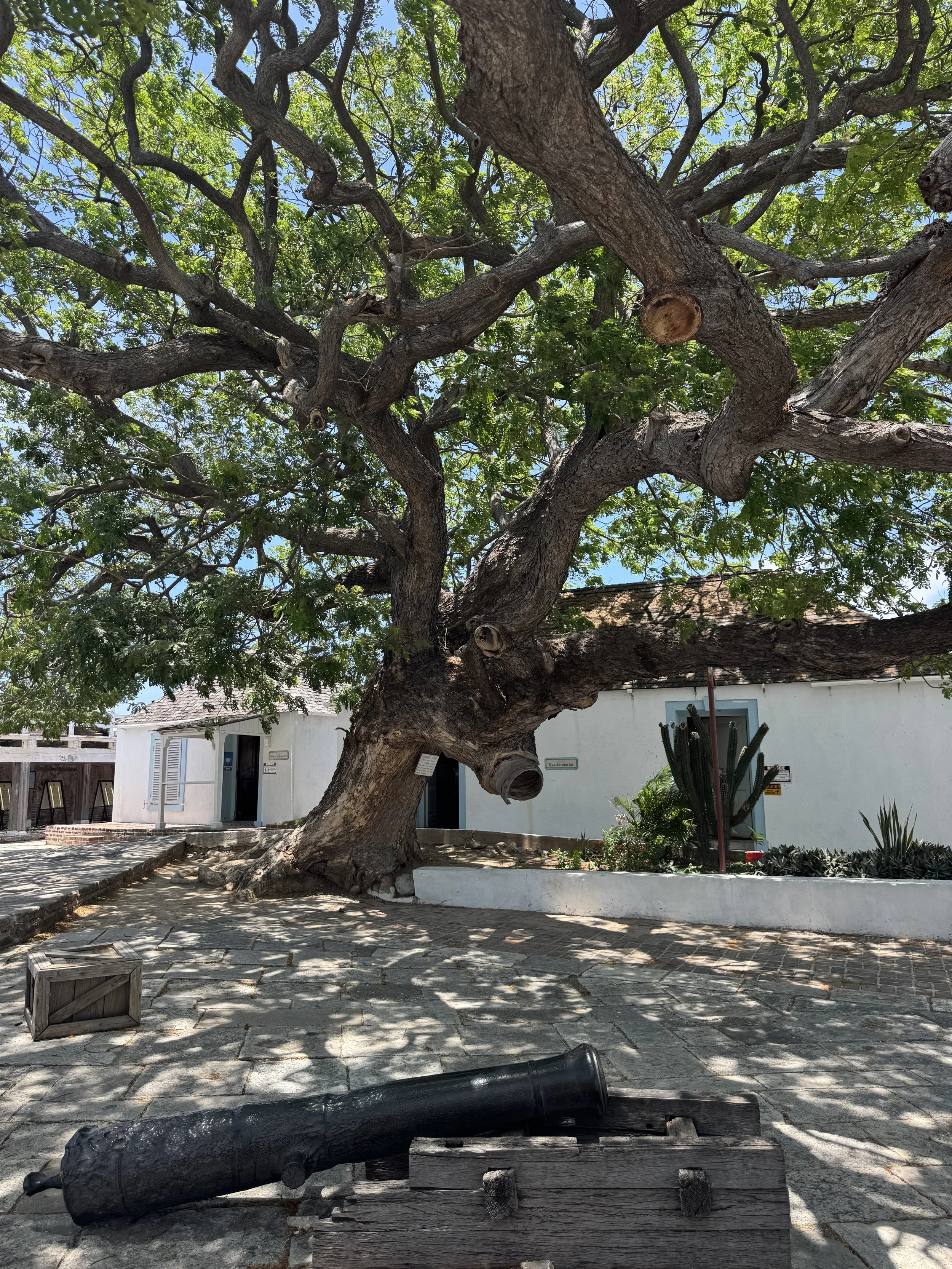
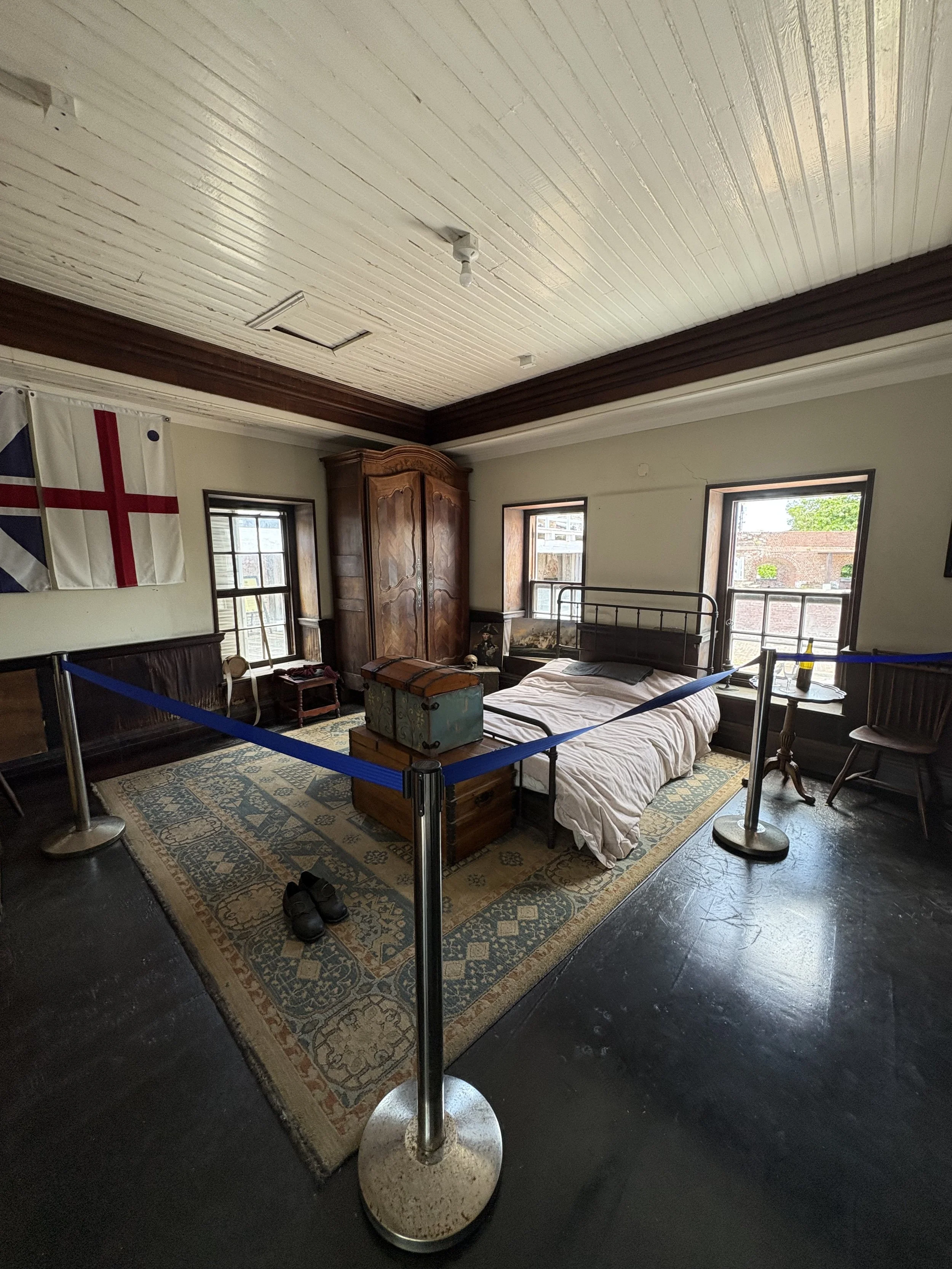
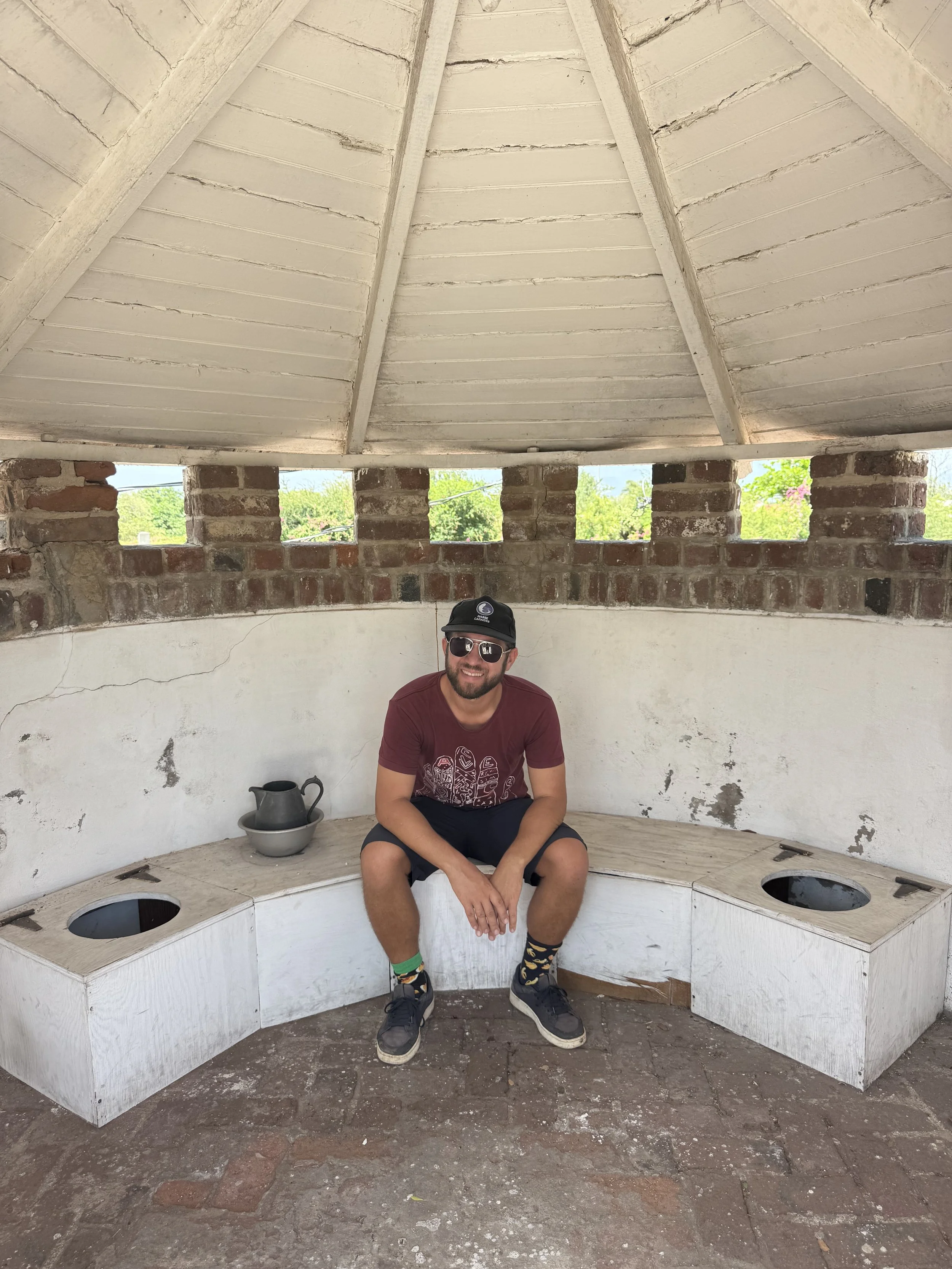
The next day, we head to Port Royal. Jamaica has a very long colonial history. After all, it is the third-largest Caribbean island, which was settled as early as 1494. Port Royal is probably a familiar name to anyone who has even the slightest interest in pirates. Before Kingston was founded – now one of the world’s largest natural harbours – Port Royal was established on an offshore island that was, at the time, still independent. A legendary base for English buccaneers. When piracy was abolished, Fort Charles, one of the last remaining ruins open to visitors, became the final destination for several famous pirates. It was here that Calico Jack, or Jack Rackham – the inspiration for various stories – and Anne Bonny were imprisoned, and the former was also executed.
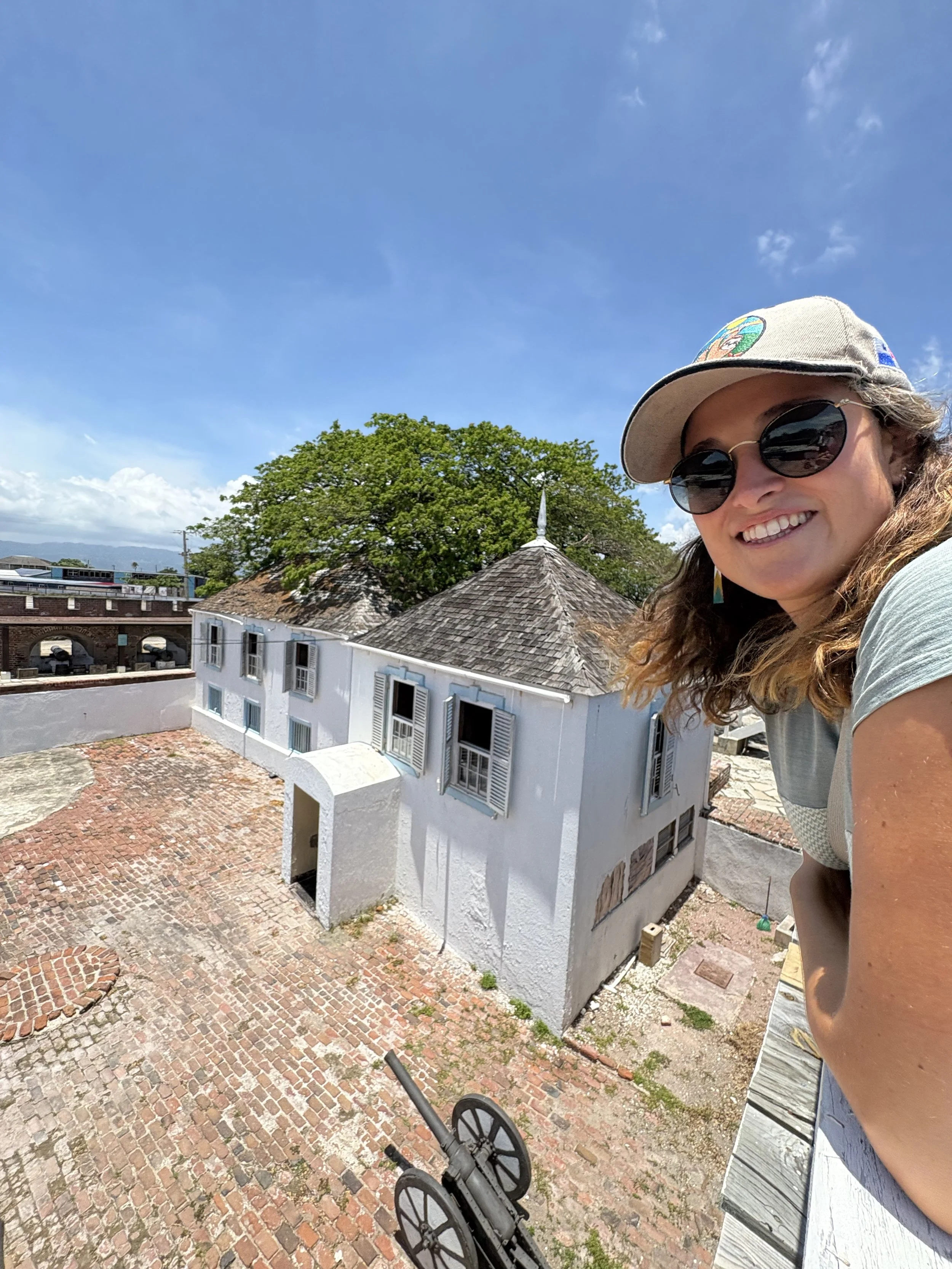
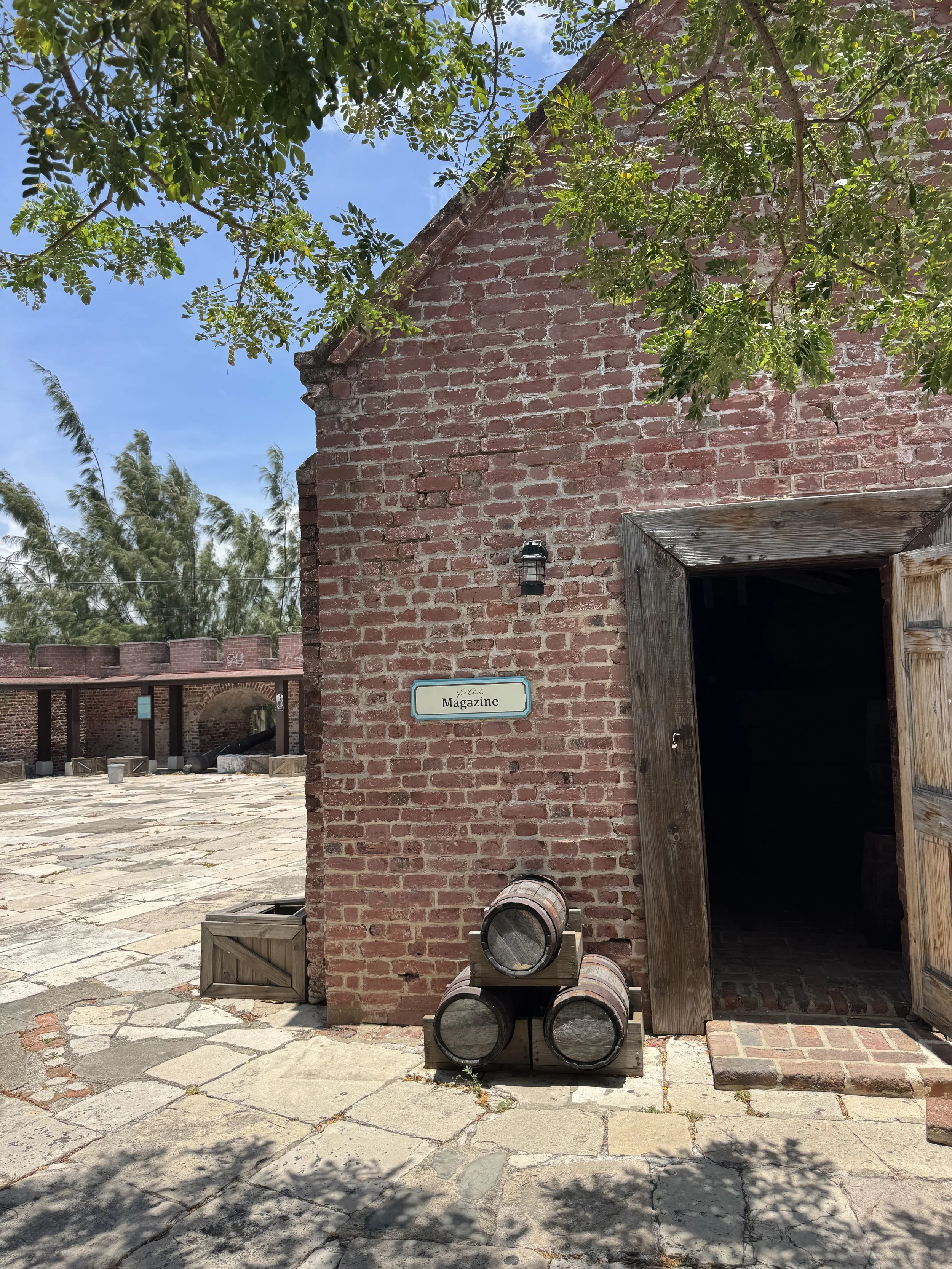
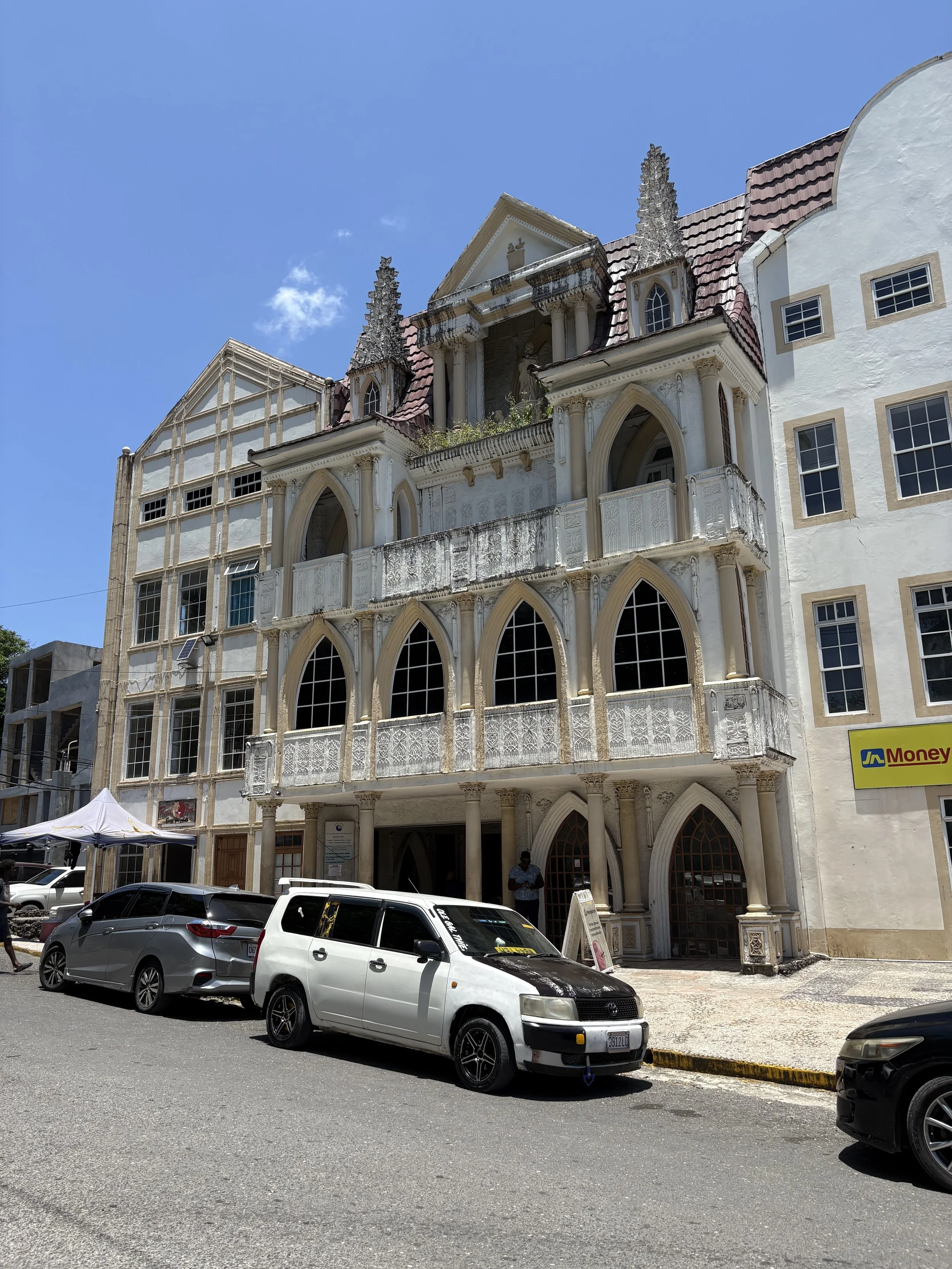
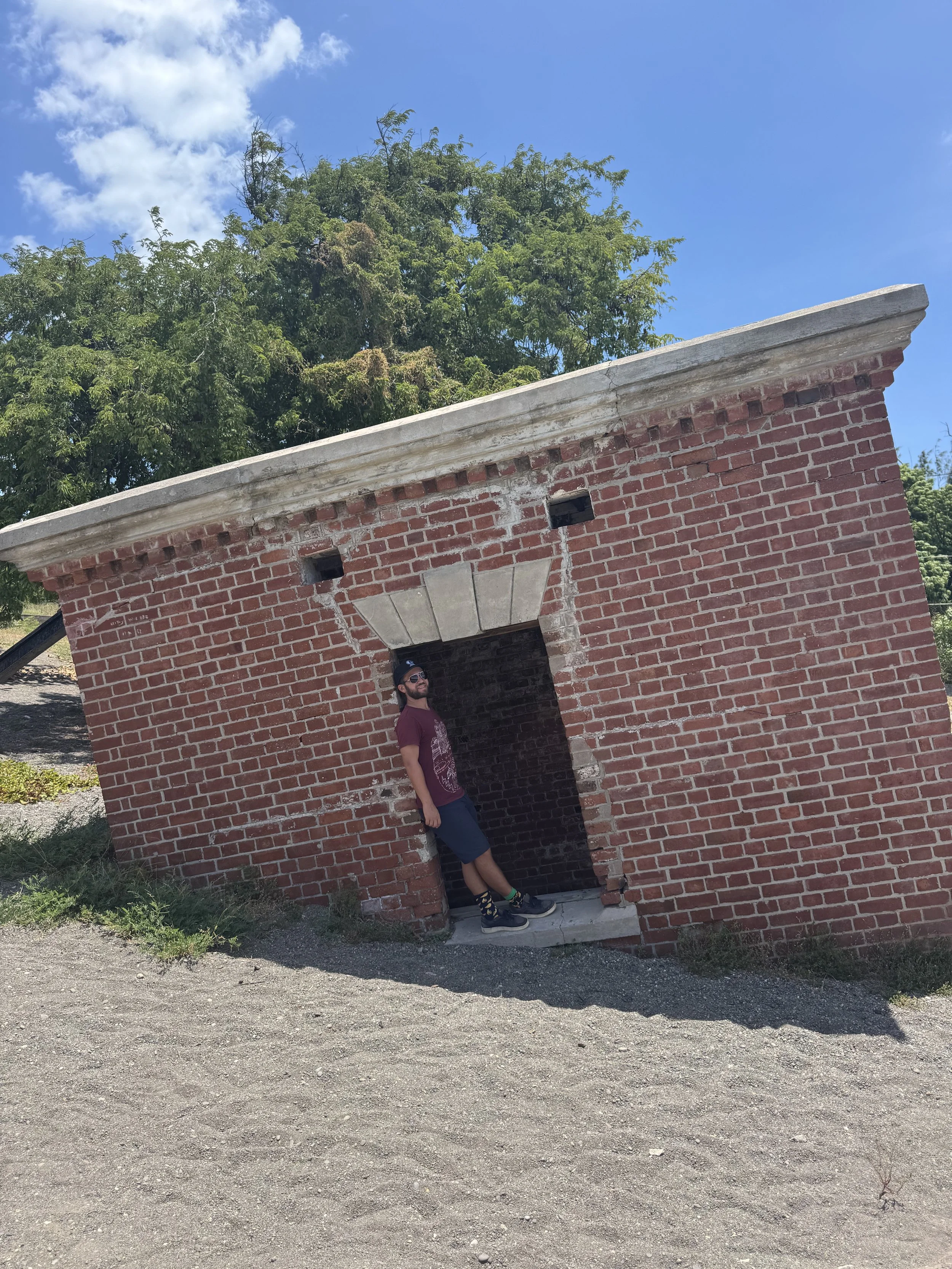
Unfortunately, over the years the town fell victim to numerous hurricanes and was almost completely destroyed by a severe earthquake in 1692. As a result of the tremors, large parts of Port Royal sank into the sea and were swept away by a tsunami. The effects can still be seen today in the leaning Giddy House. Over time, the island or sandbank that originally lay offshore became connected to the mainland by sediment deposits, thus forming the peninsula we see today. As a result, Kingston grew in importance. Unfortunately, most of Kingston’s colonial buildings were destroyed either by natural causes or by the building boom, and there is virtually no old town left.
Reggae party with a view
Every Sunday, the Dub Club hosts a reggae party. As soon as we heard about it, we knew straight away: we had to extend our road trip by one night to experience this spectacle.
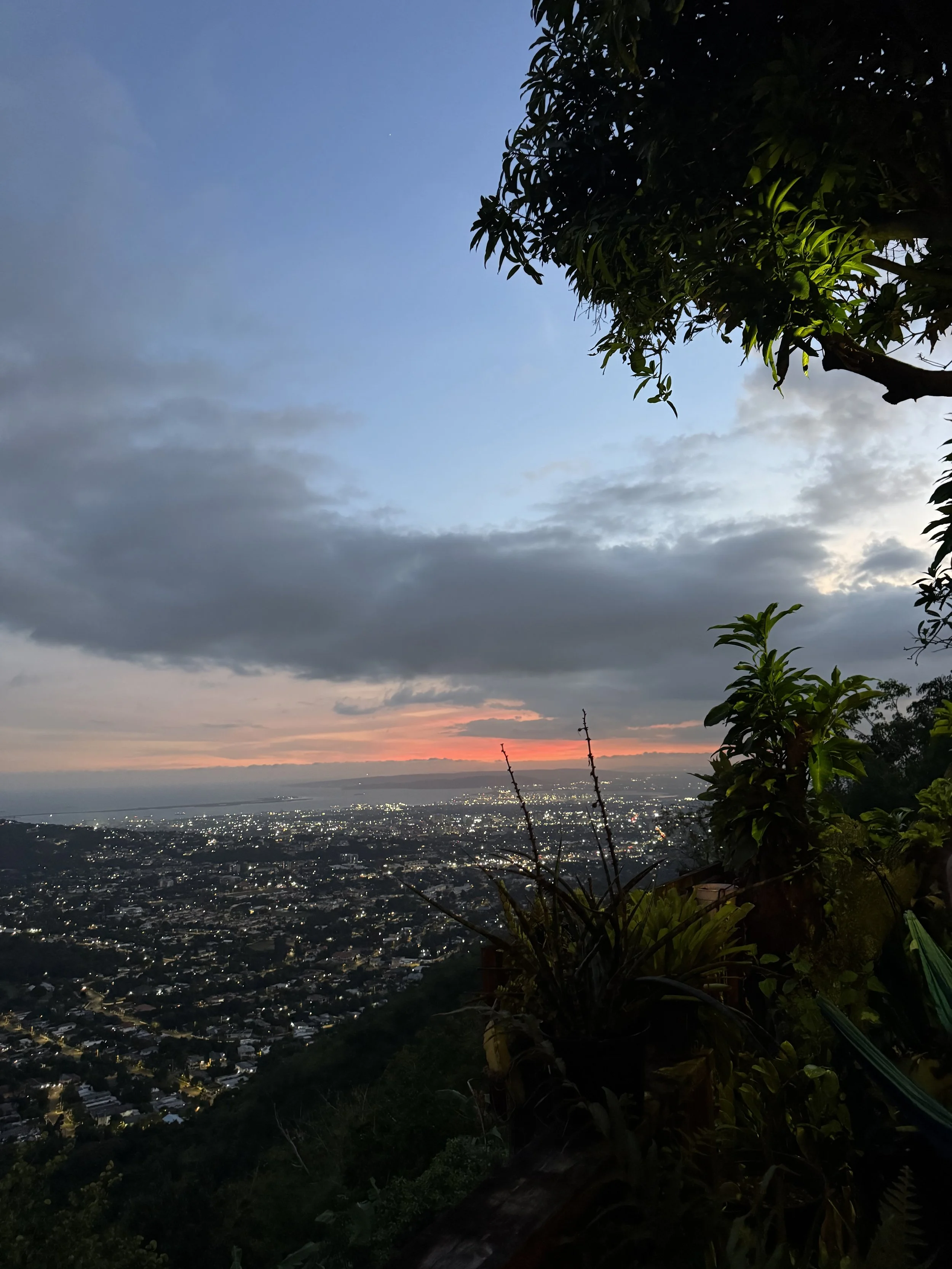
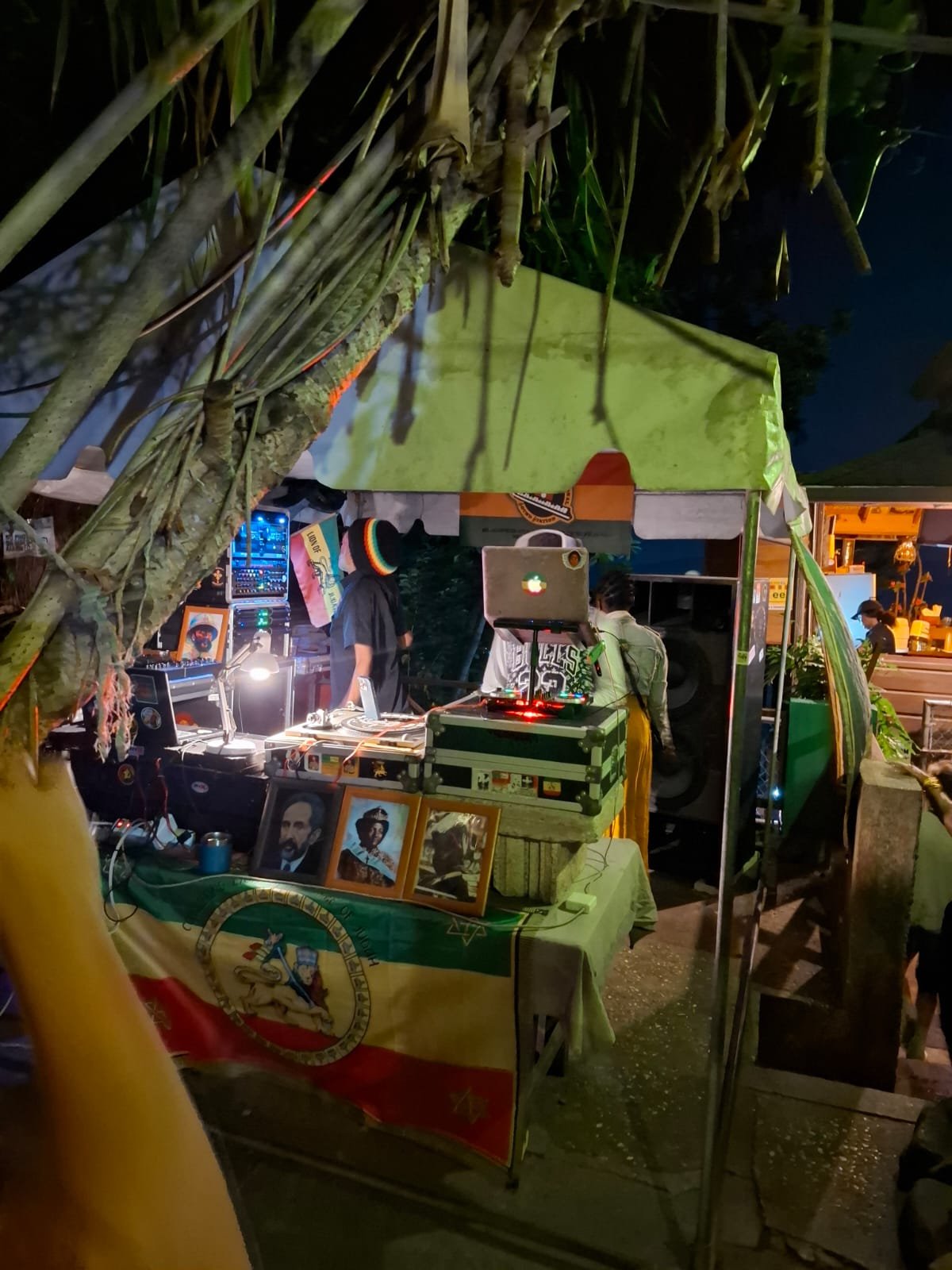
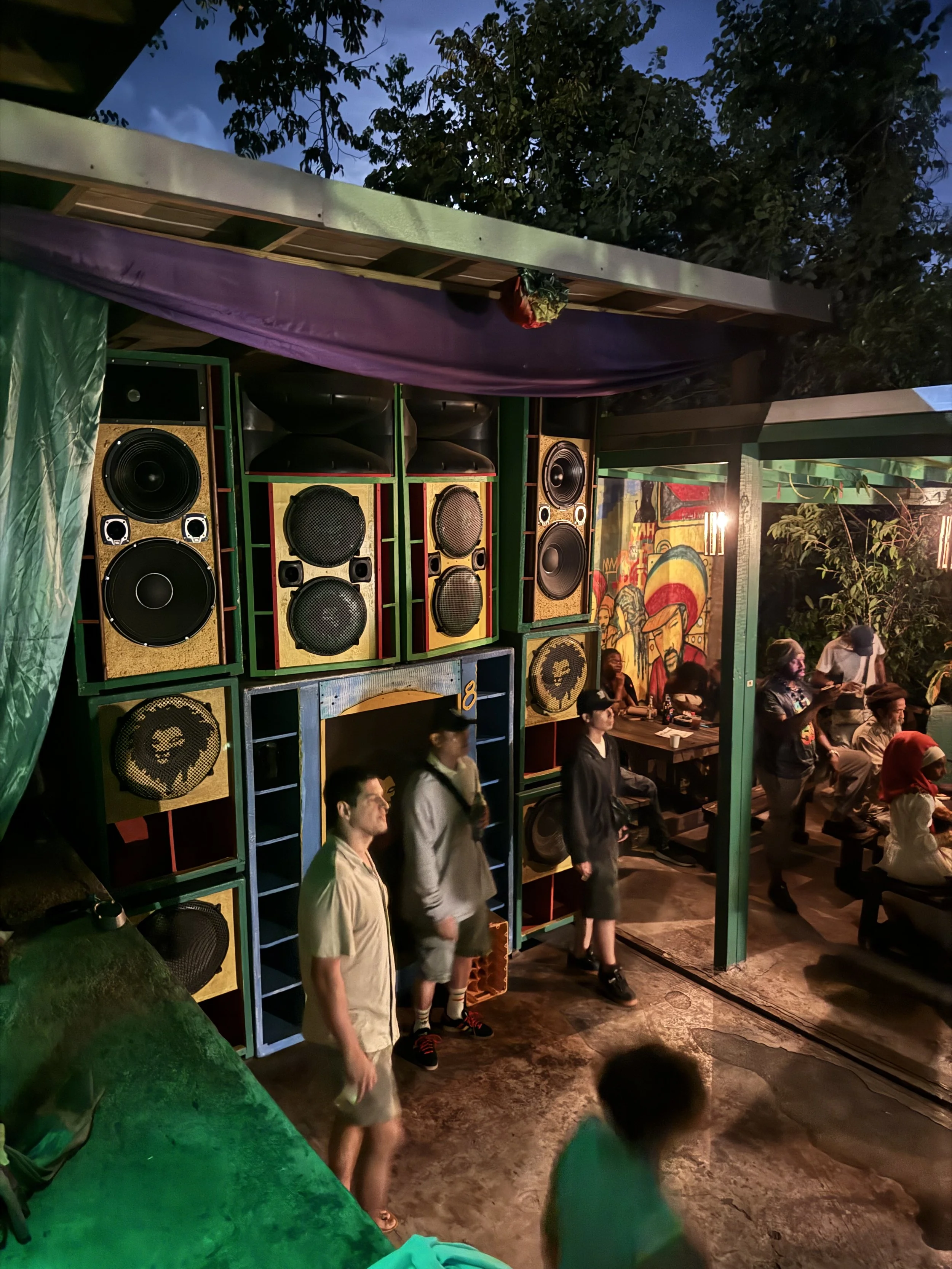
The club is situated on the terrace of a private house high above Kingston. The owner used to organise the parties in various clubs around the city before he simply moved them to his own home. The view over the city at night is definitely impressive. There’s a bar, food and, of course, ‘herb’ for sale. At the start, it’s mainly tourists milling about on the terrace, but as the night wears on, more and more locals join in. One reggae song after another blares through the huge speakers, punctuated by electronic sounds like a “Piu Piu Piu”, all in keeping with the motto “the only good system is a sound system”. It takes a while before we realise that there’s actually a separate mixing desk responsible for this and that the operator keeps pressing the relevant buttons seemingly at random. For us, it doesn’t fit in with the laid-back reggae vibe at all, but that’s exactly why we find it quite funny.
Farewell to Jamaica
The next day, we’re heading back to Port Antonio. The road trip with Iris and Jeff was a complete success. We still have a day to get everything ready for the next leg of our journey before we set off for the Bahamas.
After almost two weeks, we say goodbye with a heavy heart – to our new friends, but also to Jamaica itself. We would have loved to stay longer to discover even more of this beautiful, vibrant and hospitable country.
