Slow passage from Panama to Jamaica
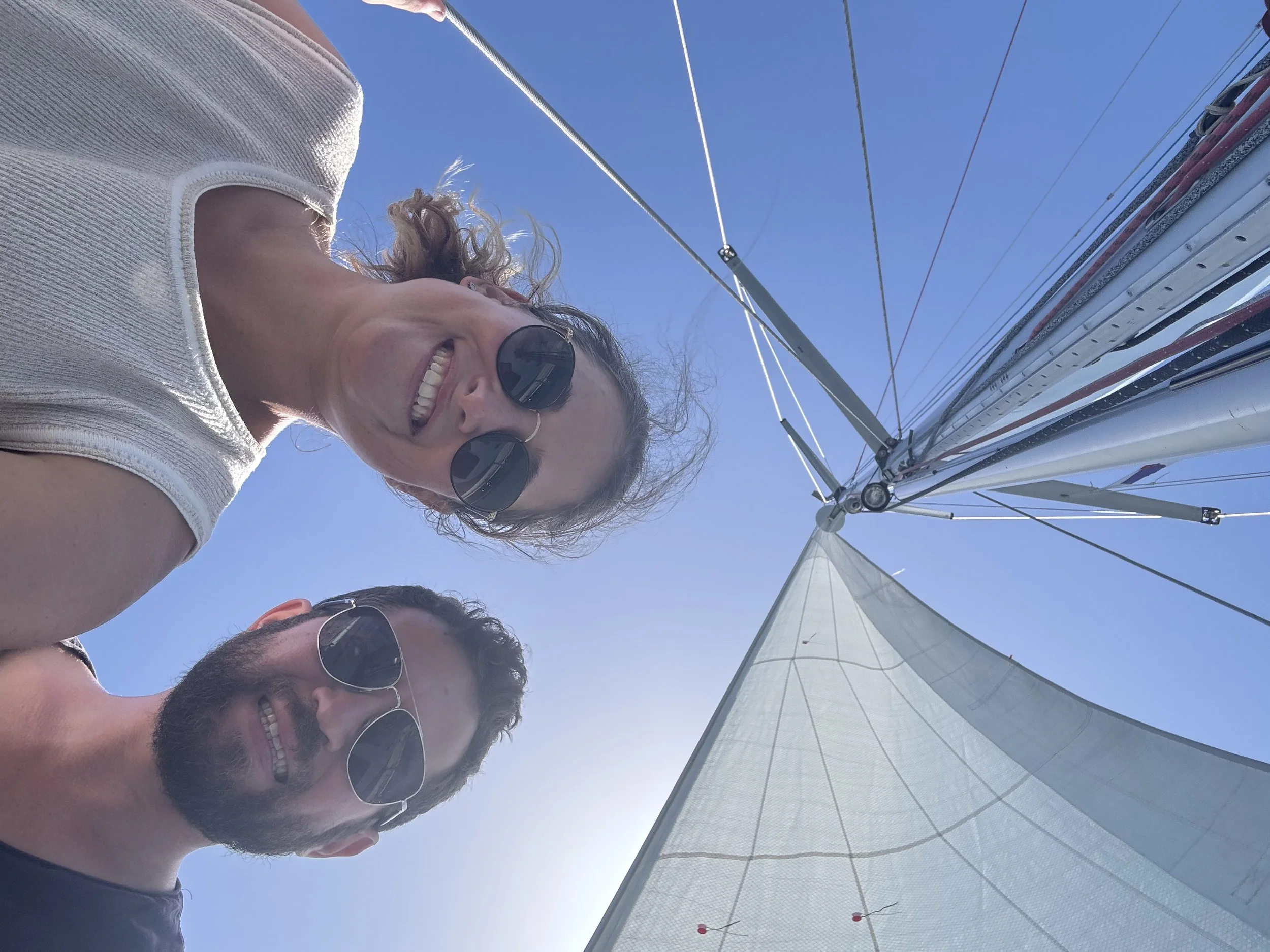
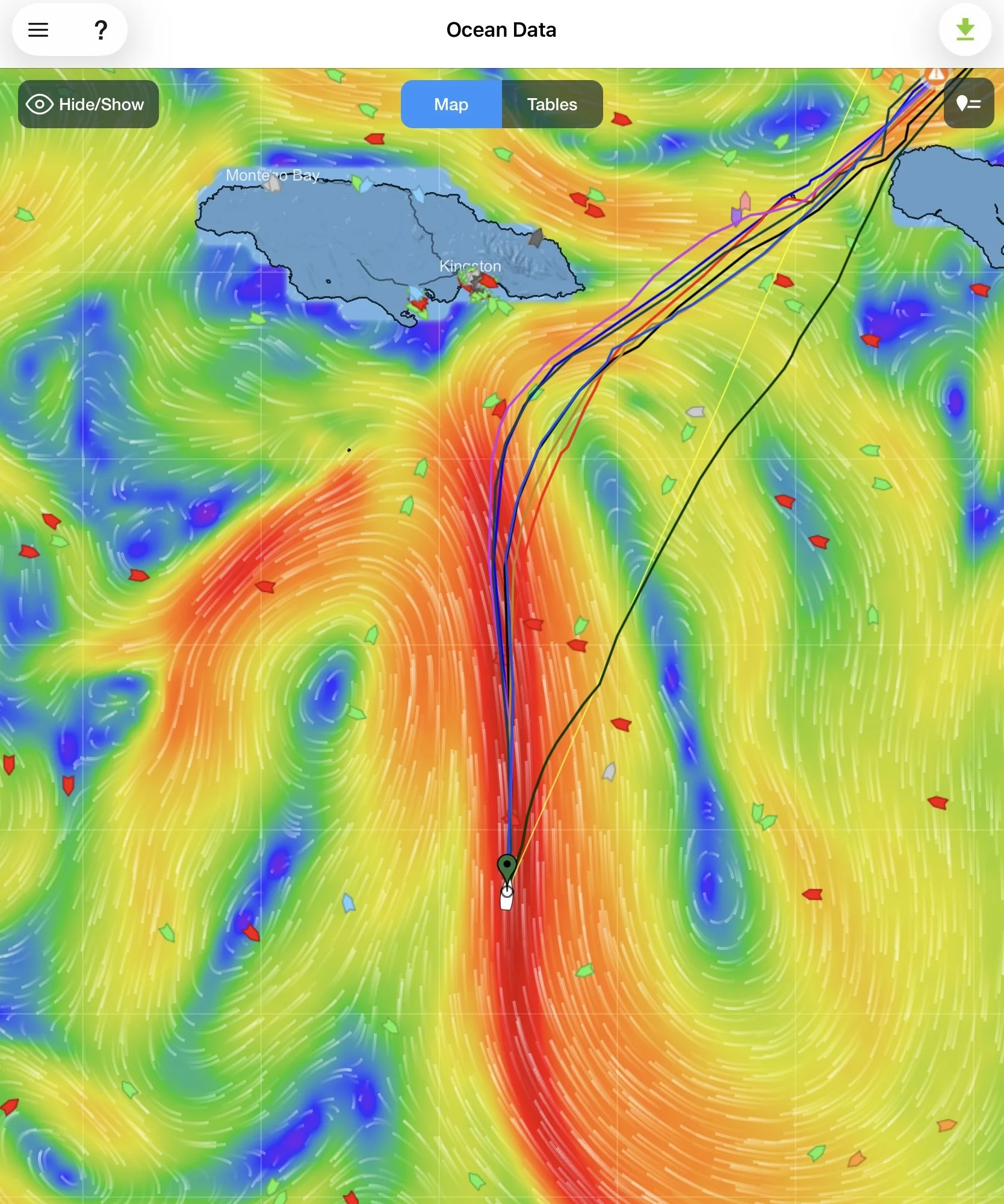
Instead of the originally planned Pacific crossing, we are heading back across the Atlantic to Europe. Our route will take us via the Bahamas to Bermuda and then on to the Azores. Unlike our other long voyages from Cape Verde to Panama, this is the first time we will be sailing in the direction from which the trade winds blow. The best time is the transition period between the hurricane season and the trade wind season. On the northern Atlantic side, this is November (before the trade wind season) or April to June (from the end of the trade wind season to the start of the hurricane season). At these times, the constant easterly winds are weaker or, in some cases, drop out completely. As a sailing boat can only sail at about 45–50 degrees to the true wind, depending on the wind and the boat (if the wind is blowing directly onto the bow of the boat, you have to turn 45–50 degrees to the left or right so that the sails catch enough wind to generate propulsion), you have to tack to get into the wind’s direction, in other words, follow a zigzag course. In this case, we made the most of the fact that the wind veers northwards between Panama and Colombia and becomes more easterly over Colombia. This allowed us to make good headway eastwards with the north wind, before turning north off the coast of Colombia to get into the easterly wind zone as much as possible and make headway northwards. There are still a few zigzags in the route, though, as the wind doesn’t blow quite so consistently from one direction by the end of the day.
For our first leg, we had planned to sail directly from Panama to the Bahamas in 8–10 days. However, we were a bit slower than expected and consequently missed the favourable weather in the strait between Cuba and Haiti. We don’t want to sail through this narrow passage with a headwind, and that is precisely what had been forecast at the time. That’s why we decided to make a stopover in Jamaica.
The wind and waves gradually die down as we make our way across, so we have a very calm and pleasant crossing – a perfect start for us, given that our last long crossing (from Curaçao to Panama) was almost a year ago.
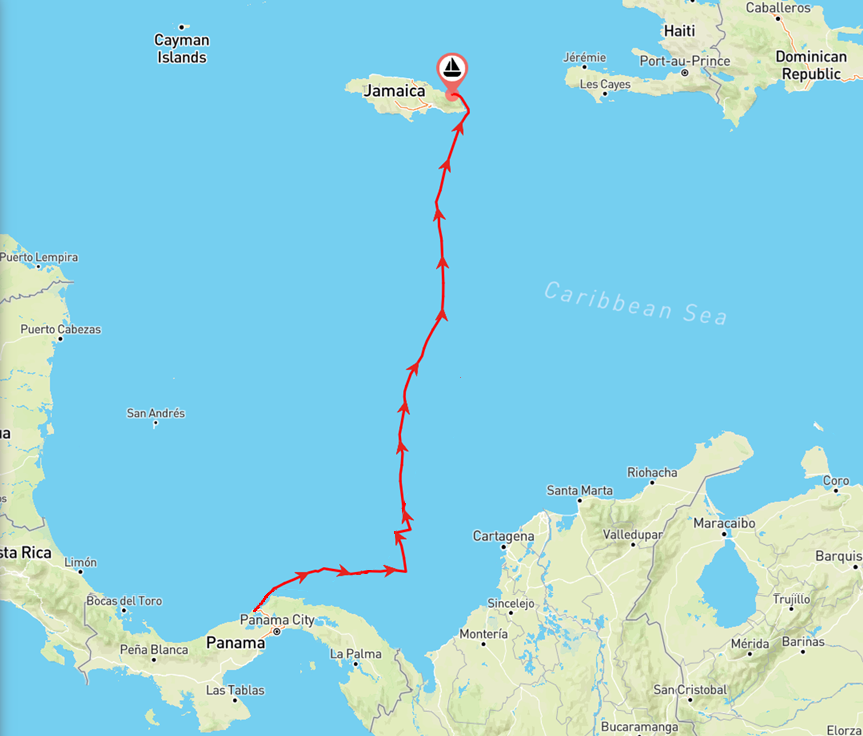
Our crossing from Panama to Jamaica in figures:
Distance: 714 nm, of which under sail: 477 nm
Engine hours: 52 hours 36 minutes
Time: 6 days 23 hours 18 minutes
Average speed: 4.3 knots
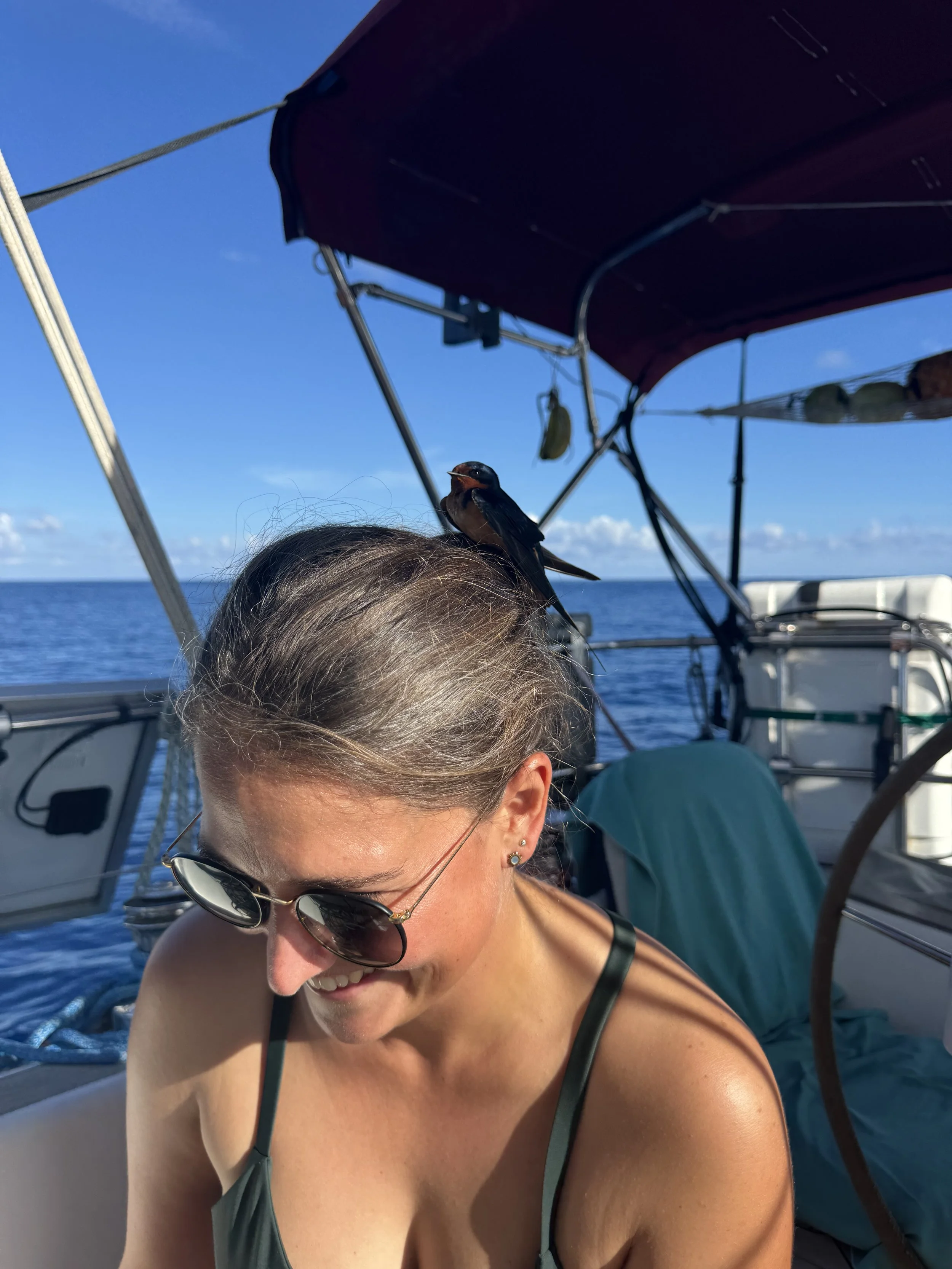
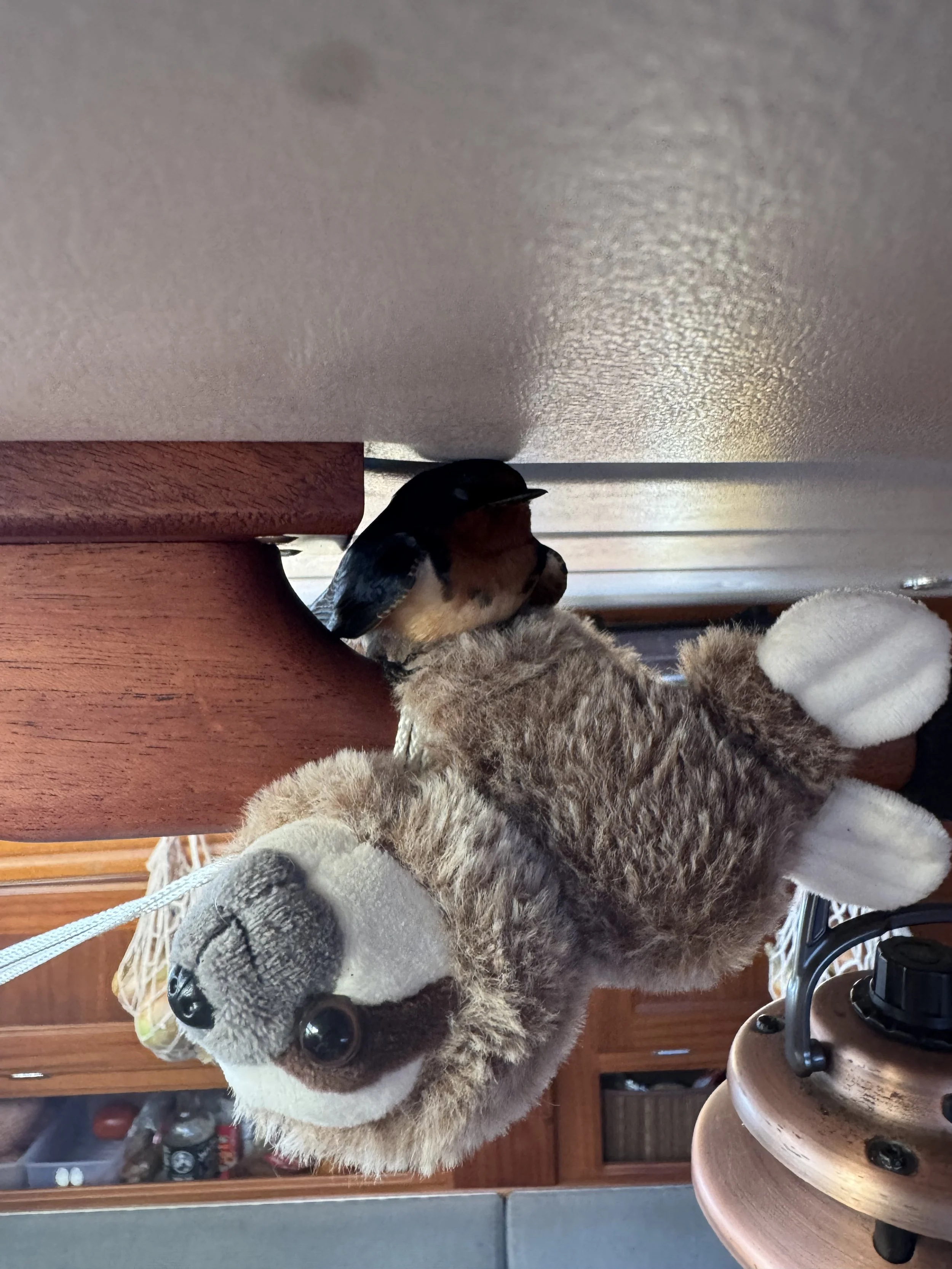
Wildlife: a little barn swallow hitched a ride
Panama - Jamaica Day1
Mon Apr 20 2026 20:07:00 GMT-0500 (Panama time)
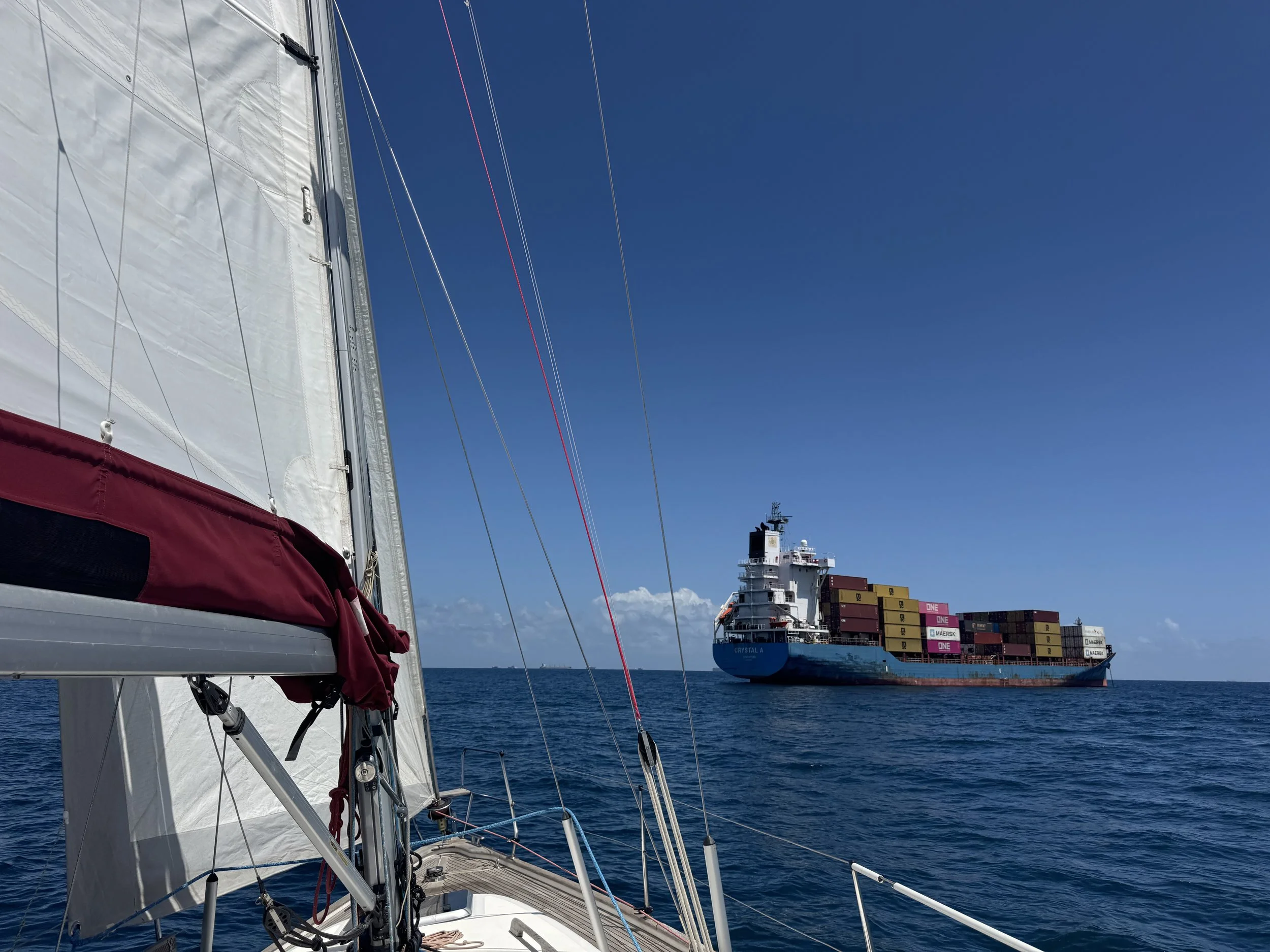
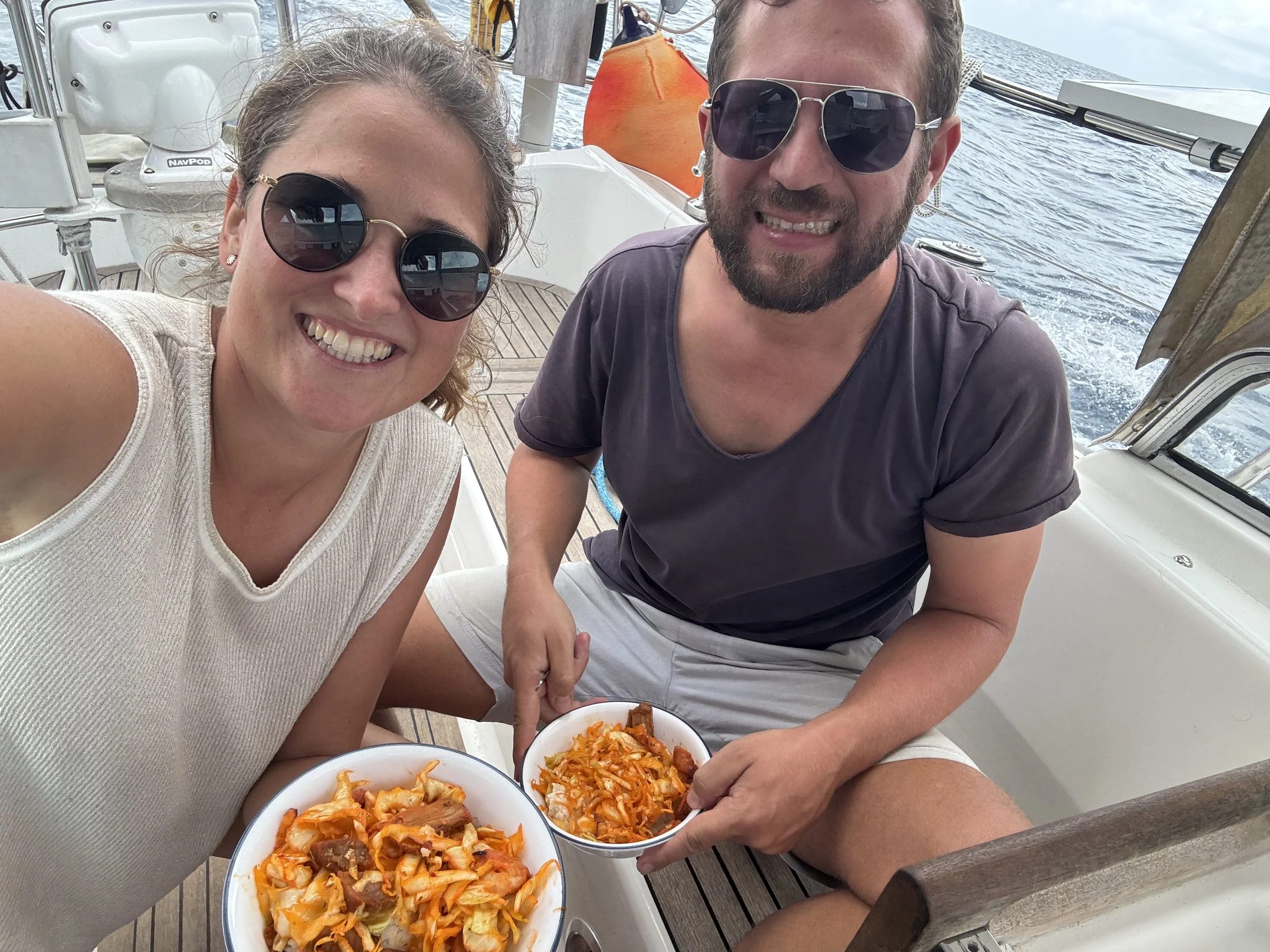
Having announced for two days running that we’d be setting off the following day, our jetty neighbours are starting to lose faith in us. But today is the day, and so we cast off at 9.15 am. We have around 870 nautical miles ahead of us to the Bahamas. Immediately after passing the breakwater, we hoist the sails and tack our way through the anchored tankers and container ships. There is little wind and wave, but they are coming from exactly the direction we want to go. All in all, a pretty good start, even if we have to tack a lot. In the meantime, the wind picks up a bit and we reef the mainsail. For lunch we cook Caribbean rice and meat – an original creation where we use the meat from the previous day’s barbecue and half a cabbage, seasoned with plenty of Caribbean spices. Shortly afterwards, the wind drops again before dying down completely. So it’s time to start the engine. Just in time for sunset, however, the wind picks up again and we glide into the night at a leisurely 10 knots.
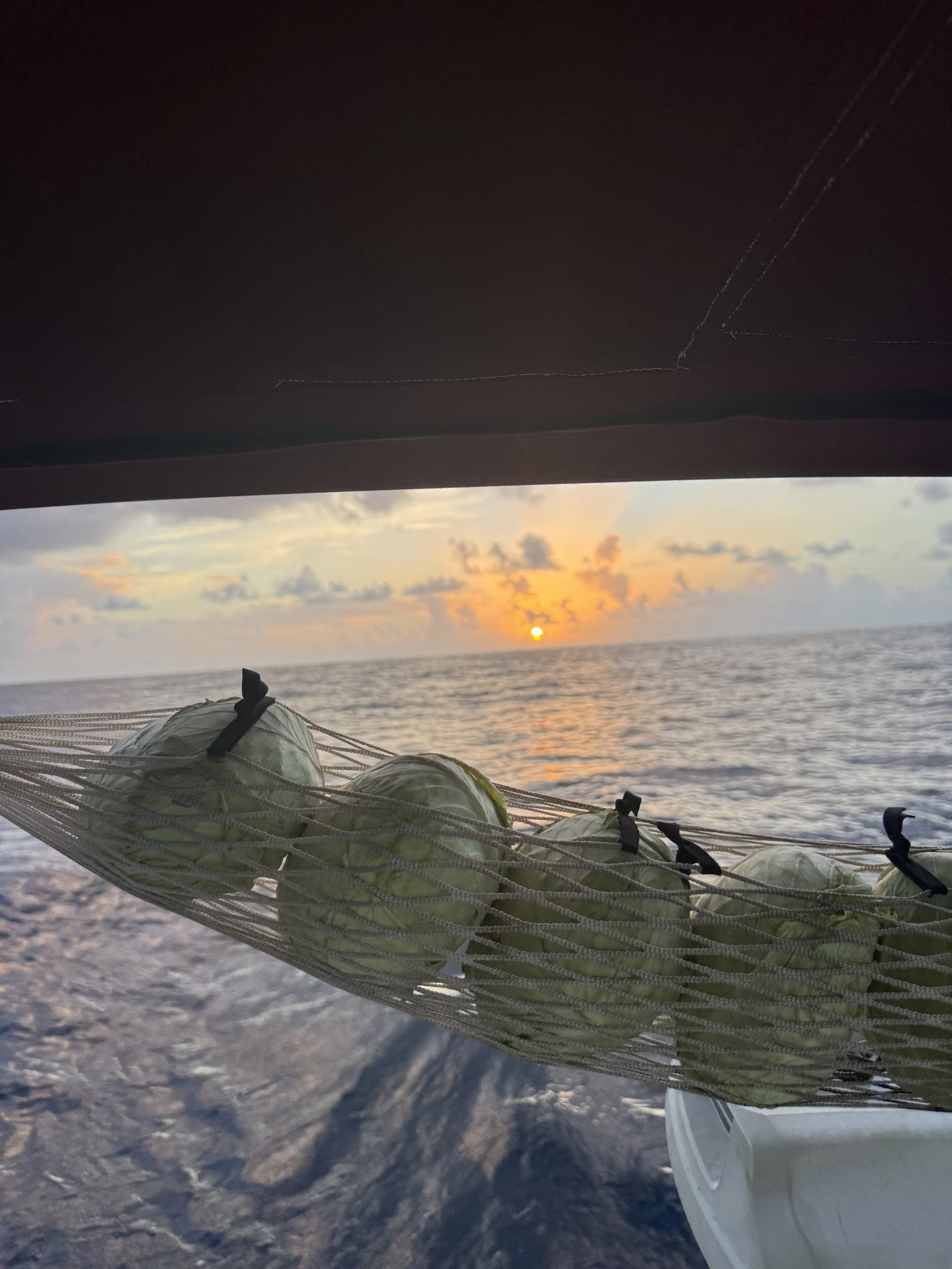
Speaking of cabbage, we have a total of 9.5 heads of cabbage on board and have been asked by several sailors whether they keep for that long and what we cook with them. Our cabbage has actually lasted forever, even without refrigeration. We hope we’ll still be able to make it through the Bahamas with our cabbage, as fruit and vegetables are extremely expensive there (as is pretty much everything).
Distance to the Bahamas: 850 nm
Meal: Caribbean rice and meat
Cabbage head count: 9/9.5
Panama - Jamaica Day 2
Tue Apr 21 2026 19:12:00 GMT-0500 (Panama time)
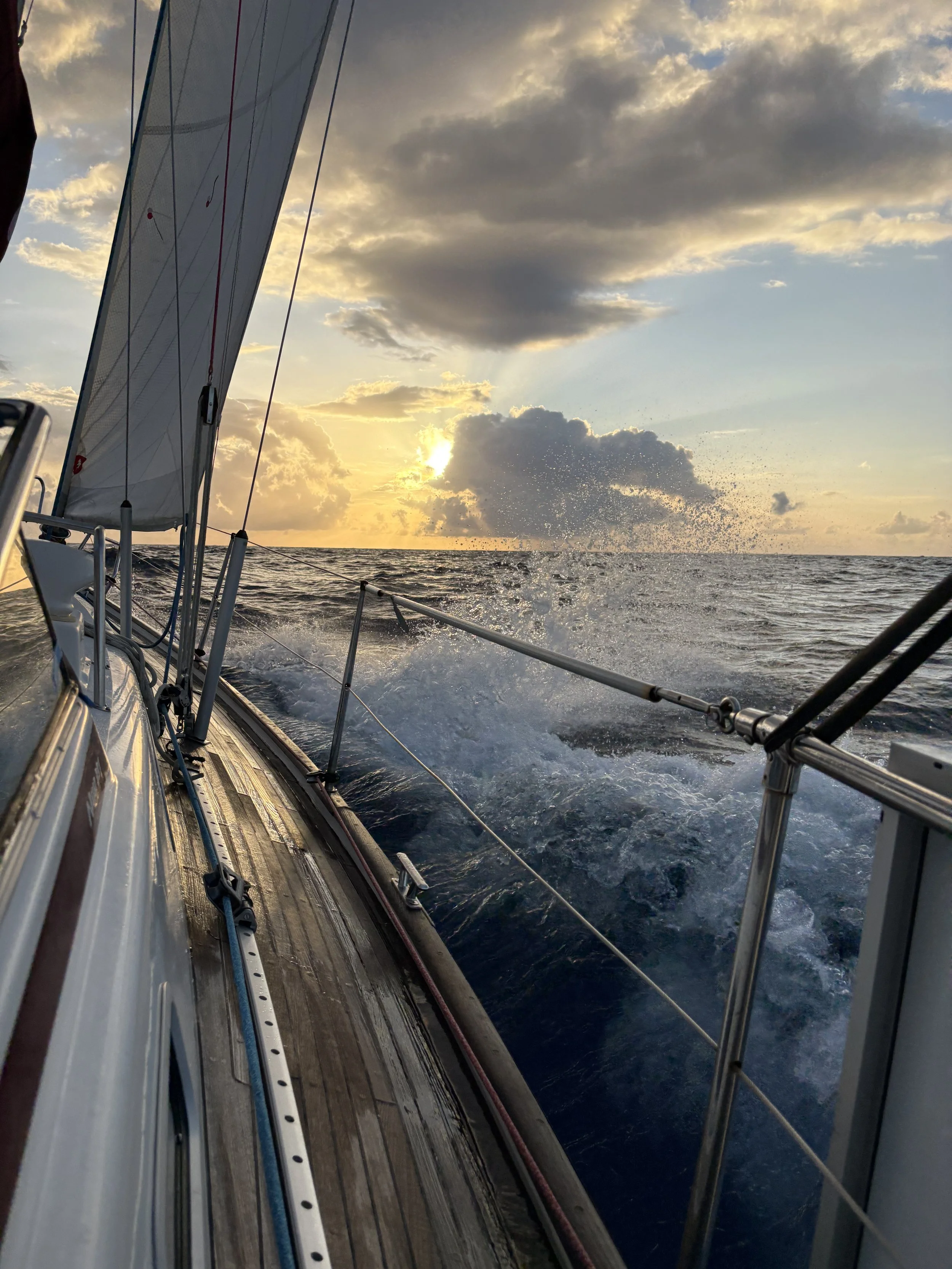
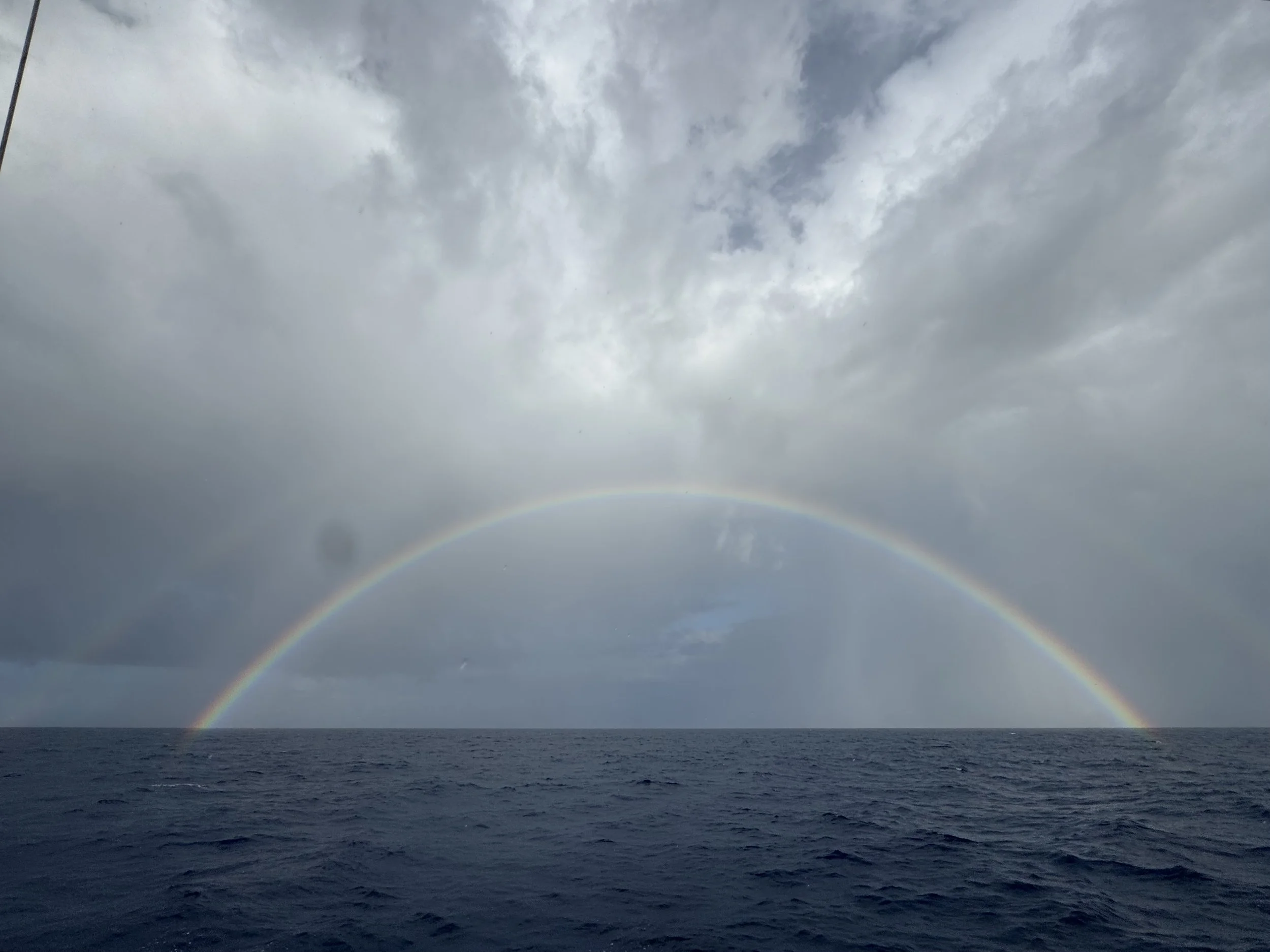
The first night passes relatively calmly. With a pleasant breeze, we make our way at a moderate speed towards the NNE. In the early morning, a few squalls (localised rain showers) pass through; one of them catches us, bringing heavy rain and a brief gust of wind. Afterwards, we are rewarded with a double rainbow. Ines buries the first flying fish that landed on deck during the night.
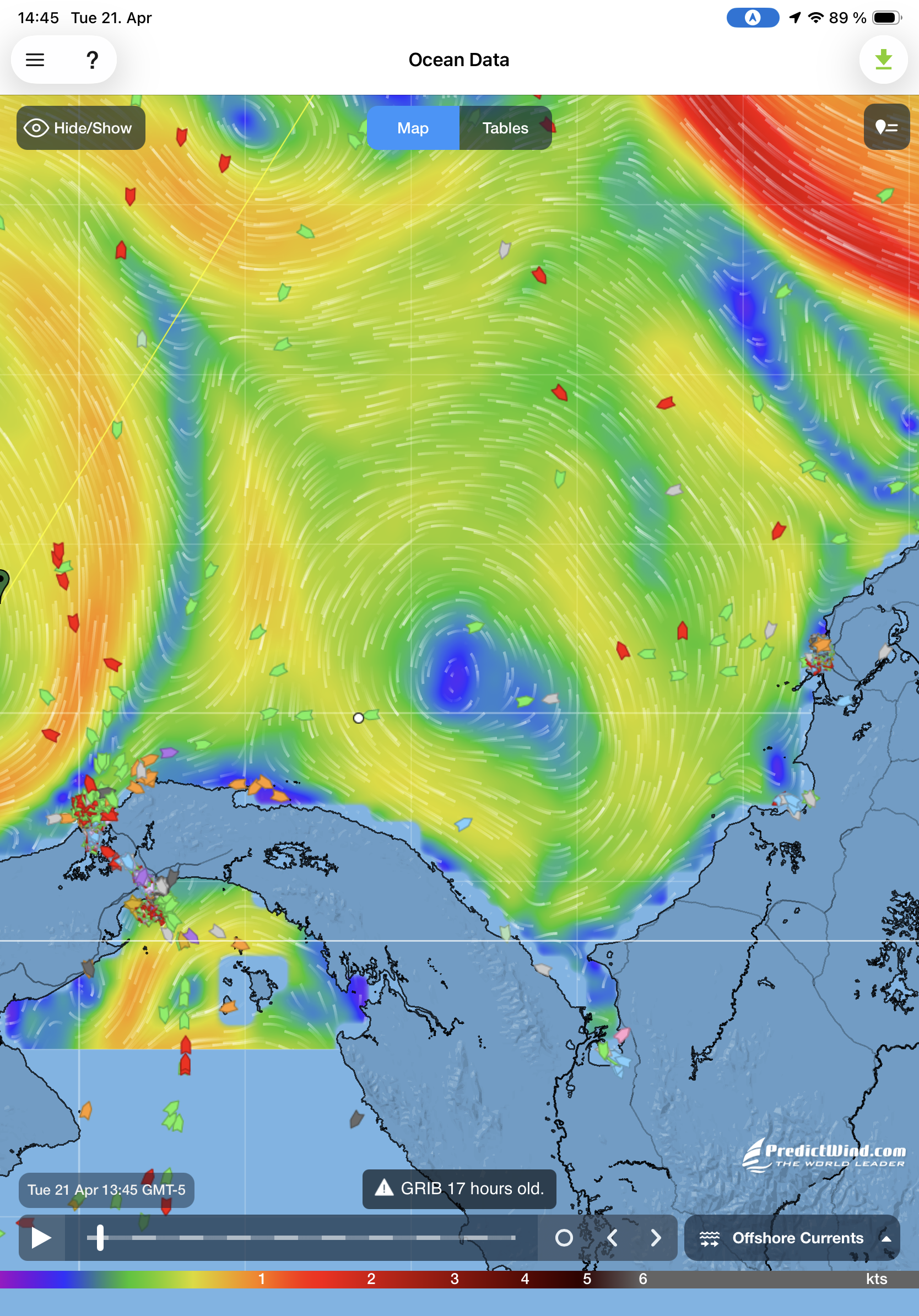
As the day progresses, the wind drops and the current pushes us further south than we intended. Our new tactic is to sail around the current’s loop far enough so that we can catch the northward current on the other side again.
Despite the calm sea, it takes us a while to get back into sailing mode. The conditions are, however, ideal for it. The boat practically sails itself, and we spend most of the time sleeping and practising staring into space. Peter is more successful at this and spots numerous fish jumping and flying. Ines is sceptical as to whether this really happened, until she too can observe the spectacle in the late afternoon.
For dinner, we make fried egg rice with the leftovers from the day before. Shortly before sunset, the wind picks up again and we’re finally heading east at a decent speed.
Distance to the Bahamas: 760 nm
Daily distance: 99 nm
Meal: Salad with mango and peanuts, fried egg rice
Cabbage-head counter: 9/9.5
Panama - Jamaica Day 3
Wed Apr 22 2026 17:57:00 GMT-0500 (Panama time)
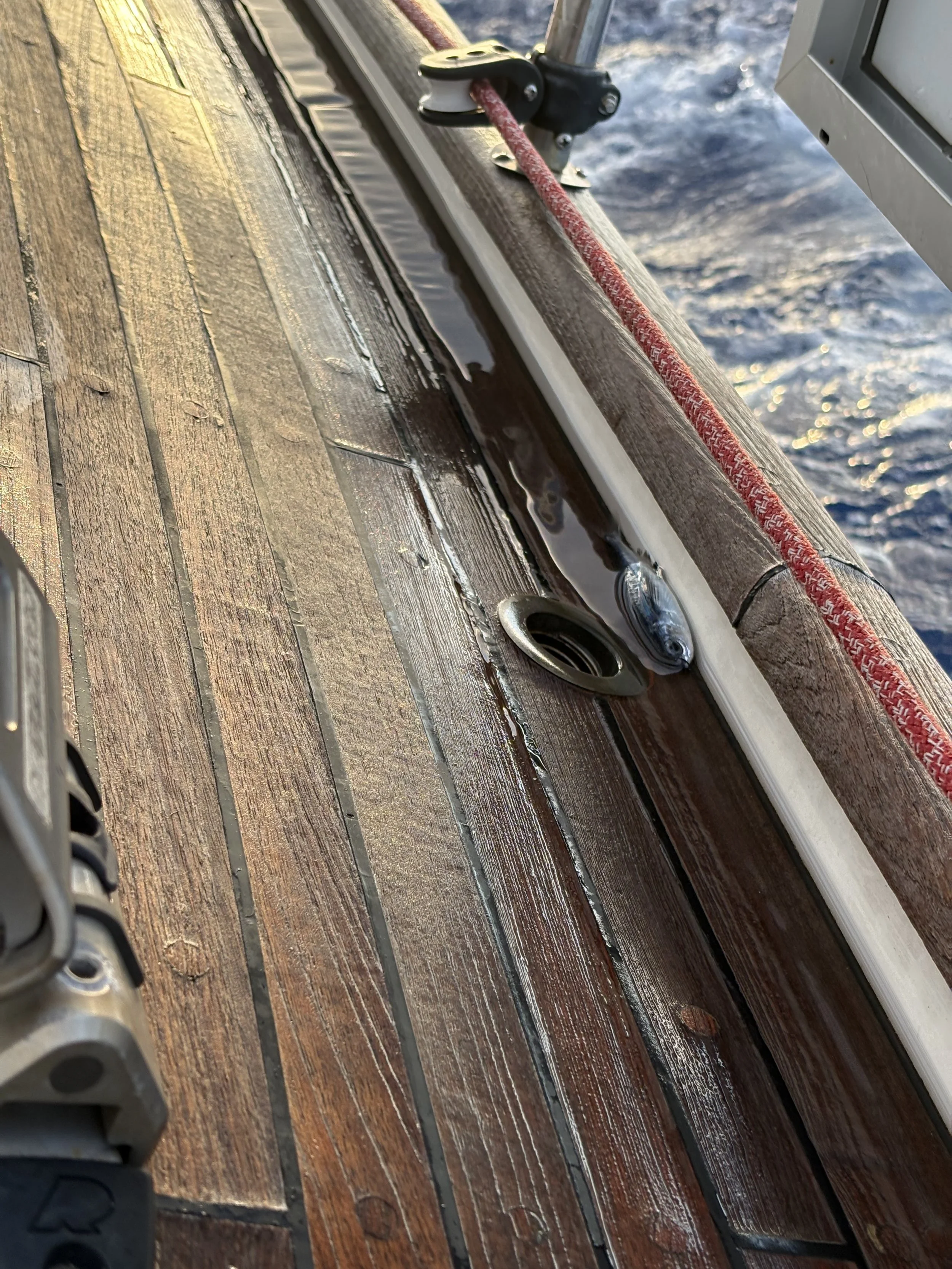
Just before Ines goes to bed, we’re sitting comfortably in the cockpit, singing. Suddenly, our rubbish bin – aka an empty water canister – makes a suspicious rustling sound. I pick it up and shove it into the shoe box. A few songs later, there’s a stench of fish; after fumbling about in the dark, we find the source of the problem. A flying fish has hit our canister head-on and died in our cockpit. Otherwise, the night passes quietly. So quietly, in fact, that we even manage to get a good night’s sleep during our watches. We always set an alarm every 15 minutes to keep an eye out for ships and squalls. We make good headway eastwards so that we can finally turn in the right direction (north) in the morning. That’s just how it is when you have to go where the wind is coming from – everything takes a little longer. Ship traffic has thinned out considerably and, as we head further north, we finally leave the shipping route between Panama and South America. It is only in daylight that we see how many flying fish have washed up on deck overnight: we find six medium to large specimens on the starboard side. That brings the total to eight dead flying fish.
Things aren’t going quite as smoothly as predicted on the way to our destination. Depending on the weather model, more or less calm conditions are forecast for Friday to Monday. We consider turning off towards Cartagena, but then decide against it. Let’s see what lies ahead. So far, we’ve hardly had to start our ‘dinosaur-eater’ (engine) and have enough ‘dinosaur juice’ (diesel) for about 400 nautical miles. That’s enough to see us through even a prolonged period of calm. At 12 USD a gallon of diesel (equivalent to about 3 USD per litre) in the Bahamas, we still want to stay as eco-friendly as possible. Besides, we don’t like the noise or the smell either.
In the afternoon, 25 miles from Panama, we finally hoist the guest country flag. After almost a year, we’re a bit out of the swing of things. Otherwise, the day passes quietly; we’re both well rested and are enjoying the rocking, which is sometimes gentle, sometimes less so.
Distance to the Bahamas: 699 nm
Daily average: 101 nm
Meals: Quesadillas, spaghetti with pesto rosso
Cabbage-head counter: 9/9.5
Flying fish on deck: 8
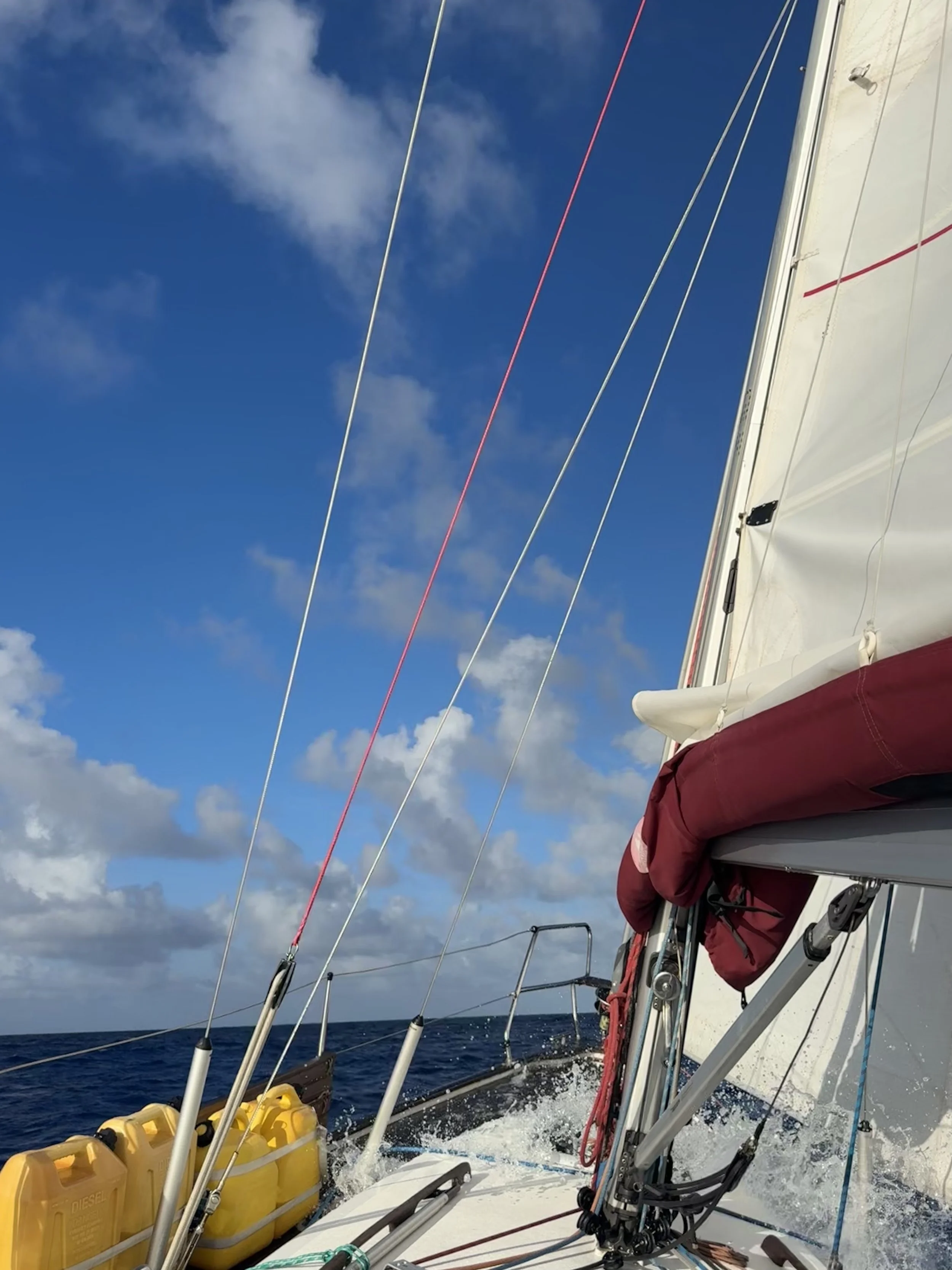
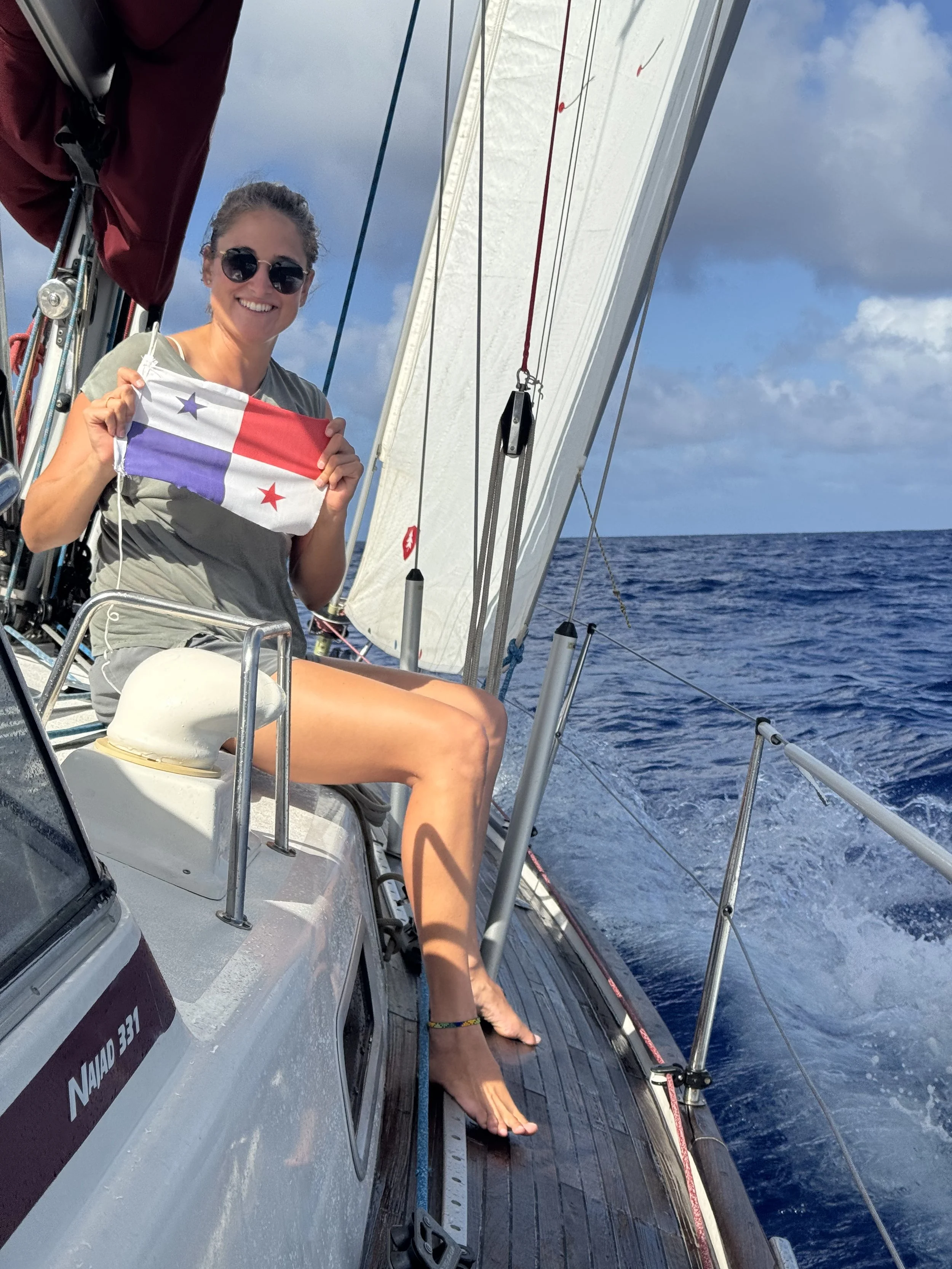
Panama - Jamaica Day 4
Thu Apr 23 2026 18:38:00 GMT-0500 (Panama time)
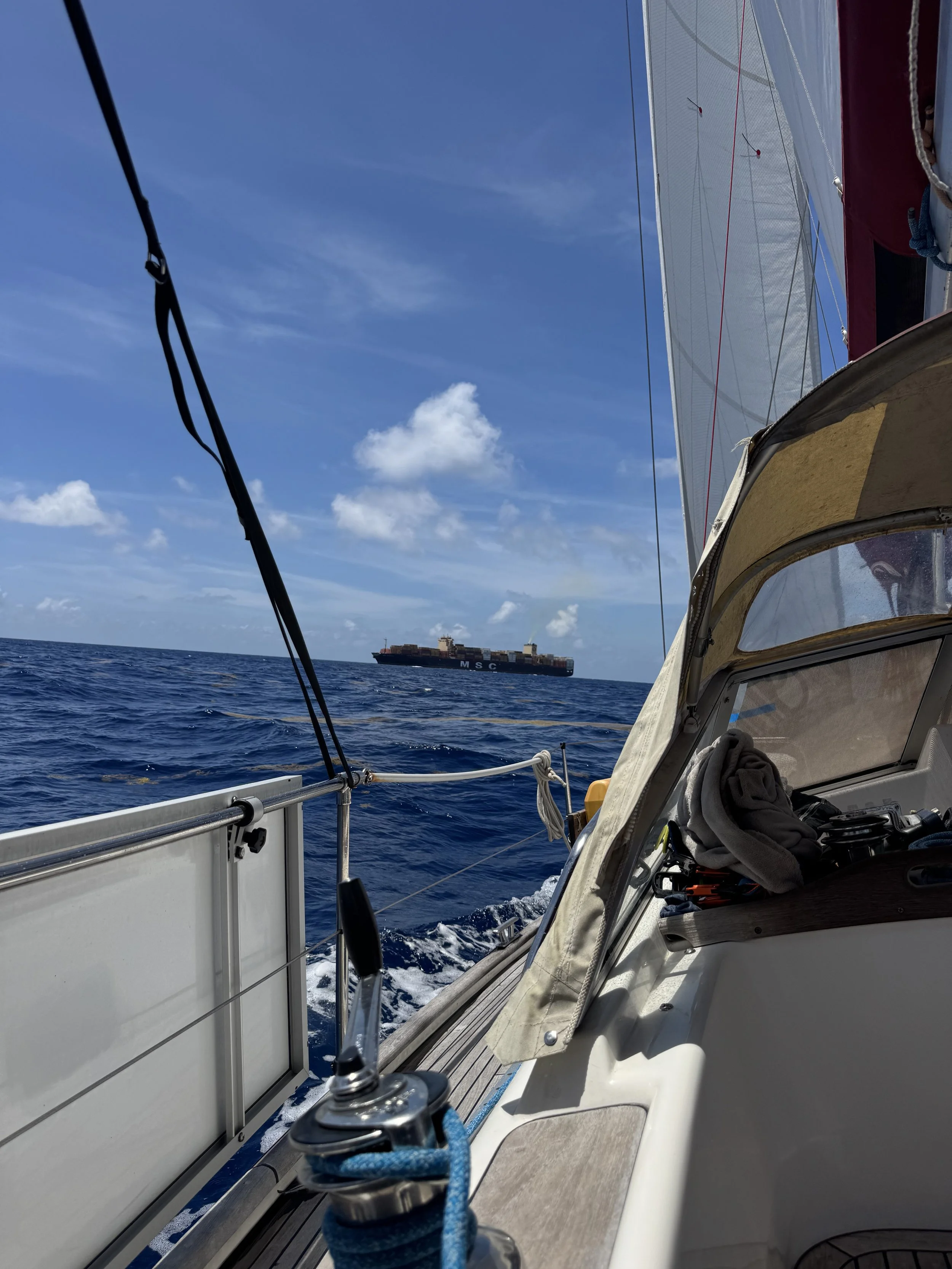
All is quiet. The wind and waves die down late at night and we make our way north at a leisurely pace. The by-catch is very low today; we only have one flying fish to report. We catch a few raindrops during the day, but otherwise it’s absolutely lovely. In the early afternoon, we briefly realise just how small the sea really is when a container ship, the MSC Eugenia, suddenly passes us at half a mile’s distance – and that’s only because the ship adjusted its course. We’re running out of patience for looking stupidly into the sea, so we’re now turning to more or less intellectual pursuits such as crocheting and reading. We’re enjoying the peaceful day of sailing, because according to the weather forecast, from tomorrow afternoon we’ll be relying on the ‘dinosaur-eater’.
We often talk and write about ‘looking stupidly into the sea’ when describing days at sea; here’s an attempt to describe a little of what actually happens:
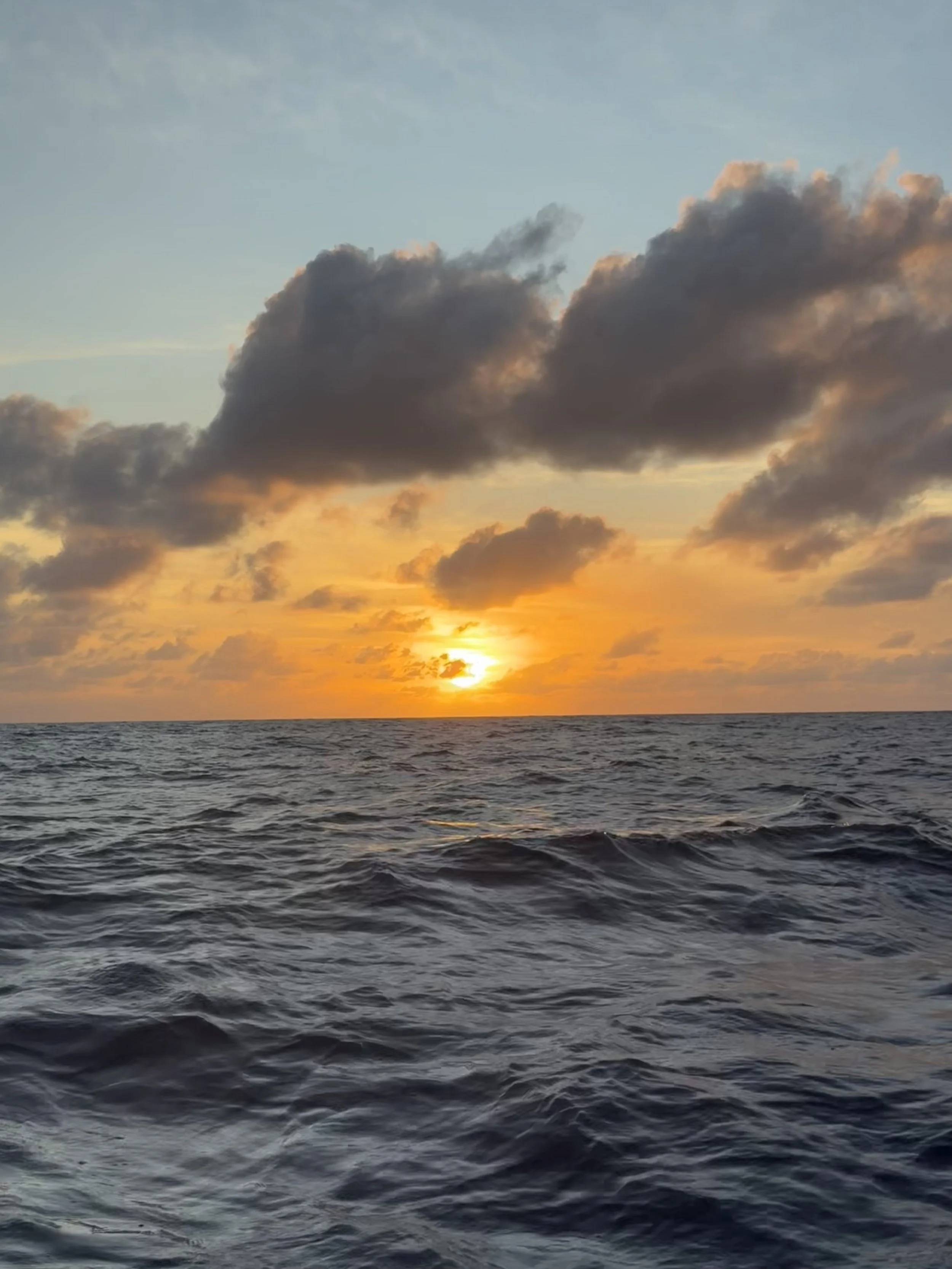
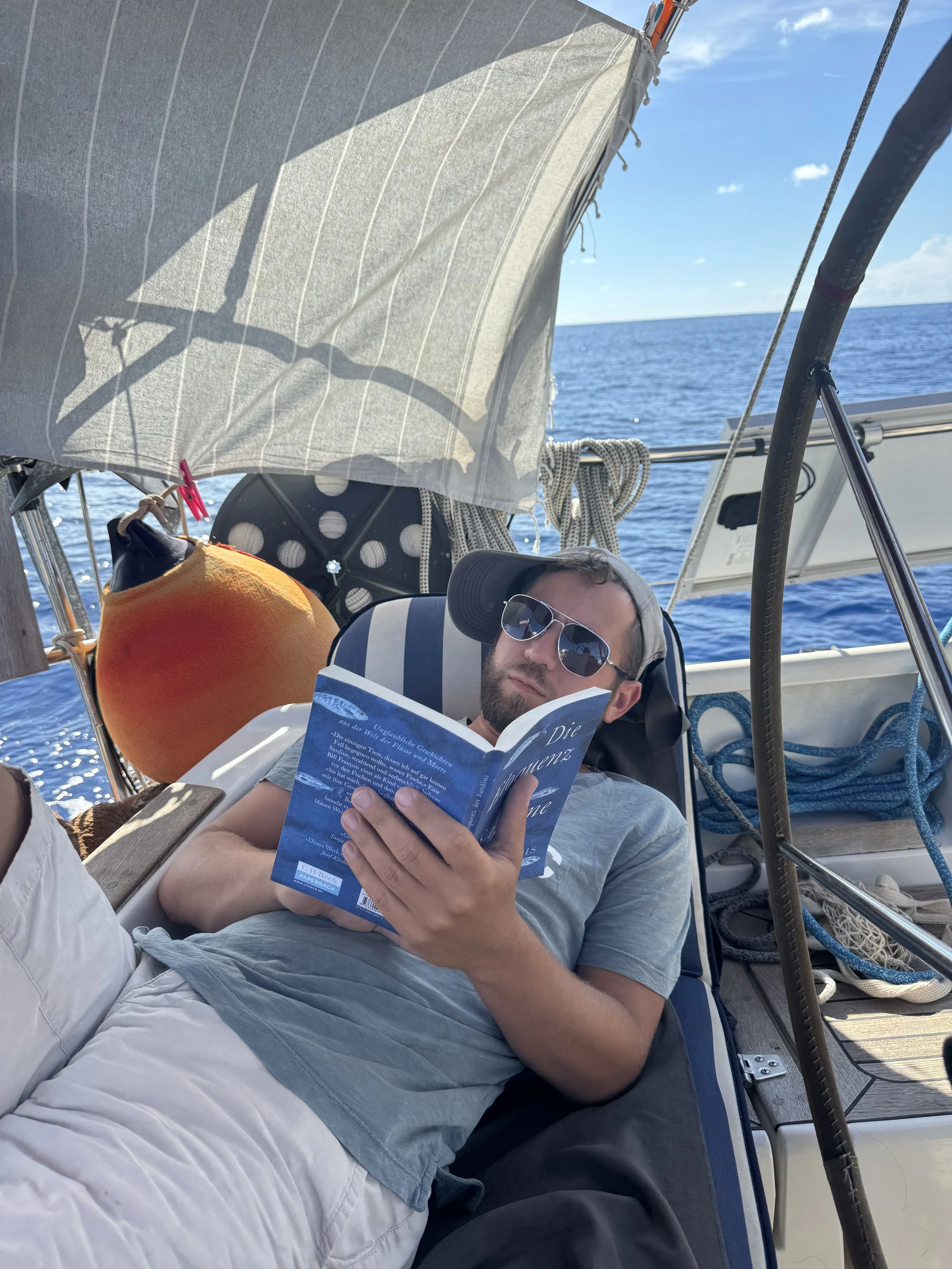
The hectic pace of life slows down completely. It takes a while to shift from the fast-paced rhythm of everyday life, with its countless to-dos and distractions, to the much slower rhythm of sailing, over which we have little control. Not much happens when viewed through the ‘lens’ of everyday life on land. Waves, clouds and, at night, stars pass by briefly. The to-do list is essentially limited to moving the sailing boat forward – which usually takes less than an hour a day – and taking care of basic needs. The rest of the time is free, and we deliberately keep the opportunities for digital distractions to a minimum. This drastically reduces the stimuli, and at first it gets boring. Since boredom is, well, boring relatively quickly, you look for something to do. Compared to life on land, the choice is unfamiliar and seems limited at first. A few classics remain, such as reading, singing, cooking, playing, talking to one another and making music. To be fair, there are ultimately no limits to creativity here either. One particular way of using one’s free time and keeping oneself occupied is simply staring into the ocean or at the sky. For me, the following happens: on the one hand, I have time to reflect on and make sense of things for which there is no time in the rhythm of life on land. Especially after a hectic period, a real backlog can build up here. On the other hand, one’s perception becomes keener. In other words, I notice details that I wouldn’t otherwise have the mental bandwidth for, or that I’d miss because things are moving too fast. The senses are under-stimulated. So you give them new tasks: listening to, smelling and feeling the surroundings. Observing the shape of the clouds, smelling the scent of the sea, listening to the sound of the waves, or, after a long crossing, smelling the vegetation and earth. In between, sorting through a new wave of thoughts… That is how time passes, and viewed from the outside, it seems as though one has merely looked a little dazed for a moment or stupidly into the sea.
Distance to the Bahamas: 608 nm
Daily average: 108 nm
Meals: Asian papaya and tomato salad with cabbage, Caribbean chicken with papaya and tomato sauce (guess what’s ripe)
Cabbage-head counter: 8.5/9.5
Flying fish on deck: 9
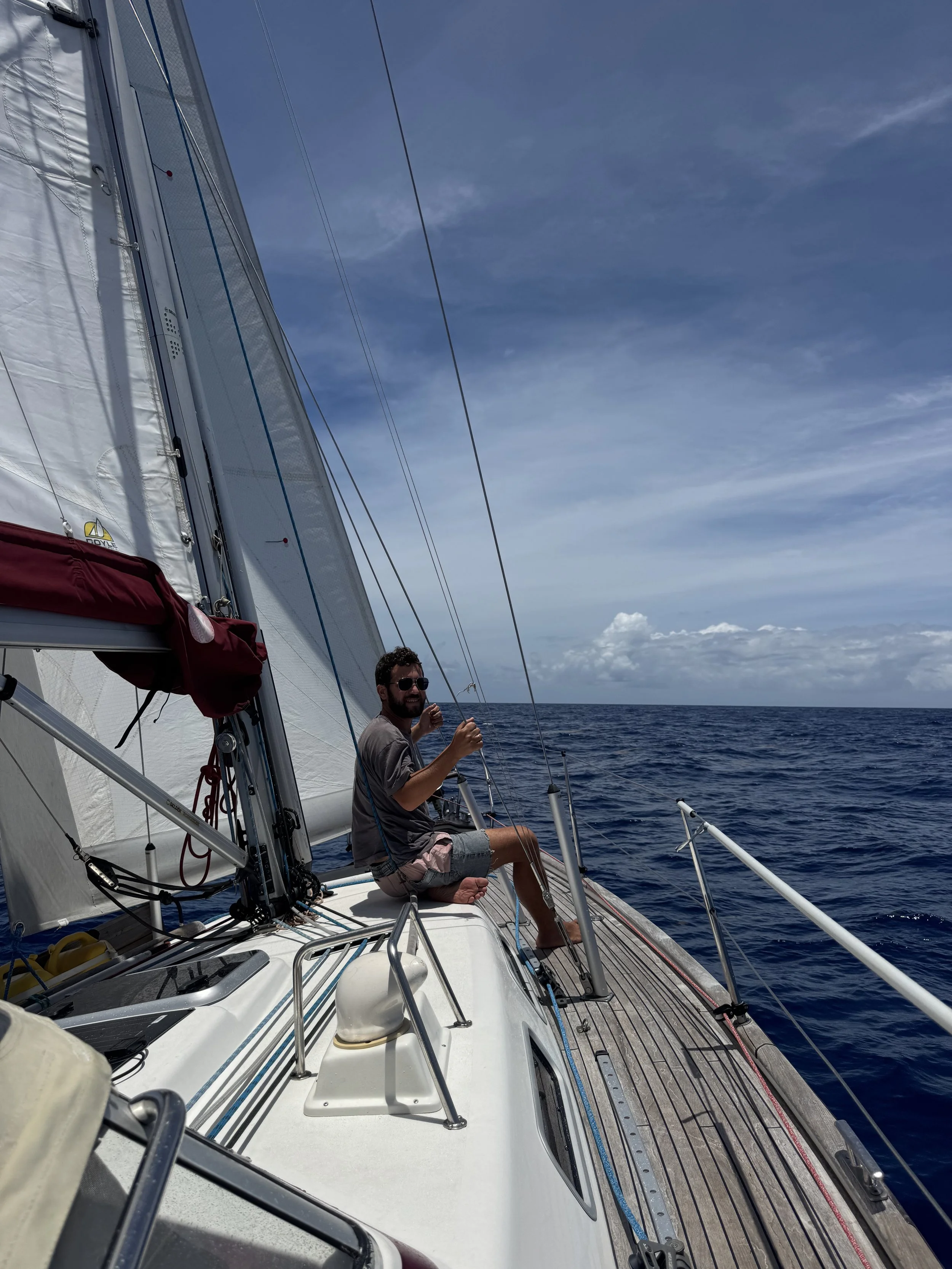
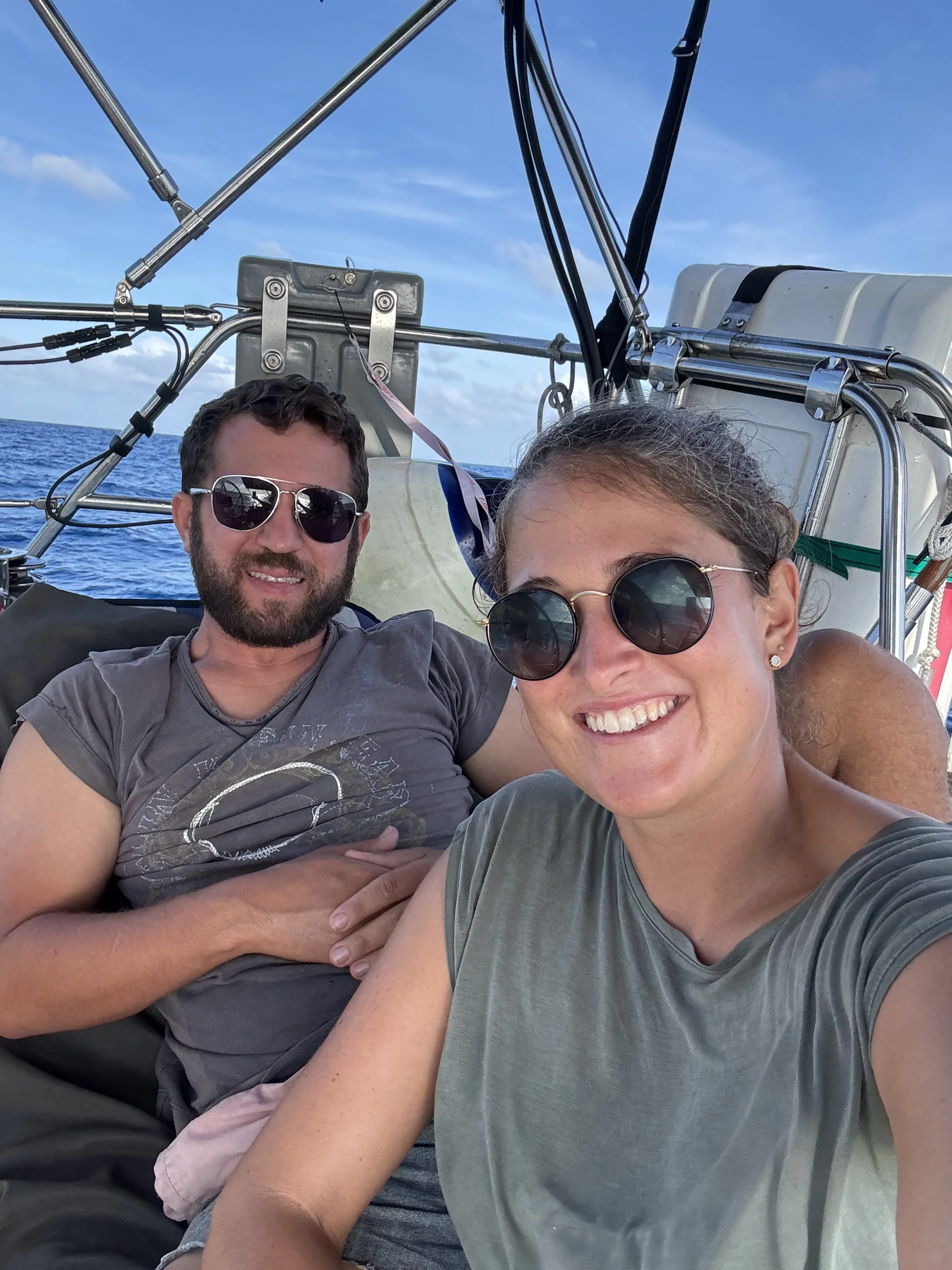
Panama - Jamaica Day 5
Fri Apr 24 2026 20:16:00 GMT-0500 (Panama time)
When sailing long distances, at least from the perspective of someone directly involved, the question sometimes arises: why on earth are we putting ourselves through this? The route we aim to cover by the end of June – or rather, which we have to cover due to the weather – from Panama to the Azores will take around 30–35 days of pure sailing. Thanks to the numerous flights from Panama to Europe, we now know the route well, at least from 10,000 metres up. In 2–3 hours you’re somewhere over the Dominican Republic (roughly the same distance as the Bahamas from Panama); Bermuda is bypassed directly, as are the Azores most of the time, so you’re right on the European mainland in 10–12 hours.
So what makes the whole thing so appealing? Apart from the comparatively unlimited free baggage allowance, it’s certainly sailing days like these:
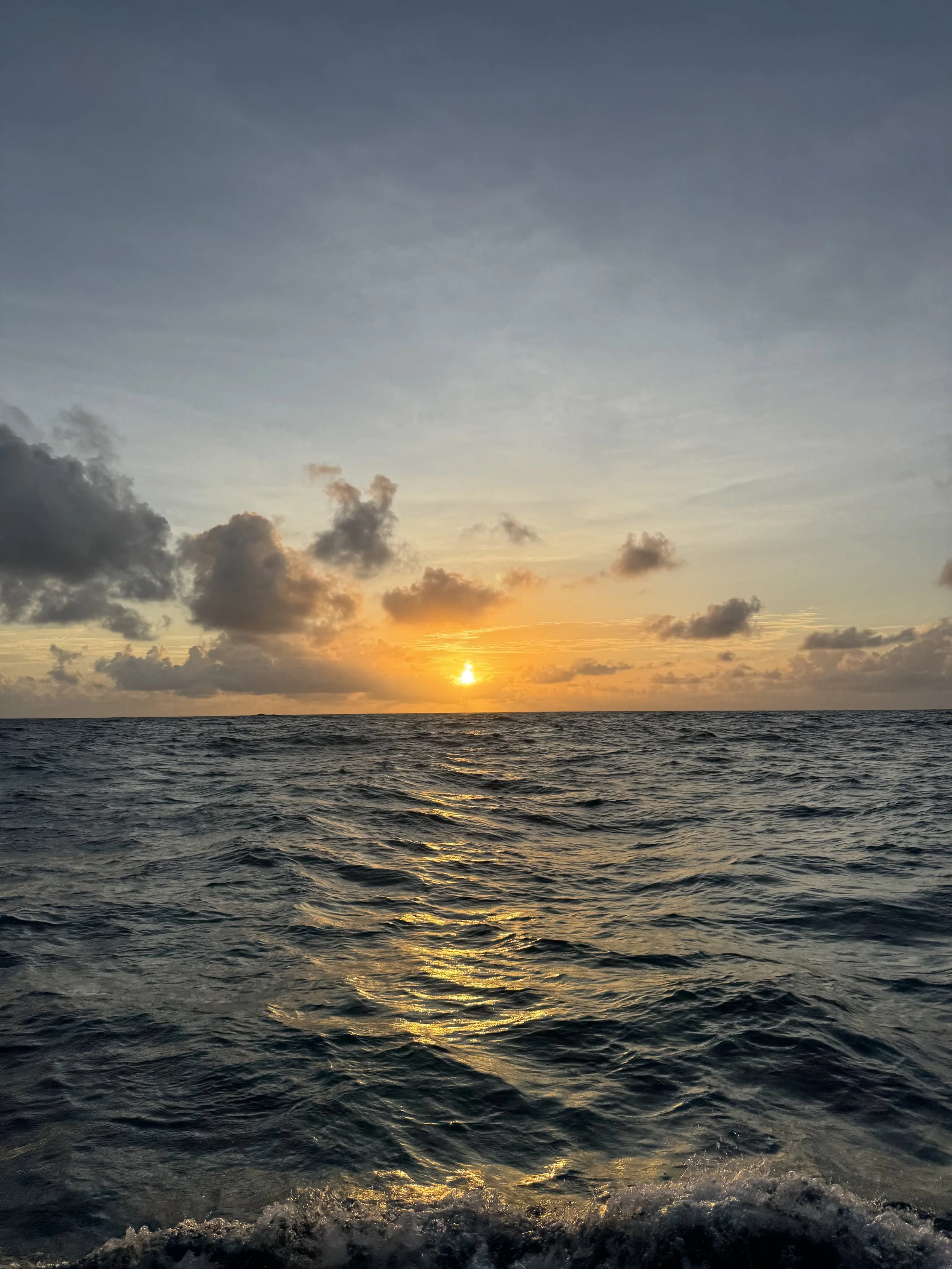
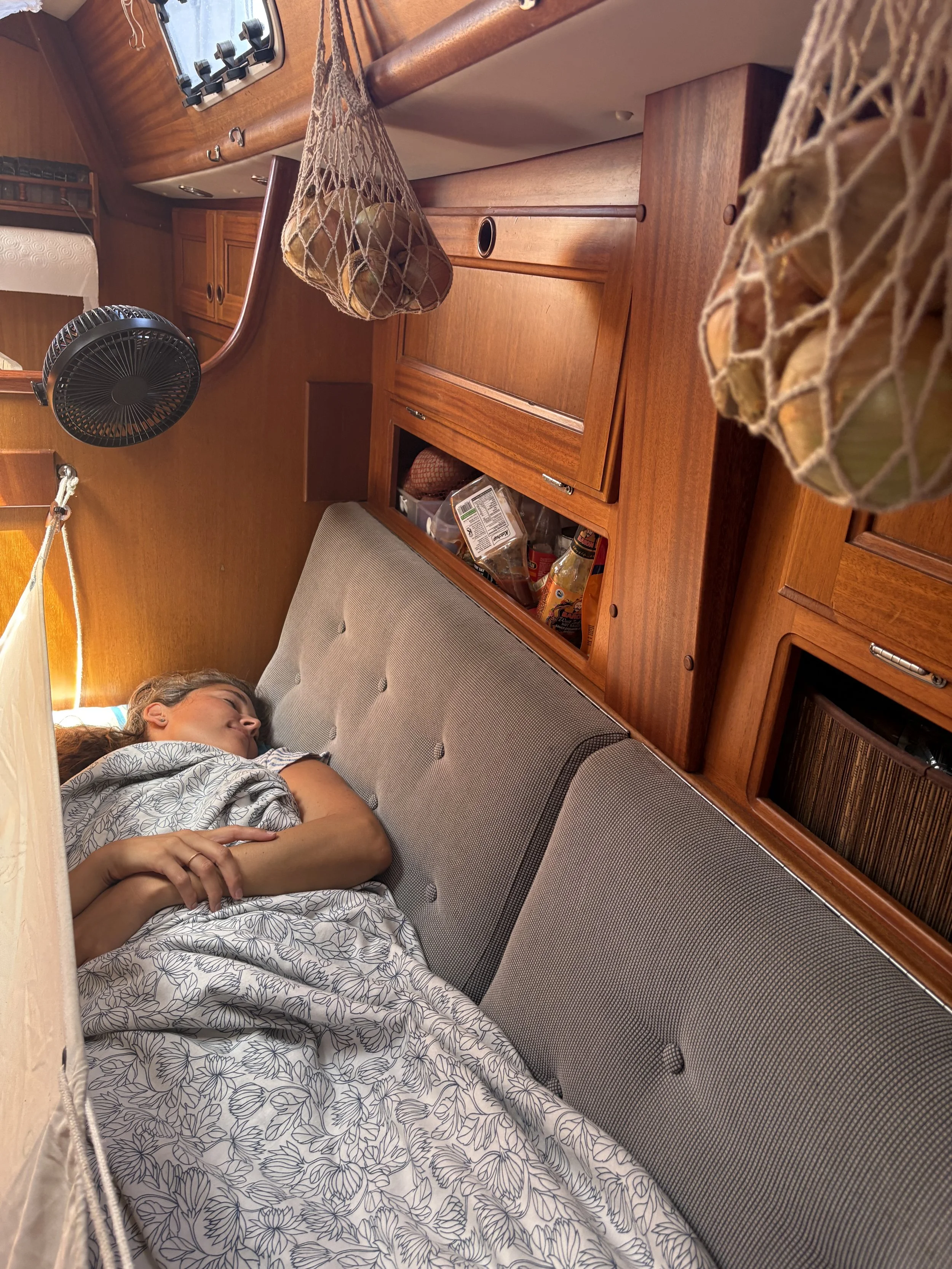
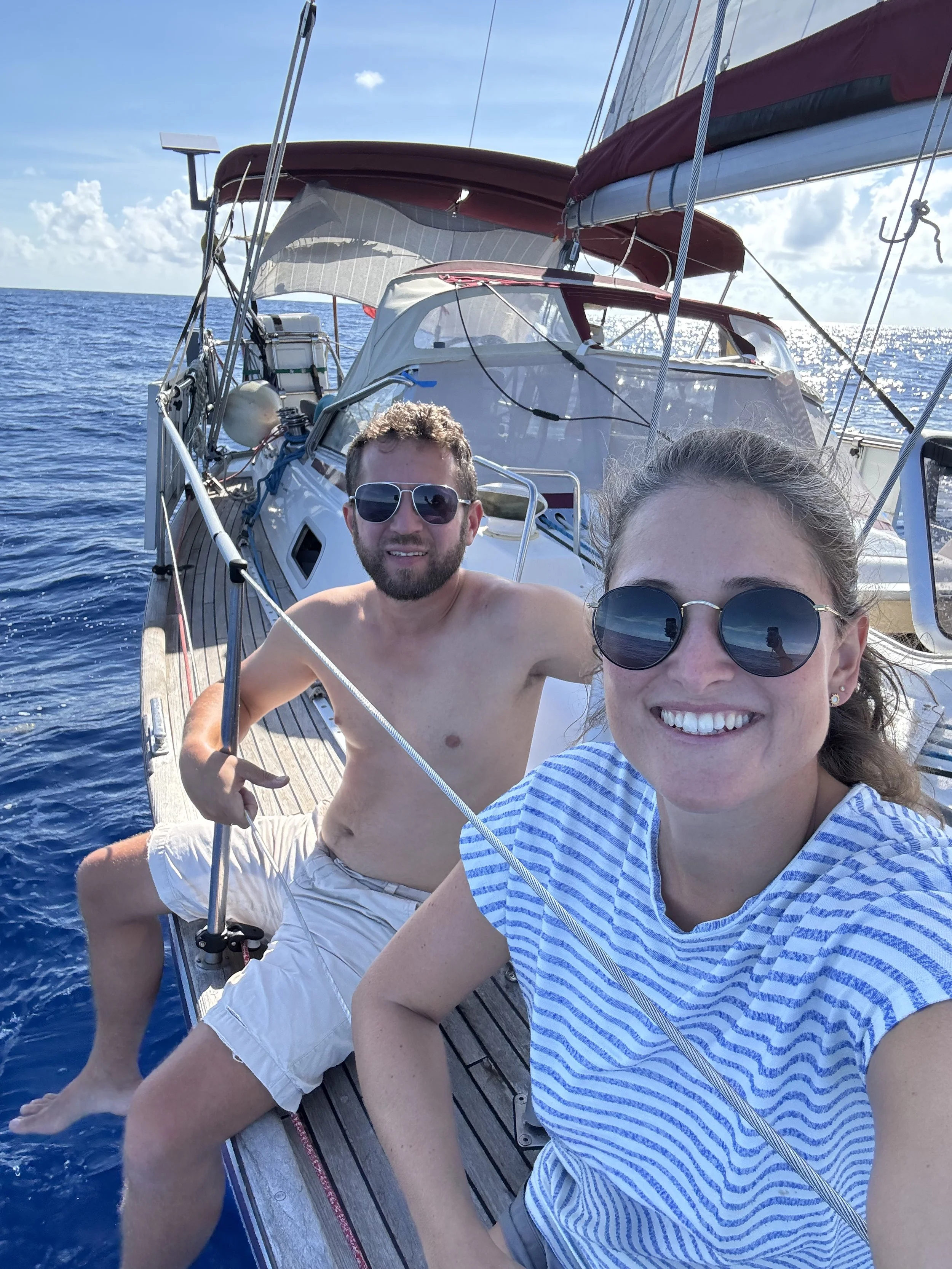
The magical sailing conditions continue through the night. Compared to the previous days, the boat rocks gently through the waves. As we’re sailing close-hauled – that is, as close to the wind and thus mostly against the waves as possible – it usually happens occasionally that the bow of the boat crashes into a trough, accompanied by a lot of noise. Unlike the previous days, we don’t crash once. Instead, it rocks regularly, very gently up and down. I imagine that this is how it feels for a baby to be rocked to sleep. For one of us, this means sleeping cosily tucked up in the bunk beneath the yellow onions. The other is treated to the unusually cloudless night sky. As we’re in the trade wind zone here, we usually see the trade wind clouds – a grid of small, uniform clouds – drifting by. In other words, the horizon is almost always covered anyway, and fleecy clouds drift across the sky above the boat. Not so tonight: apart from a few scattered clouds, it is a starry night, and the second major disruptive factor, the moon, is also absent. The view is like that in a planetarium. The Milky Way is clearly visible, as are the constellations of Scorpio, Orion and the Big Dipper. The Southern Cross (the Southern Hemisphere’s counterpart to Polaris, the current North Star) can still be glimpsed at times; as we head further north, it sinks lower and lower until, in the coming days, it remains completely hidden behind the horizon. It is so dark that you can see the stars shimmering through the white fabric of our Austrian flag fluttering at the stern.
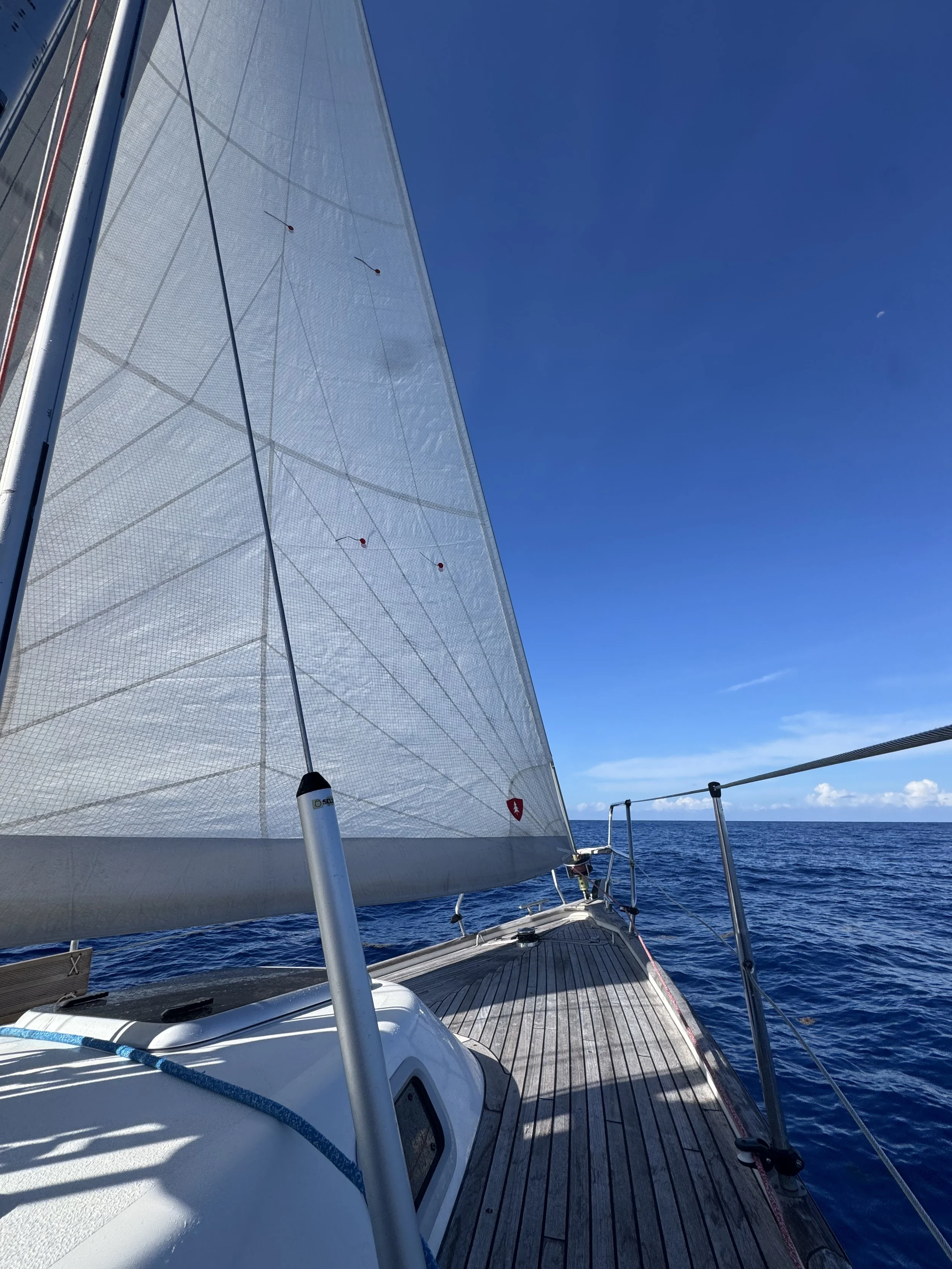
The day is just as calm as the night. The waves are no longer splashing onto the deck and it’s a really pleasant sail. The only drawback: the wind is dying down. Around 2 pm we reach the current, which pushes us towards Jamaica at 1.5–2 knots. Even with just 6 knots of wind, we’re making 3 knots through the water and, thanks to the current, 4.5 knots over ground. Just in time for sunset, however, the wind dies down completely and the waves cause the sails to flap, as there’s no wind left to stabilise them. We take them in and motor out into the night.
For those curious to know: the North Star is the star that currently lies more or less in line with the axis around which the Earth rotates. It is therefore constantly visible in the northern night sky. Why ‘more or less’? The axis shifts by 46 degrees over the course of 26,000 years. The North Star has therefore been a different star on several occasions throughout human history. For the ancient Egyptians, for example, it was Thuban, and for the ancient Greeks, Kochab in the Big Dipper. Currently, it is Polaris.
The North Star can be used not only to determine direction but also one’s north/south position in the Northern Hemisphere – the higher the North Star is in the sky, the further north you are. The closer you are to the equator, the lower the North Star appears, until it is no longer visible in the Southern Hemisphere beyond a certain latitude.
Distance to the Bahamas: 516 nm
Daily average: 102 nm
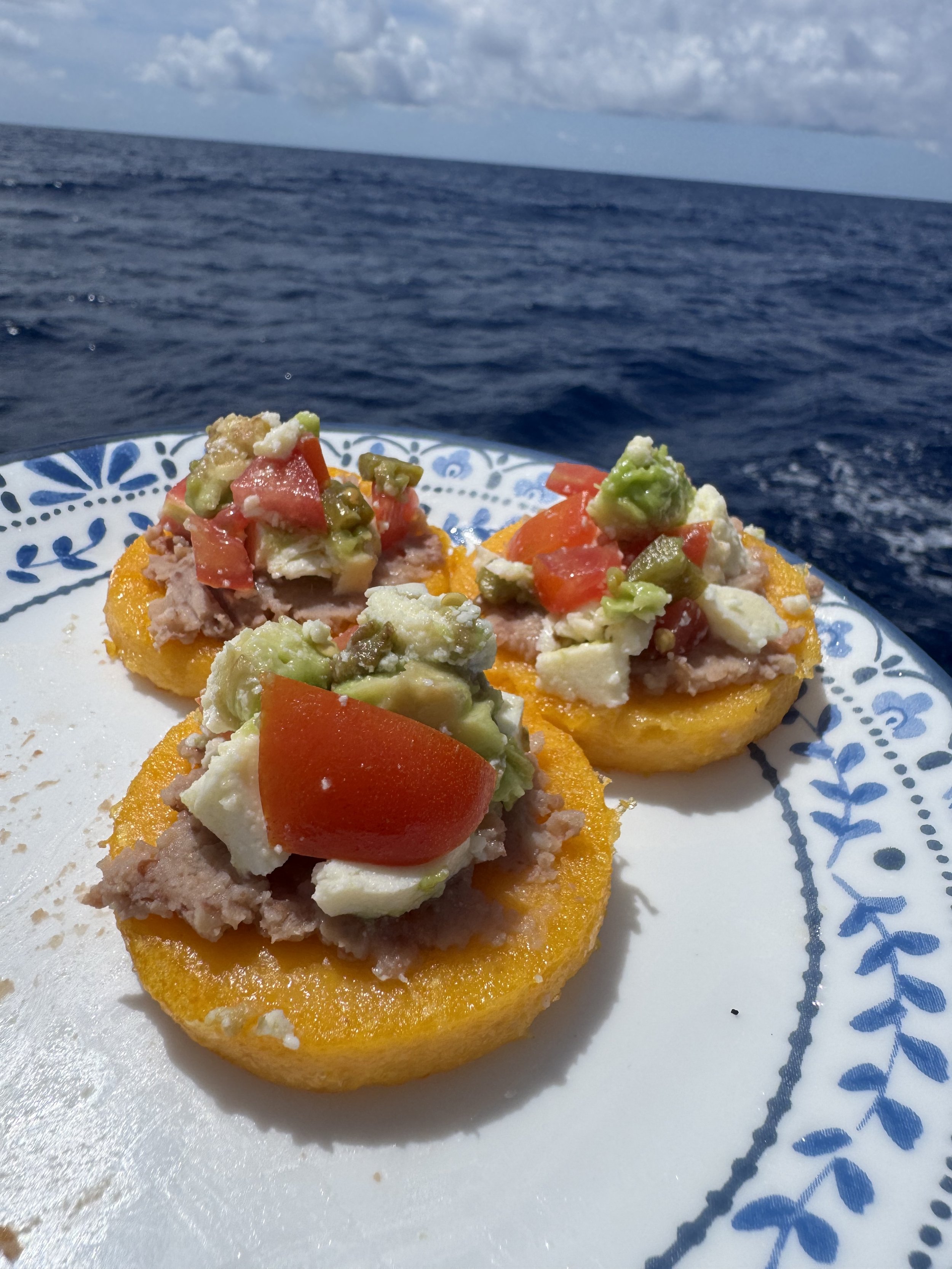
Meals: Arepas (thick corn tortillas) with white cheese, tomatoes and avocado, Caribbean rice with plantains and a fried egg
Cabbage-head counter: 8.5/9.5
Flying fish on deck: 10
Panama - Jamaica Day 6
Sat Apr 25 2026 18:54:00 GMT-0500 (Panama time)
The calm has us firmly in its grip well into the night, and our dinosaur-eater is churning down T-Rex, pterosaurs, stegosaurus and all manner of other long-extinct prehistoric beasts, refined into diesel. At 1 am, a light breeze picks up. After an hour of motor-sailing with the headsail, we decide to try sailing on the headsail alone when it’s time for the next watch. The dilemma with the light wind and the swell is that the ocean is rarely as calm as a lake. The swell is always slightly slower than the wind, or rather, there is almost always a bit of swell coming from somewhere on the ocean because there is always wind blowing somewhere. In any case, this has the annoying side-effect that the boat moves more with the swell than the wind exerts counter-pressure in the sails. This leads to what is known as sail flapping. You can imagine it as if you were shaking out a very large carpet – in our case, 25 m² per sail. On top of that, the mainsail is connected to a relatively large amount of hollow aluminium (mast and boom combined), making for an extremely annoying noise overall. The experiment proved successful throughout the night. Fortunately, we managed to make it into the ‘current highway’ yesterday with the last of the wind, so despite only travelling at 1.5–2 knots through the water, we’re still making a solid 3–3.5 knots over ground.
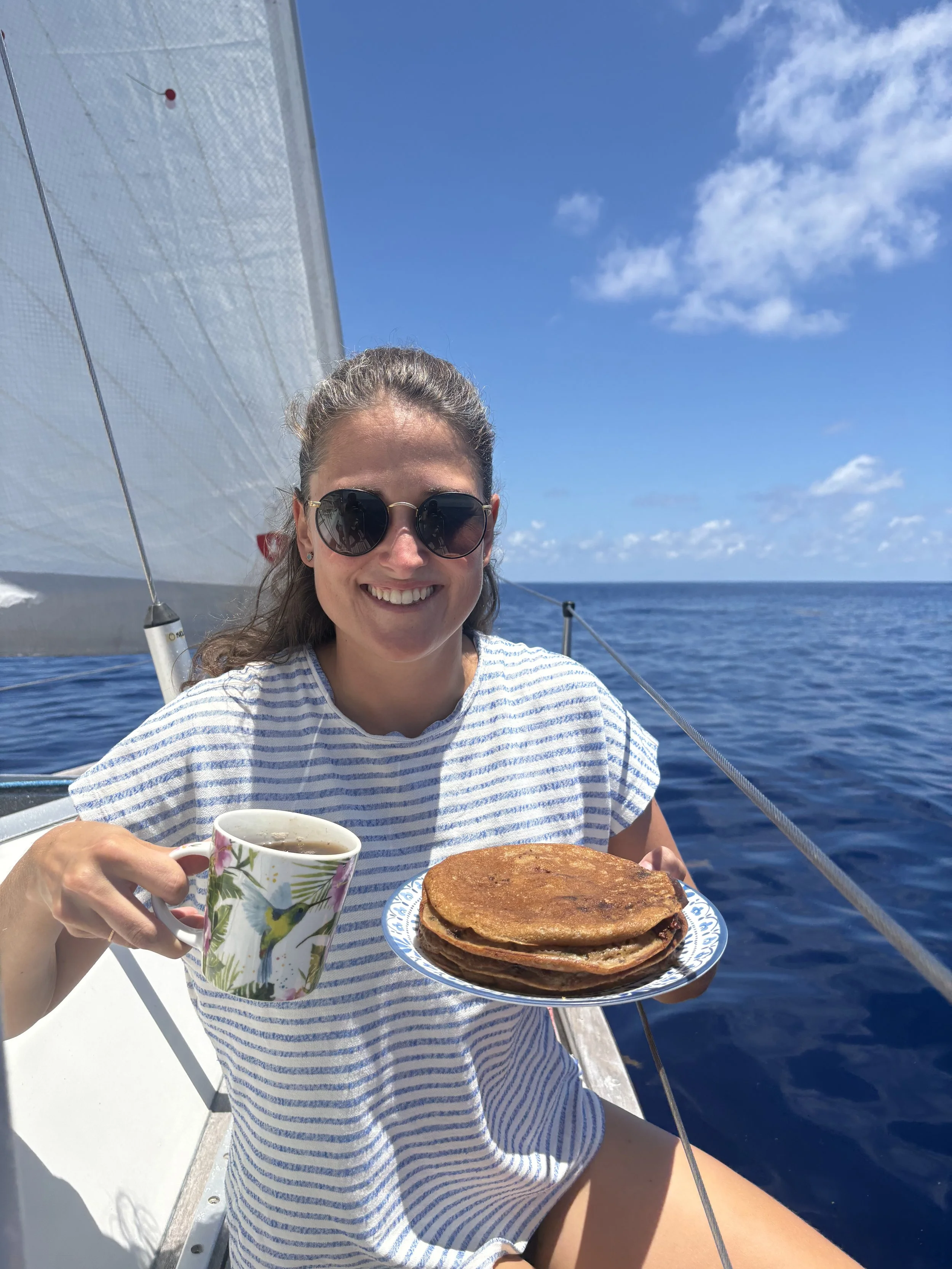
In the morning, the wind picks up a bit more and we hoist the mainsail as well. This means we’re moving a bit faster again – after all, we’re now doing 4.5 knots with the current. For breakfast, or rather brunch, Ines makes banana and chocolate pancakes, which we eat on deck for a change, with a view of the infinity pool. So we’ve put those overripe plantains to good use.
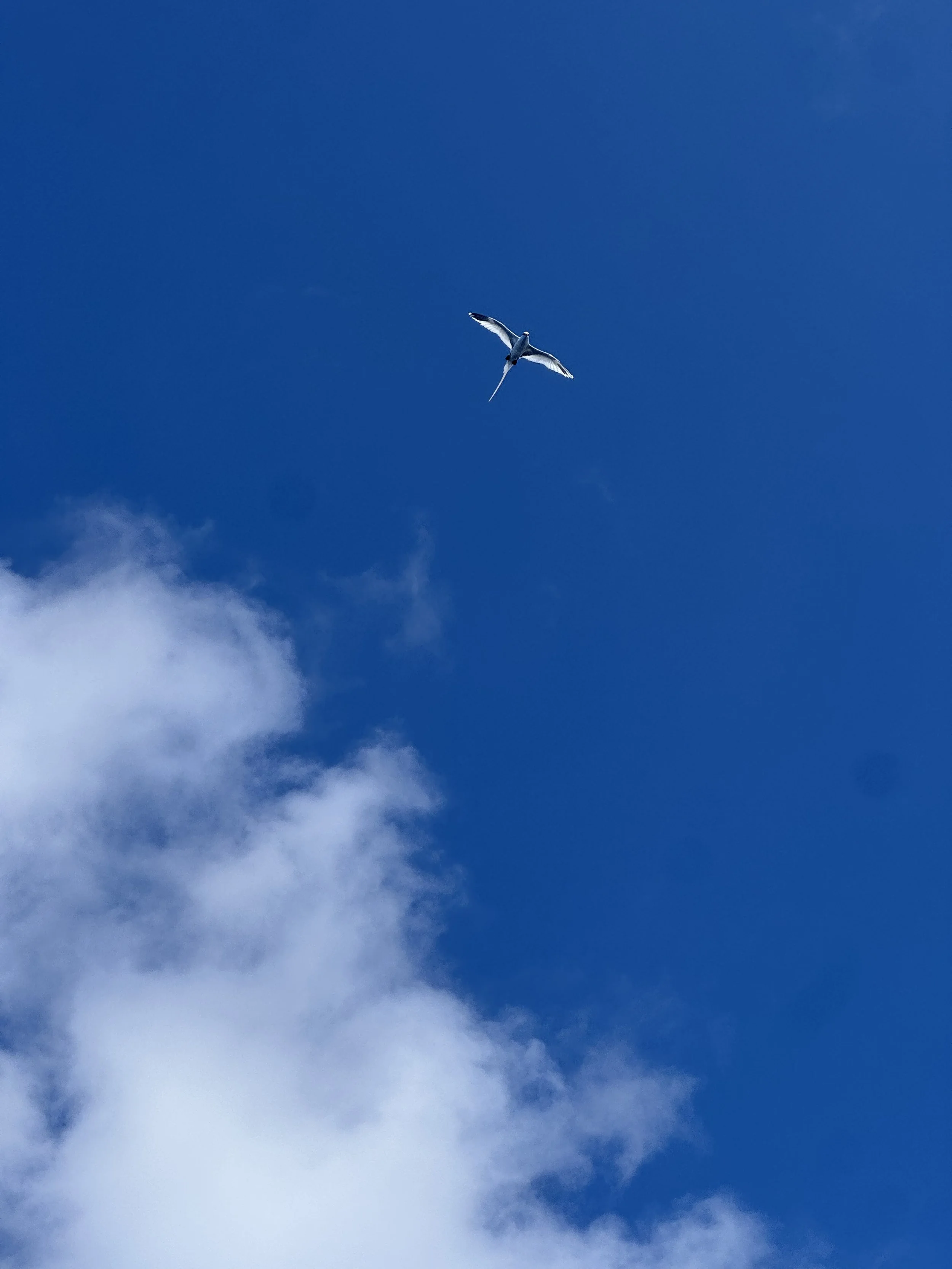
Today we’re visited by a few birds and fish. First, a small yellow bird tries several times to land on the boat, but doesn’t quite dare in the end. Shortly afterwards, a tropical bird circles us with its pretty long white tail. We also watch a booby hunting for flying fish.
In the afternoon, the wind dies down again and we check the latest weather forecast to decide what to do. No wind at all is forecast for tomorrow, and if we were to motor from now on, we might just make it through the narrow strait between Cuba and Haiti before stronger headwinds are forecast there. We’re really enjoying the peaceful sailing at the moment and don’t want to rush things, only to end up facing headwinds all the more. With a strait, you never know exactly how strong the jet effect will be. This is what people refer to when the wind is forced into a strait and the air has to ‘squeeze’ through, causing it to accelerate. We decide instead to stop off in north-eastern Jamaica, specifically in Port Antonio, and wait for a more favourable weather window. This shortens the time until our next shore leave, and we’re aiming to arrive in Jamaica on Monday. All because of the rum supply!
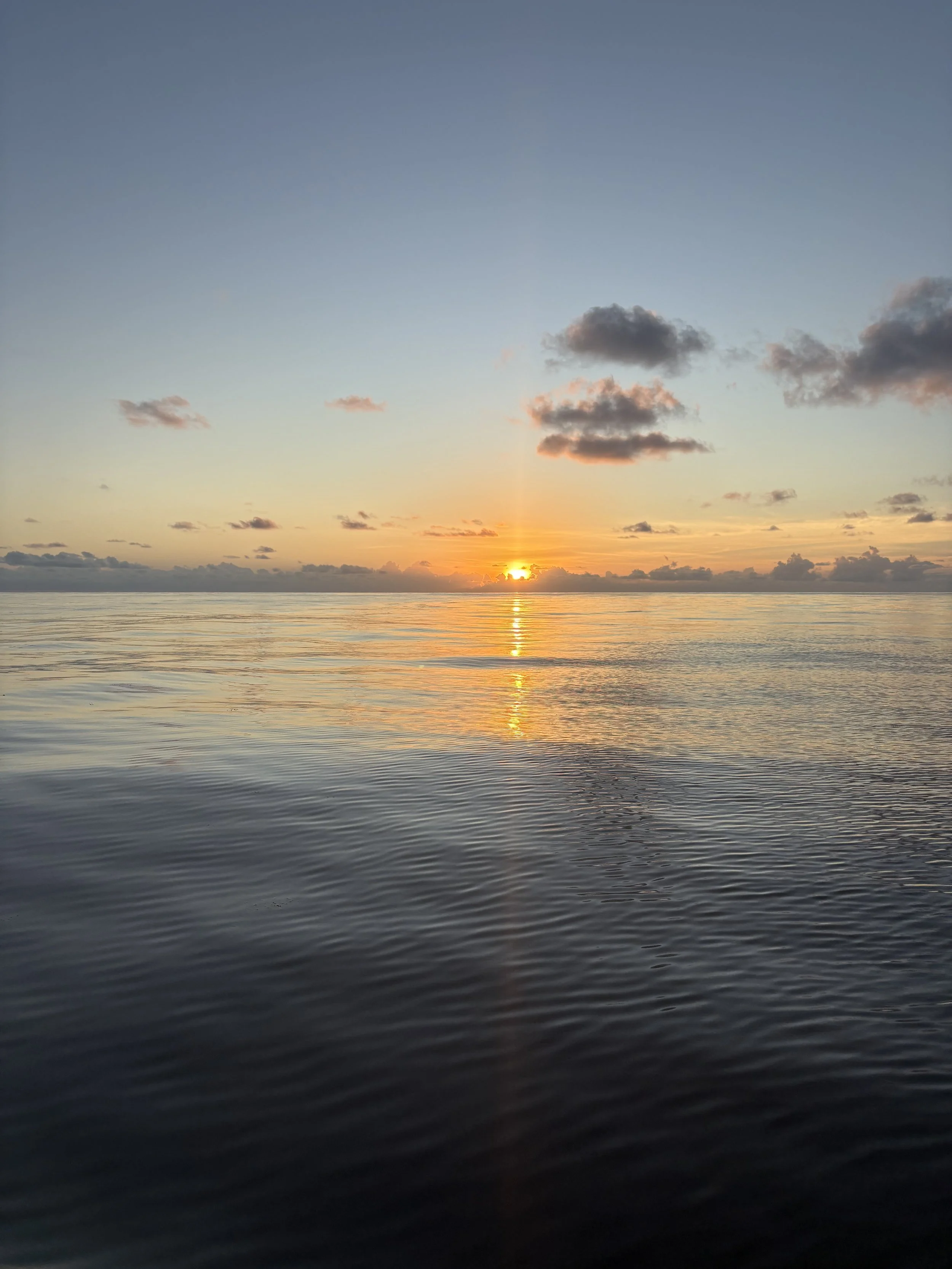
Shortly before sunset, we’re no longer making any headway under sail, so we start the engine. Perhaps, just like last night, the wind will pick up again today.
Distance to the Bahamas: 414nm
Distance to Jamaica: 203 nm
Daily average: 100 nm
Meals: Banana and chocolate pancakes, Asian egg noodles with cabbage and aubergine
Cabbage-head counter: 8/9.5
Flying fish on deck: 10
Panama - Jamaica Day 7
Sun Apr 26 2026 19:39:00 GMT-0500 (Panama time)
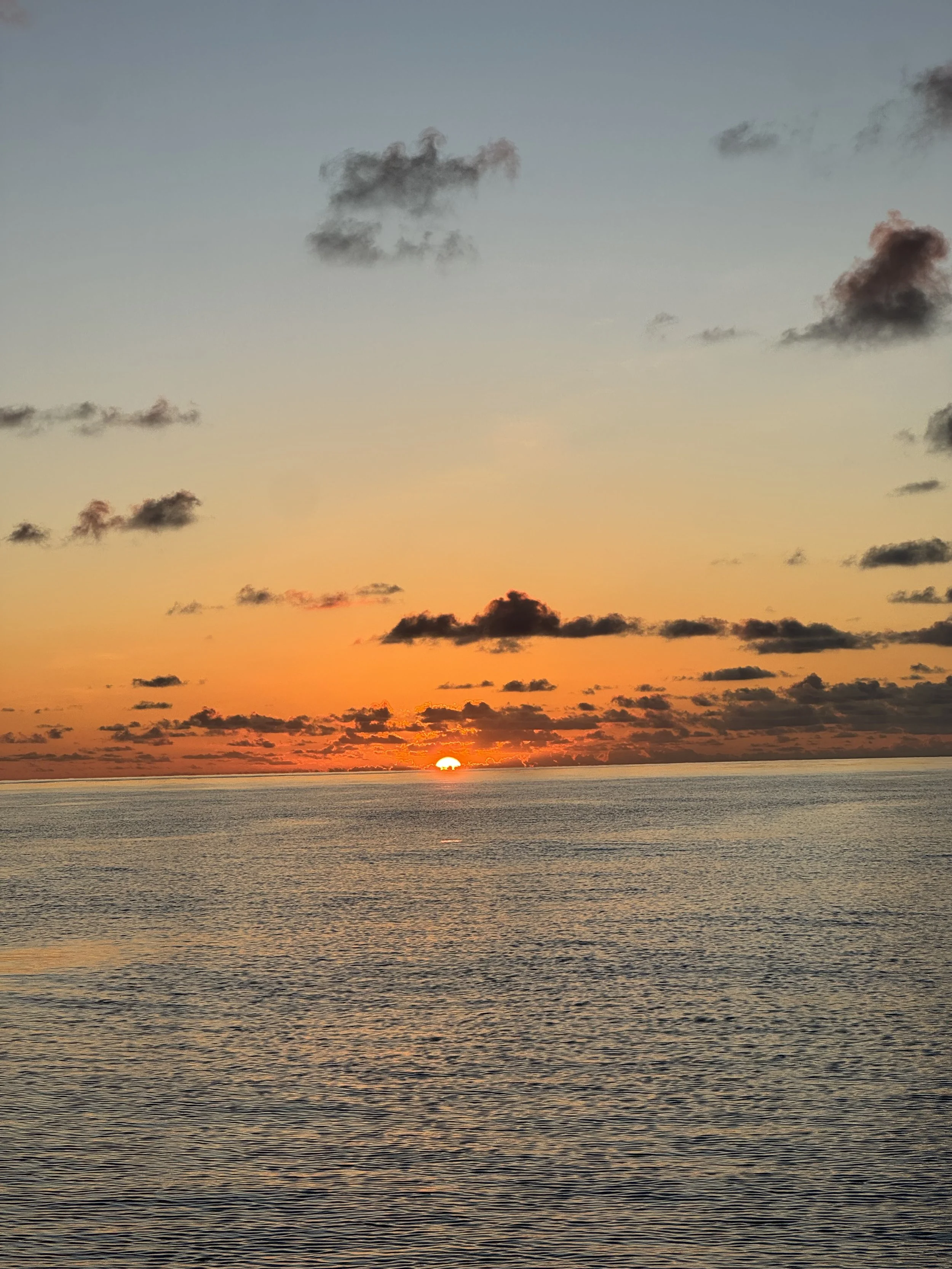
The night is calm and we are entirely reliant on the power provided by dinosaur juice. In terms of wind, it’s not possible to do much more than hoist the headsail now and then for a 0.5-knot boost. Although we remain in the current corridor, the current is slowing down more and more, and instead of the forecast 1.5–2 knots, it’s now only pushing us along at 0.3–0.5 knots. We try to ‘find it again’, but then give up and adjust our course directly towards the eastern tip of Jamaica. The morning remains calm and the weather forecast suggests we will have to motor until we arrive in Port Antonio tomorrow morning.
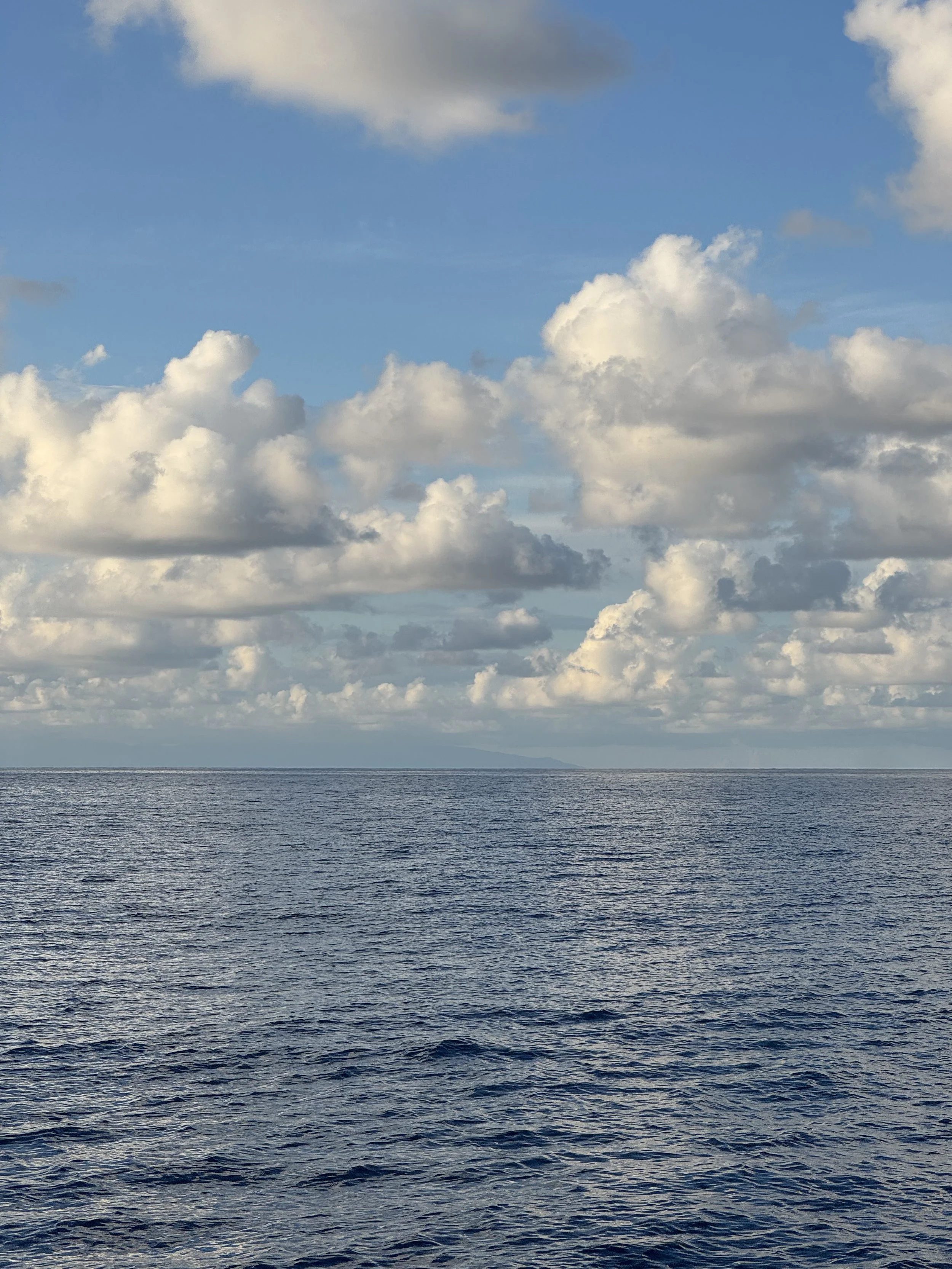
Peter is the first to spot land during his early shift. It is the Blue Mountains in the east of the country. Coffee connoisseurs may know it as the source of the exquisite Jamaica Blue Mountain Coffee. To get us in the mood for our expected 4- to 5-day stop on this Caribbean island, we got into the spirit musically yesterday with the album “Legend” from Bob Marley. Jamaica is one of the few Caribbean islands with which we can establish a connection relatively quickly. Unfortunately, the island, already plagued by poverty, was hit by a disastrous hurricane last year. We’re setting out, at least as far as our short stay allows, to follow in the footsteps of Bob Marley, Blue Mountain Coffee, Appelton Estate rum and jerk chicken, and with a bit of luck we’ll be able to enjoy a Red Stripe beer with the national bob sleigh team.
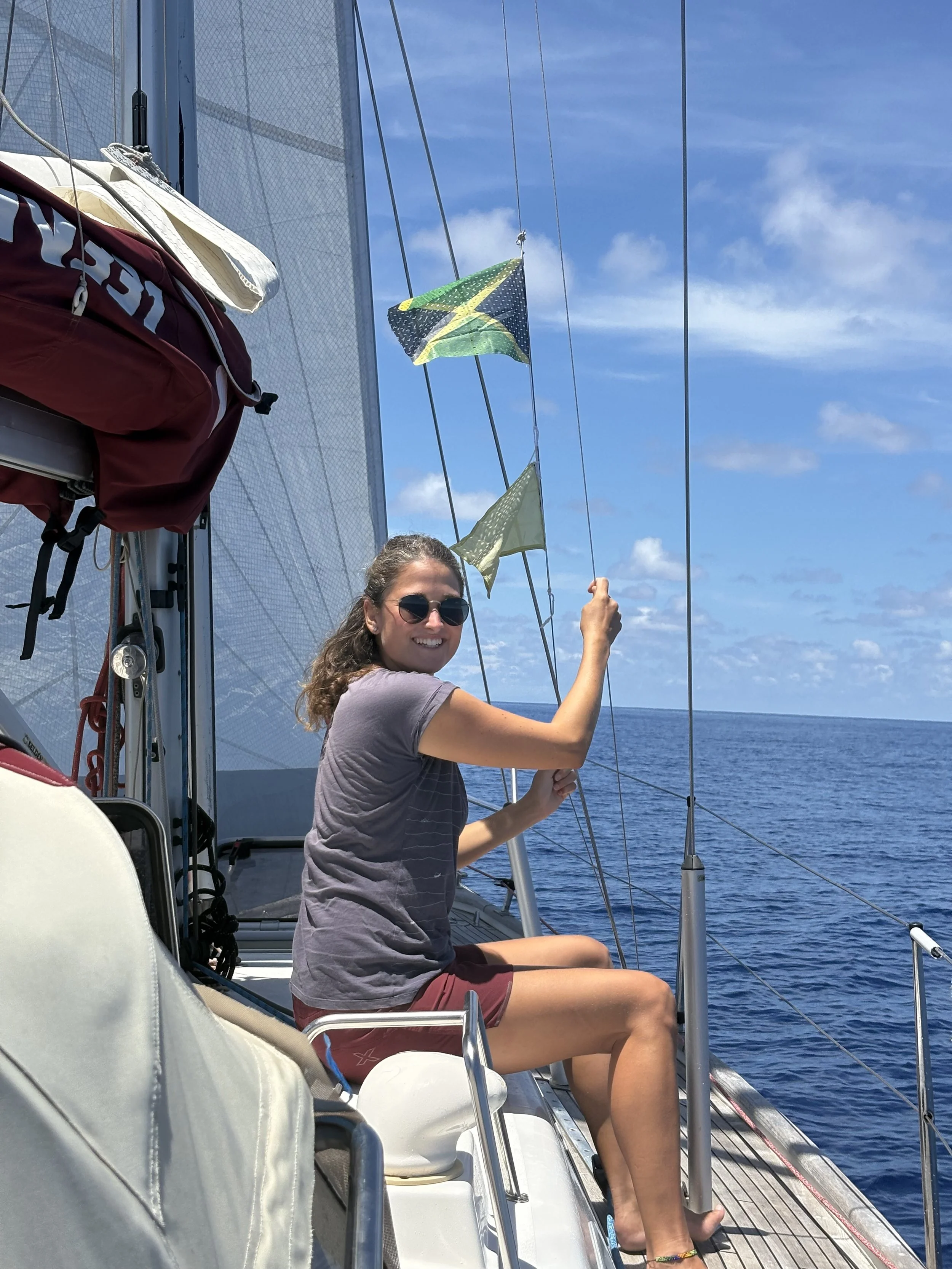
In the afternoon, the moment finally arrives and, full of anticipation, we hoist the Jamaican flag as well as the yellow quarantine flag, which indicates that we have not yet officially cleared customs. Shortly afterwards, we notice that we have a little stowaway on board – a small barn swallow. We approach very cautiously, but quickly realise that the little fellow is anything but frightened, because shortly afterwards he flies into the boat and lands on Ines’s bun as she is just cutting open the mango. We’ve named him Rufus, because of his reddish-brown breast colouring, just like the Rufous-tailed Hummingbird we saw in Boquete, Panama. He’s keeping us on our toes, as he keeps flying into the boat and we keep carefully carrying him out again using Peter’s cap. Even after sunset, he’s still here. We’ve built him a little nest on the cockpit bench using a polo shirt and Peter’s cap. There he is, soundly asleep – let’s see how long he stays there. This is likely to be a night spent bird-sitting…and navigating around the eastern tip of Jamaica.
Distance to Jamaica: 88 nm
Daily average: 105 nm
Meal: Deluxe ham and cheese toast, Caribbean chicken with papaya sauce (the remaining papaya and chicken also needs be eaten)
Cabbage apple counter: 8/9.5
Flying fish on deck: 10
Panama - Jamaica Day 8
Mon Apr 27 2026 09:53:00 GMT-0500 (Panama time)
We made it safely to Jamaica! A more detailed update follows shortly.