Atlantic Crossing West-East Live Tracker
Switch to the Live Tracker in German here:
Here is our live tracker for the final major leg of our journey and the last part of our Atlantic crossing. We’re setting off from the Azores island of São Miguel, and our destination is the Algarve in southern Portugal. The route is around 800 nautical miles and, as very little wind is forecast, we expect the crossing to take at least 8 days. Apart from good sailing weather, we also hope we don’t encounter the orcas off the Portuguese coast, as the Iberian orca pod likes to ‘play’ with the rudders of sailing boats and damage them. All other marine mammals are always welcome!
You can follow our progress live here. We’ll update our position twice a day and post a short blog entry about life on board once a day. We’d love it if you joined us on this voyage too!
Azores – Algarve, Portugal Day 1
Tue 01 September 2026 20:26:00 GMT+0000 (Azores Summer Time)
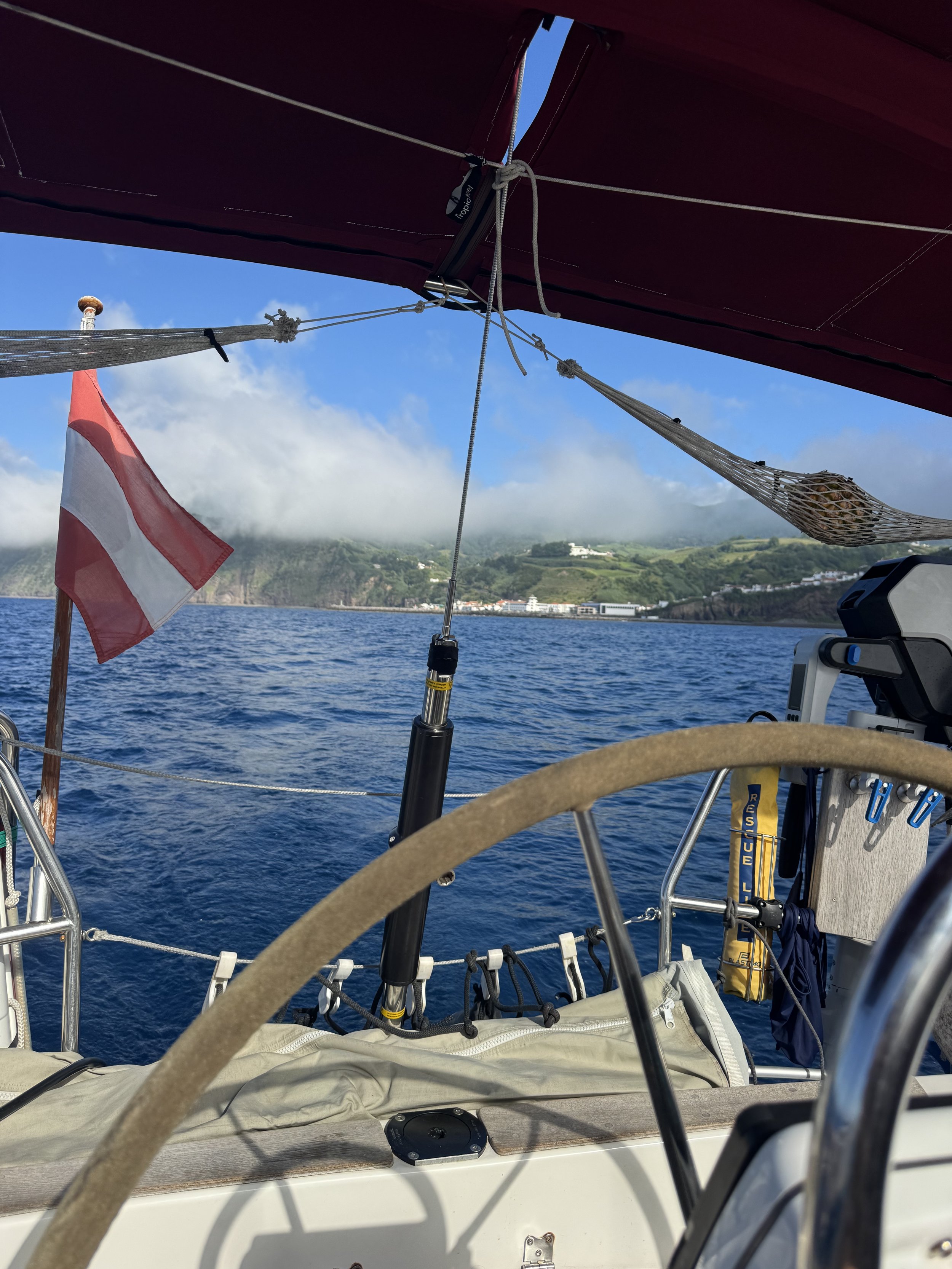
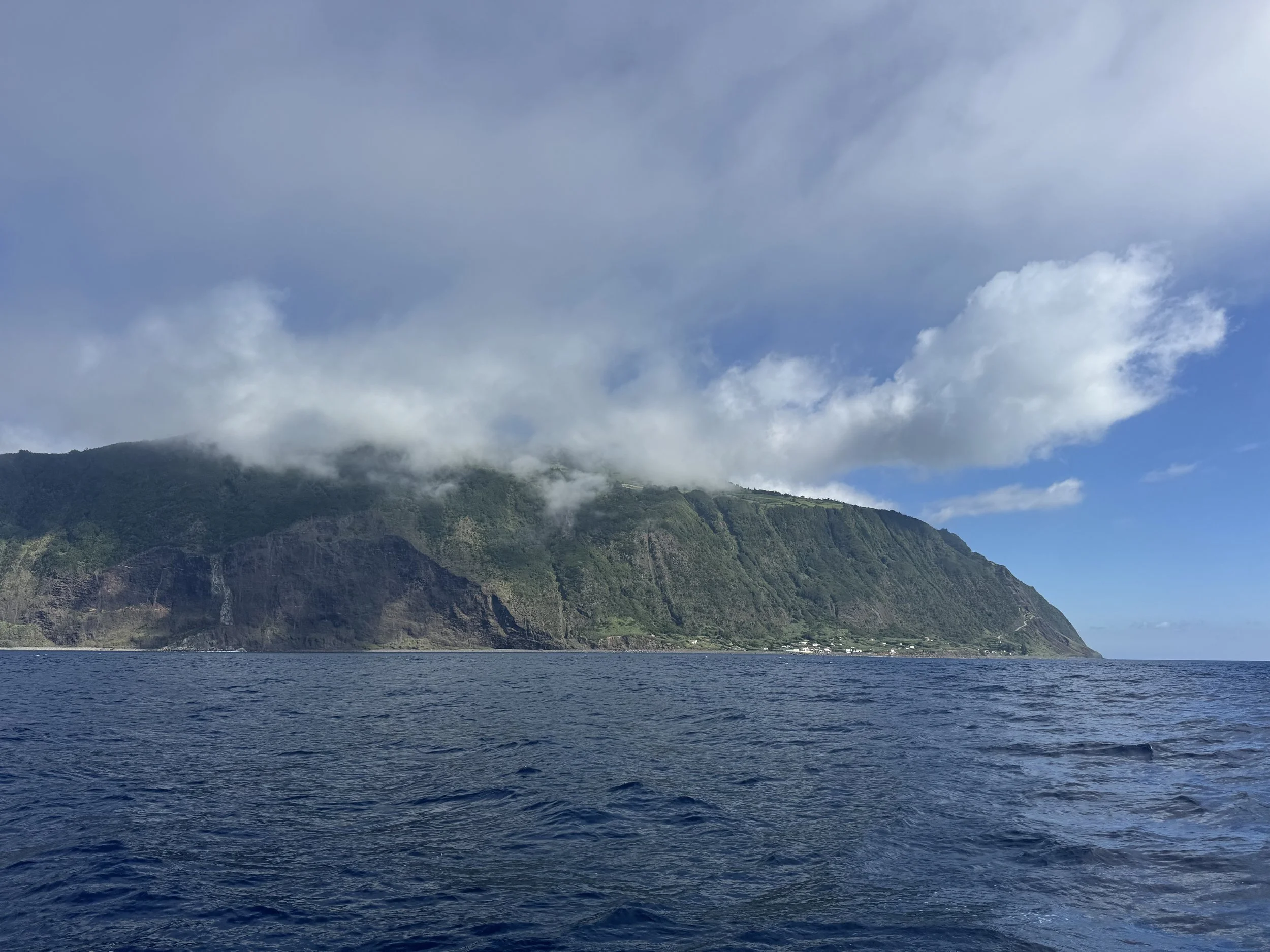
After about two months in the Azores, we’re setting off on our final major crossing. Our time in the Azores was intense; we had lots of visits from friends and family, and tried to do and see as much as possible with everyone. We managed to visit six of the nine islands. In between, we popped home for a week to sort out things for the next stage of our lives. We’re content; we feel we’ve seen a lot and had a wonderful time. Over the last few days, the two of us have been able to wind down a bit. Nevertheless, our feelings are mixed. We’re torn between a sense of wistfulness that our journey is coming to an end and the prospect of a new chapter in our lives, which is becoming ever more real.
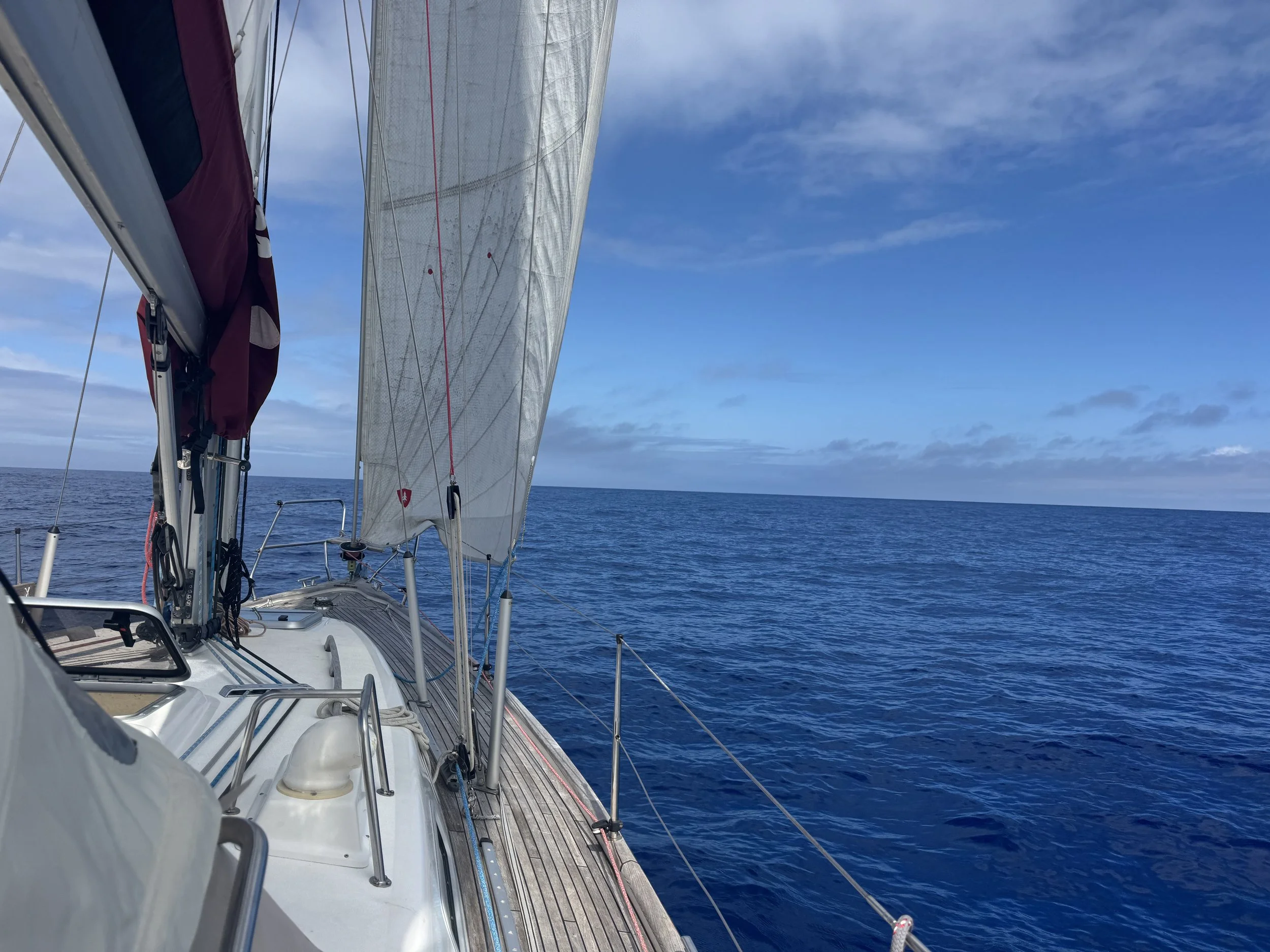
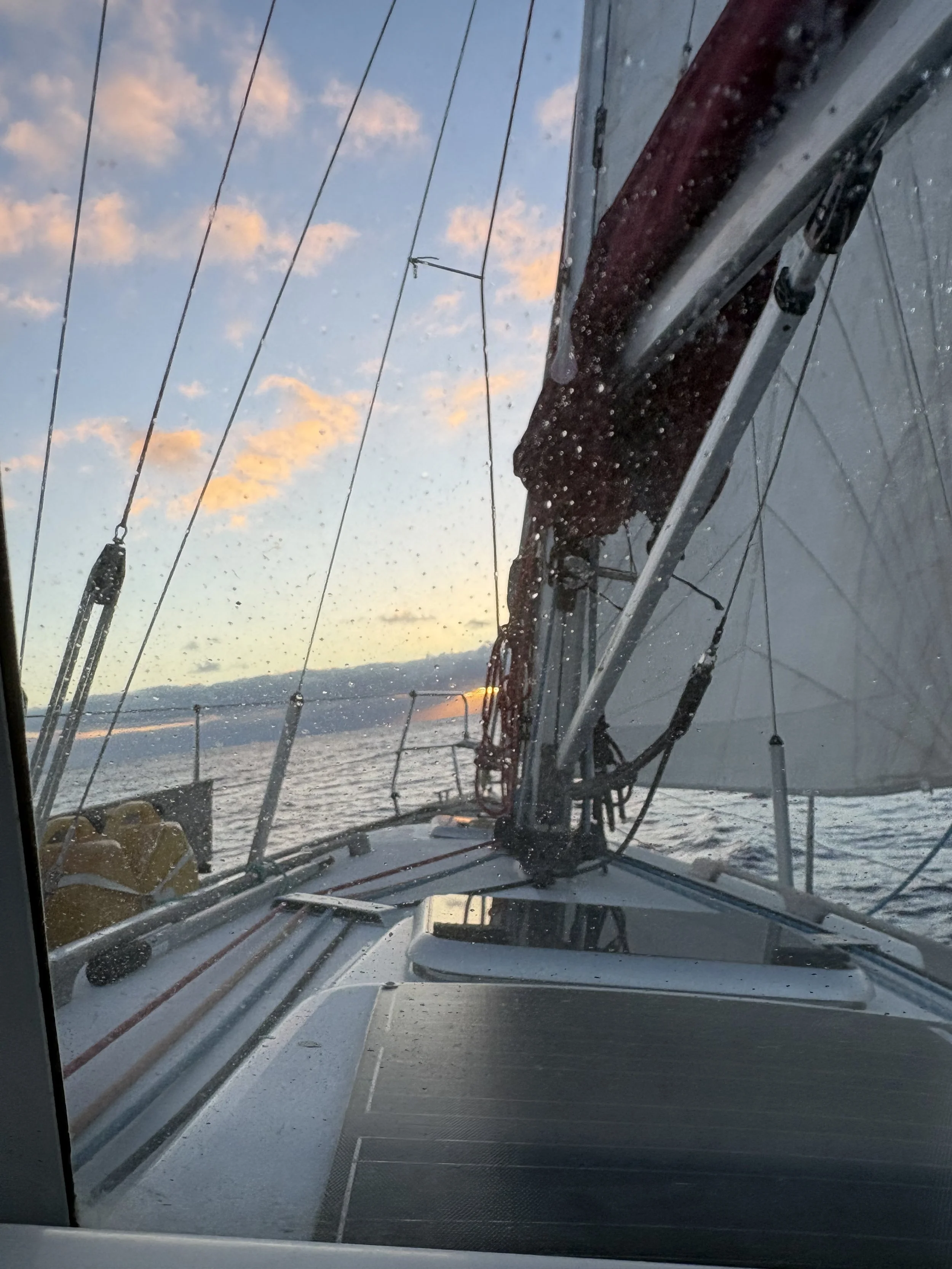
The day’s sailing begins with a light breeze and sunshine. At one point, we have to run the engine for 2–3 hours to get out of the shadow of the mainland. After that, we sail leisurely under full sail into the evening. It’s a bit overcast, but the sun keeps breaking through the clouds, and it looks as though we might at least catch a glimpse of a sunset through a veil of mist. The wind is expected to die down around midnight and return only very sporadically over the next 48 hours. After that, a passing low-pressure system with a southerly wind should carry us to the Portuguese trade winds (a northerly wind off the west coast of Portugal), which will allow us to cover the rest of the route to the cape off the Algarve. As the wind can blow quite strongly with a slight easterly component, we’re trying to sail as far north as possible into this zone. That’s the theory behind weather routing. In 8 days’ time, we’re supposed to be in Lagos on the Algarve.
Distance to Lagos: 840 nautical miles
Meal: Salad with capers and walnuts, cheese ravioli, steak sandwich
Azores – Algarve, Portugal Day 2
Wed 02 September 2026 19:49:00 GMT+0000 (Azores Summer Time)
The first night is very peaceful. The sea is extremely calm, yet we have enough wind to sail through the night. At times, a beautiful starry sky appears before disappearing again behind a blanket of clouds. There is a surprising number of ships out and about. During the night alone, we spot five and even have to give way to one heading straight towards us. We’re certainly not on our own.
As is so often the case at the start of a crossing, we take turns sleeping a great deal. It always takes a bit to settle into the new rhythm. We read, crochet, listen to music and just zone out – classic entertainment on a crossing. But it feels a bit different. We’re already getting a bit bored. Is it because the last few weeks have been so packed with activities, trying to see as much of the islands as possible with our visitors? Or is it because our motivation for this final crossing is somewhat limited, as it’s simply the fifth multi-day crossing since the end of April? Or is it because our journey is coming to an end in Portugal and boat maintenance work awaits us at our destination? It’s probably a combination of all these things. But I’m still hopeful that, as we settle into the daily routine of the crossing, the joy will return and we’ll be able to enjoy this final leg of the journey.
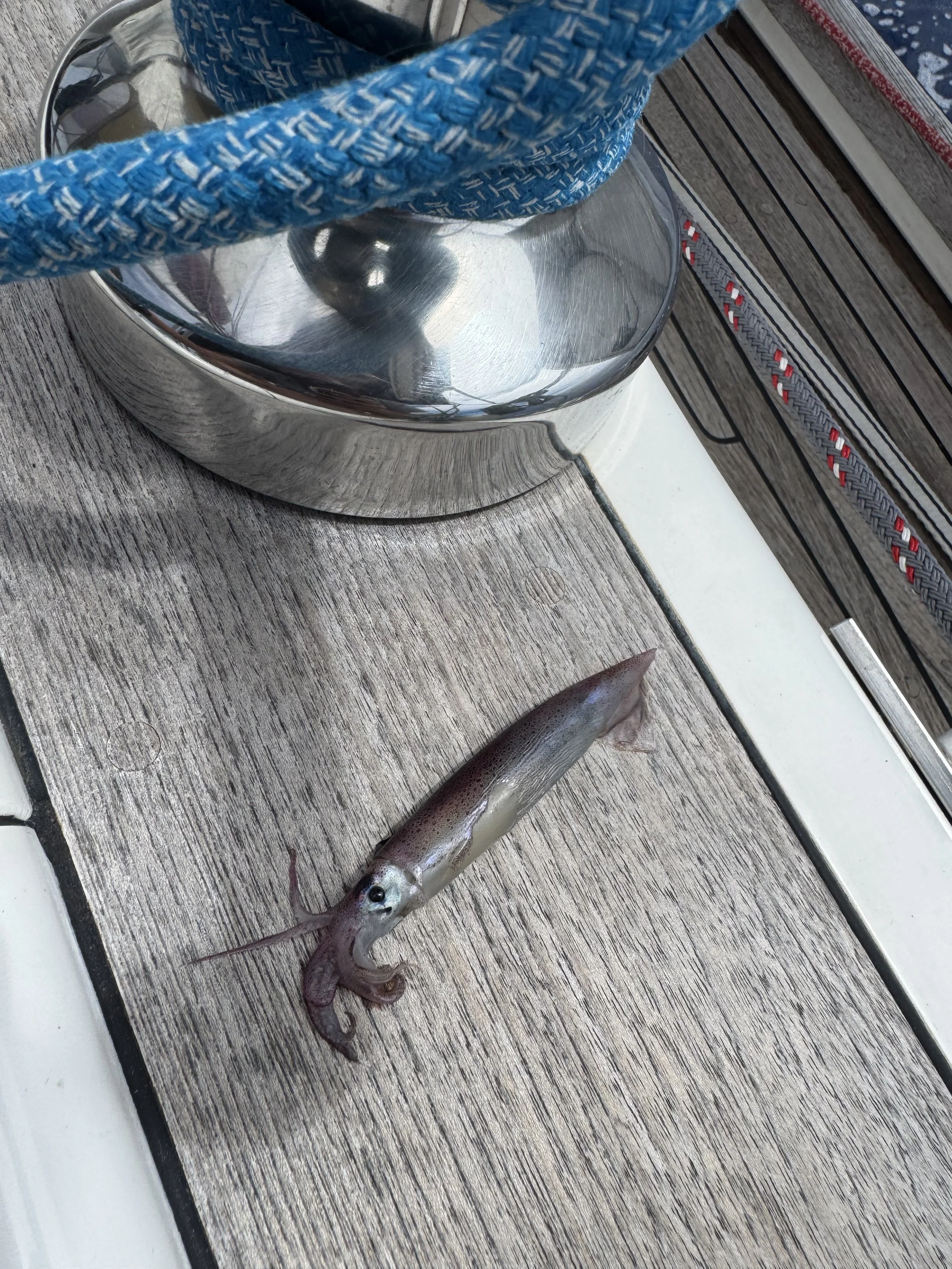
In the afternoon, a squid unfortunately finds its way on board, but by the time we realise, it’s already too late. Despite this, we return it to the sea. Apart from a few birds, we unfortunately have no other animal visitors.
Daily average: 108 nautical miles (114 nautical miles in 26 hours)
Distance to Lagos: 720 nautical miles
Meals: Bread with sausage, cheese and spreads, ramen, mushroom ravioli, tortilla española
Azores – Algarve, Portugal Day 3
Thu 03 September 2026 19:26:00 GMT+0000 (Azores Summer Time)
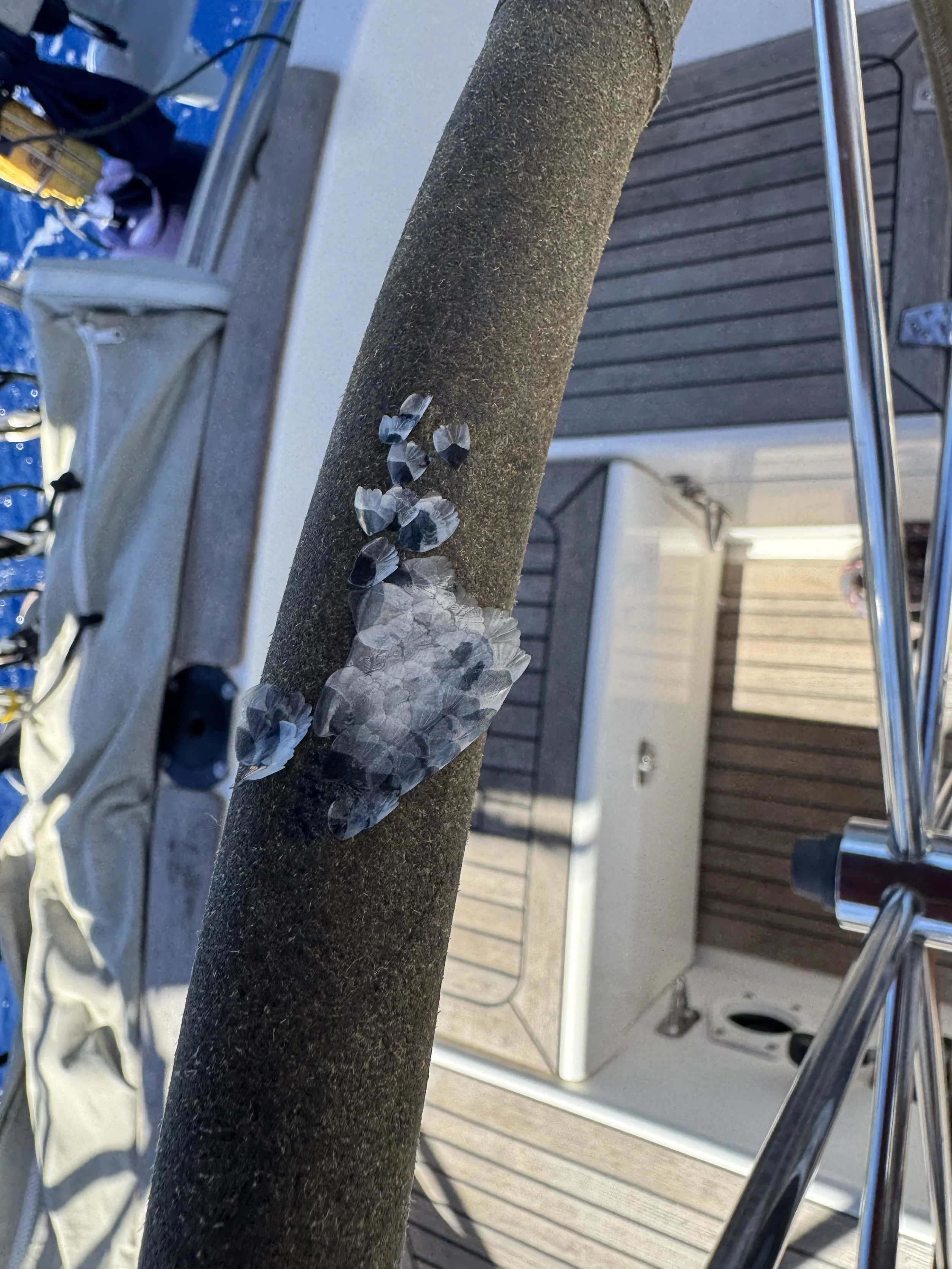
The night is a bit more action-packed, though it’s worth pointing out that, to put things into perspective, we’ve never sailed under full sail (i.e. with maximum sail area) for this long on any previous ocean crossing. Ines sees the plankton’s bright glow and is delighted by it. Apart from the moon, there is little light in the sky, as the night is otherwise largely cloudy. Just as the watch changes, a torpedo (flying fish) strikes. Peter was just about to go to sleep. Using his teacup, he flings the wildly wriggling creature overboard. The next day, the on-board detectives piece together the attack. Remnants of scales on the steering wheel reveal the point of impact. Numerous traces of the night-time raid are also found on the cockpit floor. Was it, after all, a planned pirate attack?
At sunrise, the wind shifts further east and we’re already heading SSE. Time for a manoeuvre – the only one since São Miguel has been out of sight. After a tack, we’re heading north-east again.
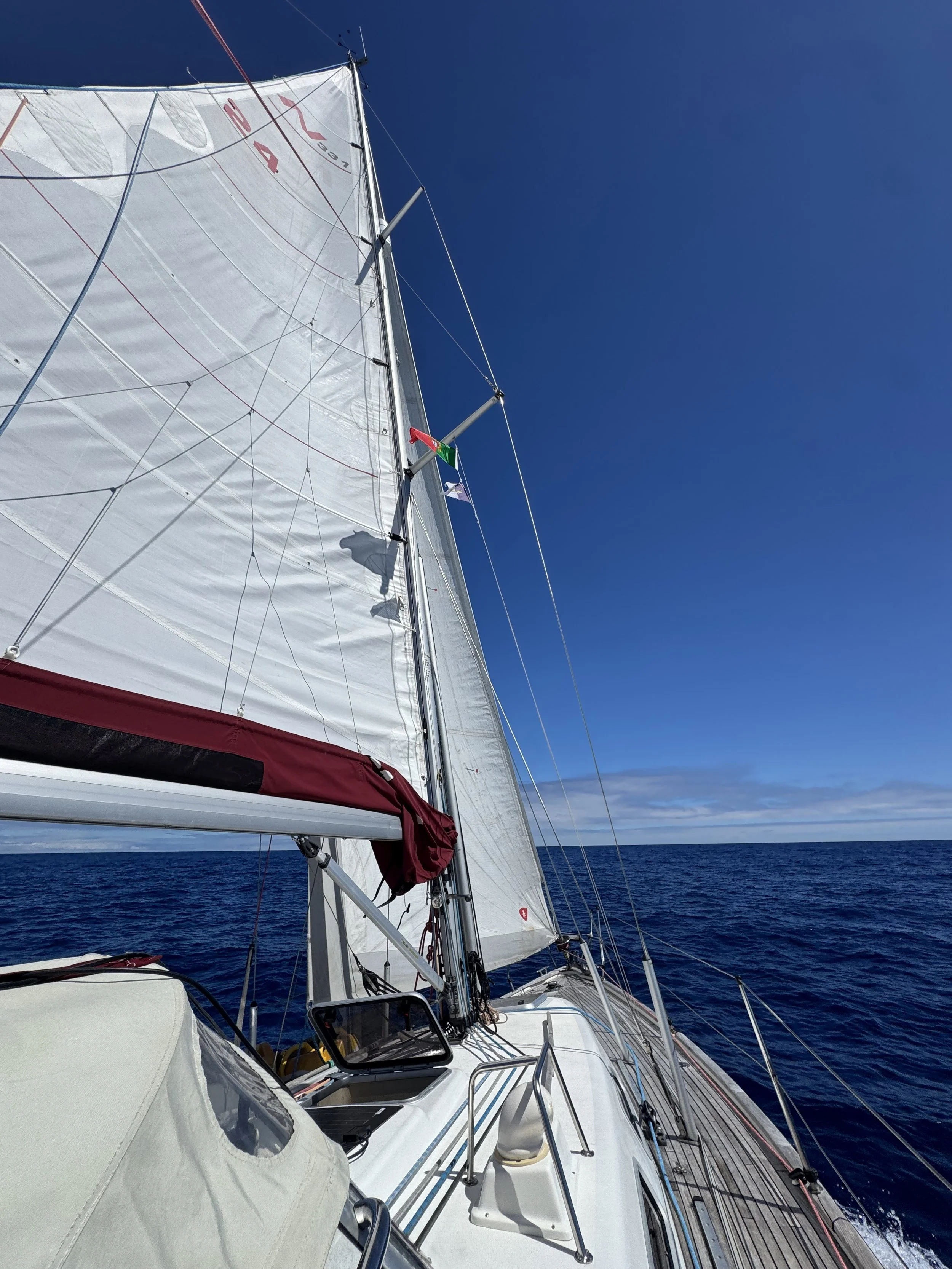
The morning weather forecast once again predicts no wind for the coming days. So far, we’re still sailing along nicely under full sail, today under blue skies and sunshine with very little swell. Under different circumstances, some might call us ‘beer sailors’. The engine has run for less than two hours in total so far. In any case, we no longer trust the weather forecast and are simply hoping that things will continue this way.
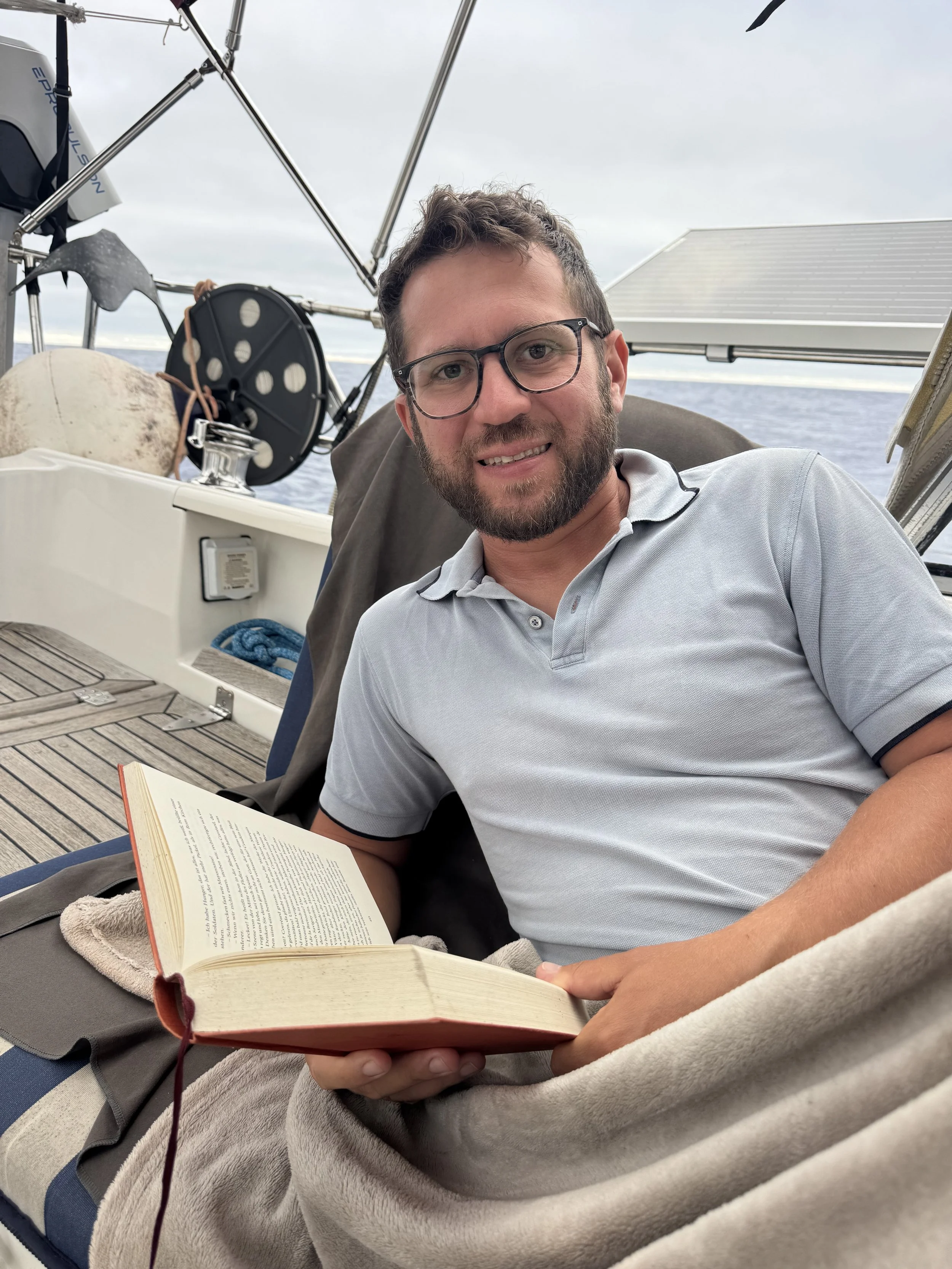
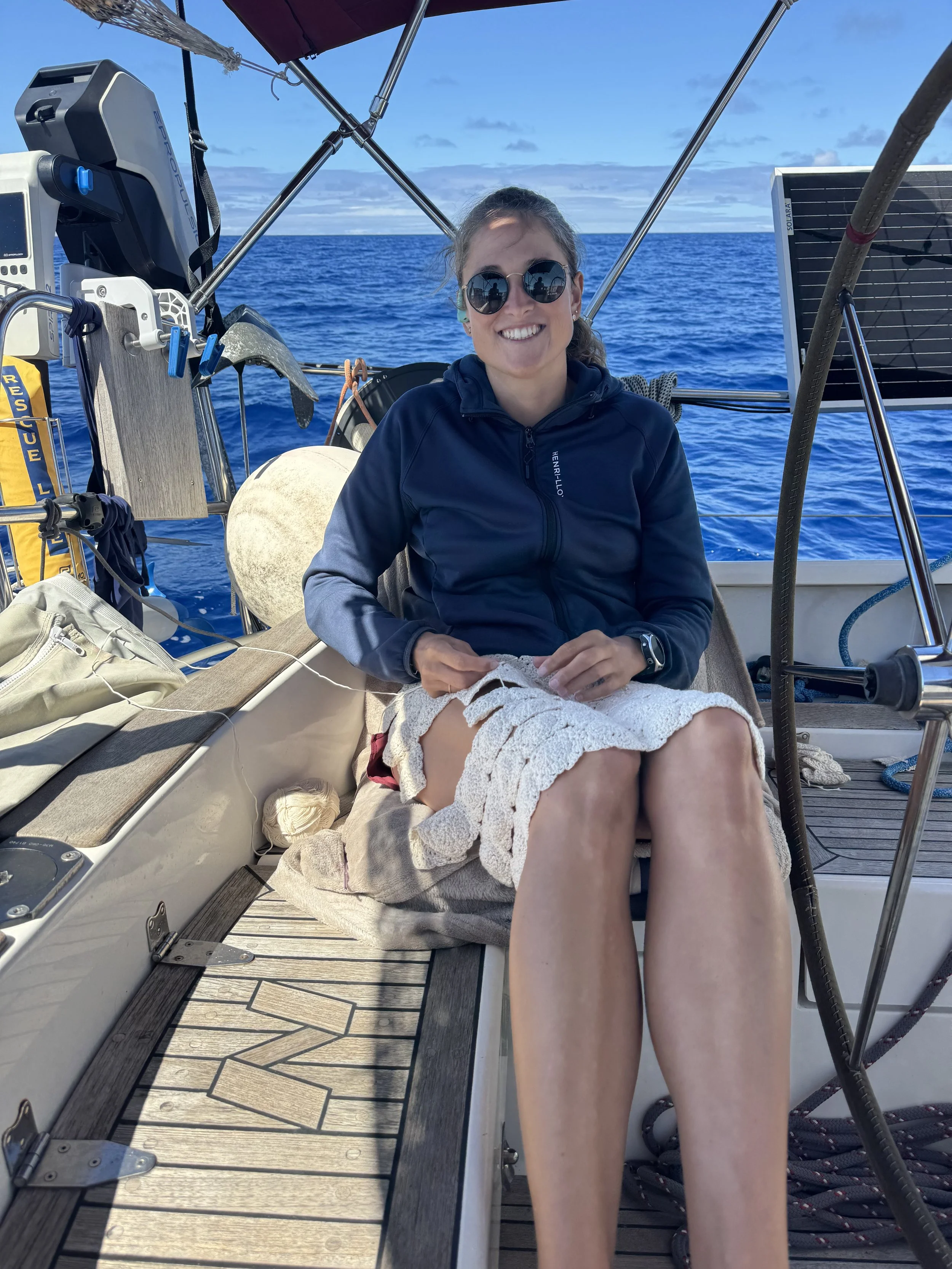
We’re recovering from some sort of exertion – no, actually, we’re just sleeping and aren’t quite sure why we’re tired – crocheting and reading. Peter has just finished reading The Raft of the Medusa by Franzobel today – a fitting horror story for an ocean crossing like this.
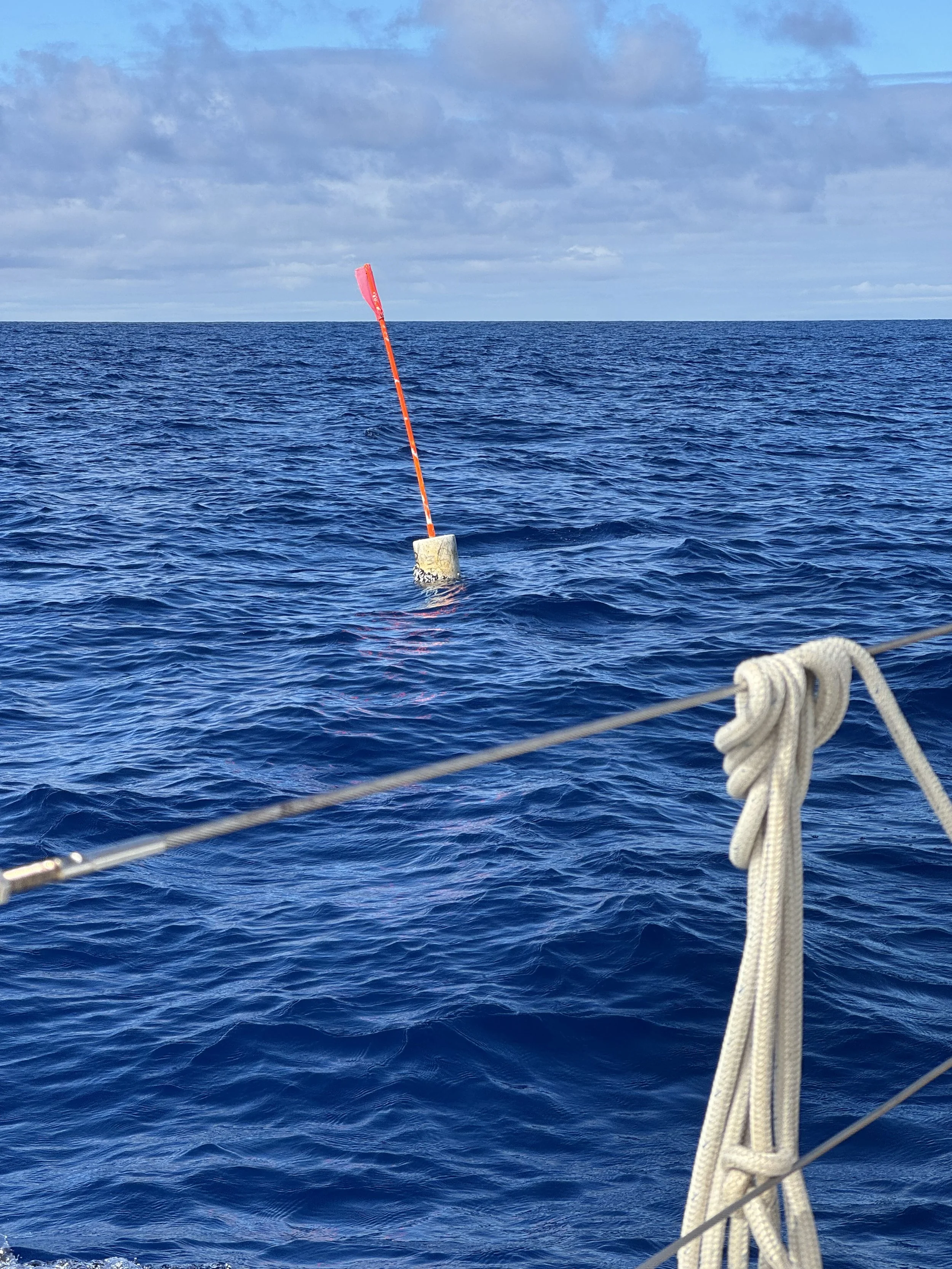
In the afternoon, Ines spots a floating flag quite close by. To make sure it’s just a fishing buoy and that there isn’t a lifebuoy attached to it, we sail closer. Much to Peter’s annoyance, as he’s woken from his afternoon nap, but fortunately it turns out to be just that. Still, it’s a bit bizarre to spot a fishing buoy in the middle of the ocean.
Daily average: 112 nautical miles
Distance to Lagos: 602 nautical miles
Meals: Avocado toast with scrambled eggs, gazpacho, bread with spread
Azores – Algarve, Portugal Day 4
Fri 04 September 2026 19:45:00 GMT+0000 (Azores Summer Time)
This time, the wind really does die down after a glorious day’s sailing. Halfway through the first watch, at around 10.00 pm, we have to rely on the power of the ‘dinosaurs’ (diesel) to cover some miles. The night is correspondingly calm; the stars are out in all their splendour, and Peter counts a full six shooting stars during his watch.
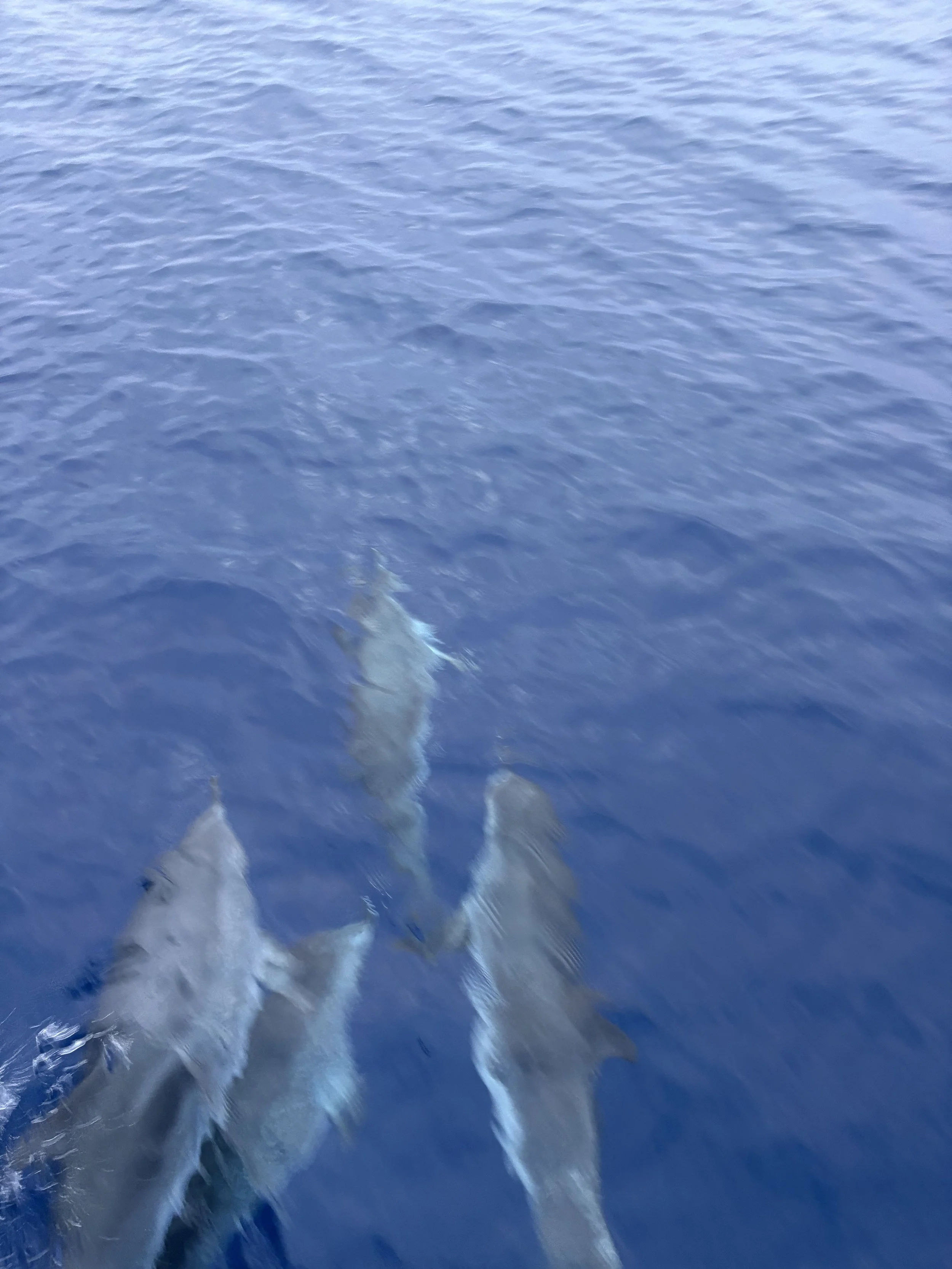
No sooner has Peter opened his eyes after his morning doze in the cockpit than he spots dolphins. A couple of large ones are clearly riding the bow waves here – even the oldest among them can keep up at the boat’s speed. The wildlife highlight, however, isn’t the dolphins but two turtles drifting past us – we certainly weren’t expecting that on the high seas.
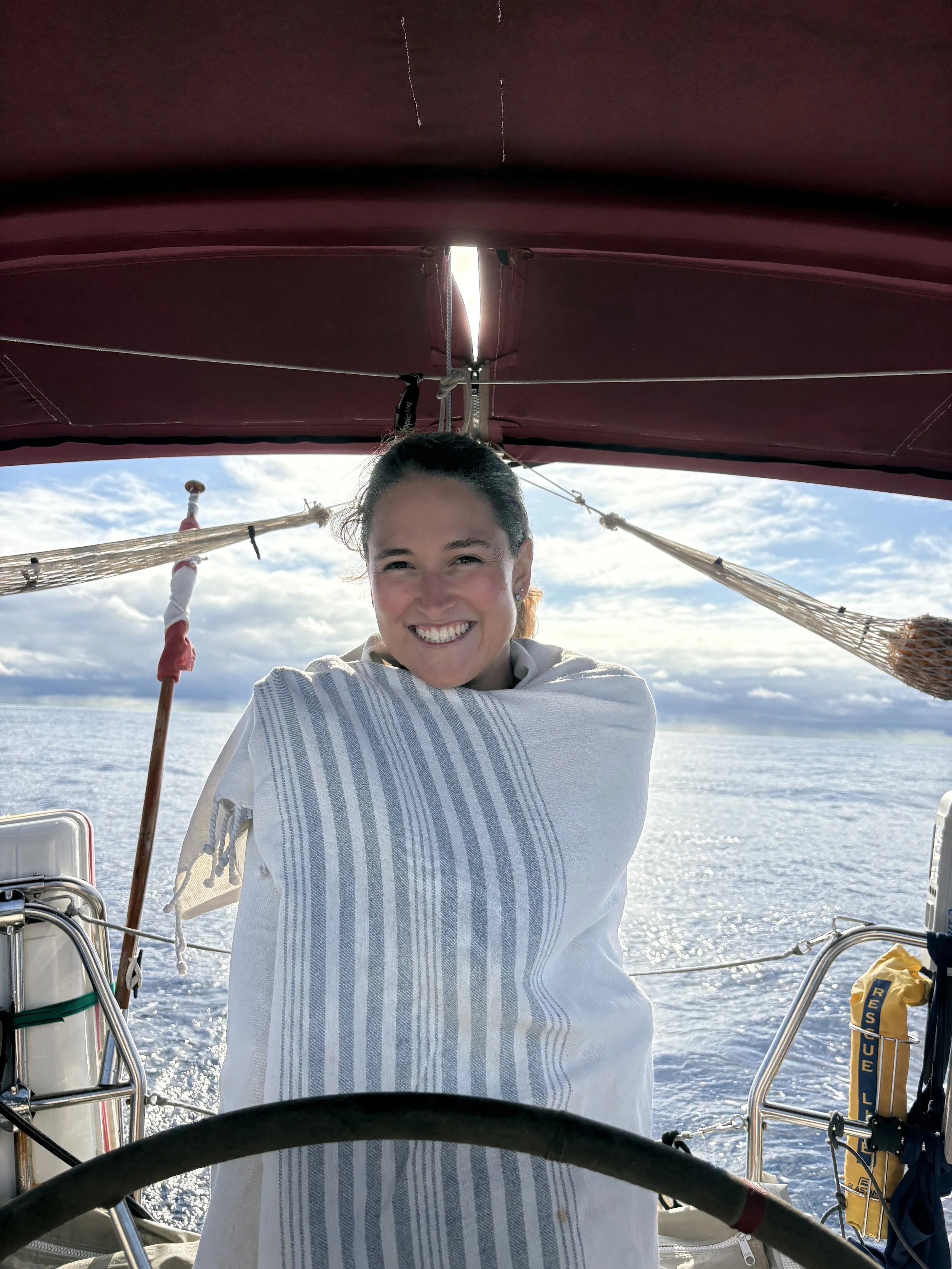
In the early afternoon, we encounter two brief showers, but it’s only a light drizzle. The sun quickly dries the cockpit out again. We make the most of the running engine, as the waste heat warms our hot-water tank, and treat ourselves to a warm shower in the cockpit.
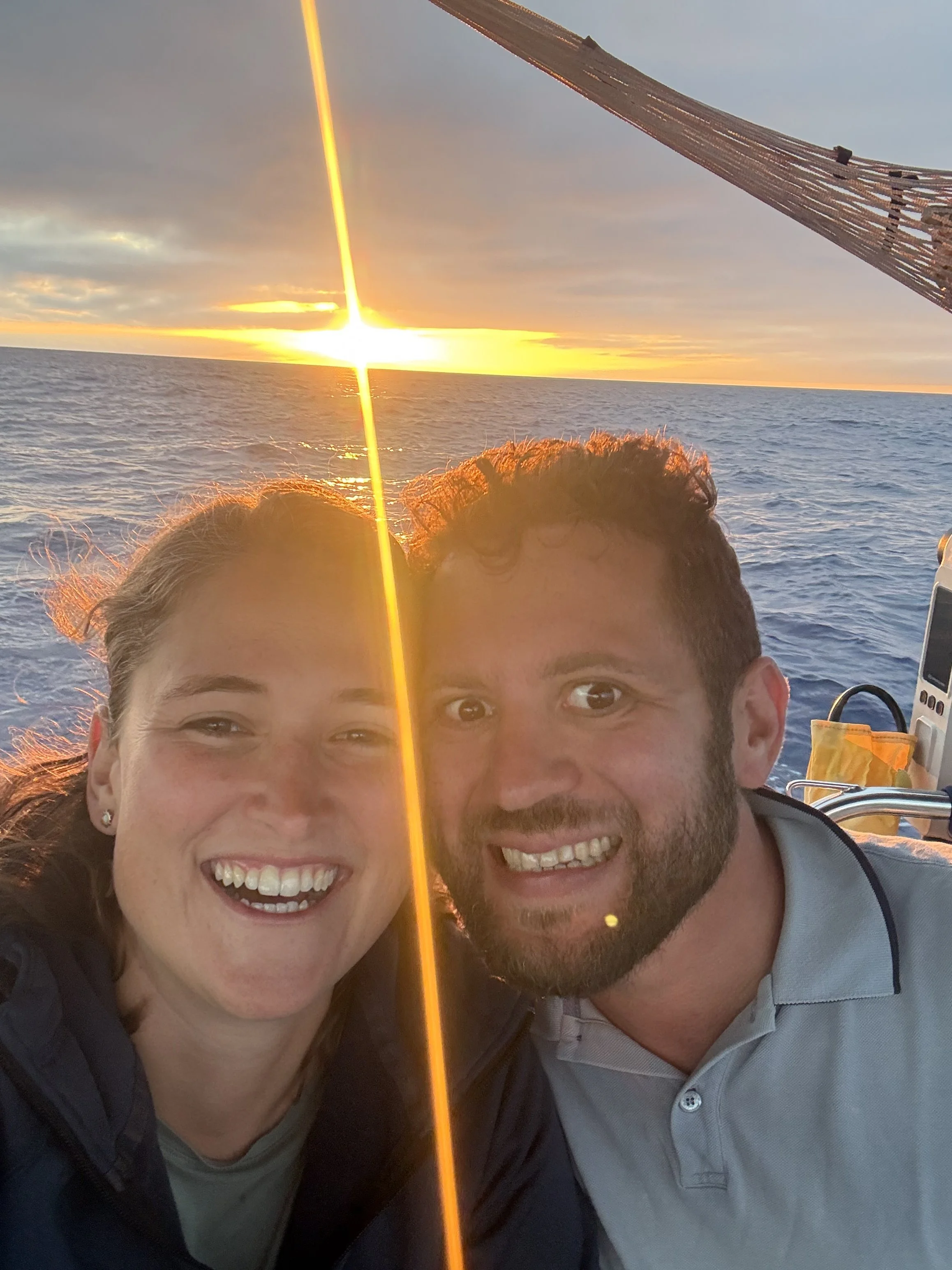
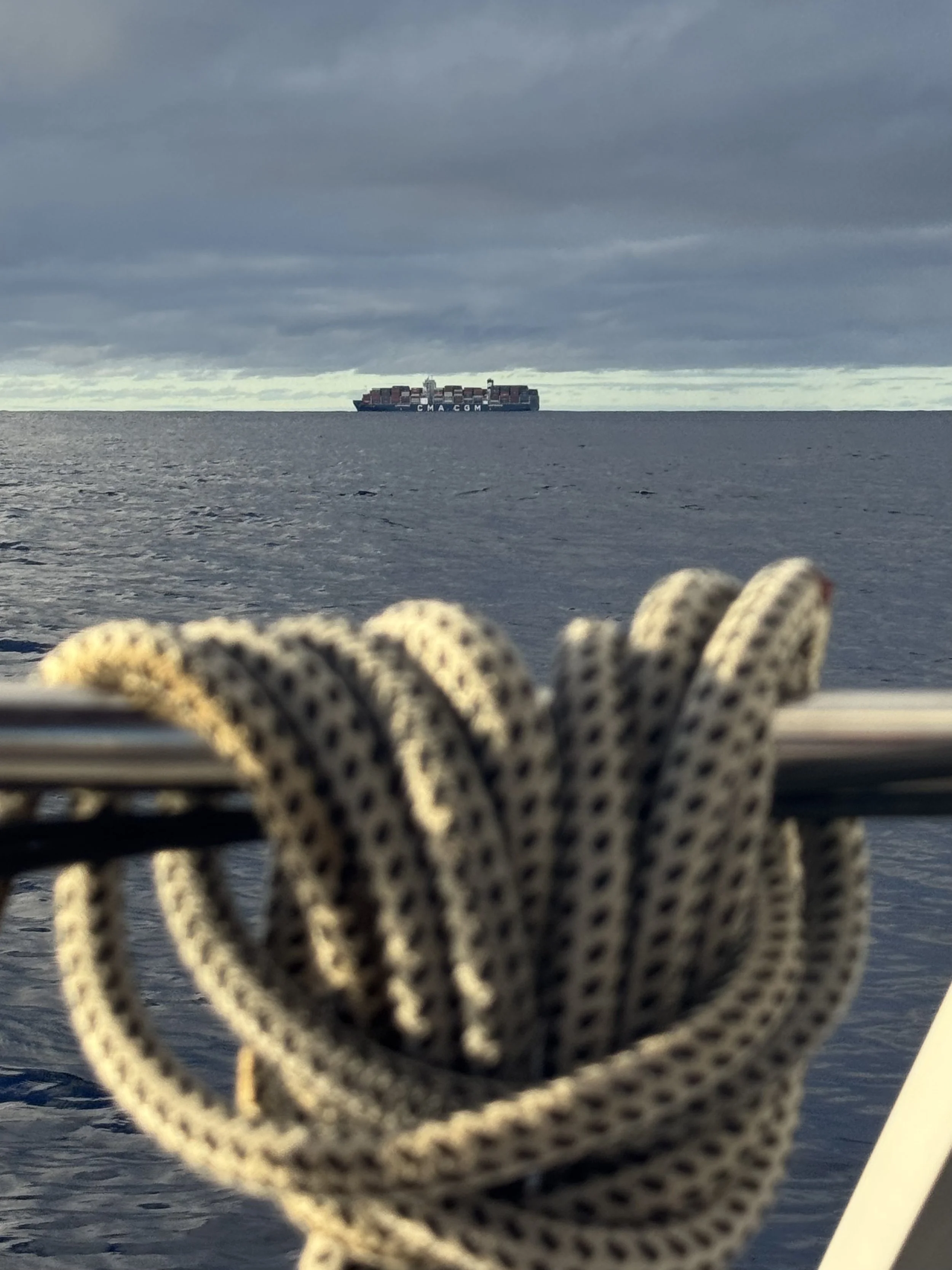
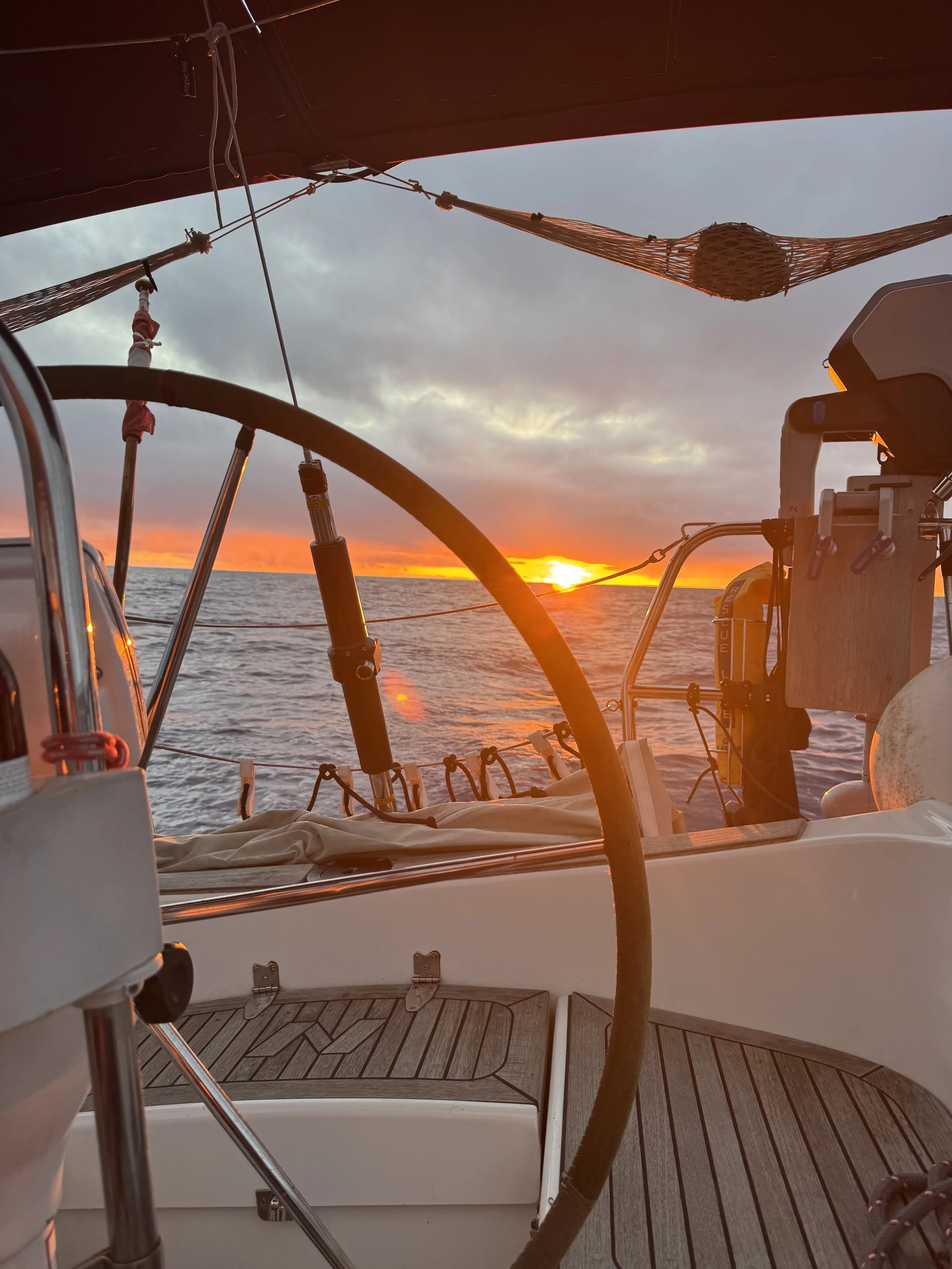
Apart from a container ship passing by in the evening, everything has been very quiet today. We hope the wind picks up again soon so we can finally sail in peace – the hum of the engine is starting to get on our nerves… Oh, just in time for sunset, we’re able to switch off the engine and enjoy our pho noodles in the cockpit with a perfect view of the setting sun. Let’s see if it’ll be a quiet night without the sound of the engine.
Daily average: 108 nautical miles
Distance to Lagos: 495 nautical miles
Meals: Quesadillas, pitas with hummus, aubergine and courgette, pho noodles and chocolate mousse
Azores – Algarve, Portugal Day 5
Sat 05 September 2026 19:35:00 GMT+0000 (Azores Summer Time)
Later in the evening, we have to run the engine for another hour. We’re rewarded with a magnificent starry sky before the moon rises – crystal-clear and cloudless. We see the Milky Way in all its splendour and even spot a shooting star together. Shortly before midnight, the wind picks up again and is supposed to stay that way until we reach our destination. Otherwise, the night passes relatively uneventfully. Ines writes our first post from the Azores, about Flores. In terms of distance covered, we’ve completed half the journey at some point during the night.
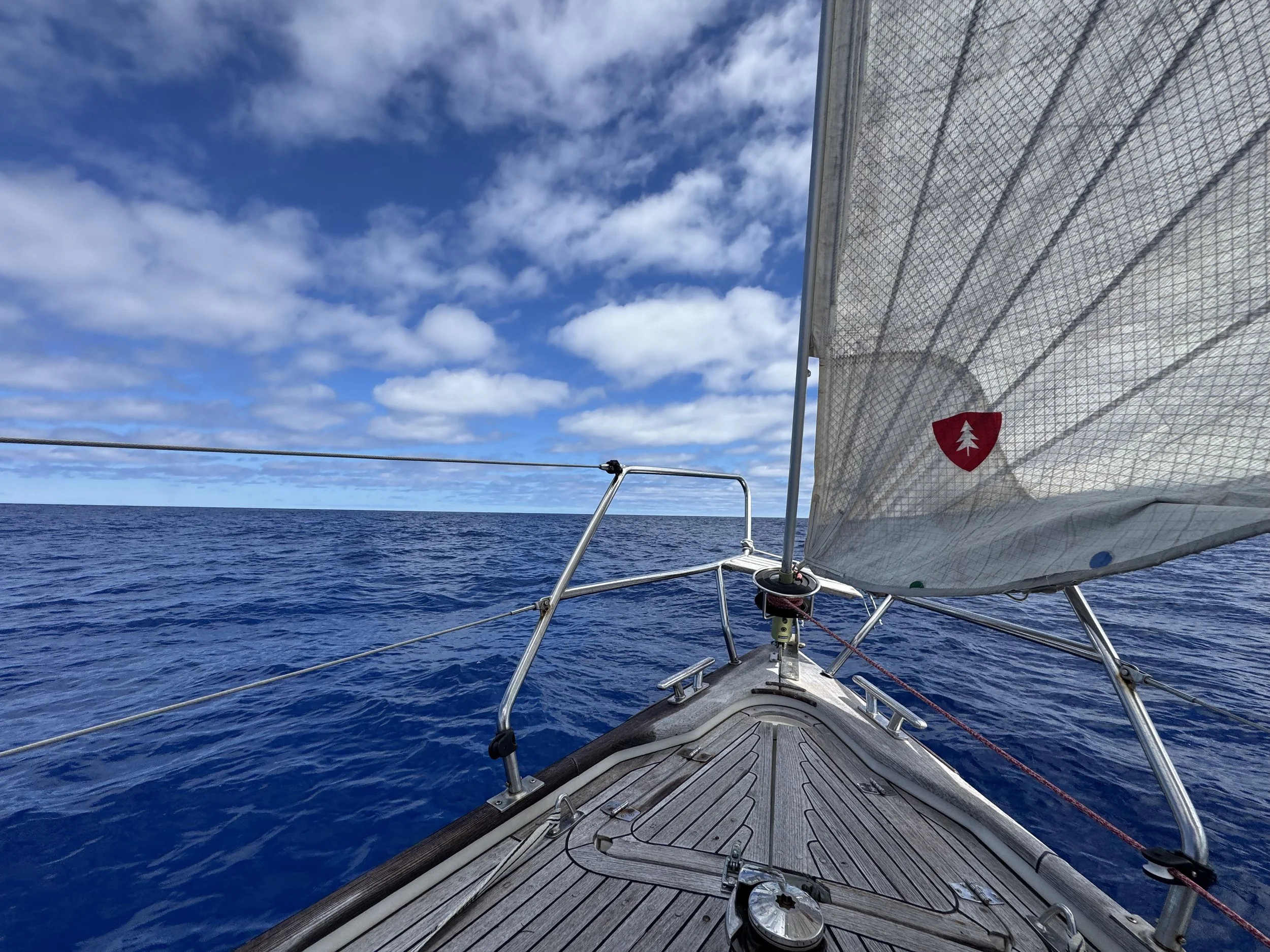
The morning starts off cloudy, but it clears up quite soon and the rest of the day is very sunny, apart from a few stray cumulus clouds. The wind is a bit inconsistent in strength and direction, blowing at 6–17 knots – at least we’re able to sail quite comfortably. We settle into a bit of a ‘cruising mode’ and philosophise about everything under the sun. Ines is crocheting her top, and this time Peter has found himself a light-hearted read about the emigrants from the Azores – not too heavy going, after all, the people there don’t eat each other.
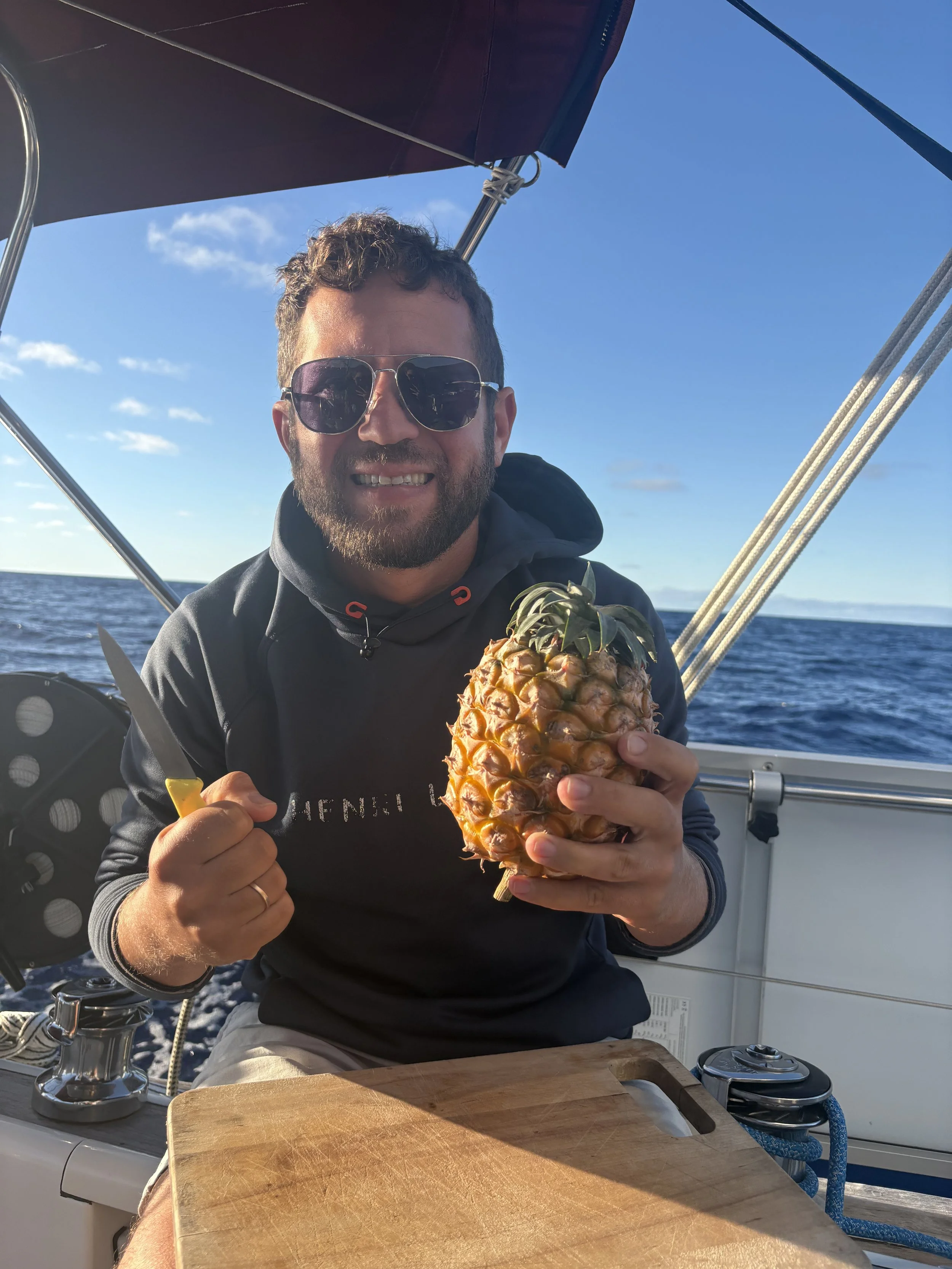
In the evening, we tuck into the pineapples from the Azores. They actually grow them on São Miguel (more on that soon in one of the blog posts about the Azores). They’re smaller and very sweet. We’ve picked them at just the right stage of ripeness and all agree that they’re among the best pineapples we’ve ever eaten. We’ve saved half for tomorrow.
Daily average: 120 nautical miles
Distance to Lagos: 373 nautical miles
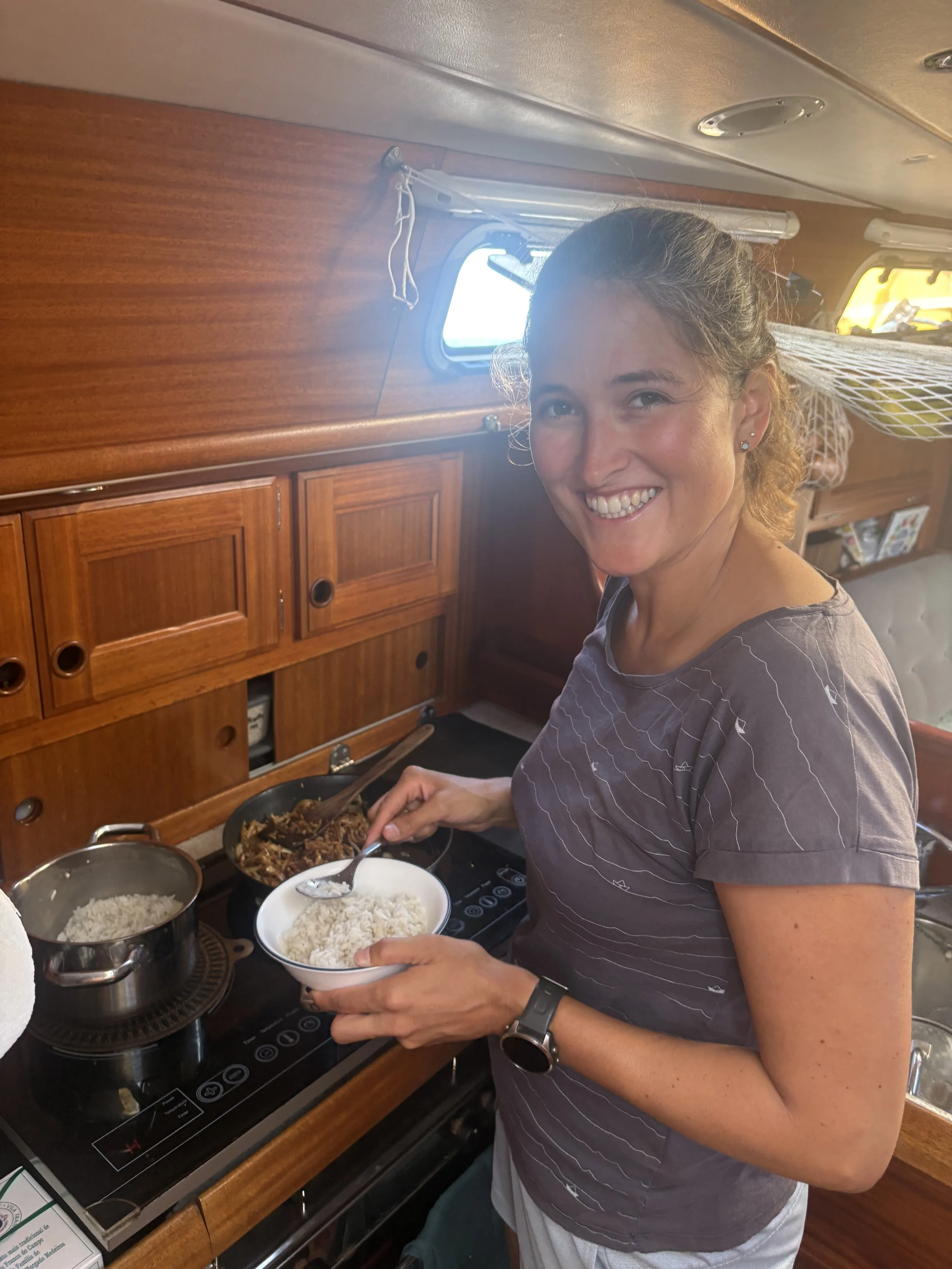
Meals: Quesadillas, the last pita with hummus, tofu stir-fry with rice, São Miguel pineapple
Azores – Algarve, Portugal Day 6
Sat 06 September 2026 19:30:00 GMT+0100 (Western European Summer Time)
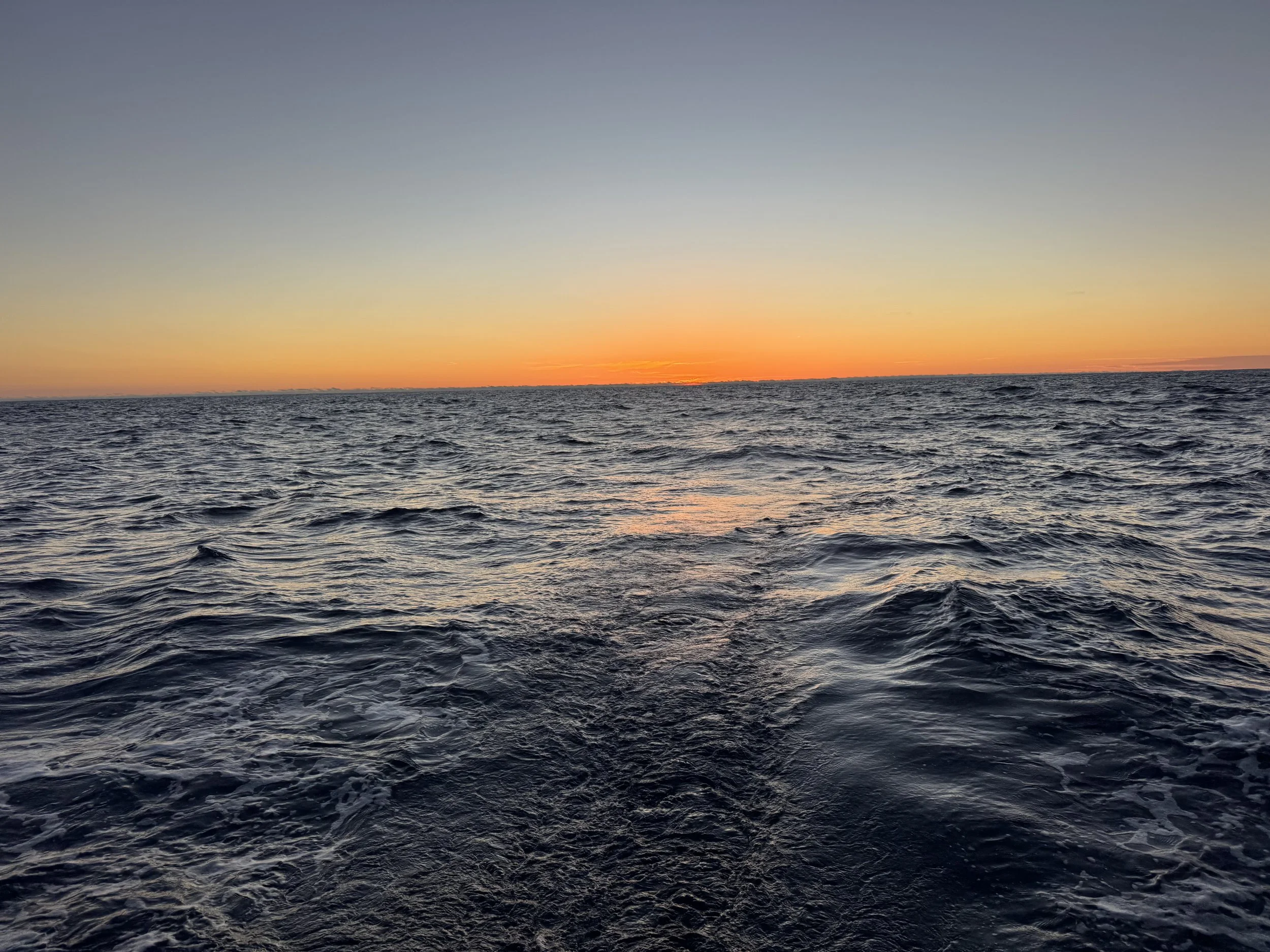
Once the sun has set completely, the stars gradually begin to appear in the cloudless sky. We briefly switch off all the lights on board and enjoy the unique view of the twinkling stars. The Milky Way shines directly above us in all its splendour, and we feel very lucky to be able to admire such a sight.
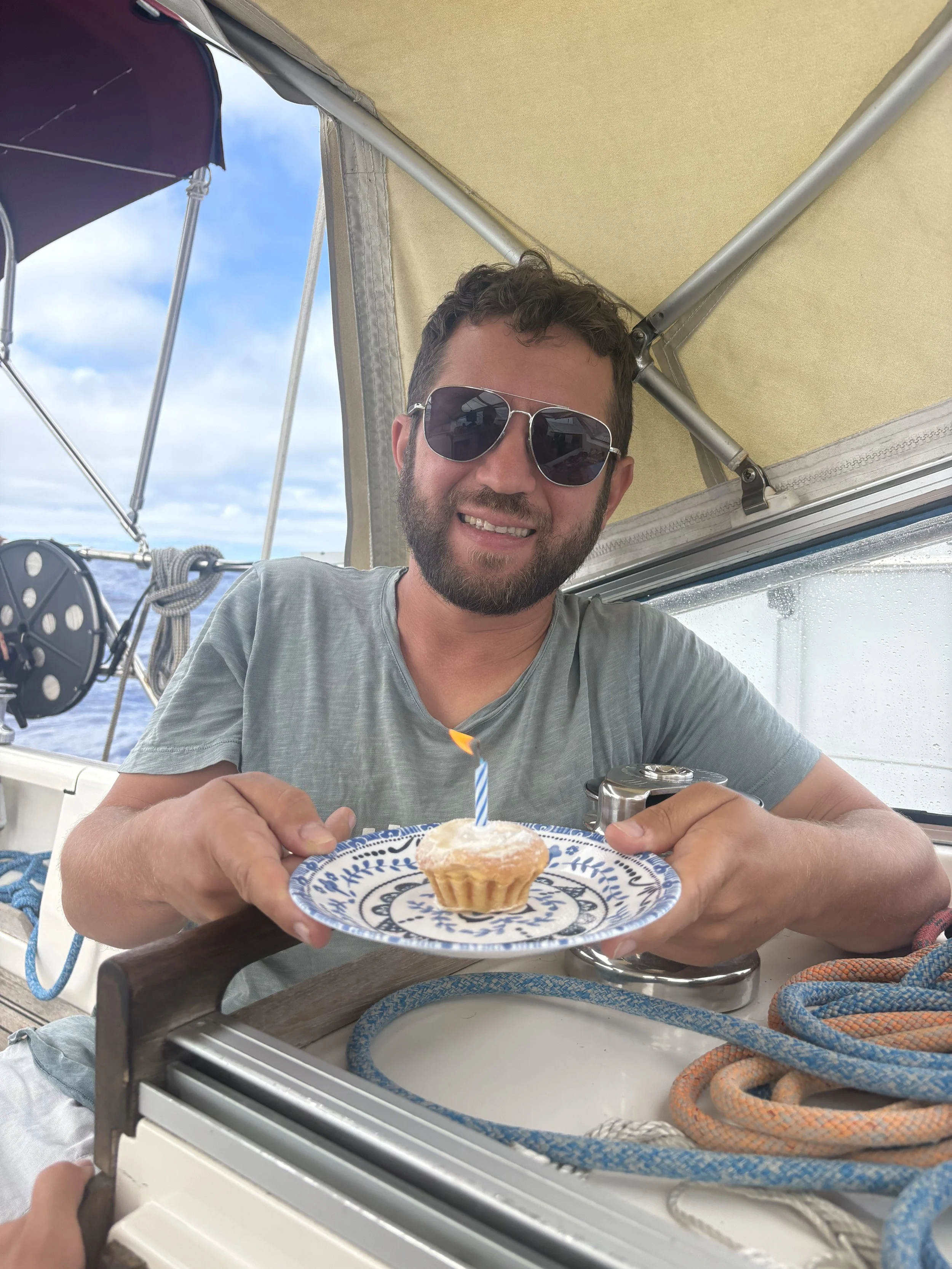
At 11 pm, we set our watches to Portuguese time, so Peter can celebrate his birthday an hour early – happy birthday, Pezi!
During the day, as forecast, the wind and waves continue to pick up, so we reef the sails for the first time on this crossing – we haven’t sailed under full sail for such a long stretch at any point during the whole journey.
To mark the occasion, we have a queijada – a traditional Azorean sweet – as a birthday cake, and we spot a turtle surfacing behind our boat once again.
In the late afternoon, the wind and waves increase even further. At times, we’re facing winds of over 20 knots and waves just over 1.5 metres high. To make things a bit more comfortable, we reef the sails once more before dinner.
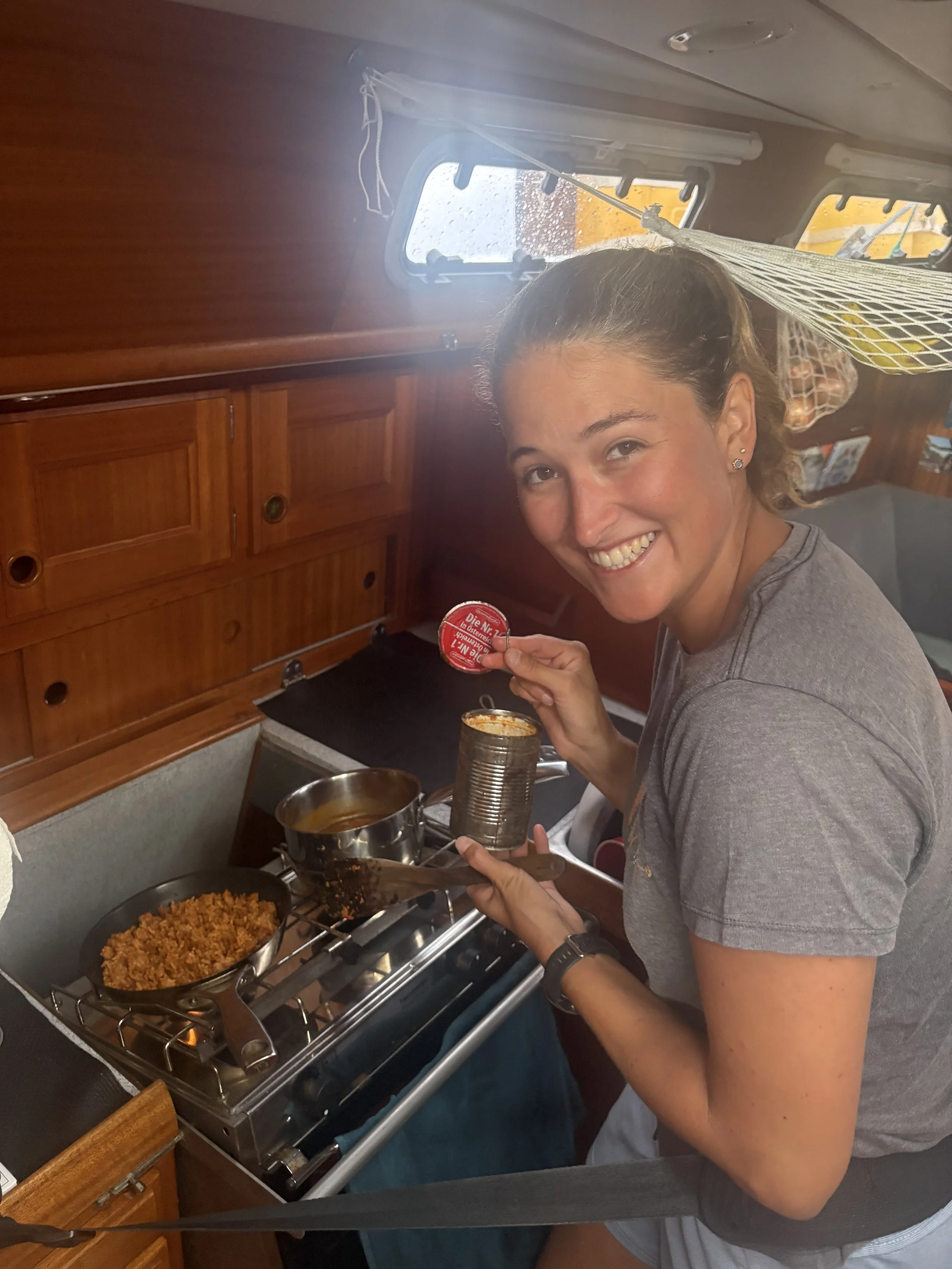
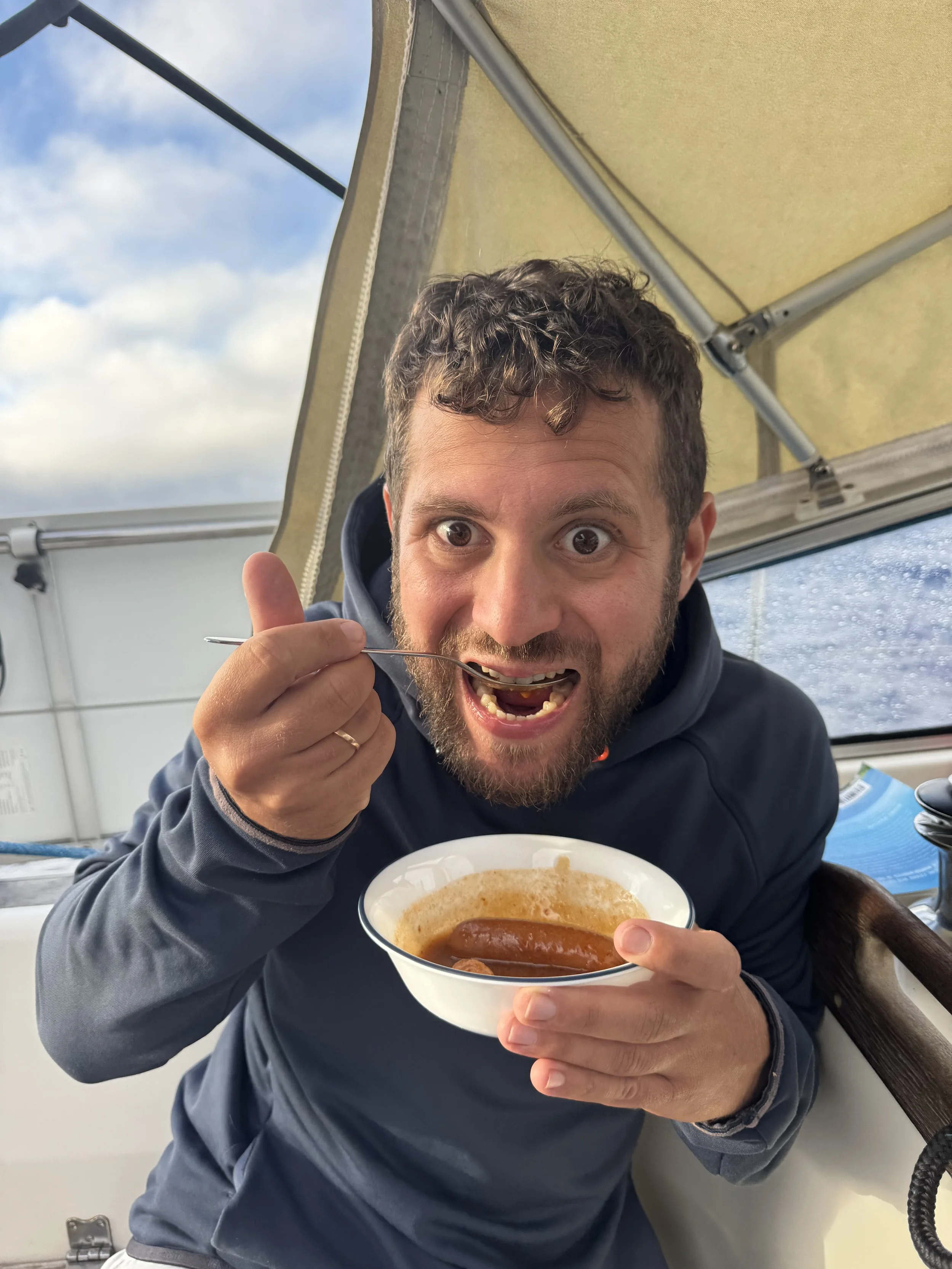
In keeping with the occasion, we’re having Austria’s number one meal: Inzersdorfer sausage goulash and tinned rice and meat. After all, that’s what the birthday boy asked for – even if, in calmer conditions, he would most likely have wanted something else. For dessert, there’s the leftover pineapple and chocolate mousse.
Well reefed and moving at a good speed, we race into the night – the final stretch is proving strenuous once again with a bit more wind and swell, and the shipping lane. But we’re in good spirits!
Daily average: 142 nautical miles
Distance to Lagos: 243 nautical miles
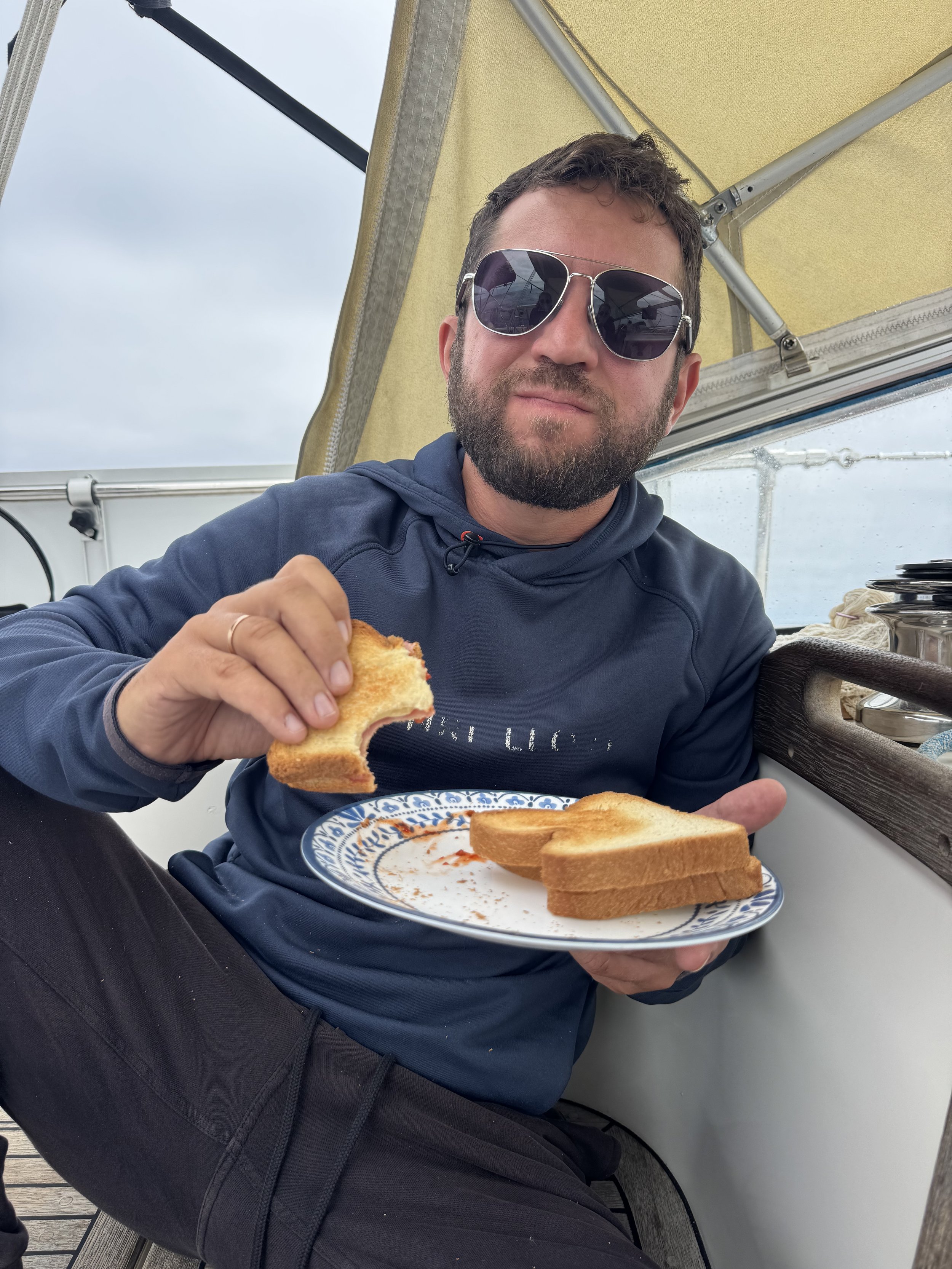
Meals: ham and cheese toast, Inzersdorfer sausage goulash and tinned rice with meat, São Miguel pineapple and chocolate mousse