A short break in the Bahamas: Blue Holes, dolphins and lemon sharks
Long Island – Welcome to the Bahamas
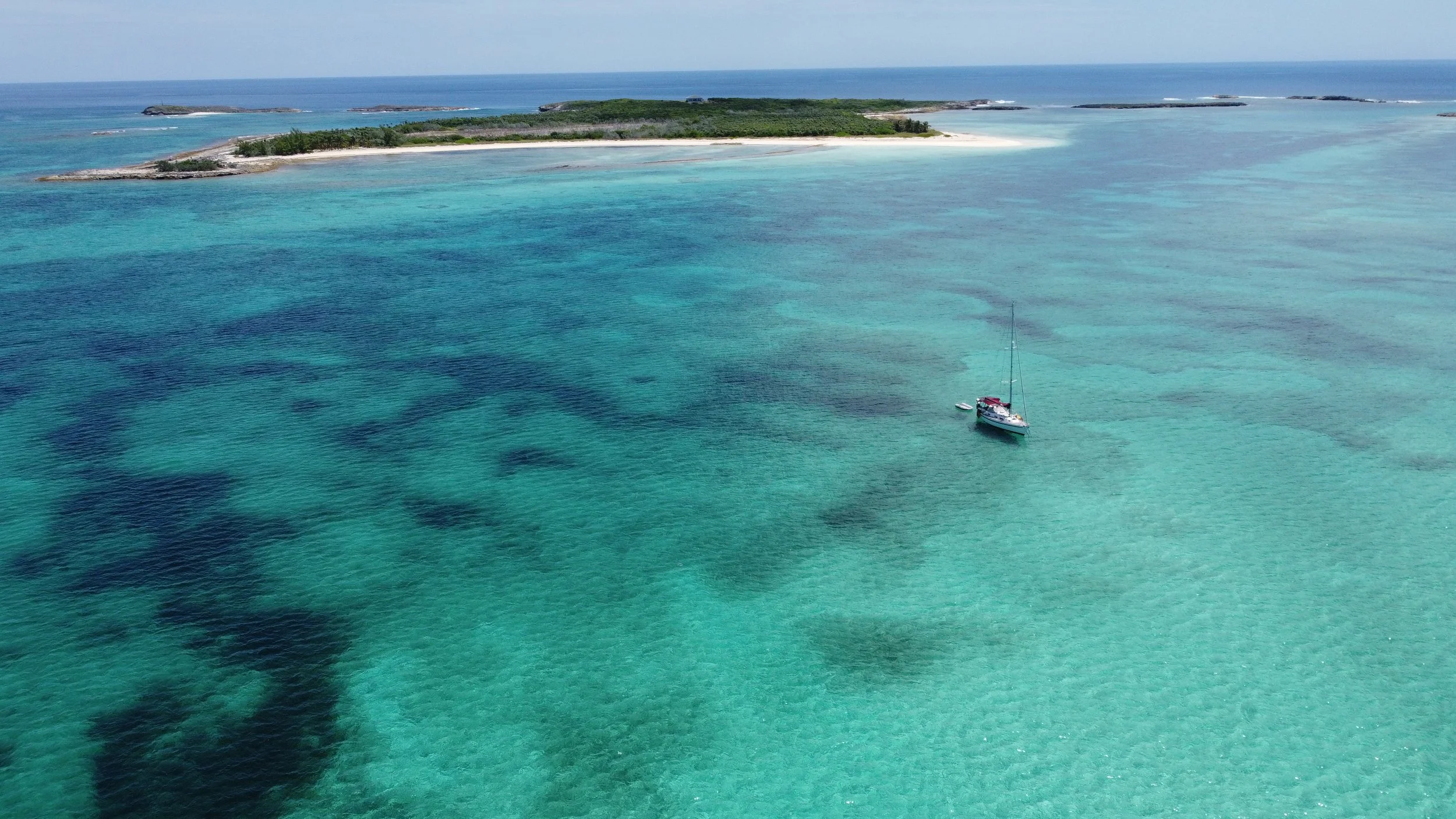
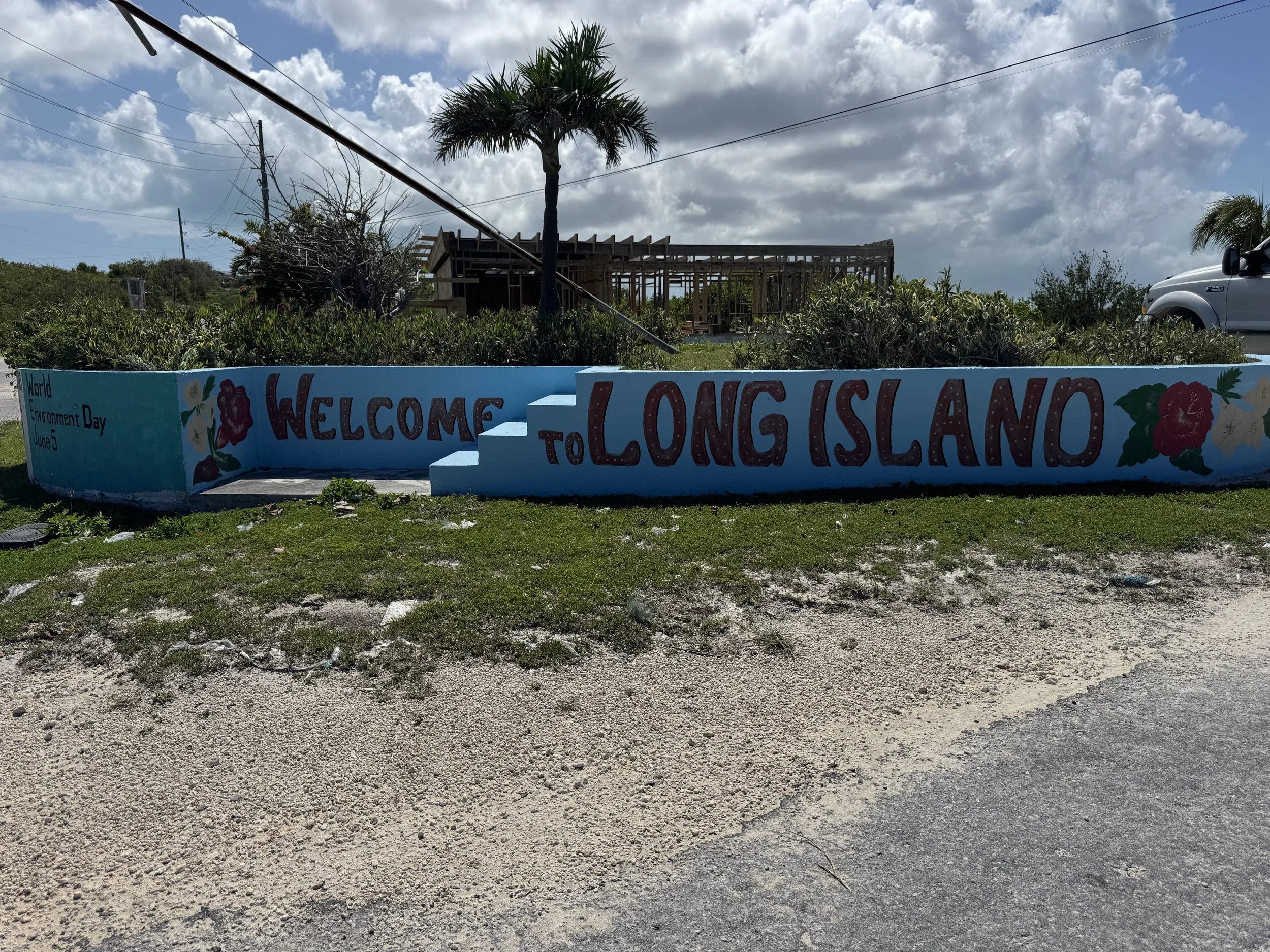
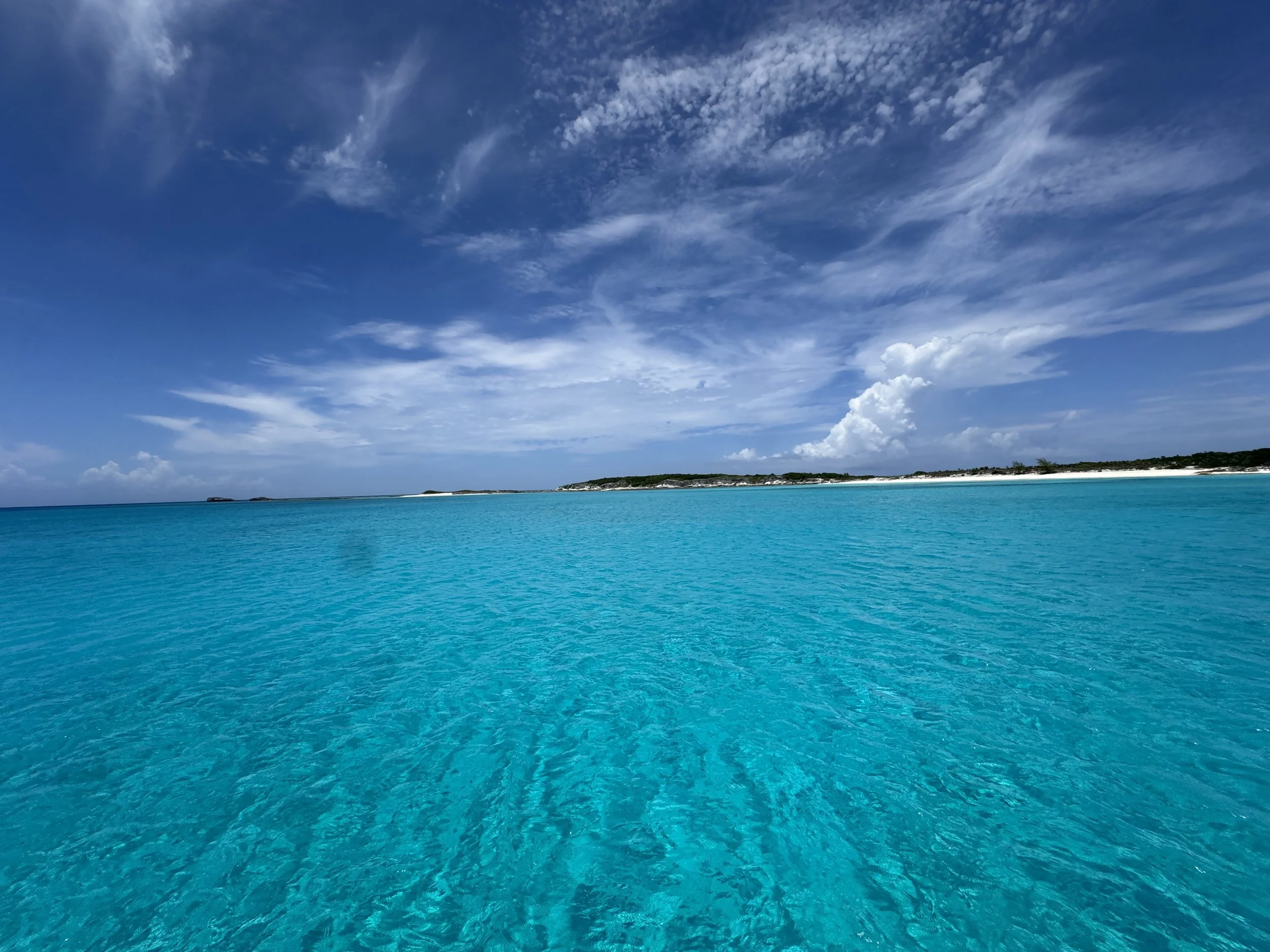
When we arrive in Long Island in the morning and drop anchor off Clarence Town, the water is turquoise and crystal-clear. This is exactly how we imagined the Bahamas! We enjoy the new view over breakfast before we inflate the dinghy and paddle into the little town. Our outboard motor is currently out of action because a wire has snapped in the connector between the motor and the battery. On the way to the customs office in the marina, we notice the beautifully maintained gardens and colourful houses. We like it straight away. Clearance is quickly sorted thanks to the forms we’d filled in online beforehand and the online payment of 350 Bahamian dollars (1:1 USD). “Welcome to the Bahamas!” This allows us to stay in the Bahamas for 30 days.
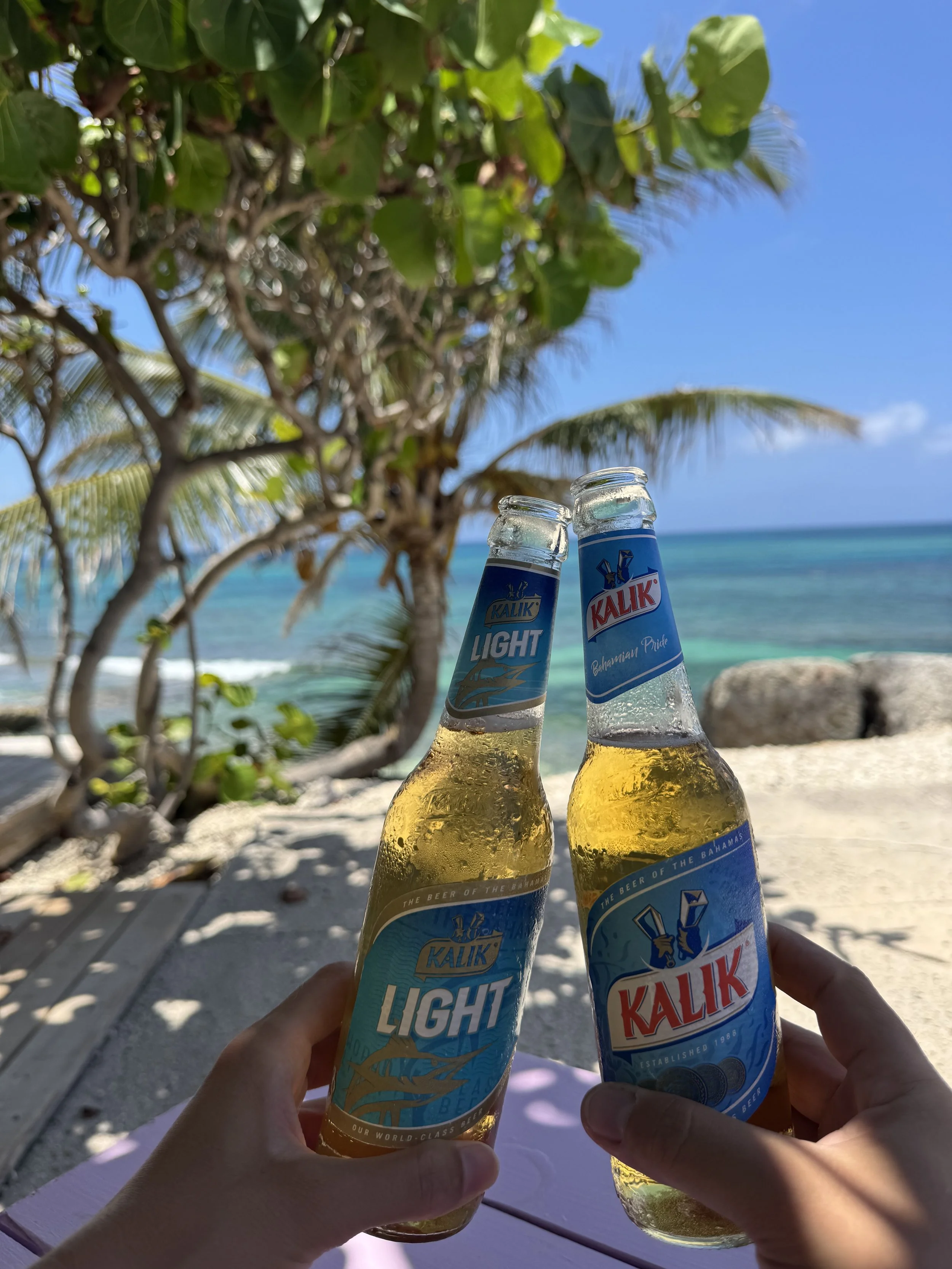
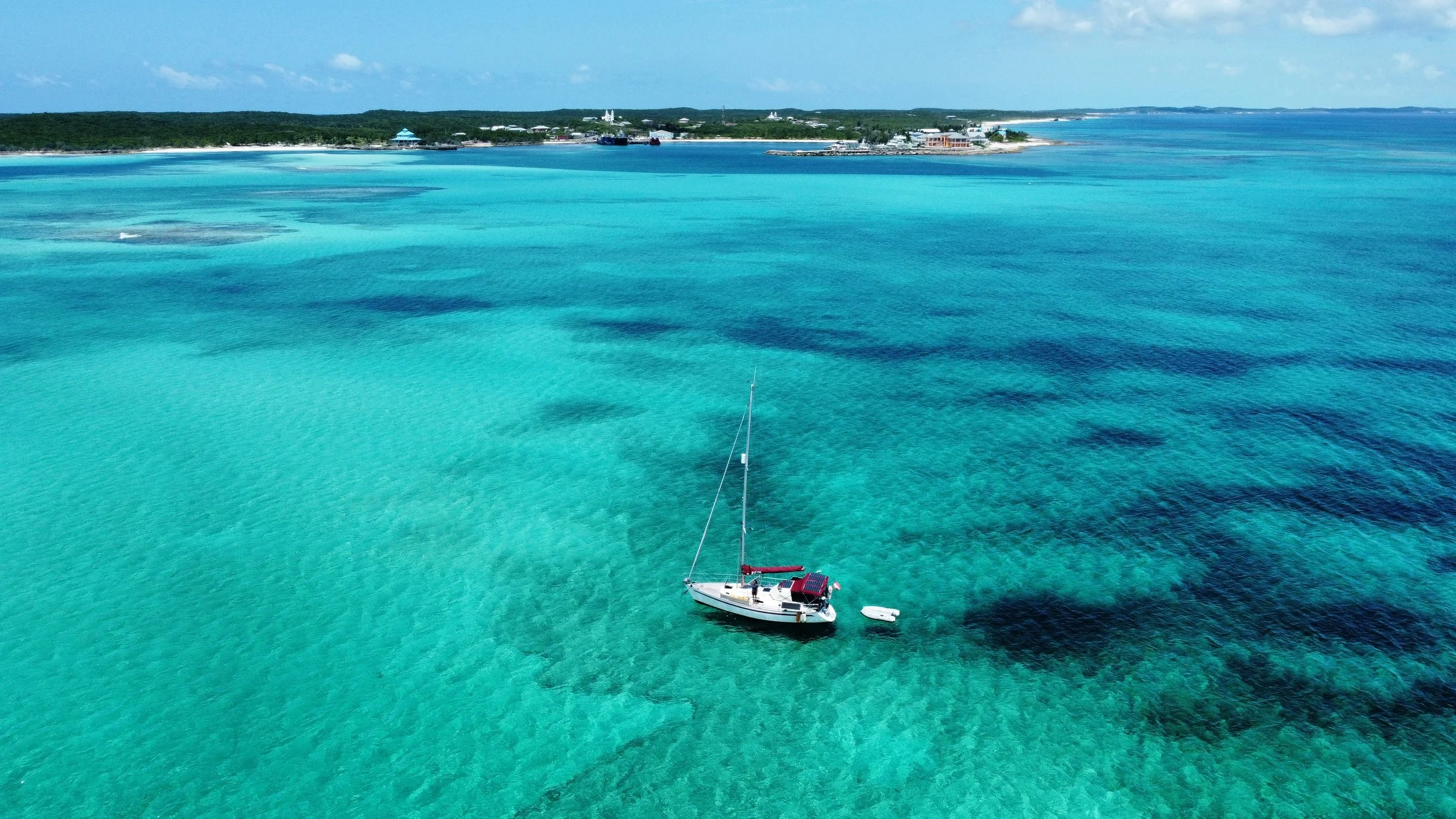
It’s now afternoon, so we pop into the local bar to toast our successful crossing with a local beer. As it’s Mother’s Day, we give our mums a ring whilst enjoying the view of the sea. The hardships of the crossing were well worth it.
Dean’s Blue Hole – A walk to the deepest blue
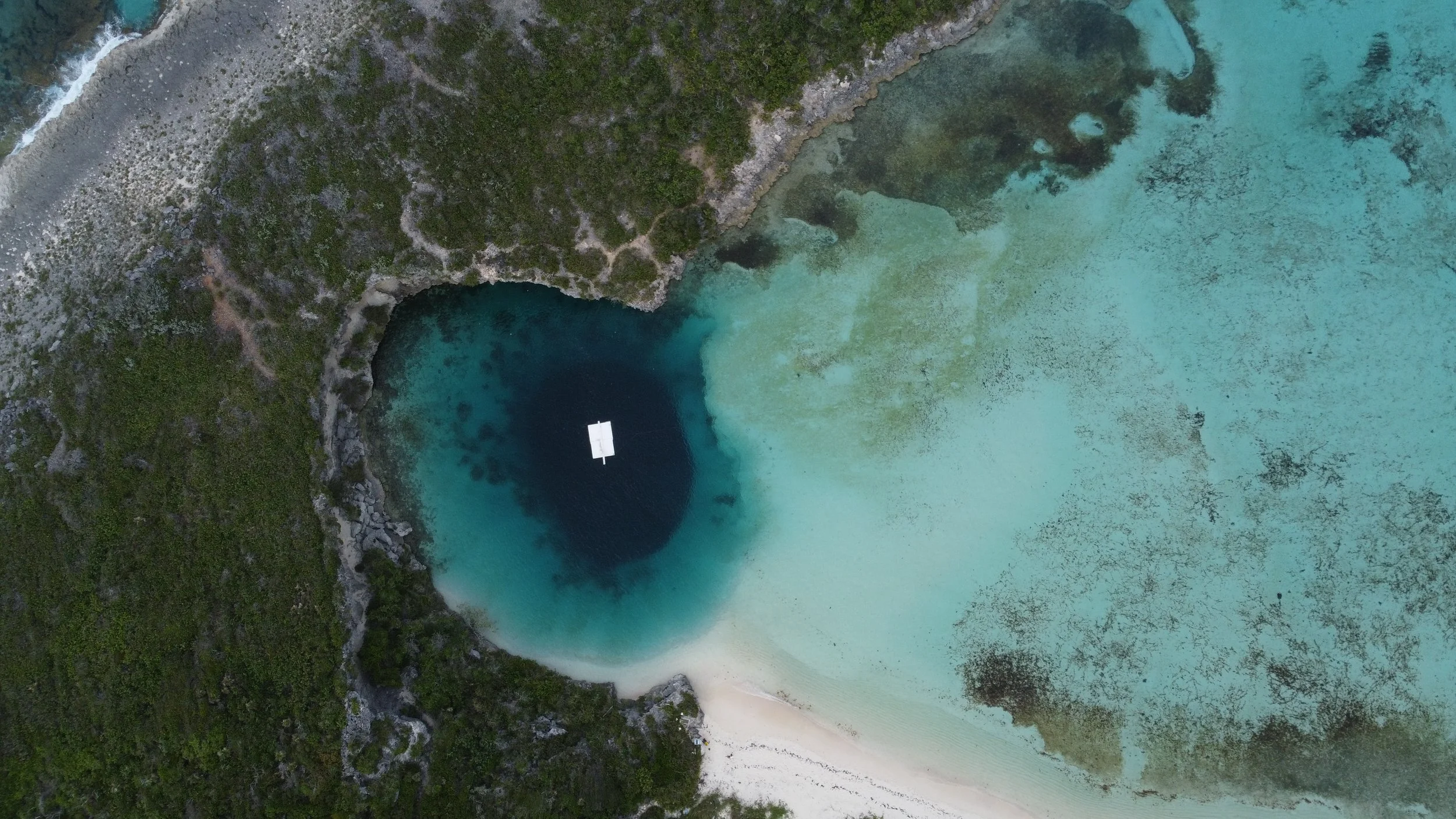
The Bahamas are famous for their so-called blue holes. These are collapsed karst caves that have been flooded by the sea over time. They are particularly impressive because they are often situated right next to beaches and drop off very steeply, albeit within a circular hole. One of the best-known and deepest is Dean’s Blue Hole. It has a diameter of 25 to 30 metres and is 200 metres deep. Situated right next to the beach, it is easily accessible and popular with freedivers. The Vertical Blue competition takes place there every year, and several records have been broken here, including by the Austrian Herbert Nitsch, who dived to a depth of 124 metres in the Constant Weight (CWT) discipline.
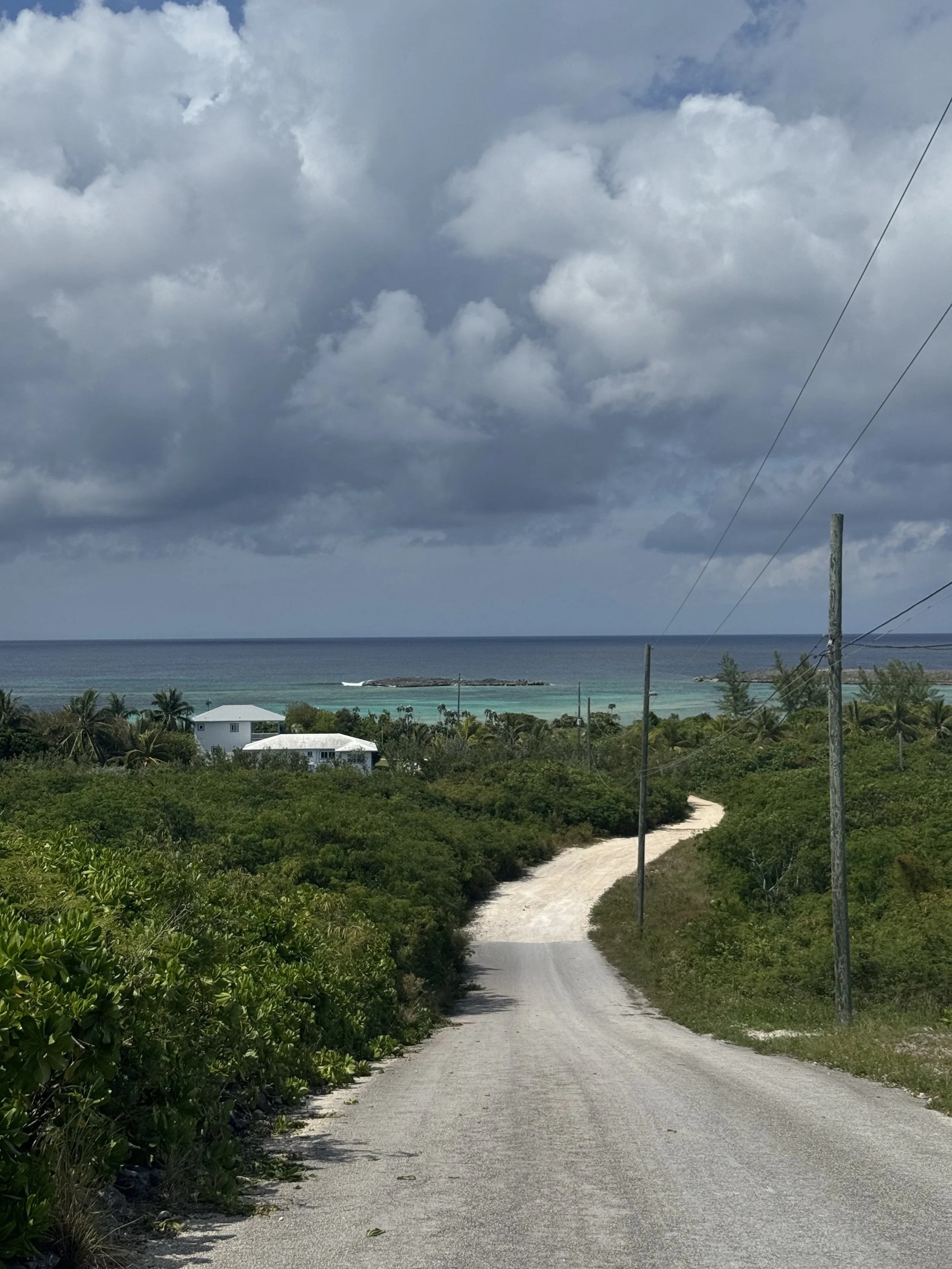
As Dean’s Blue Hole is only eight kilometres north of Clarence Town, we decide to simply walk there along the road. After three days at sea, a bit of exercise won’t do us any harm. As there was a bit of a thunderstorm in the morning, we don’t set off until midday. Perfect conditions, then, for a one-hour-and-45-minute walk in the midday heat. The path reveals the barrenness of the island. We walk along the straight main road, lined with low bushes. At least there aren’t many cars about, but every single one waves to us. Ten minutes before we arrive, we pop into a local pub for lunch and, above all, cold drinks. We walk the last stretch along a sandy track, and then suddenly we’re right on the beach, with the Blue Hole beside us. We’re all alone.
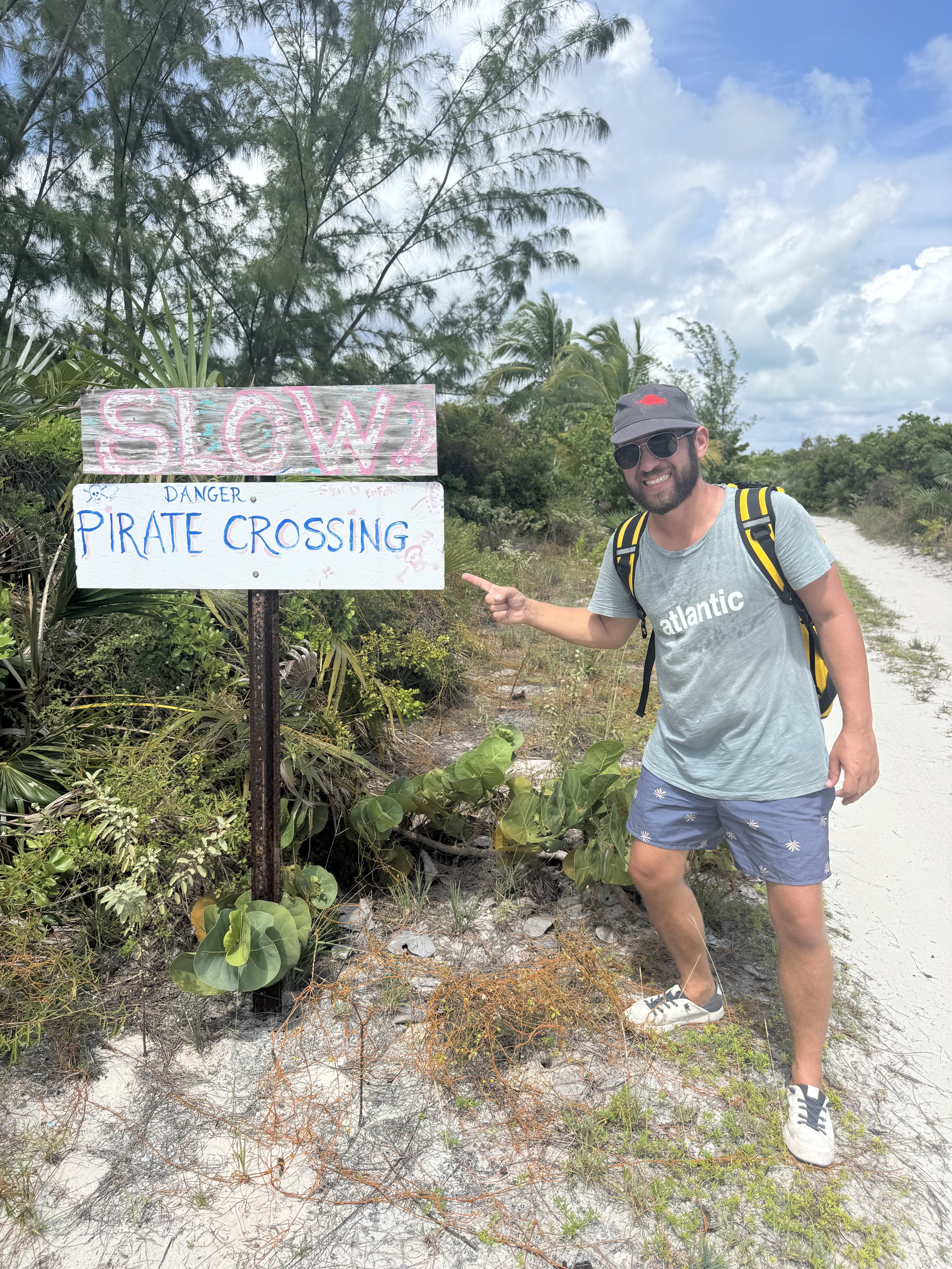
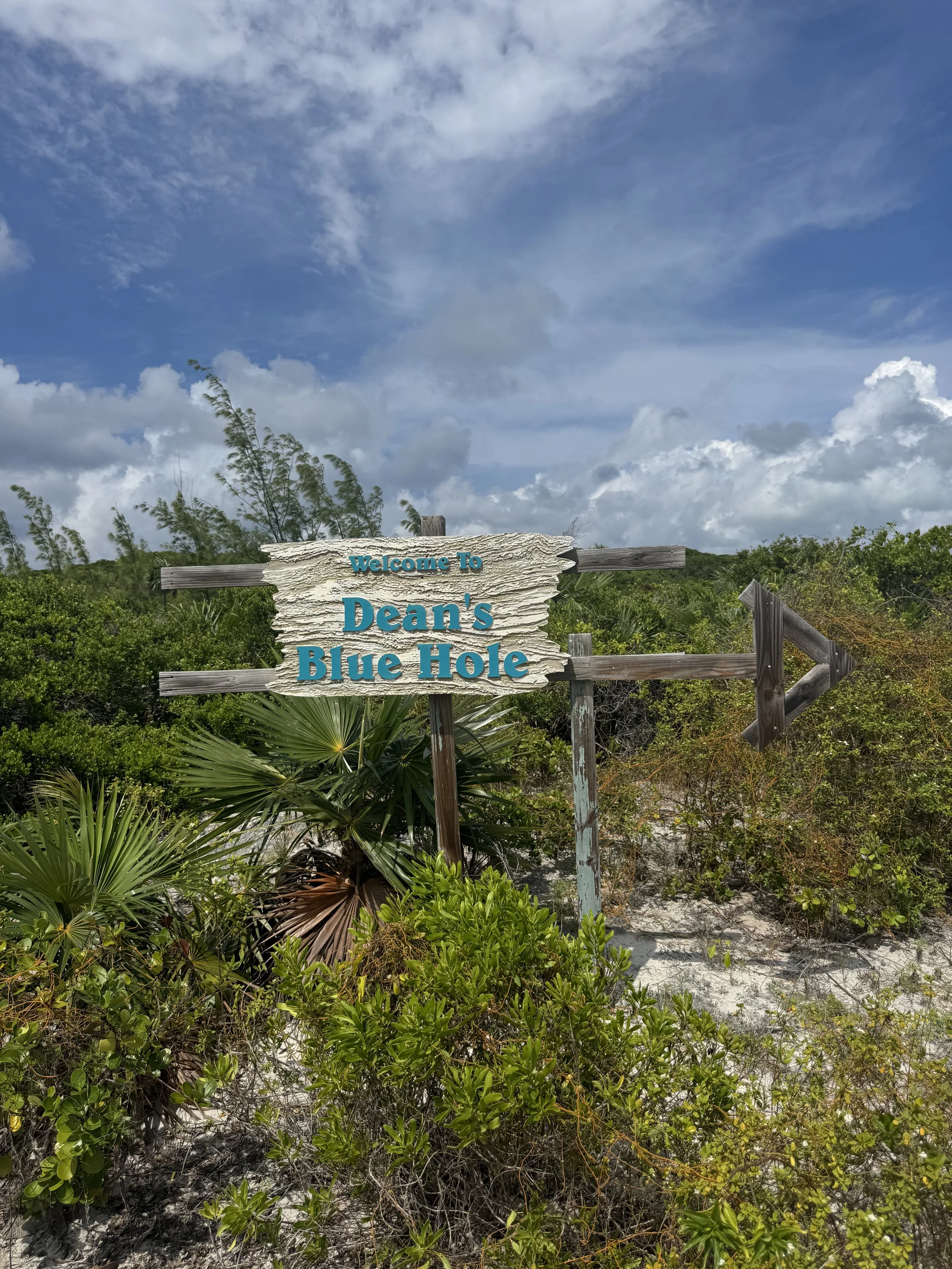
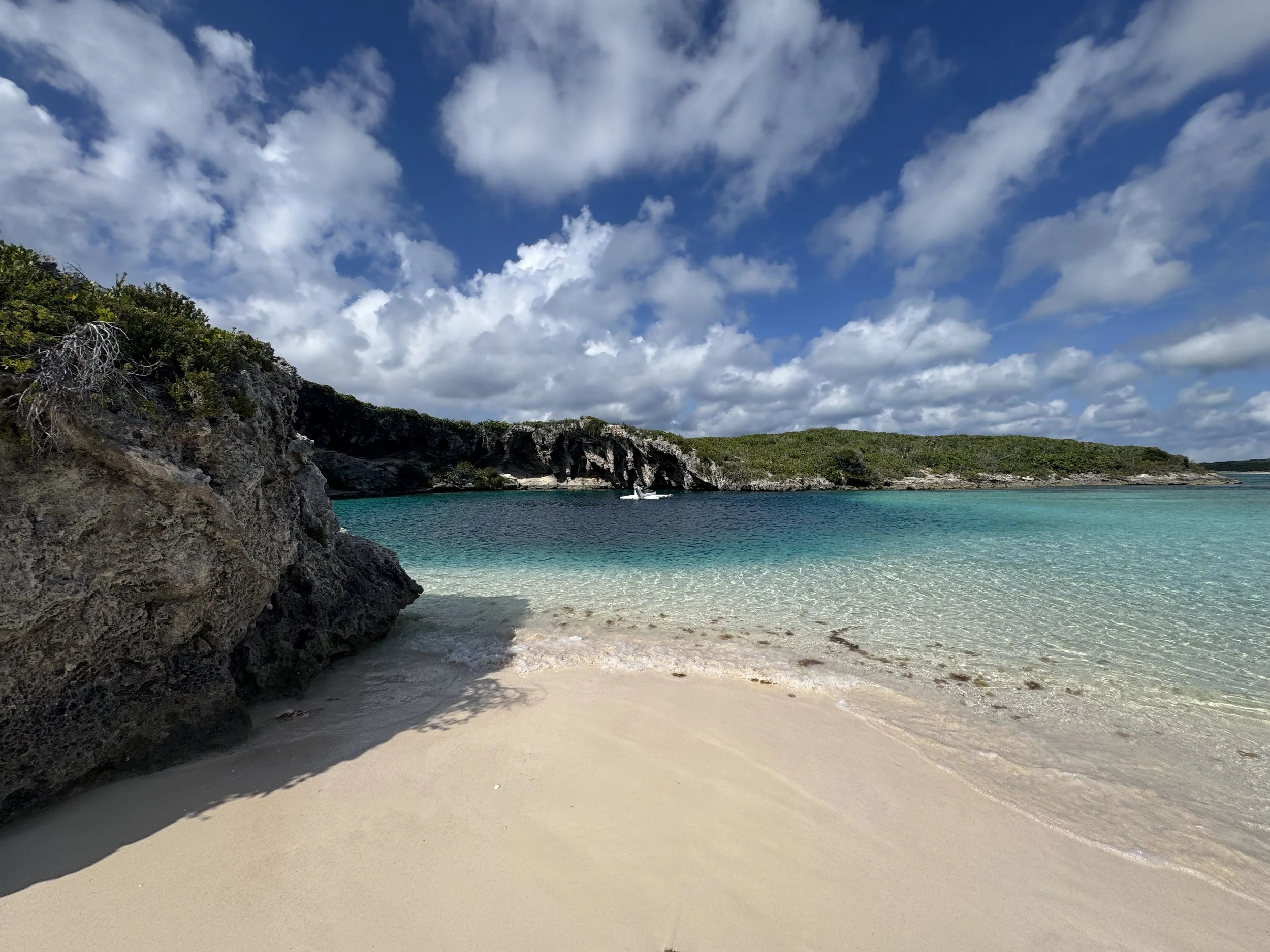
The first sight is a bit eerie: a white sandy beach with turquoise water, and next to it a dark blue hole. In the centre is a white platform from which a vertical wire rope leads downwards. Freedivers use this not only for competitions, but also for courses.
Whilst Peter immediately jumps into the water and swims into the Blue Hole, I’m still hesitant. I move only slowly towards the sloping hole. I am overcome by an irrational, oppressive feeling, as if a whirlpool might pull me into the deep blue at any moment. Yet the Blue Hole is well protected by a headland and a reef. There is no sign of waves or currents. For the photo, I am brave enough after all to swim into the dark blue.
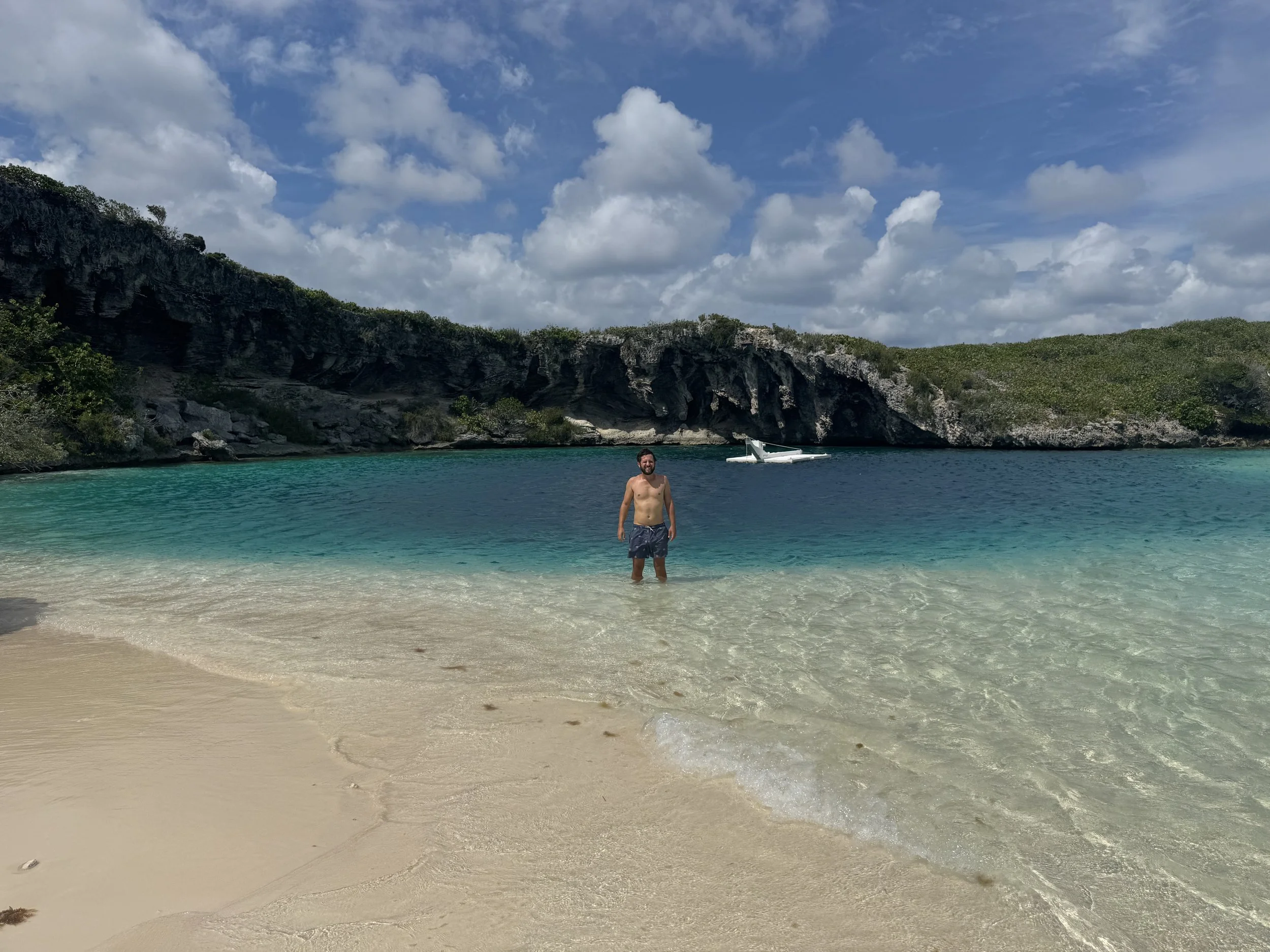
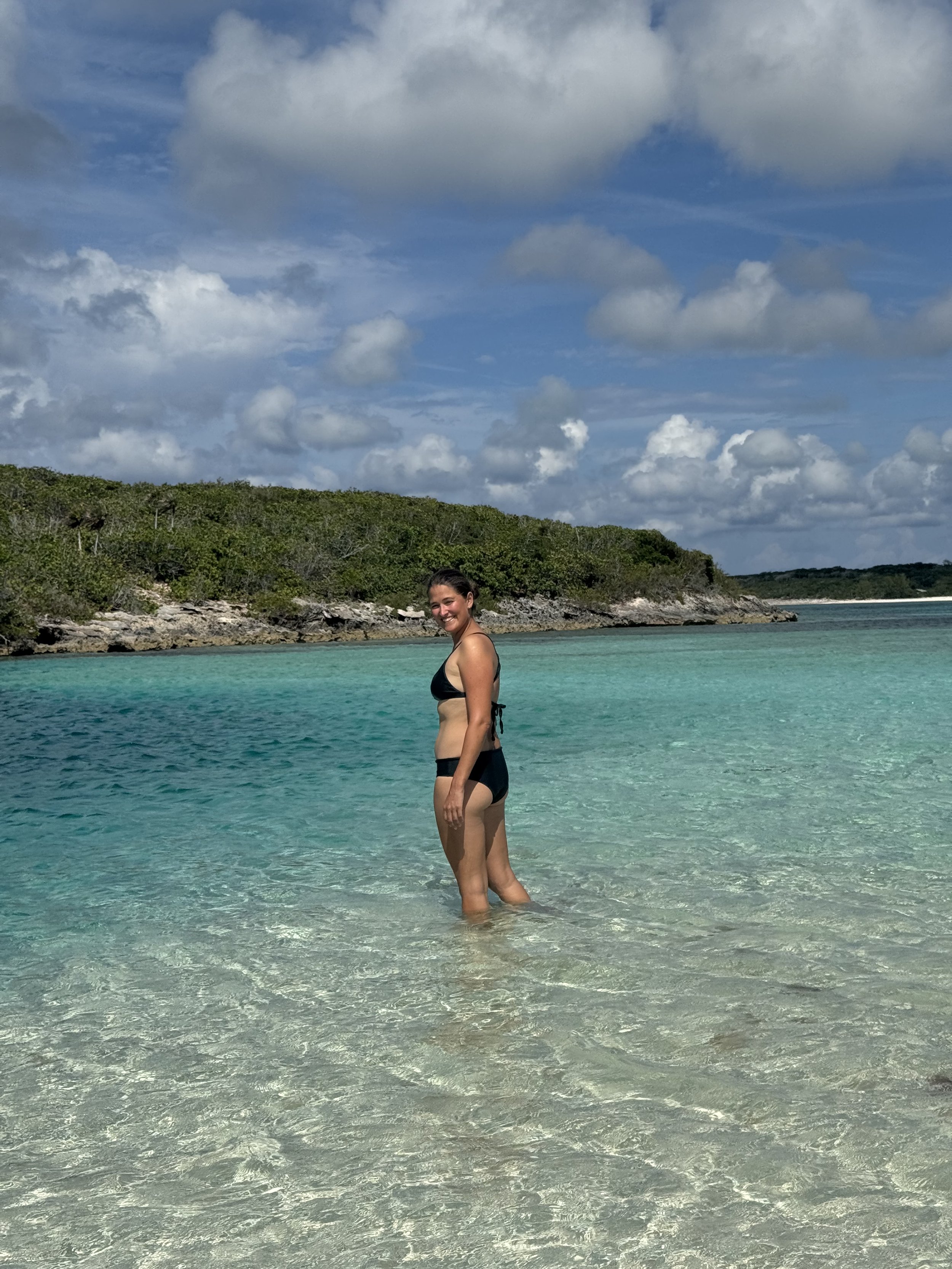
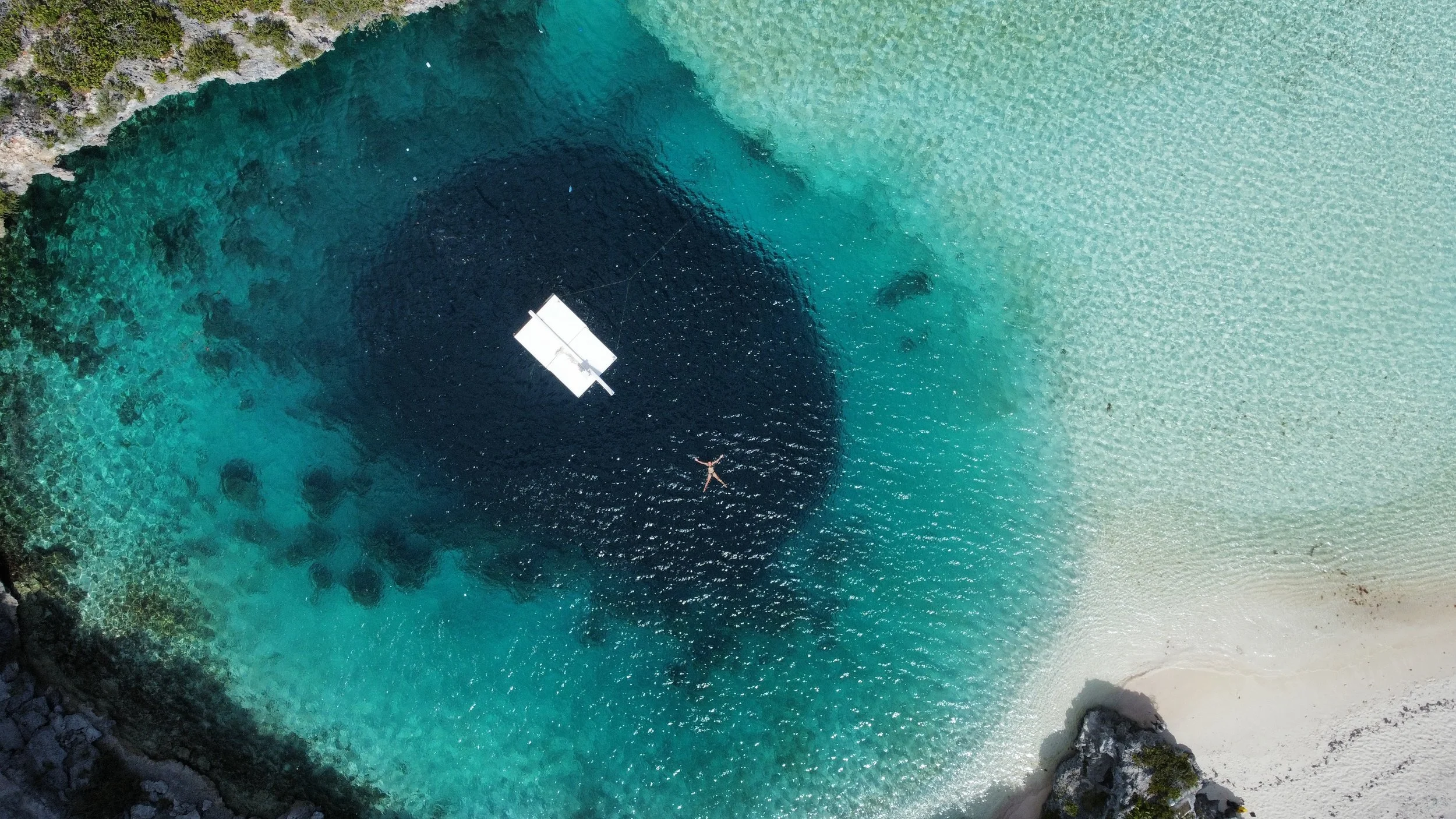
After an hour, we pack up our things and set off on the return journey. Twice a car stops and asks if we want a lift – once it’s our waitress from the pub, and once it’s two tourists. We politely decline both times, as we’re almost there and have been gripped by a sense of determination. We paddle back on board, wonder whether we’ve done a sort of triathlon with all the paddling, walking and swimming, and fall into bed, exhausted.
Pig Roast at Rowdy Boys
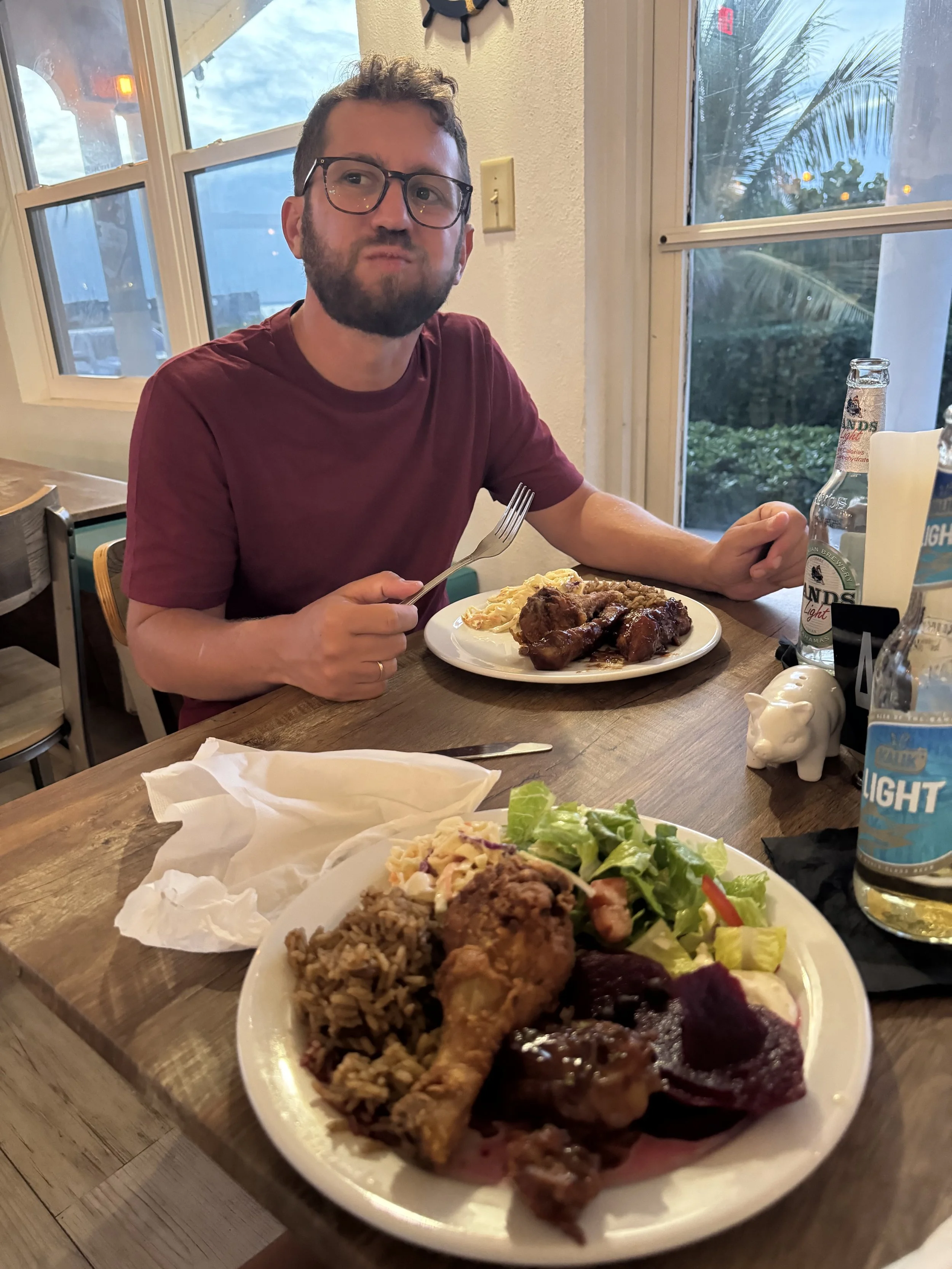
To round off our time on Long Island, we’re heading to the ‘Rowdy Boys’ for a pig roast on Friday. There’s a buffet with chicken legs, spare ribs and, of course, the roast pig – head and all. But we’re also really enjoying the side dishes: rice, beetroot, coleslaw and, above all, the fresh green salad with red peppers. We haven’t eaten anything like this for ages.
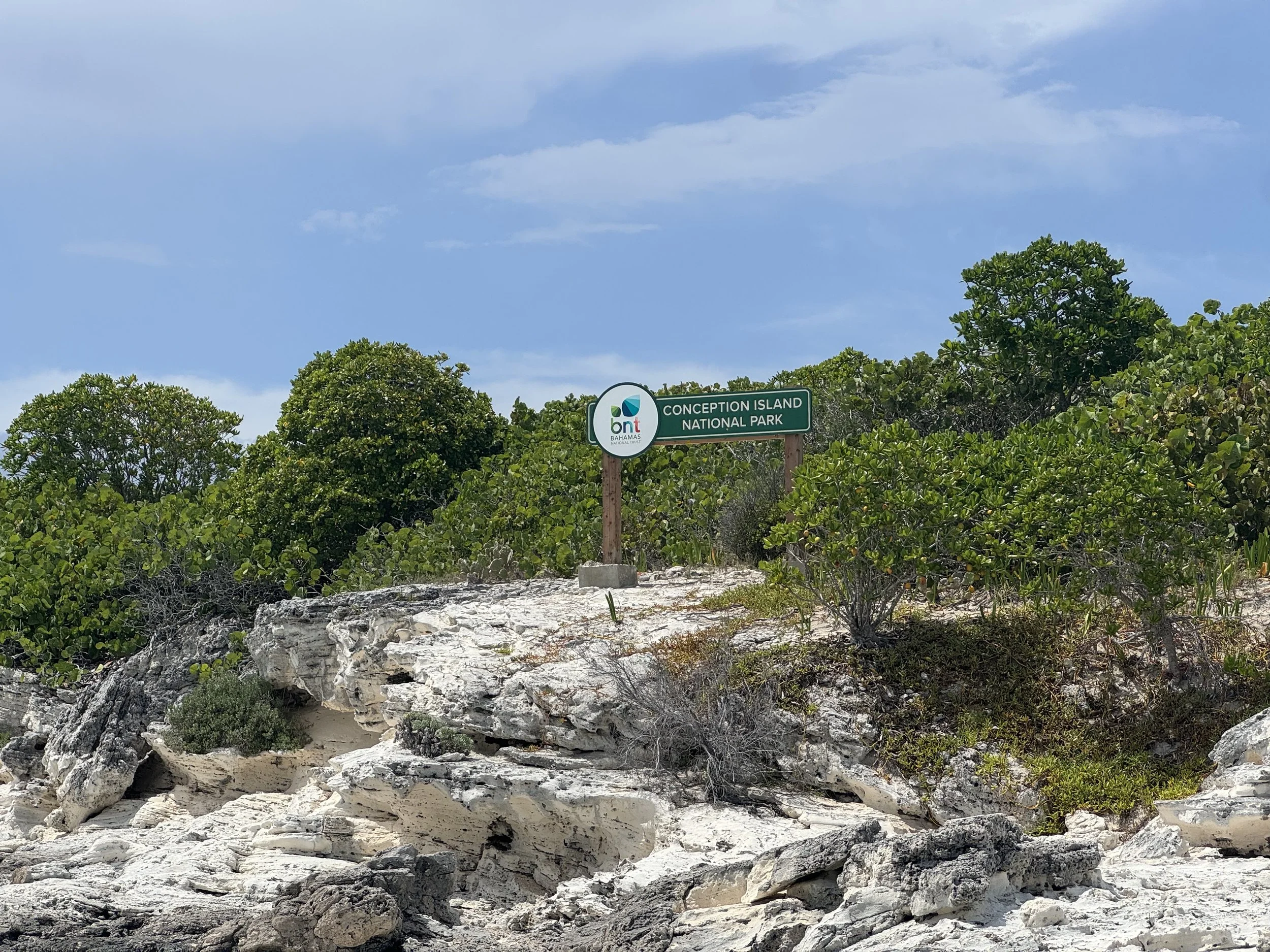
Course on Conception Island
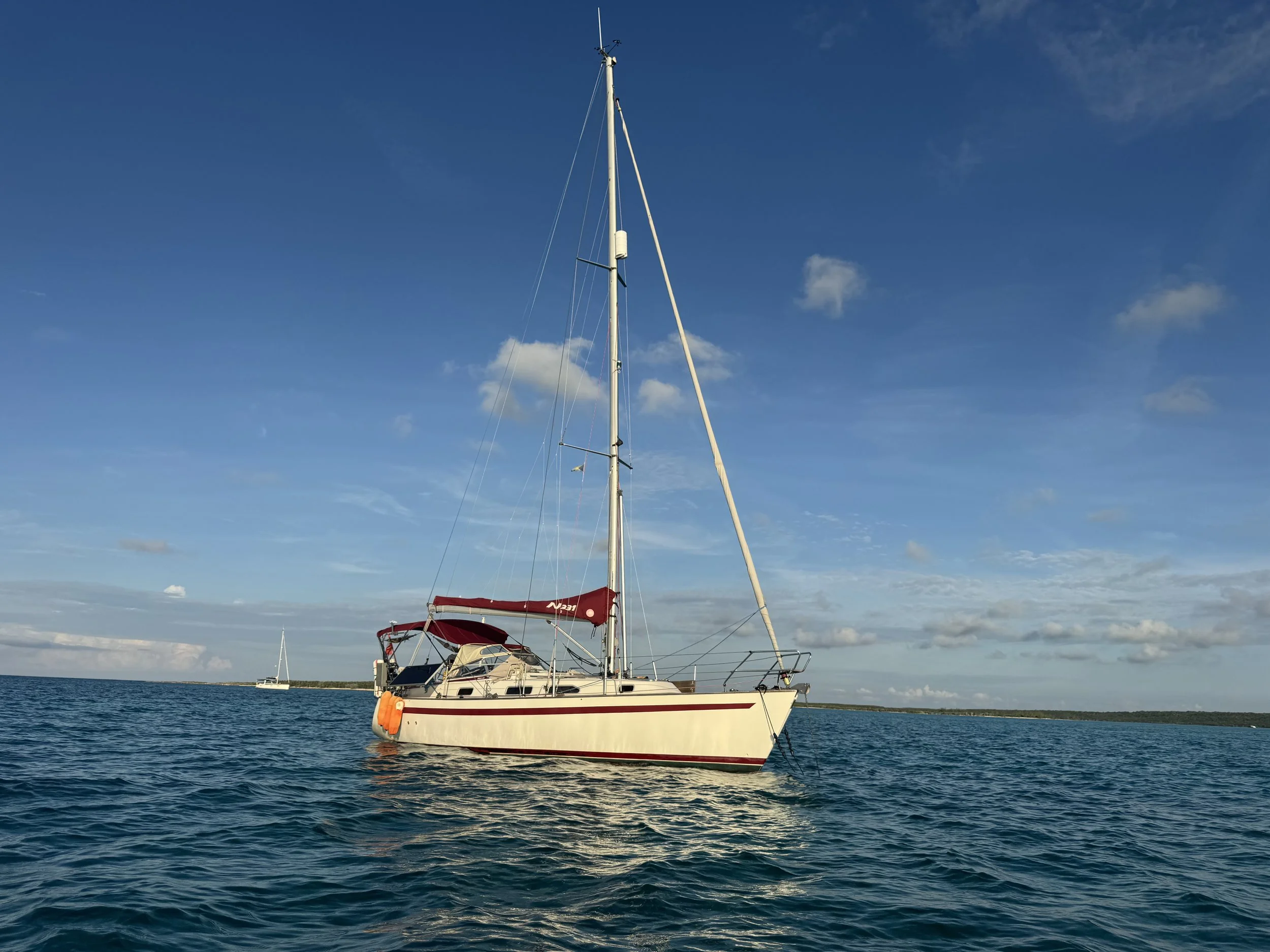
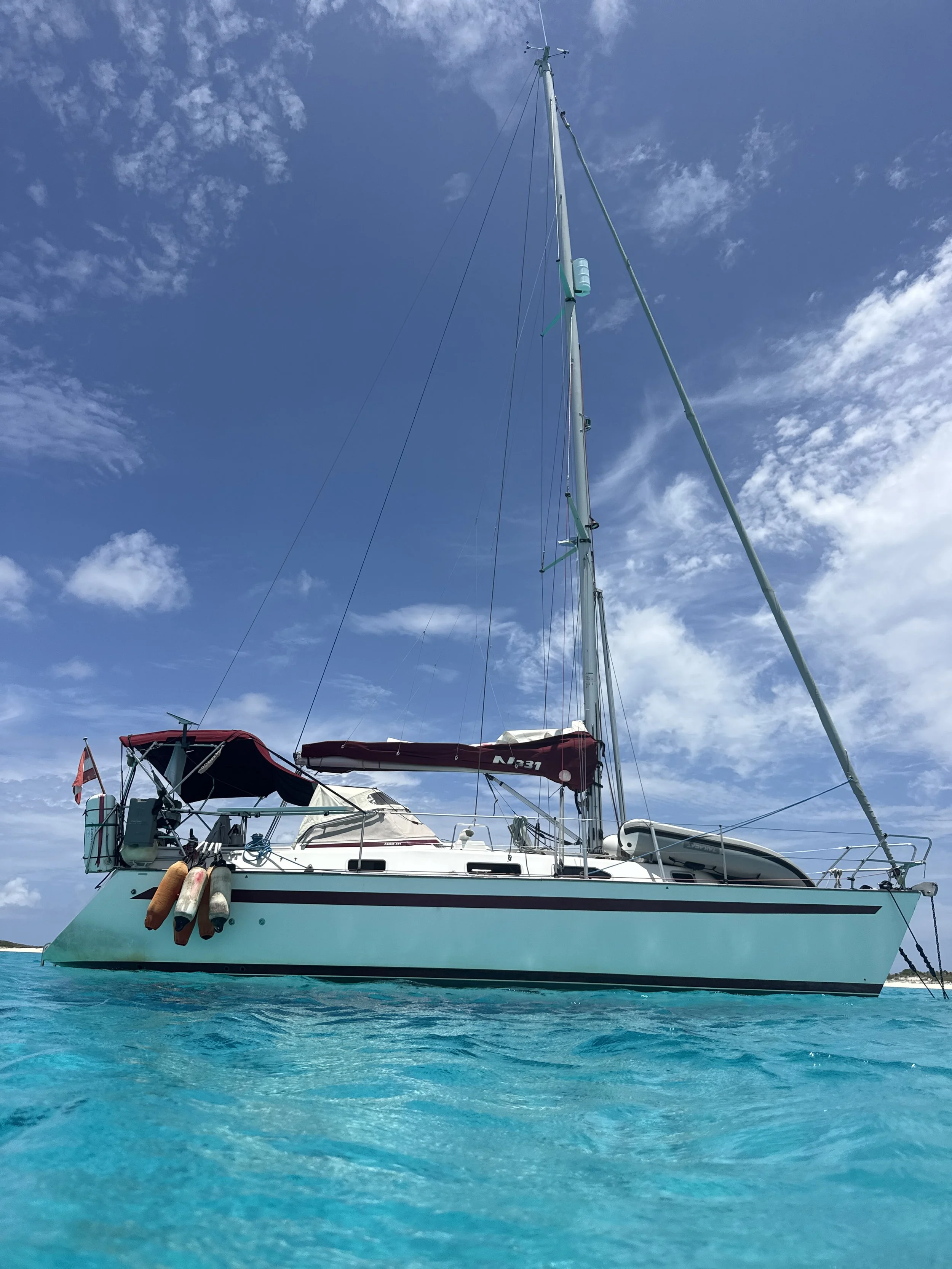
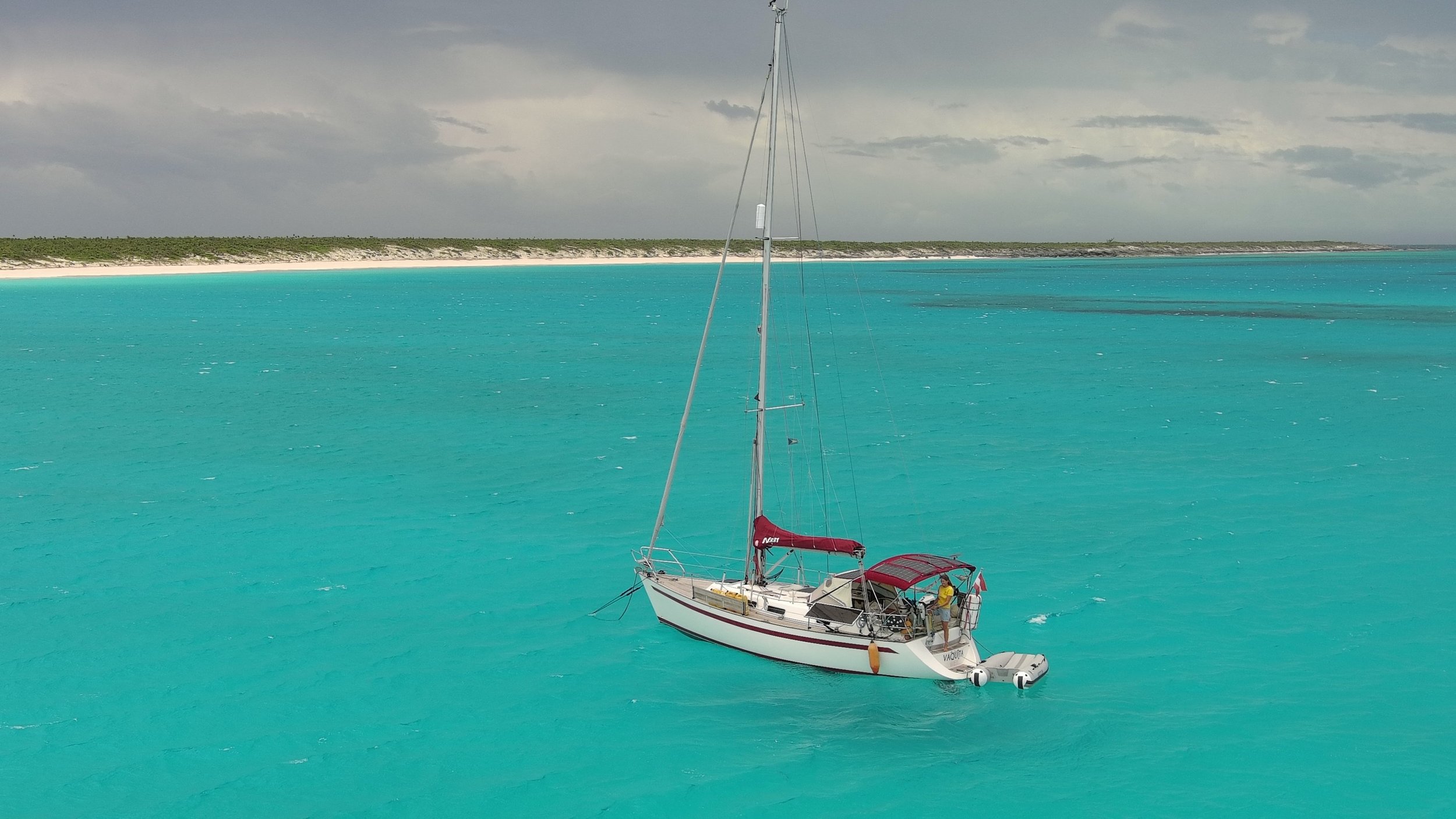
We decide to sail to Conception Island, an uninhabited island to the north-north-west of us. In theory, the conditions are perfect for a leisurely crossing with a perfect easterly wind. The first few hours go exactly as expected, but then rain cells roll in and throw everything into disarray. For a while, we’re not sure which anchorage to head for, or whether we’ll make it before dark. In the end, we make a sporty run into the bay, sailing close-hauled at 20 knots. Using the very last glimmer of light after sunset, we navigate our way in and drop anchor. The sand is so light in colour and the water so turquoise that the visibility of the seabed is still very good. Peter even spots a shark swimming beneath the boat. The anchor beer tastes particularly good today.
A barracuda called Fred, a visit from a dolphin and some new neighbours
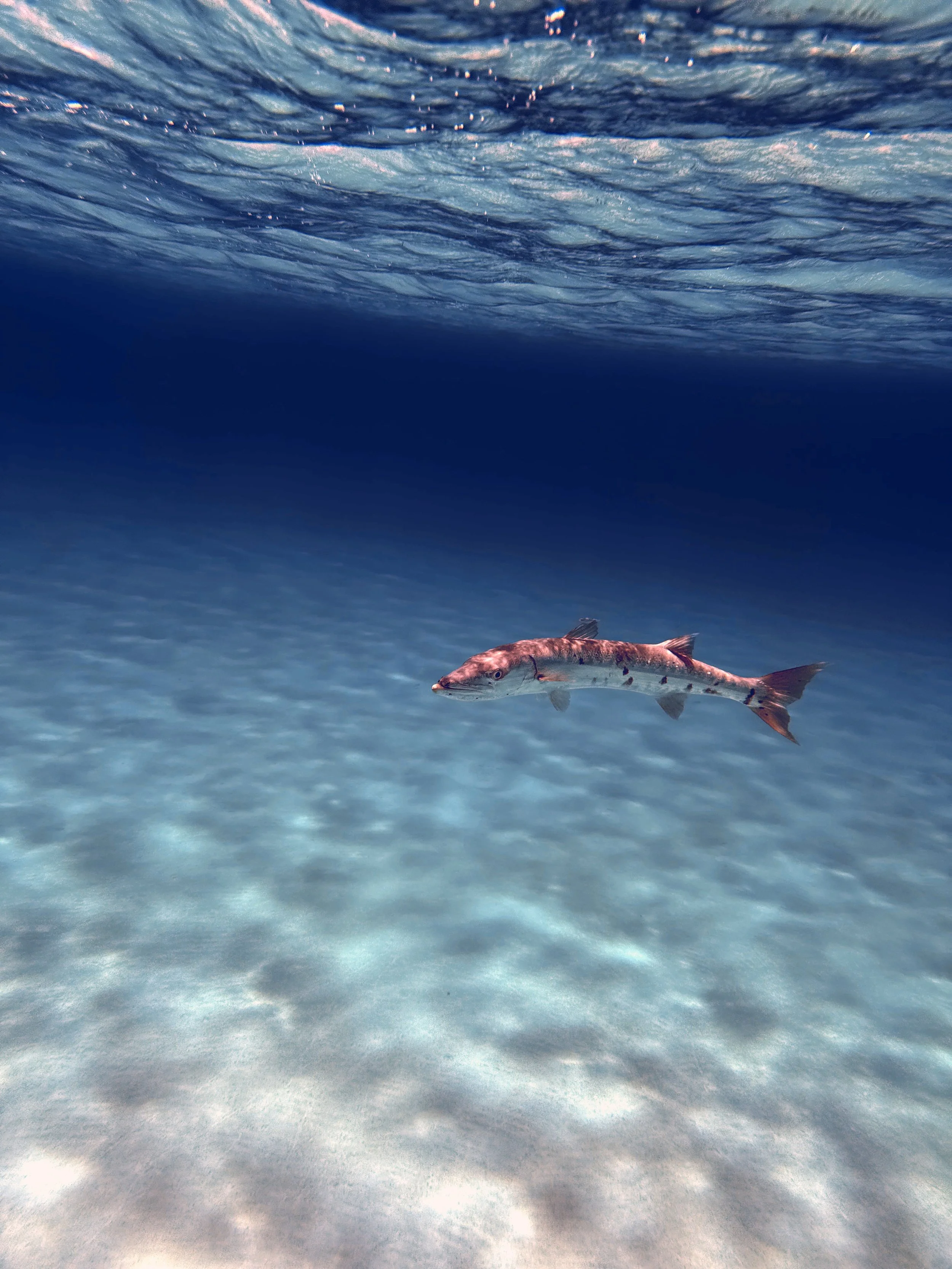
The next day, we spend a short while exploring the underwater world, where we come across a barracuda over a metre long that follows us around like a dog. We call him Fred, but Ines is too intimidated to swim over to the reef, so we call it a day.
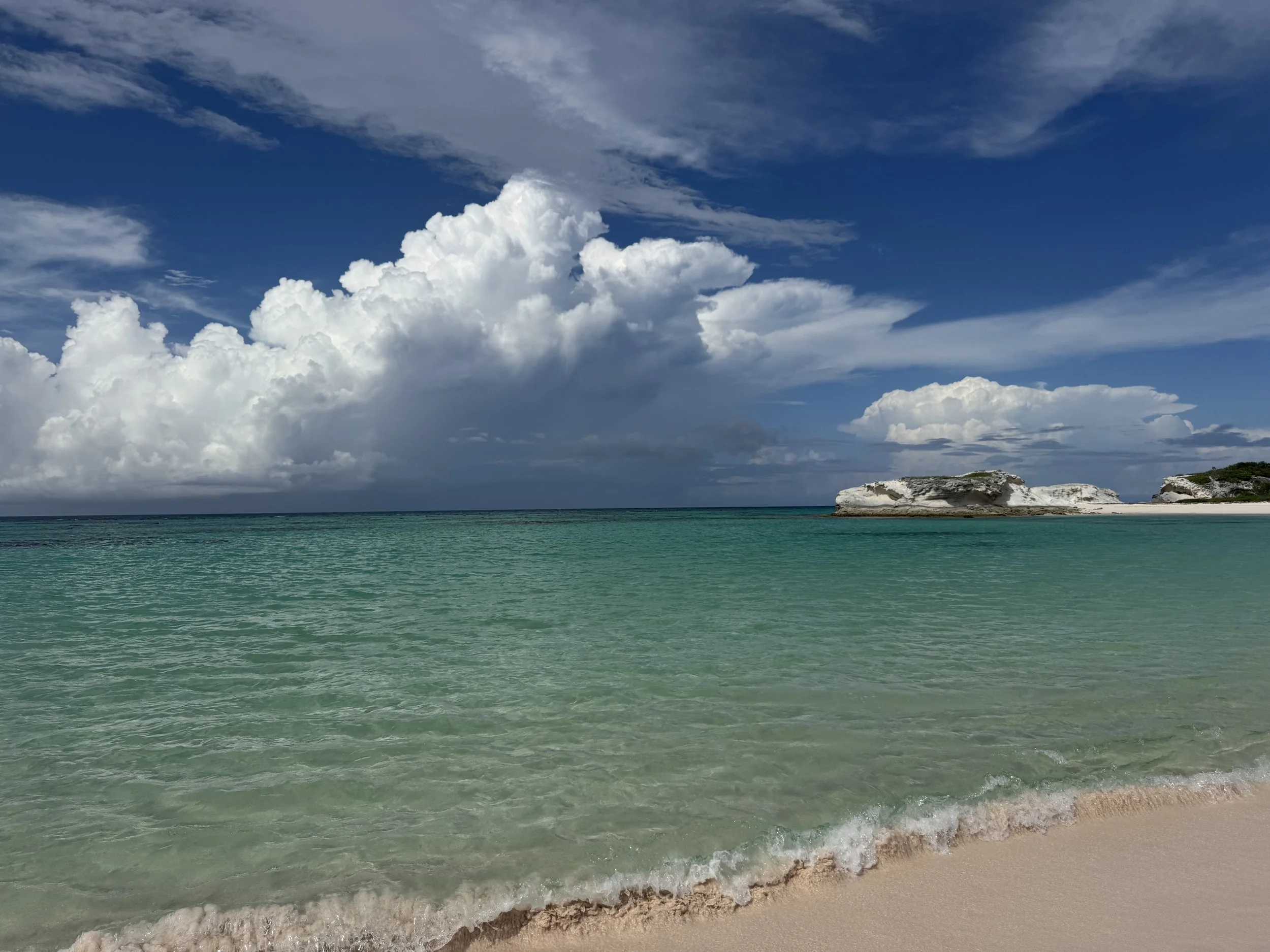
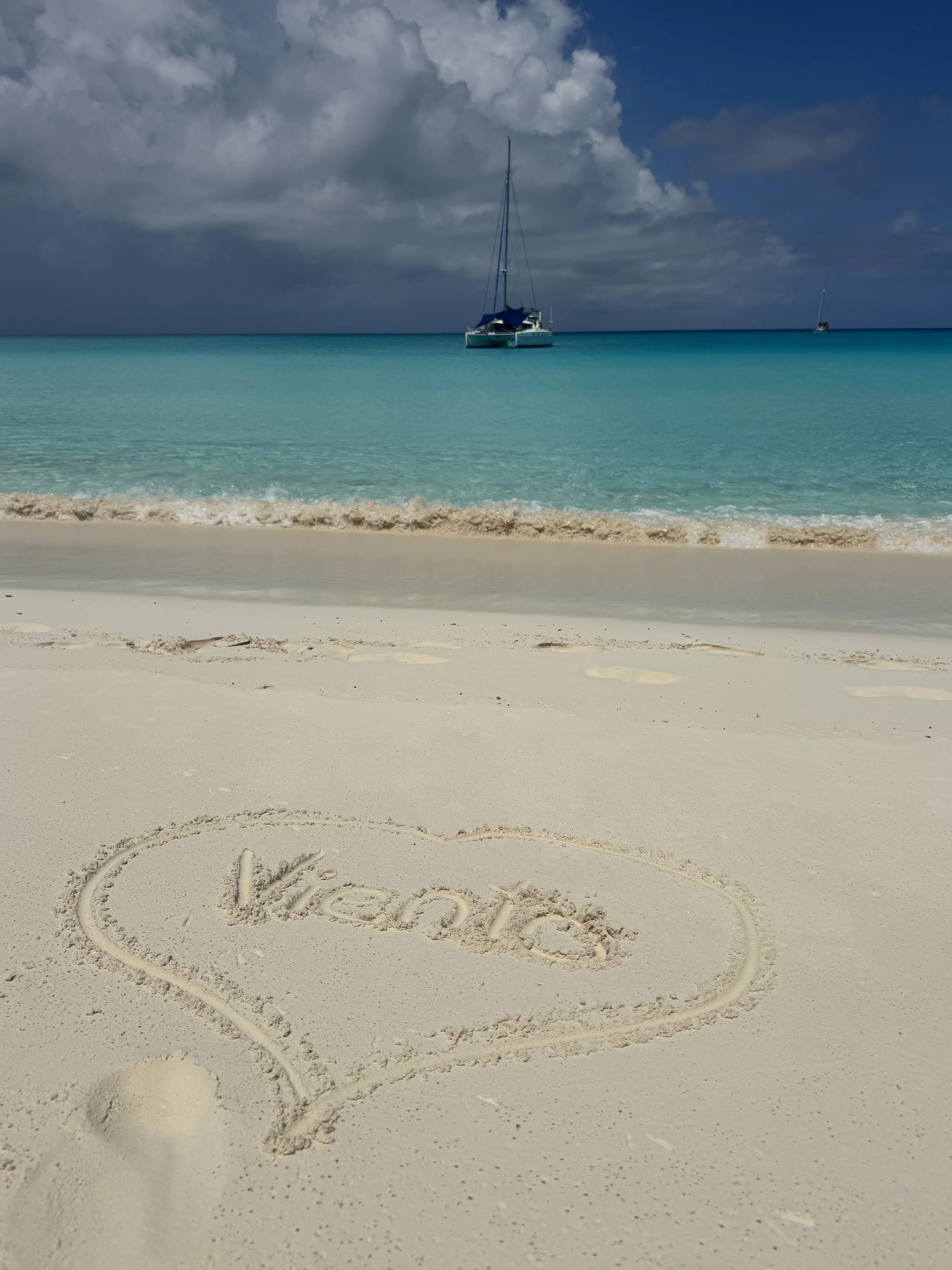
We head for the white sandy beach, which is so bright it’s blinding without sunglasses. We paddle our dinghy towards the beach and straight towards the catamaran in front of us. We have a quick chat with our neighbours Carolyn and Doug, who tell us that a dolphin visited us earlier that morning and leapt up three times next to our boat to look into our cockpit. Carolyn then jumped into the water and swam with the dolphin for a short while. Unfortunately, we were still asleep at the time. We arrange to meet for a sundowner beer the next day – a decision we certainly won’t regret.
Tropical birds, coral reefs and turtles
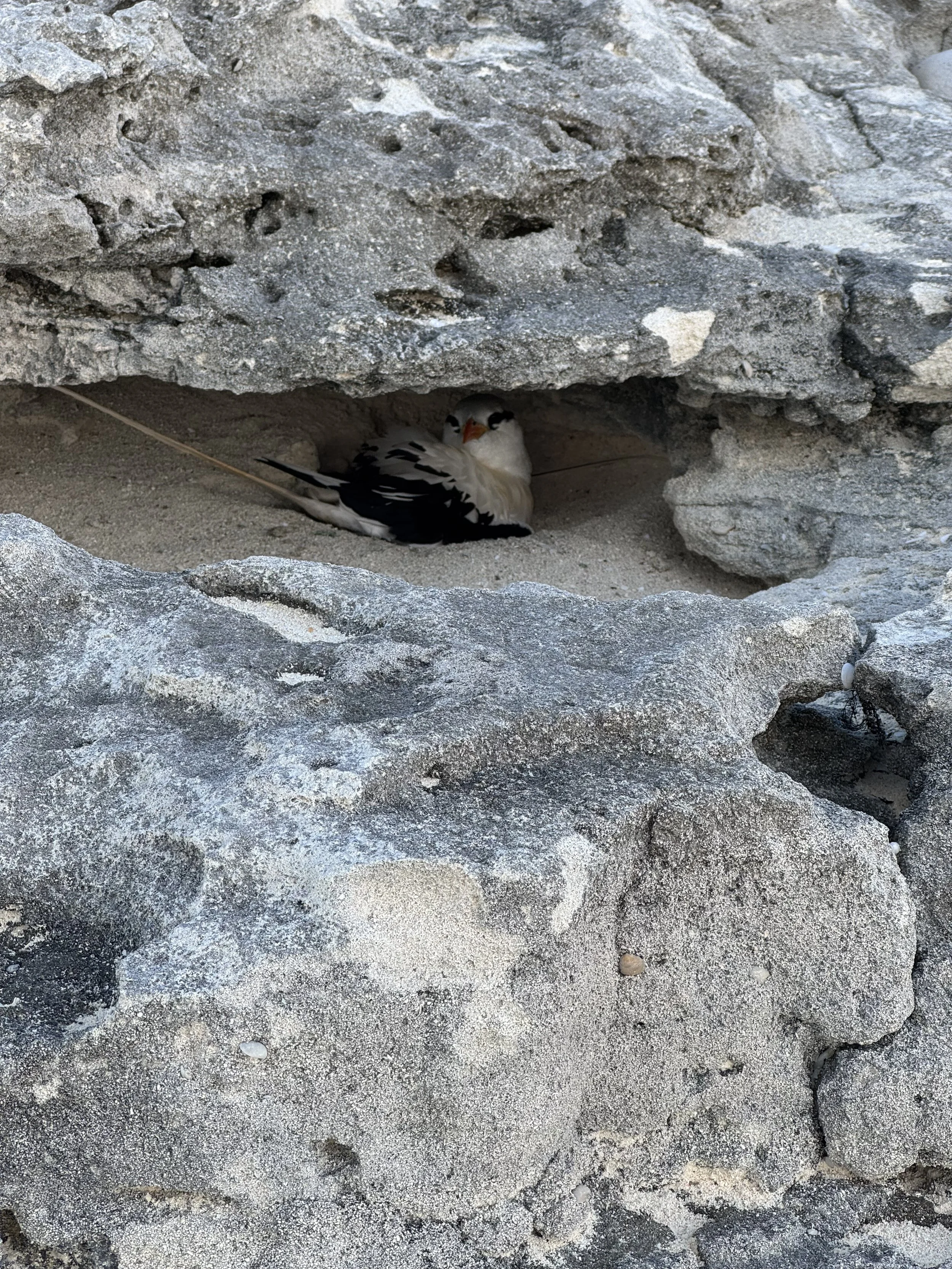
The beach is idyllic. The island is uninhabited, so there are plenty of birds. The tropical birds are ground-nesting, and as islands where people live usually also have cats and rodents, they are left with just a handful of islands on which to breed. Whilst walking along the beach, we spot one of the birds nesting, well hidden in a crevice between the rocks.
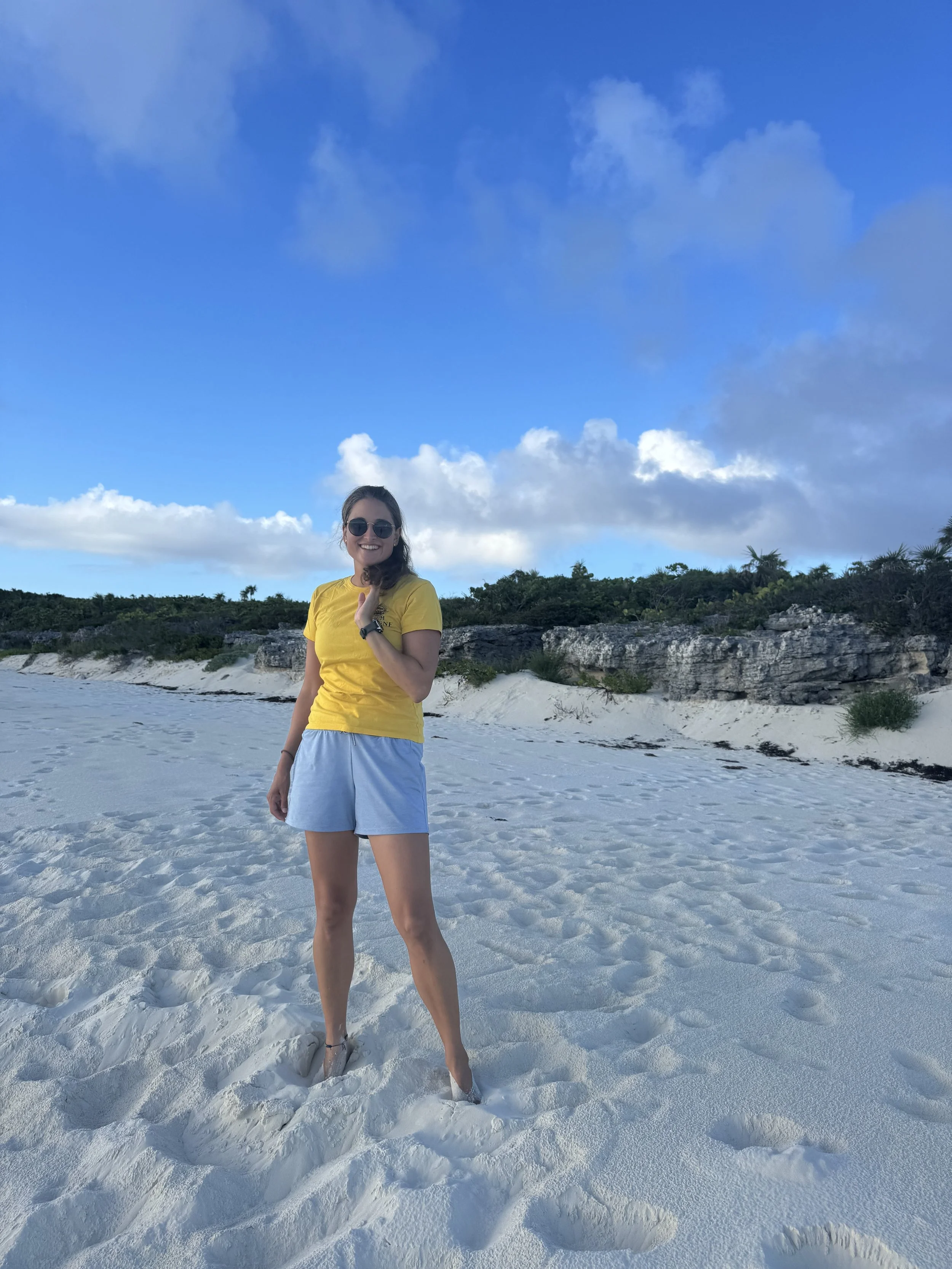
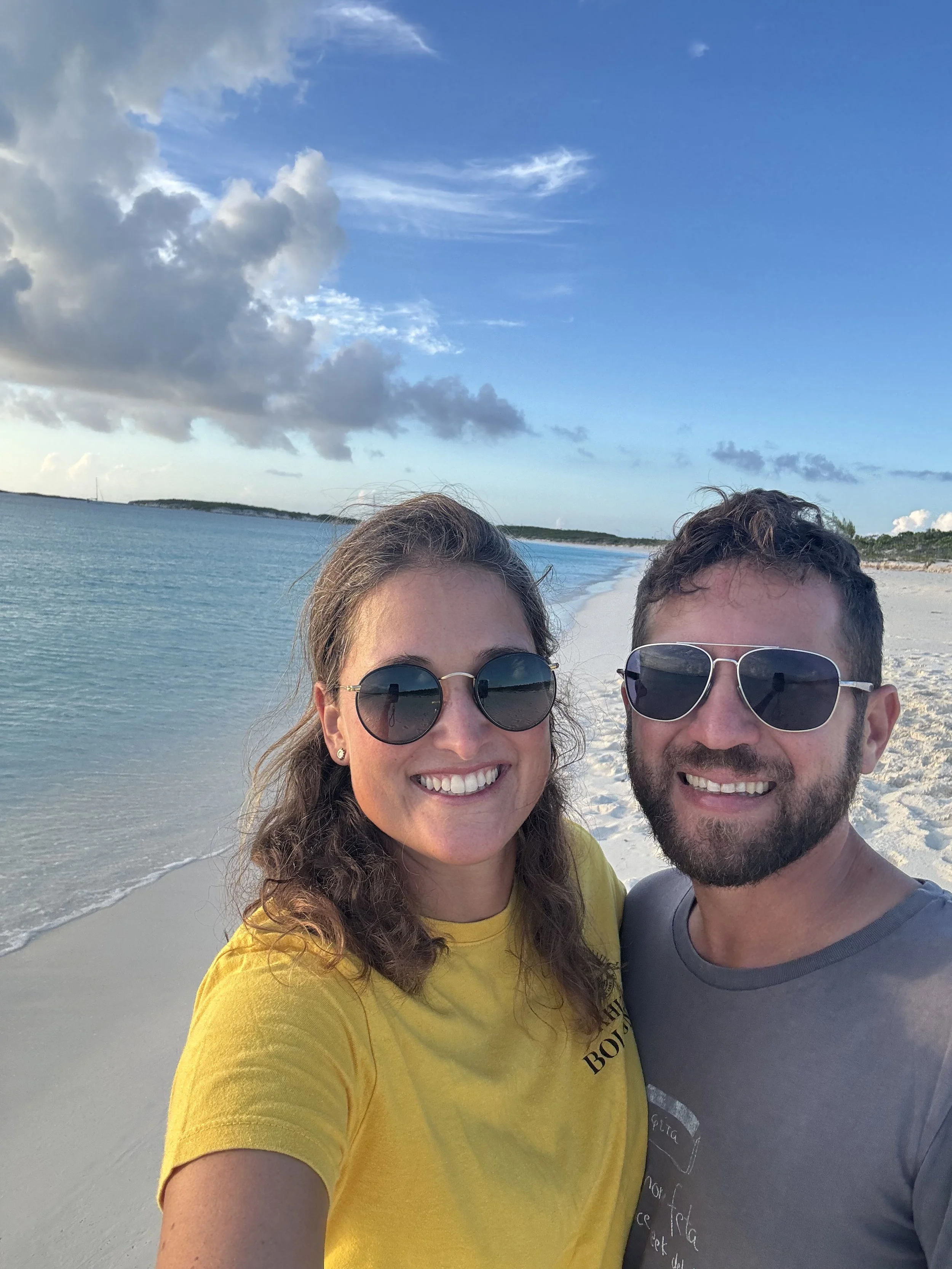
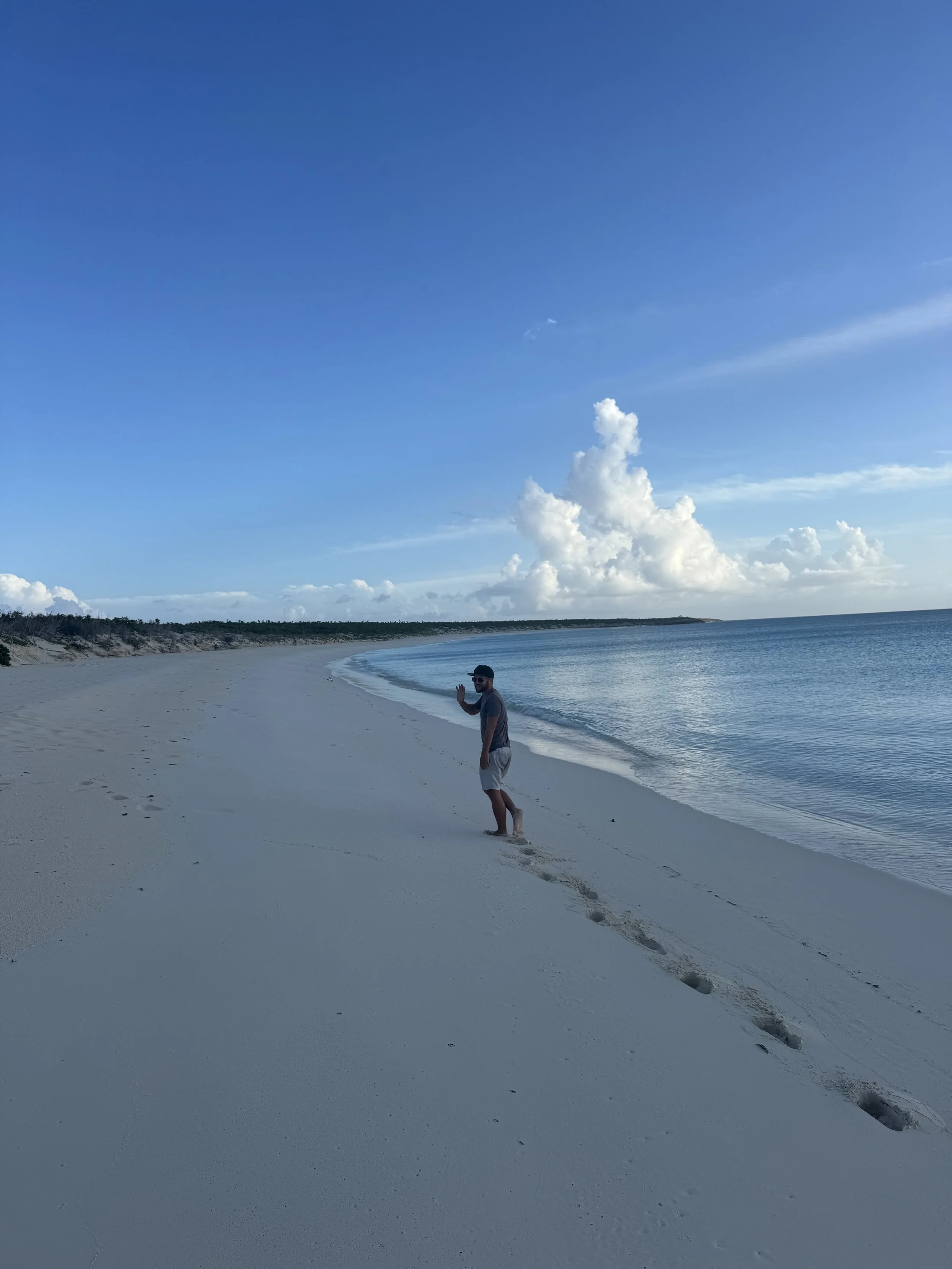
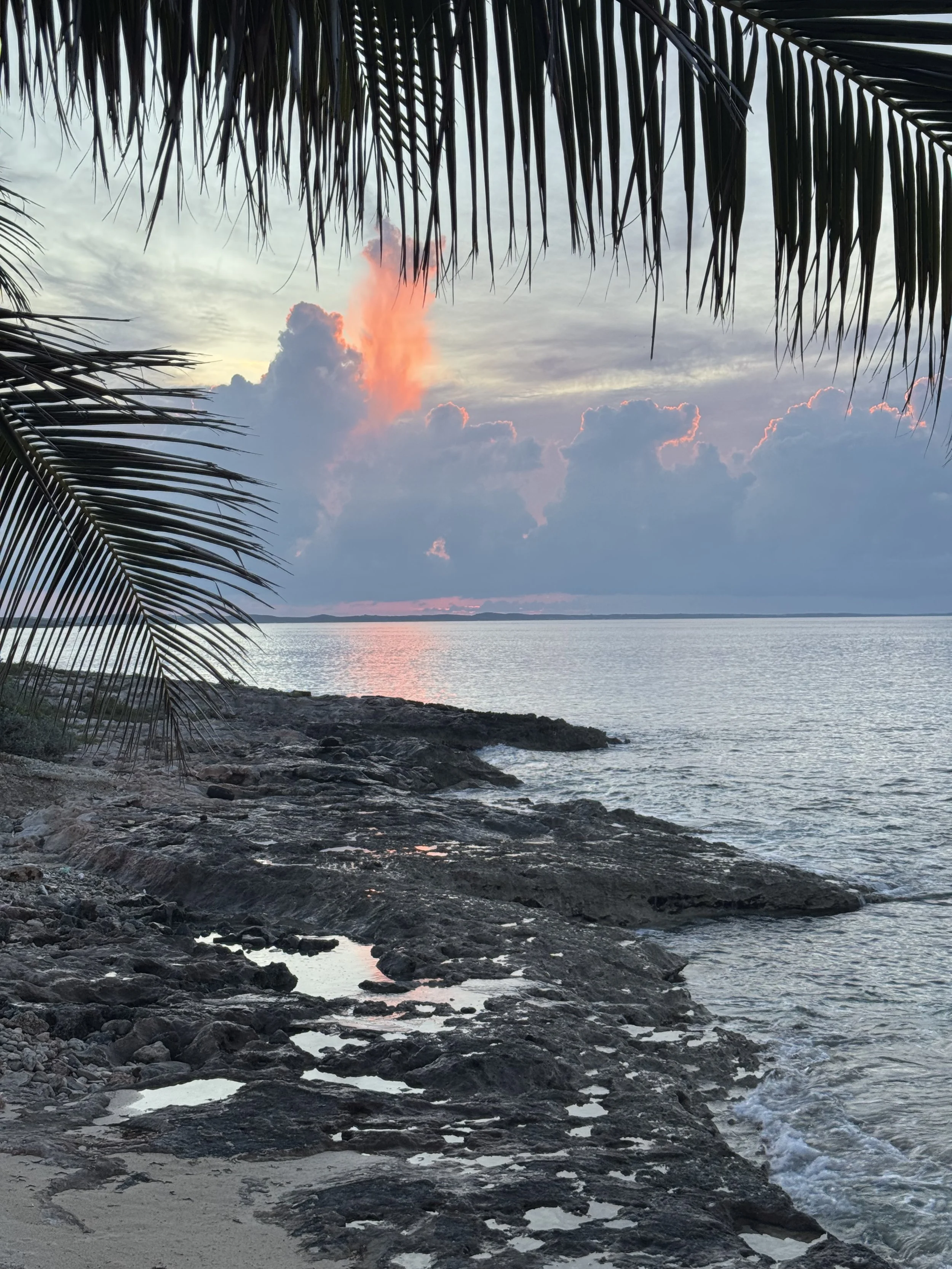
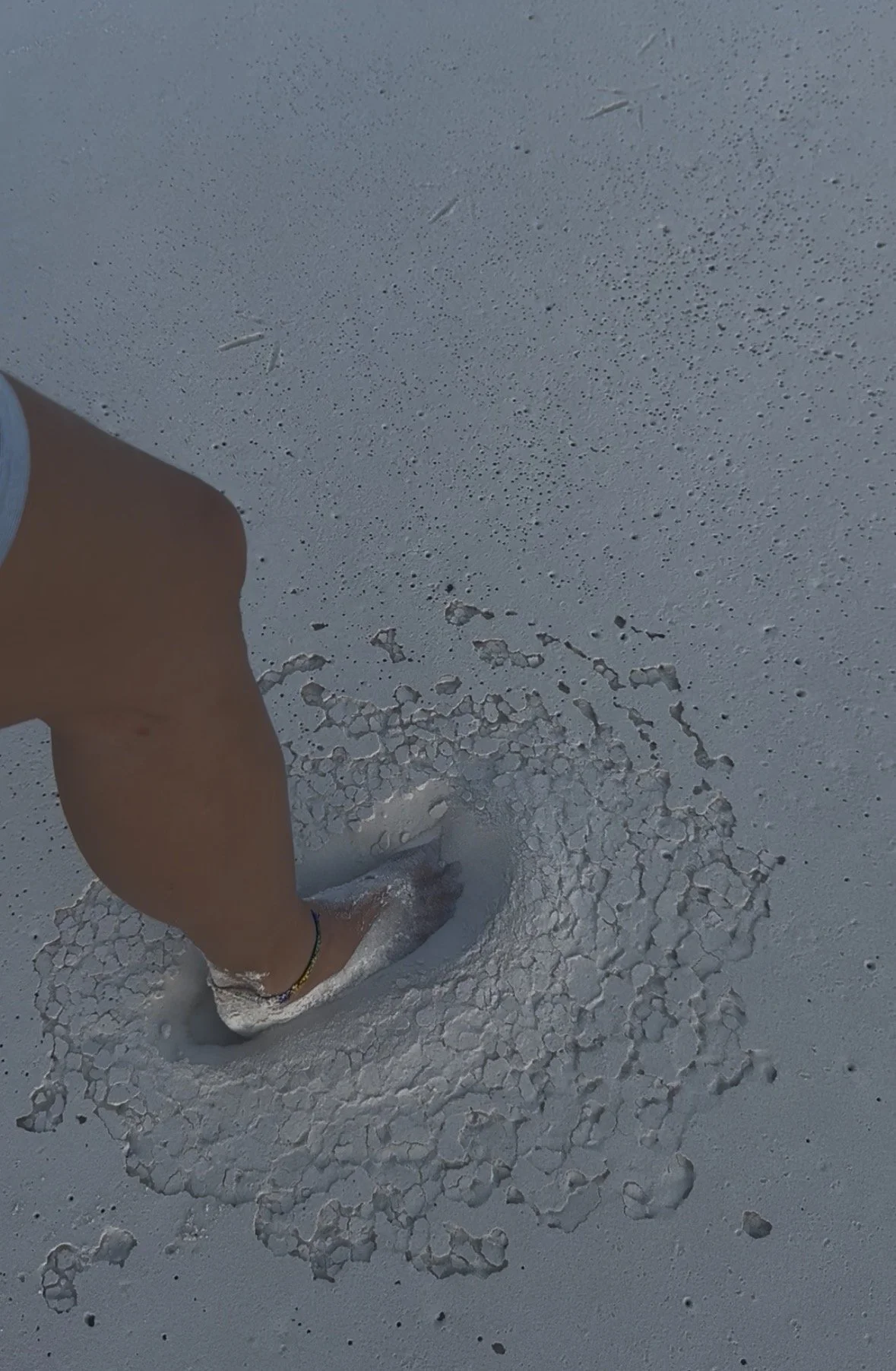
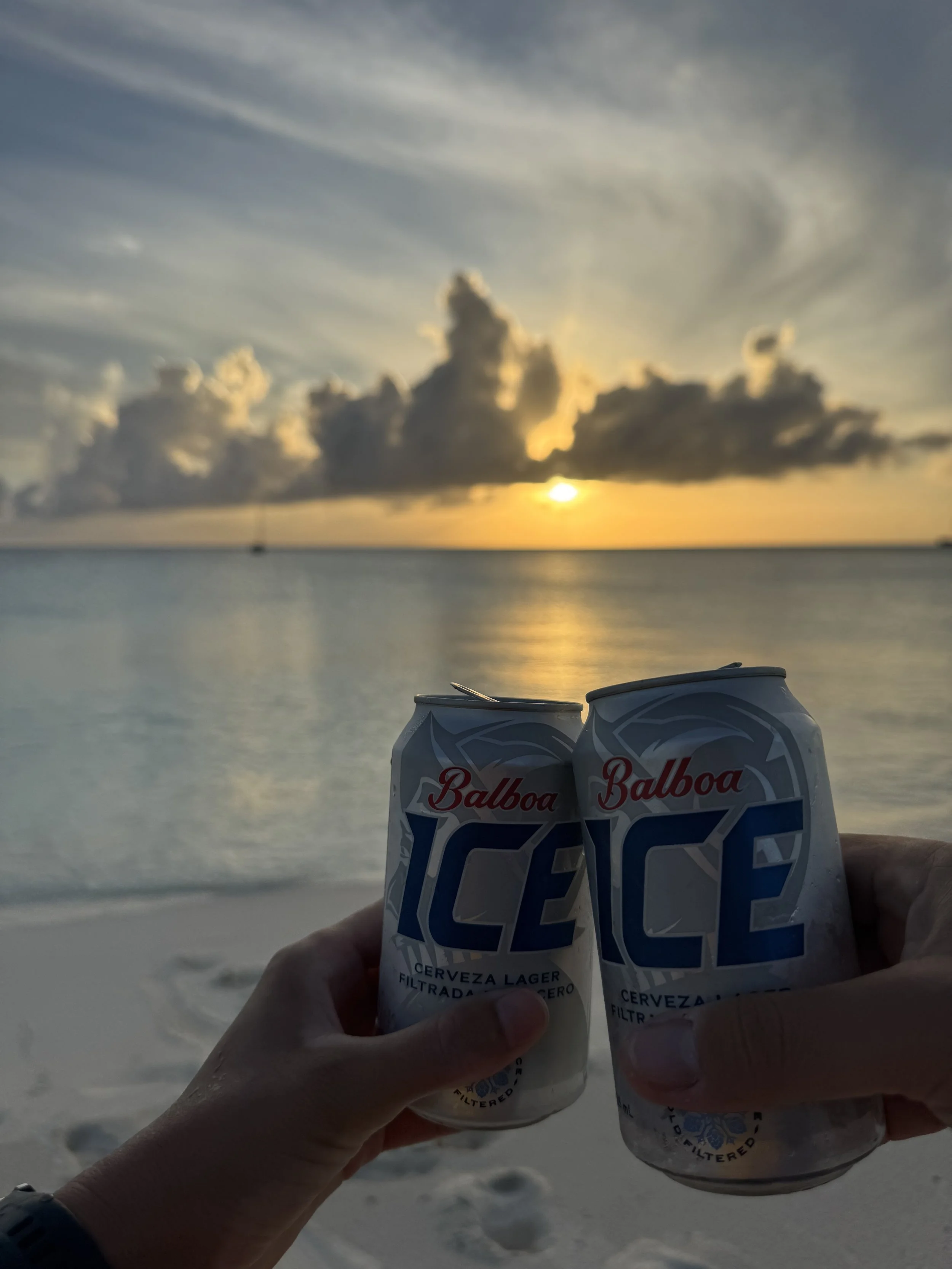
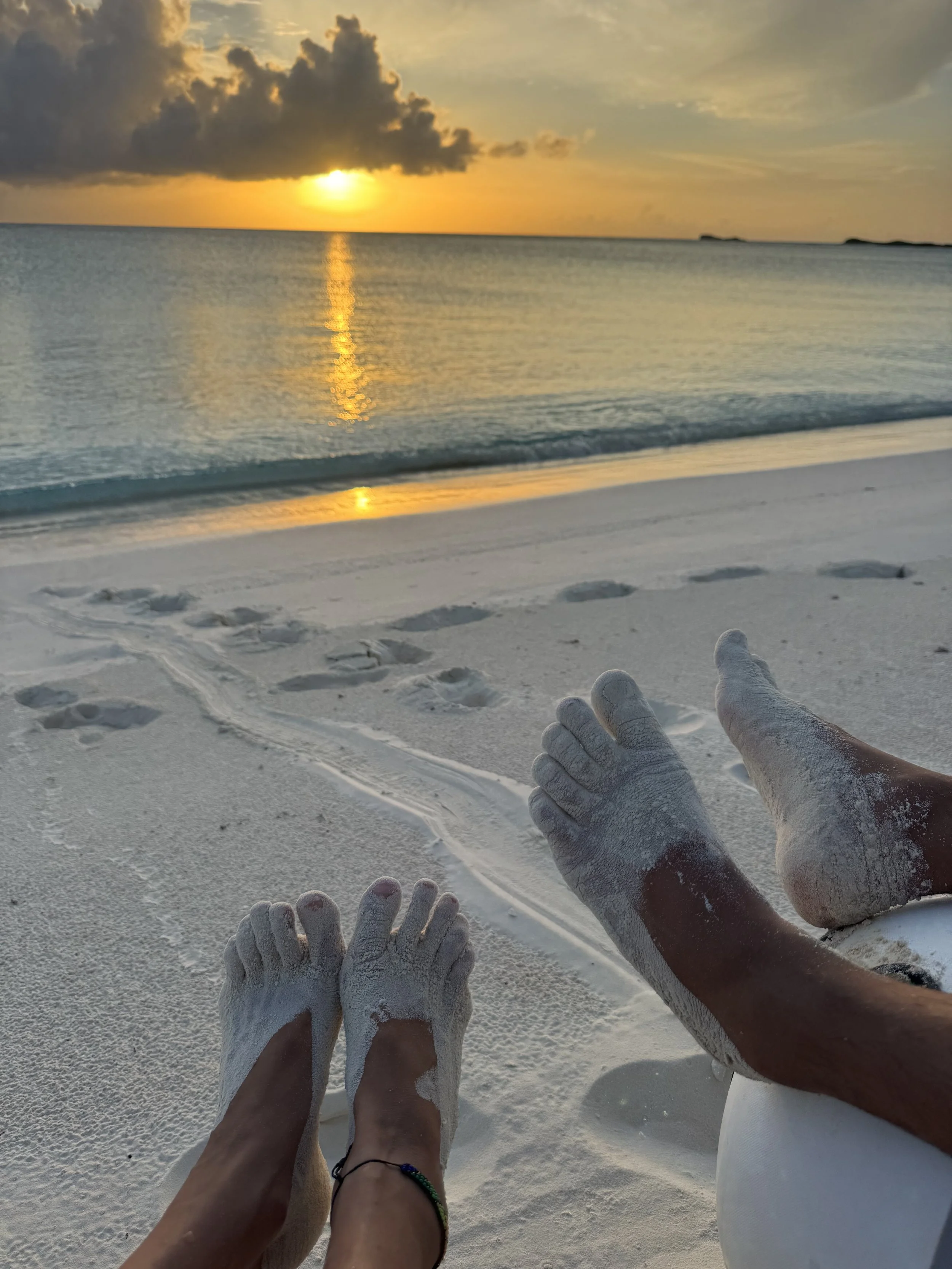
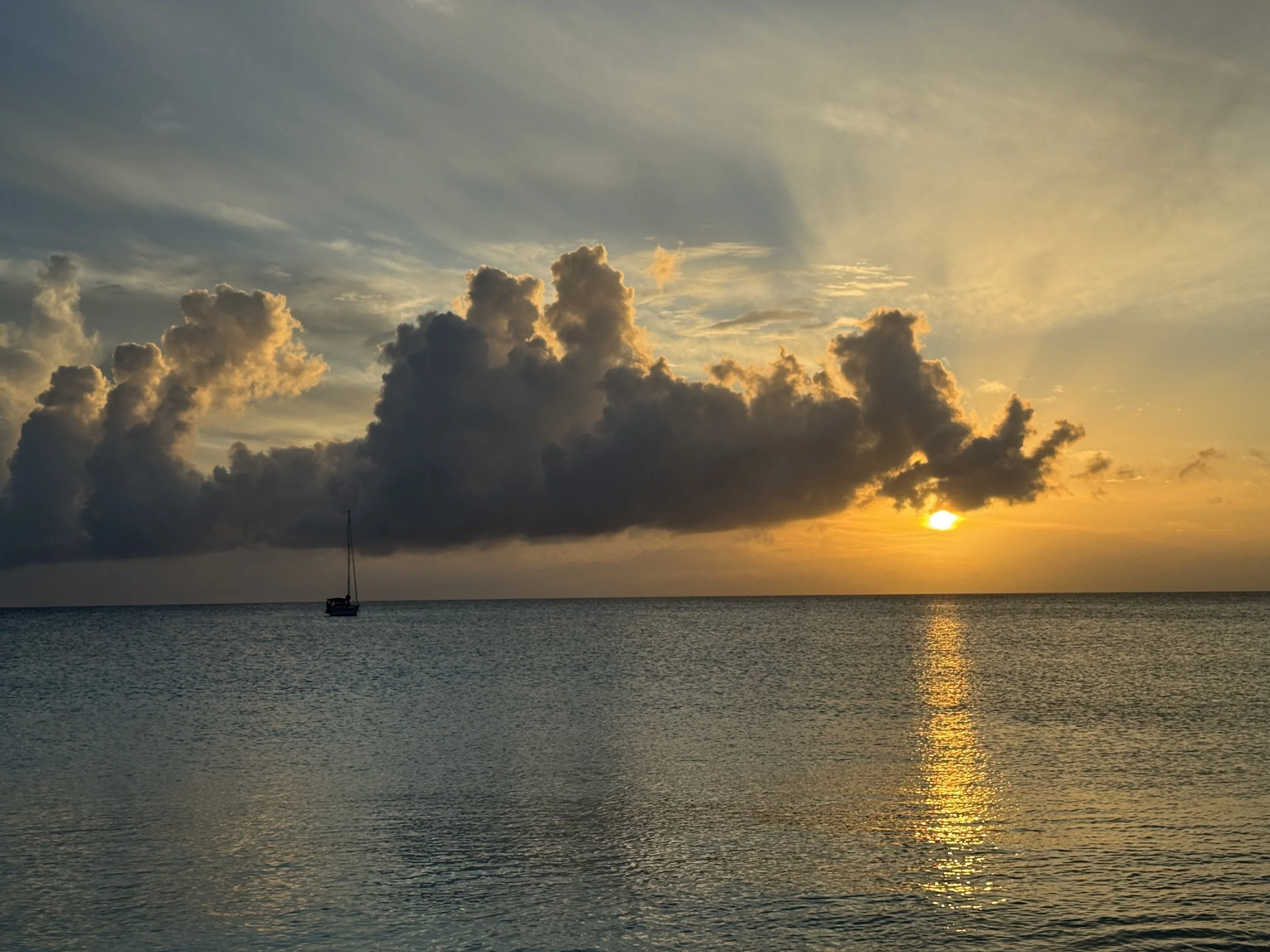
The sand is unusual. It sticks to your feet, and sometimes, when you step on it, the whole area around you collapses, as if you were walking on fragile glass that shatters beneath you. After our short walk, we sit back and enjoy the sunset on the beach with a beer from Panama.
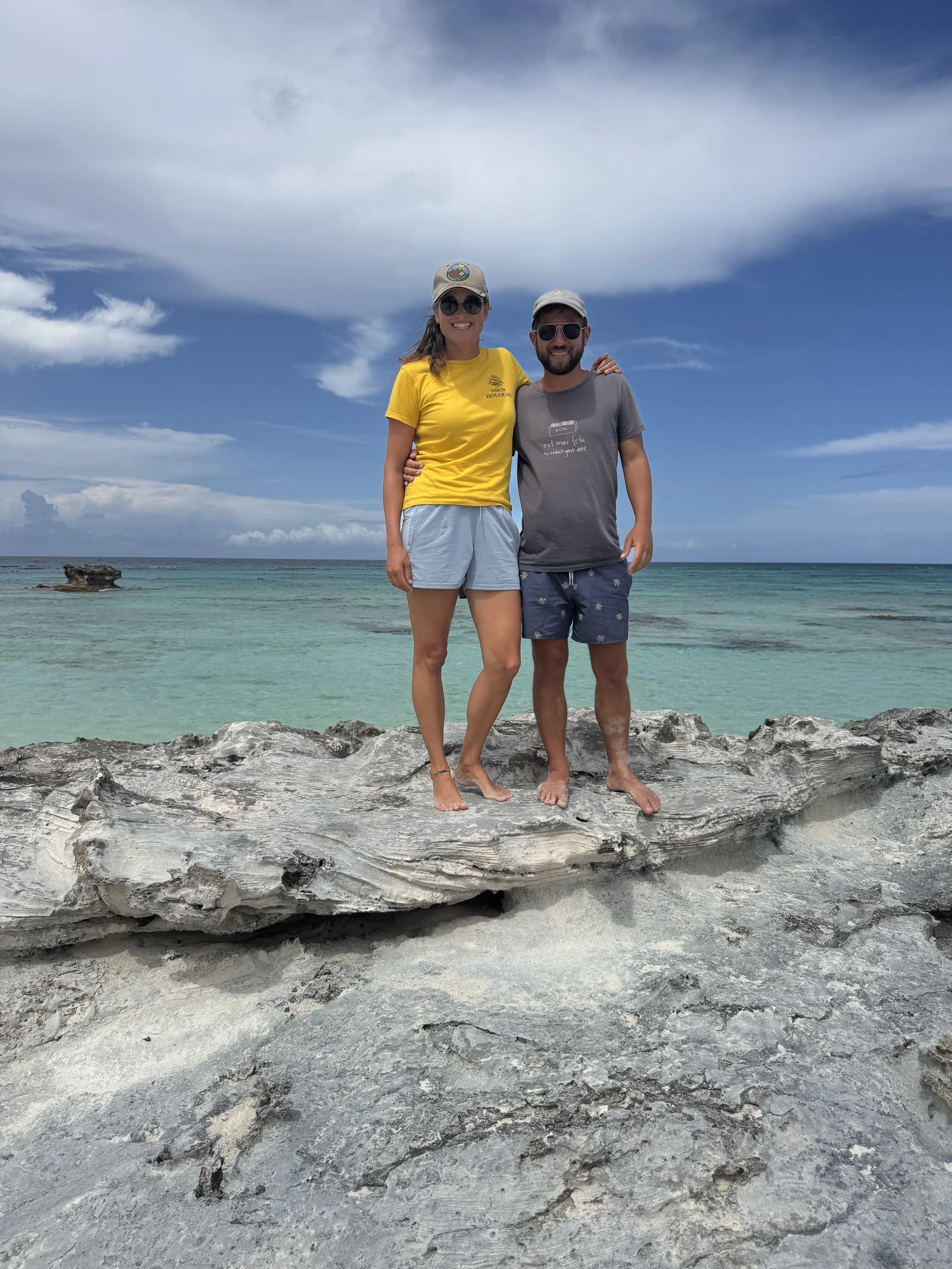
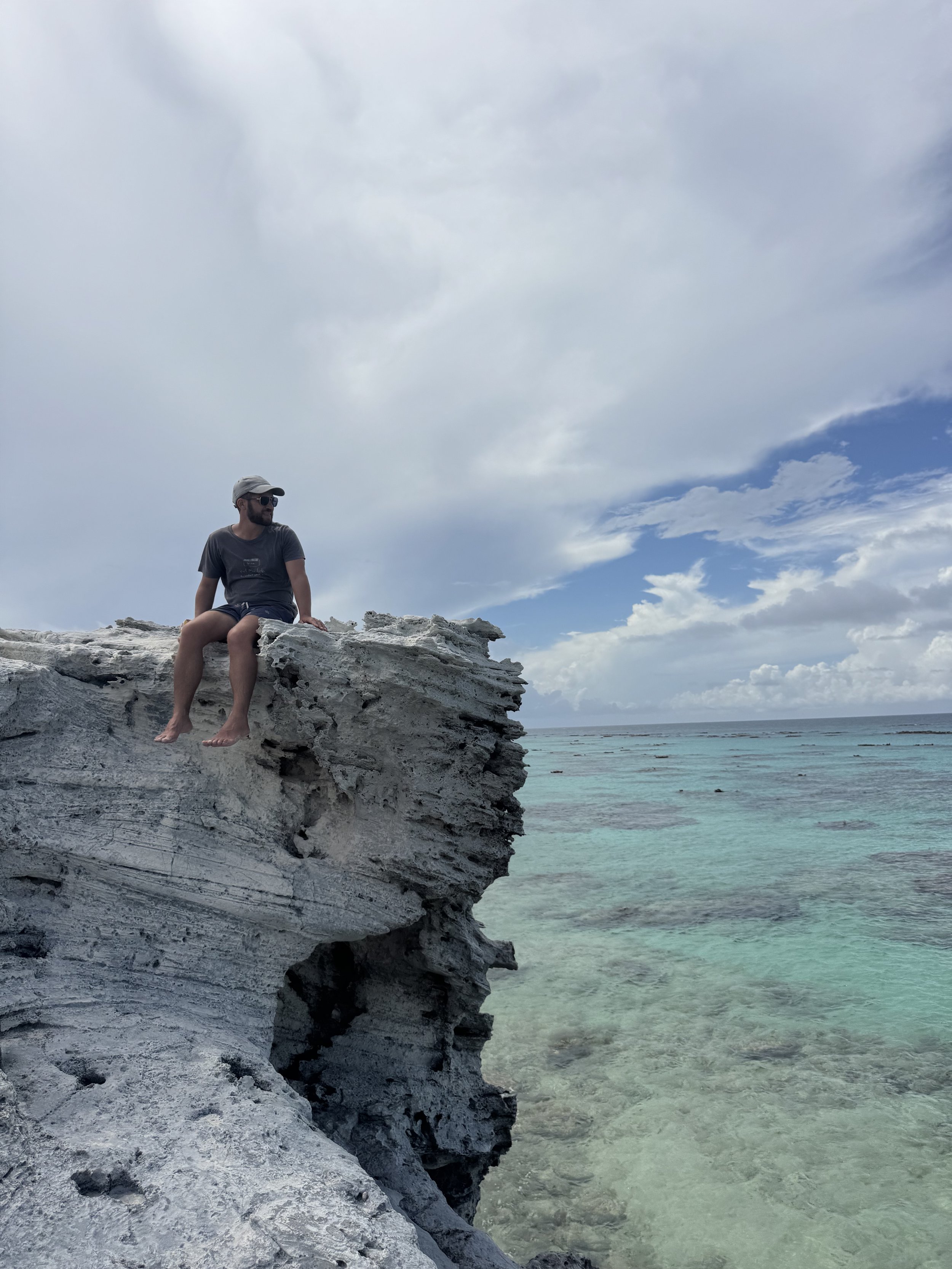
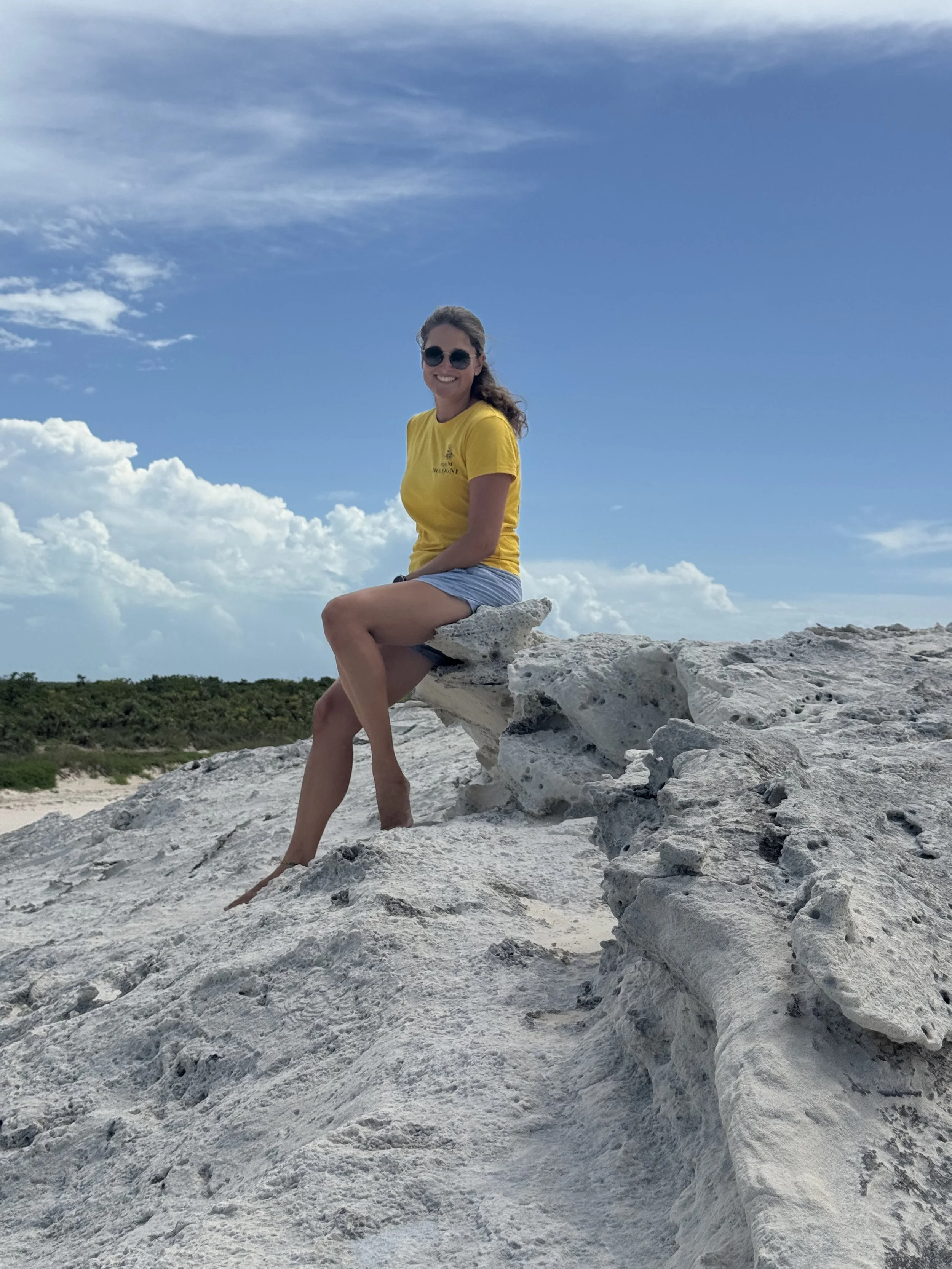
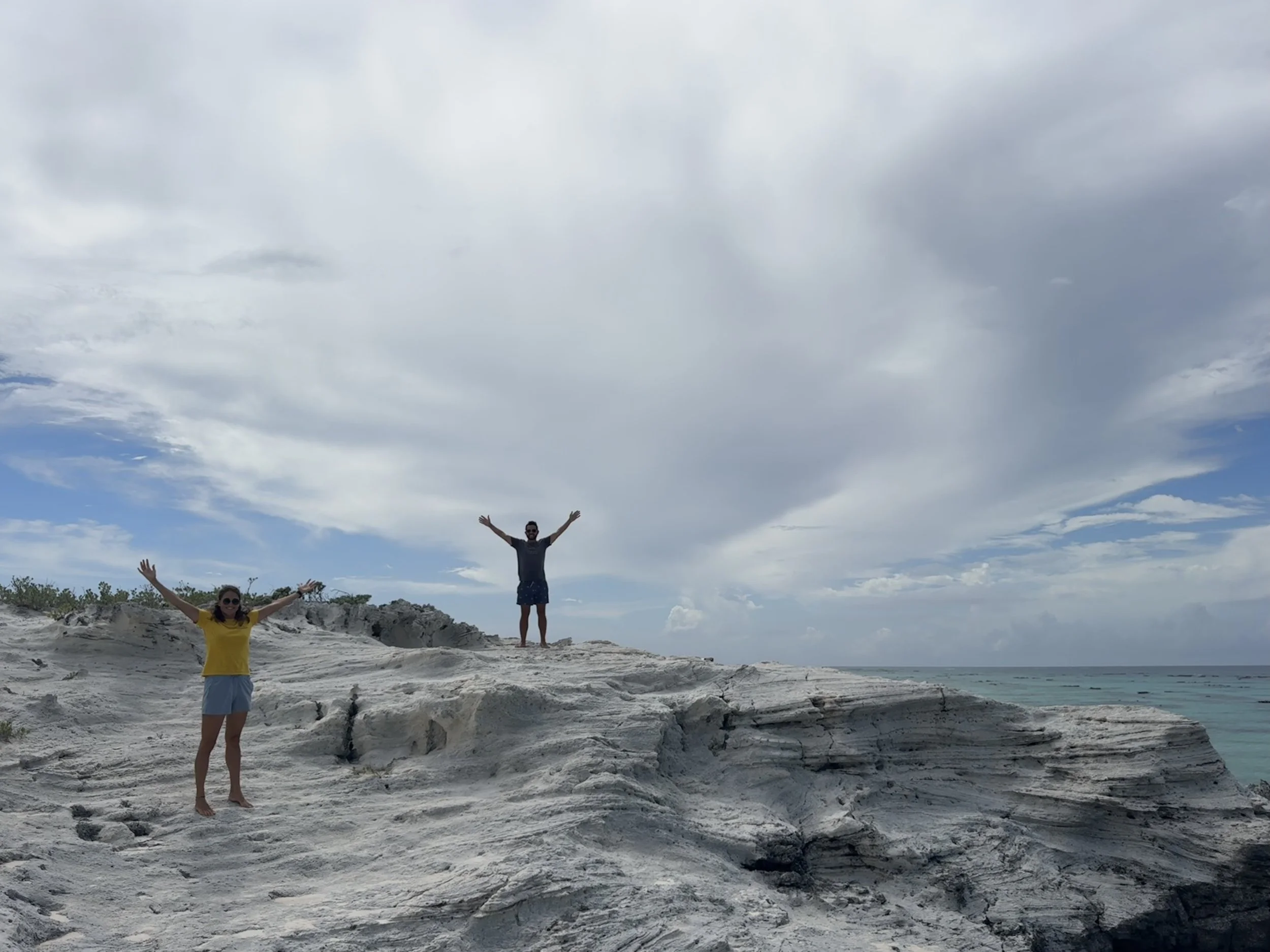
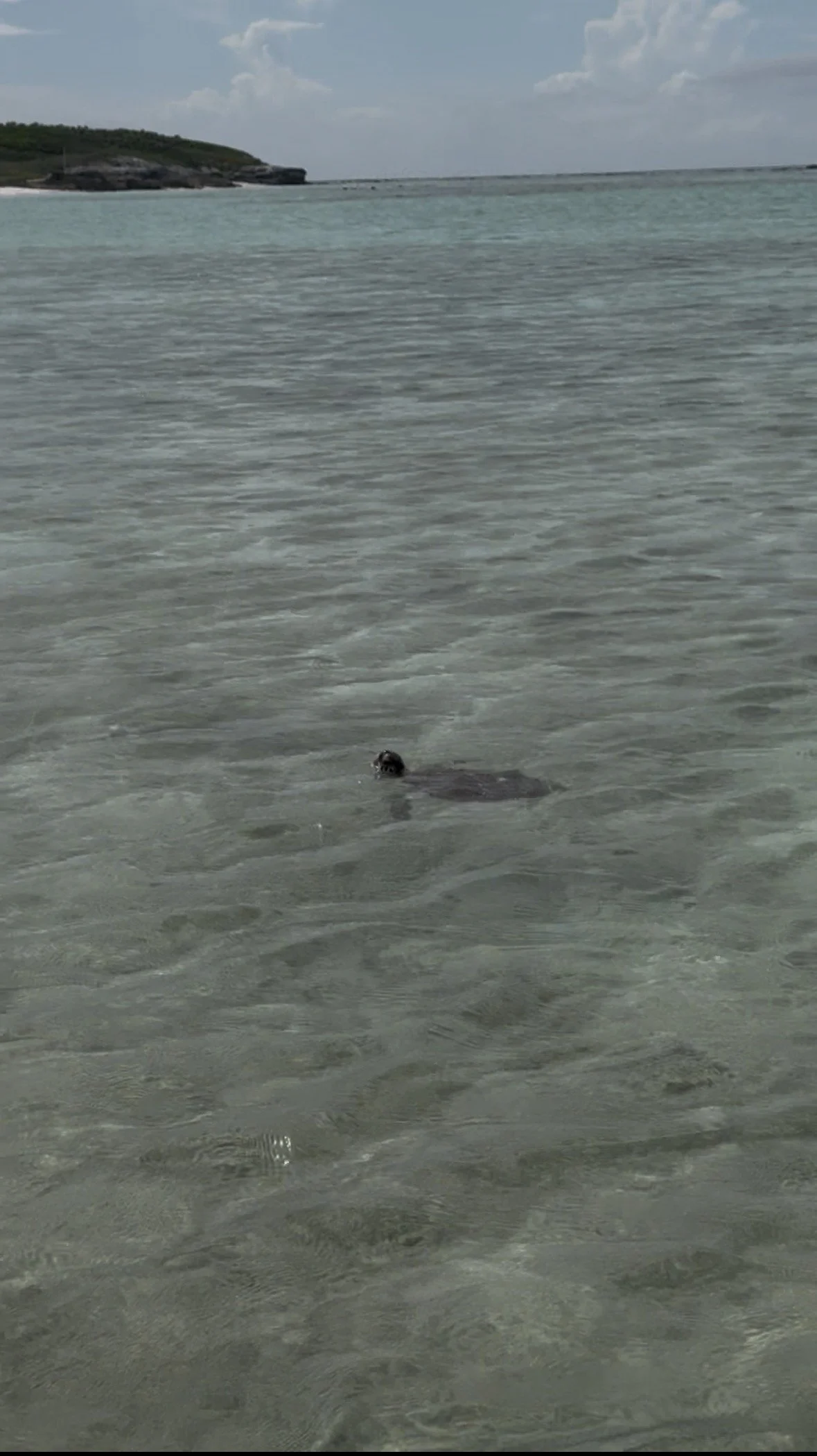
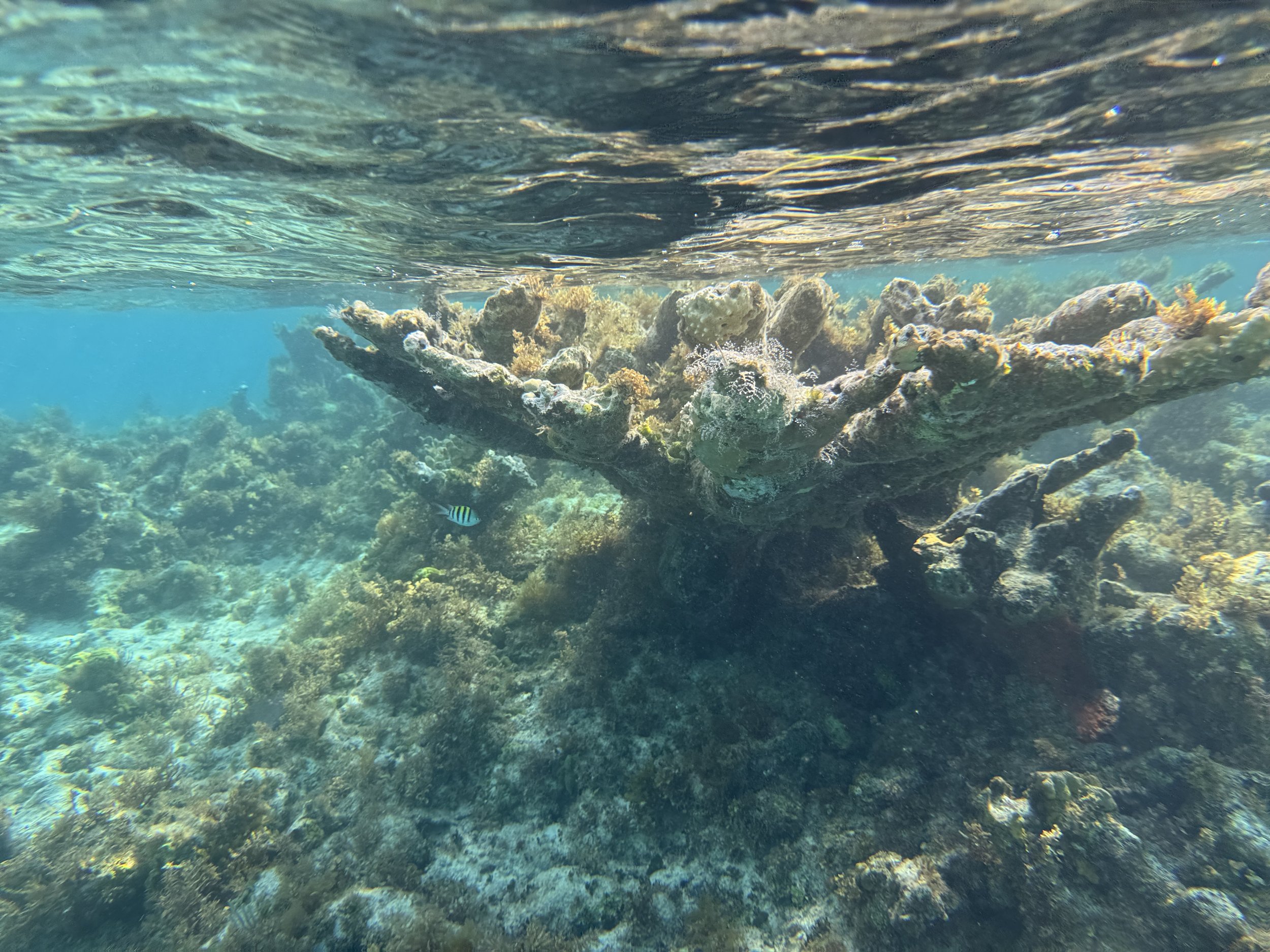
The next day we head back to the beach and to the windward side of the island. On the beach we meet our new Italian neighbours and have a quick chat. Then we walk barefoot through the scruffy vegetation, which treacherously hides tiny thorns. On the other side we meet Doug, who is just burning his rubbish. Given the rubbish situation in Clarence Town, this is probably the best solution. We have a quick chat and agree on a time for an evening beer. Then we walk along the beach and climb up a rock formation. On this side of the island, the water is lined with coral reefs that flash up like mushrooms in the shallow water. After a quick photo session, we enjoy the magnificent view and spot turtles in the shallow bay next to us. We watch as they keep surfacing to breathe and paddle around leisurely.
Sundowner with the Bahamas experts
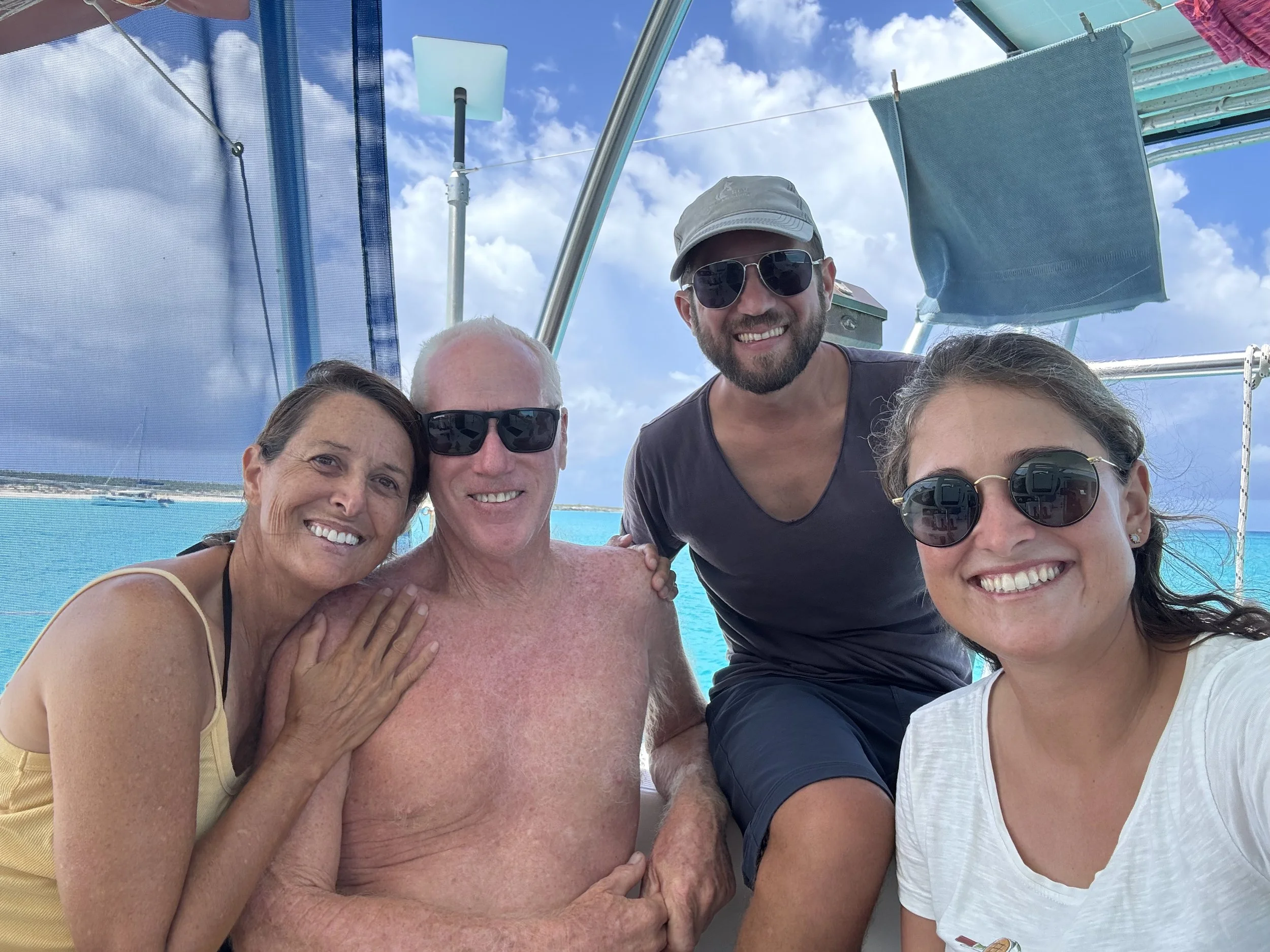
After glancing at the clock, we head back to the boat. A cold beer is waiting for us on the Viento. Carolyn and Doug are two retired Americans who have owned their catamaran for 15 years. They have already sailed round the Atlantic twice and now spend the winter here in the Bahamas and the summer in their home state of Oregon. We tell them a little about our adventures on the Panamanian Pacific coast and manage to tempt them, at least a little, to perhaps visit the Pacific after all. Time will tell.
The pair have, as our dear friends Heli and Tim would say, unlocked ‘local guide’ status for the Bahamas – something we certainly can’t claim for ourselves yet. So, as ambitious, ever-curious guides, when we’re offered a tour of the island’s lagoon for the following day, we naturally can’t turn it down.
Tour with the local guides
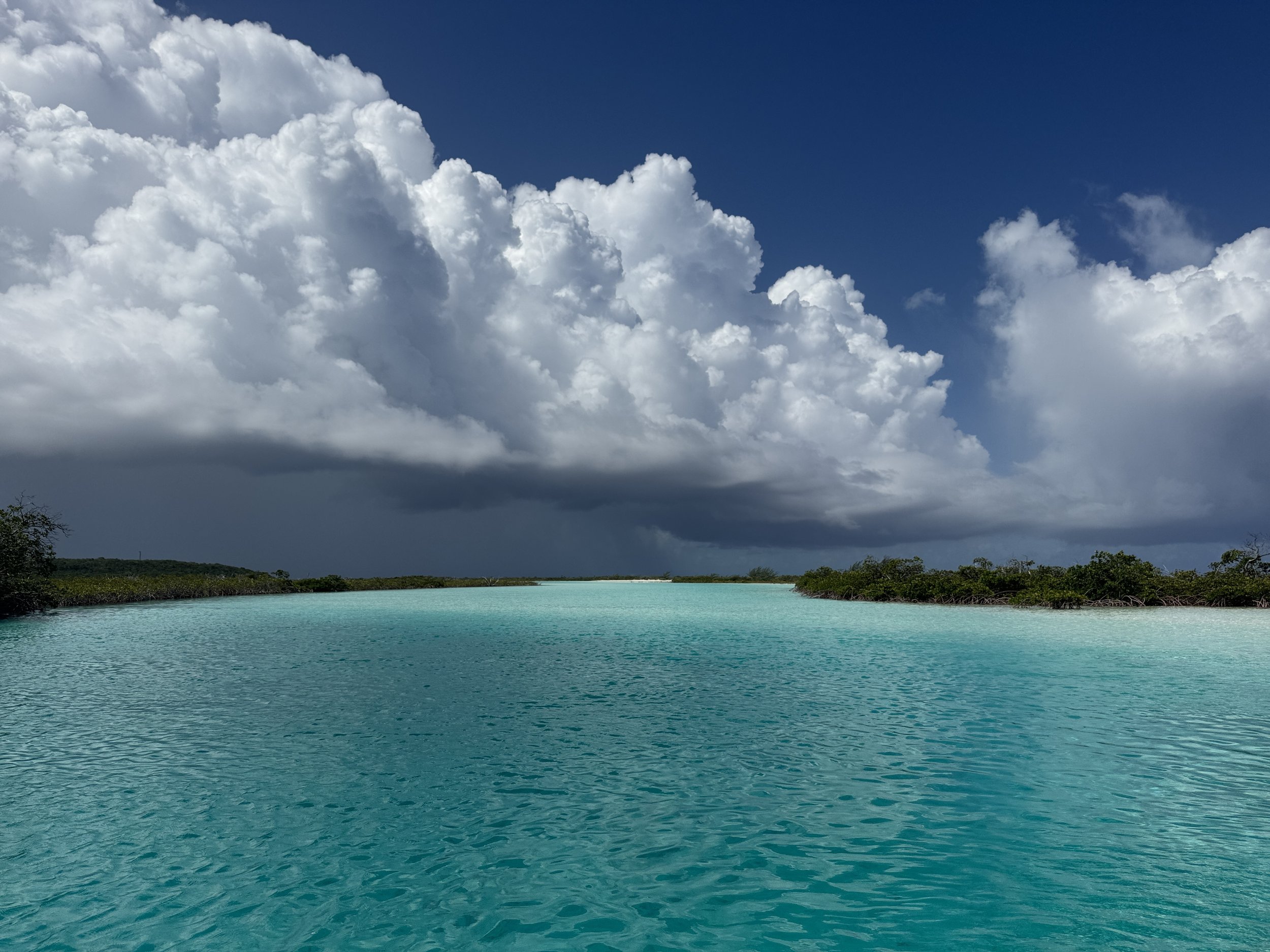
The next day, our guides announce the start of the tour in style by blowing a conch shell. In their sturdy dinghy – which, as befits Americans, is fitted with a powerful dinosaur-eating engine – the four of us speed southwards and pass through a narrow channel into the lagoon. The water there is a garish turquoise blue and lined with mangroves.
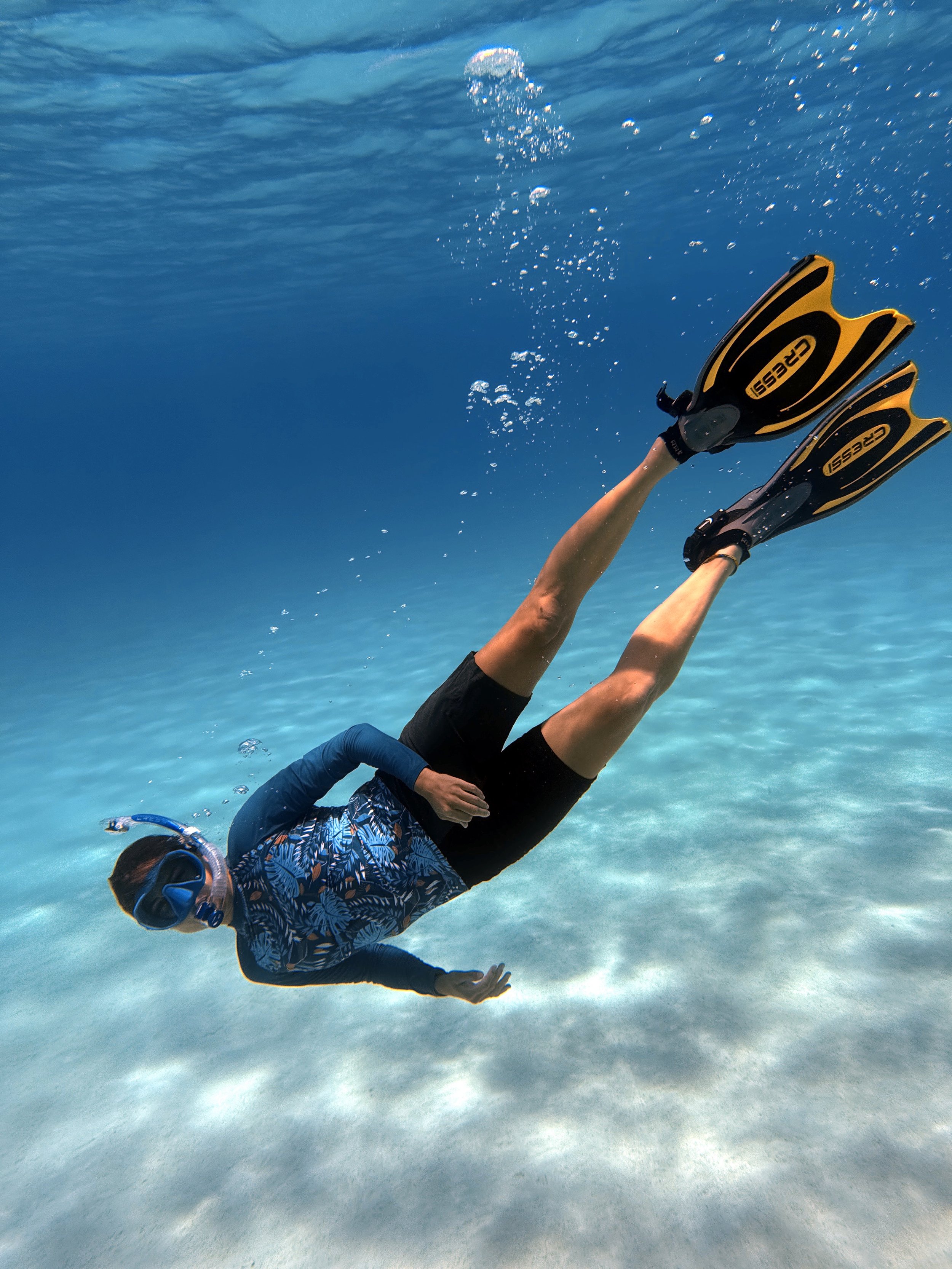
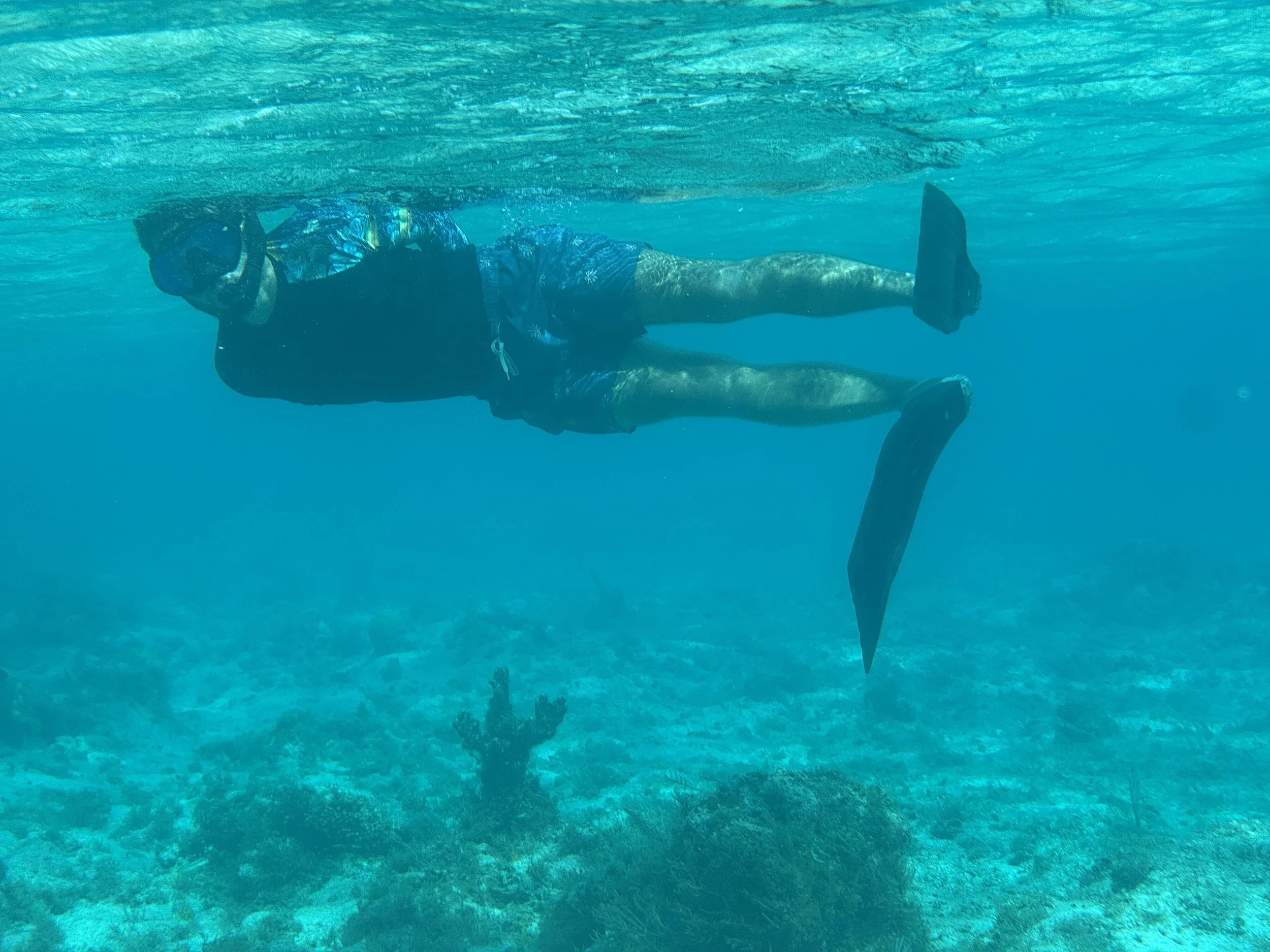
Once there, we set off on a snorkelling trip in the mostly very shallow water. Among the roots of the mangroves, we see all sorts of fish, rays and turtles. The water is so clear that you often struggle to tell top from bottom in photos. After the first stop, Peter is simply towed along whilst snorkelling. Unfortunately, the water becomes murky relatively quickly, and after half an hour of inactivity, it gets chilly. However, he manages to warm up again during a stop at a paradise-like beach.
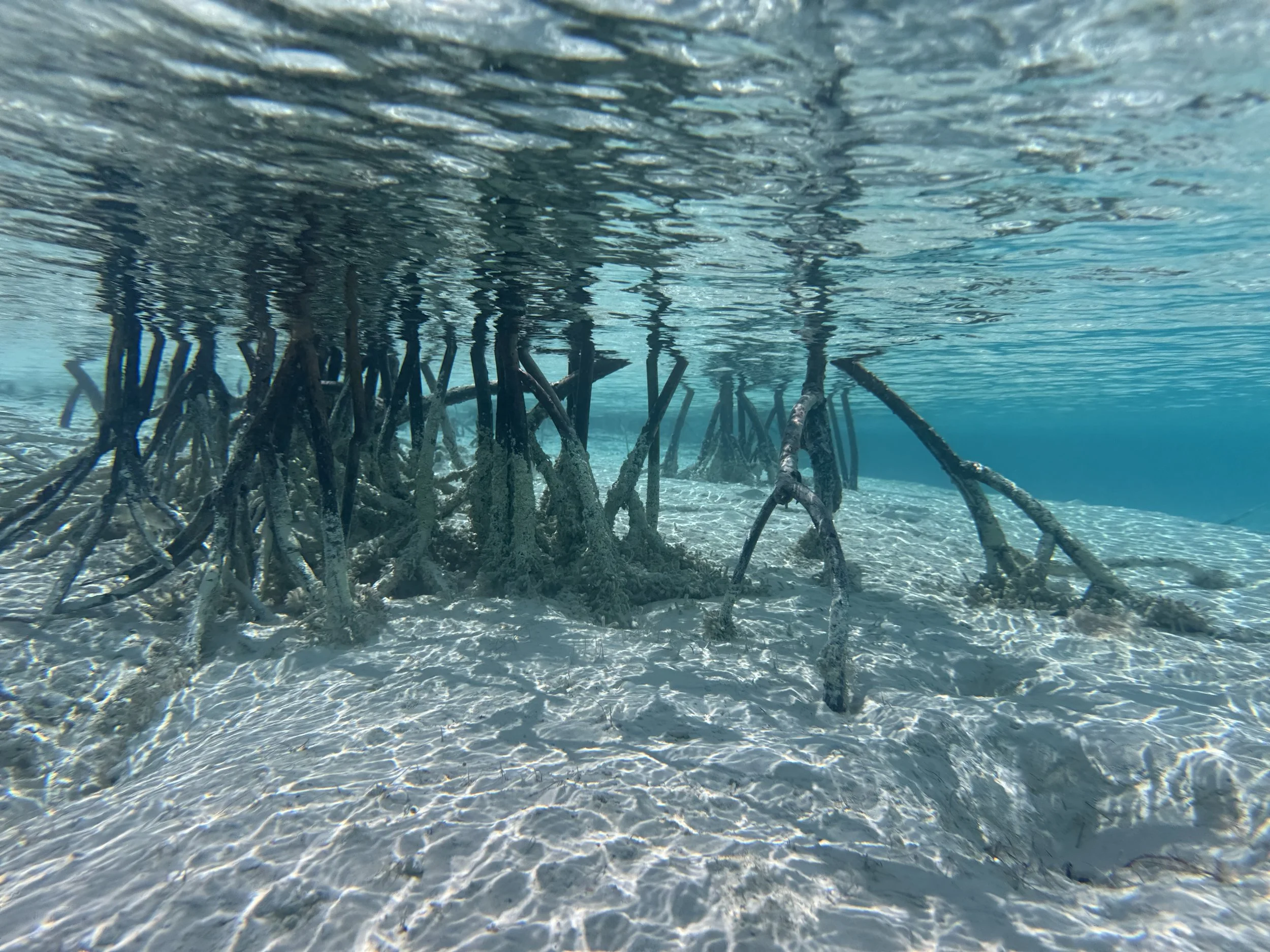
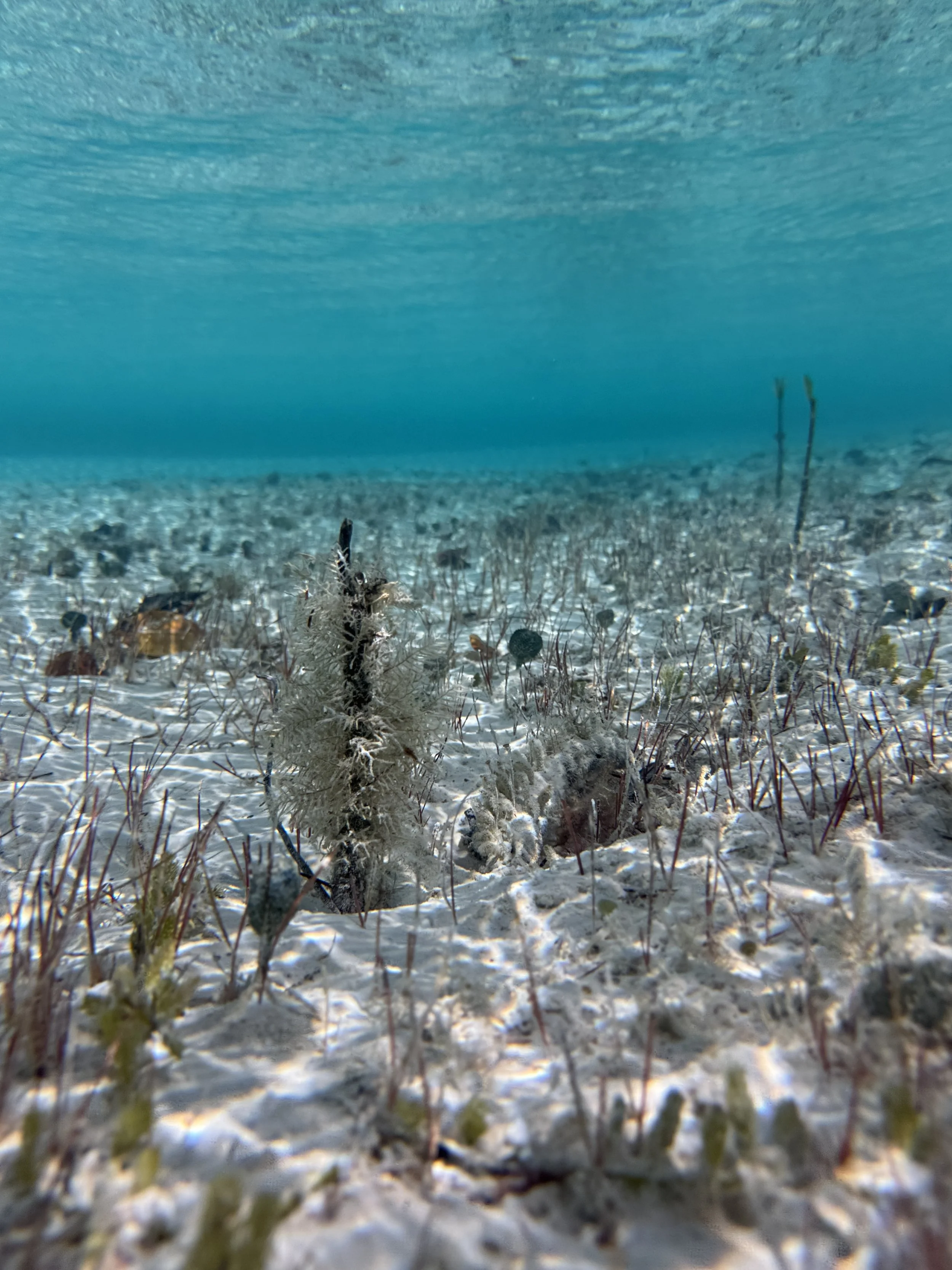
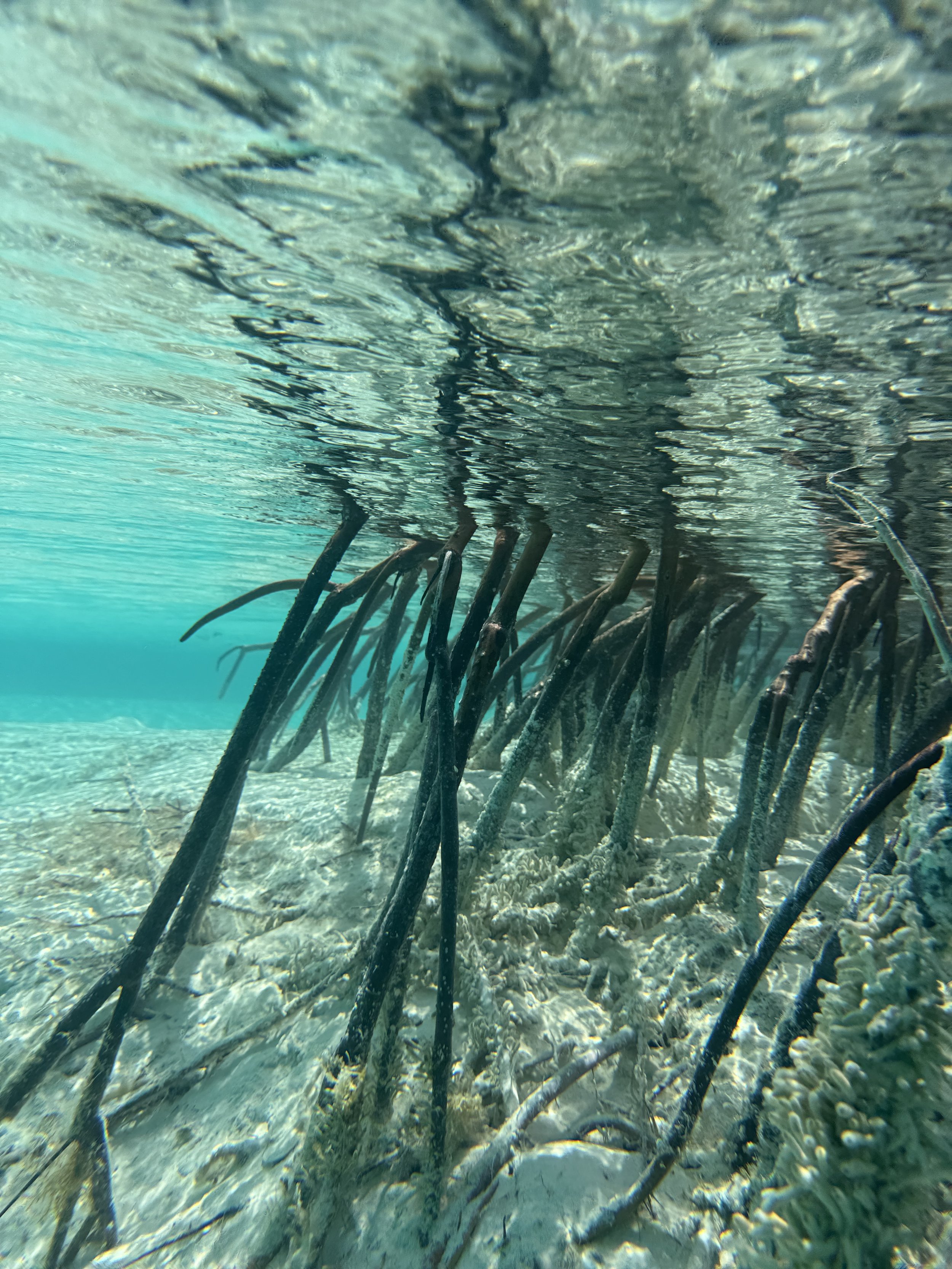
The next stop is the reef edge off the island. Here, the water depth drops very rapidly from around 20 metres to over 1,000 metres. Doug dives in and spots sharks and all sorts of other fish. Peter jumps in immediately at the mention of ‘shark’ and soon finds one too. One swims majestically in circles at a considerable depth, completely unfazed – of course, the battery is flat and we can’t take any photos. Doug and Carolyn have done a freediving course at Dean’s Blue Hole and, at their age (Doug over 70, Carolyn over 60), can still easily reach a depth of 20 metres. Peter also manages to reach about 15 metres without weights and with his long fins – a depth sufficient to feel, for a moment, as though he is part of this underwater world.
Our final stop takes us to the mushroom forest of coral reefs in the north of the island. We are thrilled, although Carolyn and Doug point out that, unfortunately, many corals have already died due to global warming. To repay them for the extensive tour, we cook the pair a fitting mushroom risotto in the evening – porcini risotto, to be precise – using mushrooms collected by Ines’ parents or Stefan’s grandad (we’re afraid we can’t remember exactly – thanks to everyone anyway!), Italian risotto rice and Parmesan. It’s one of the best things about life on a sailboat: you do things and chat with people you’ve only just met as if you’ve known each other for ages.
Lemon sharks as a farewell
The next day is marked by passing rain showers, particularly in the morning, and the wind is blowing at over 25 knots. We analyse the weather for our crossing to Bermuda and decide to set sail the following day, provided the thunderstorms ease off.
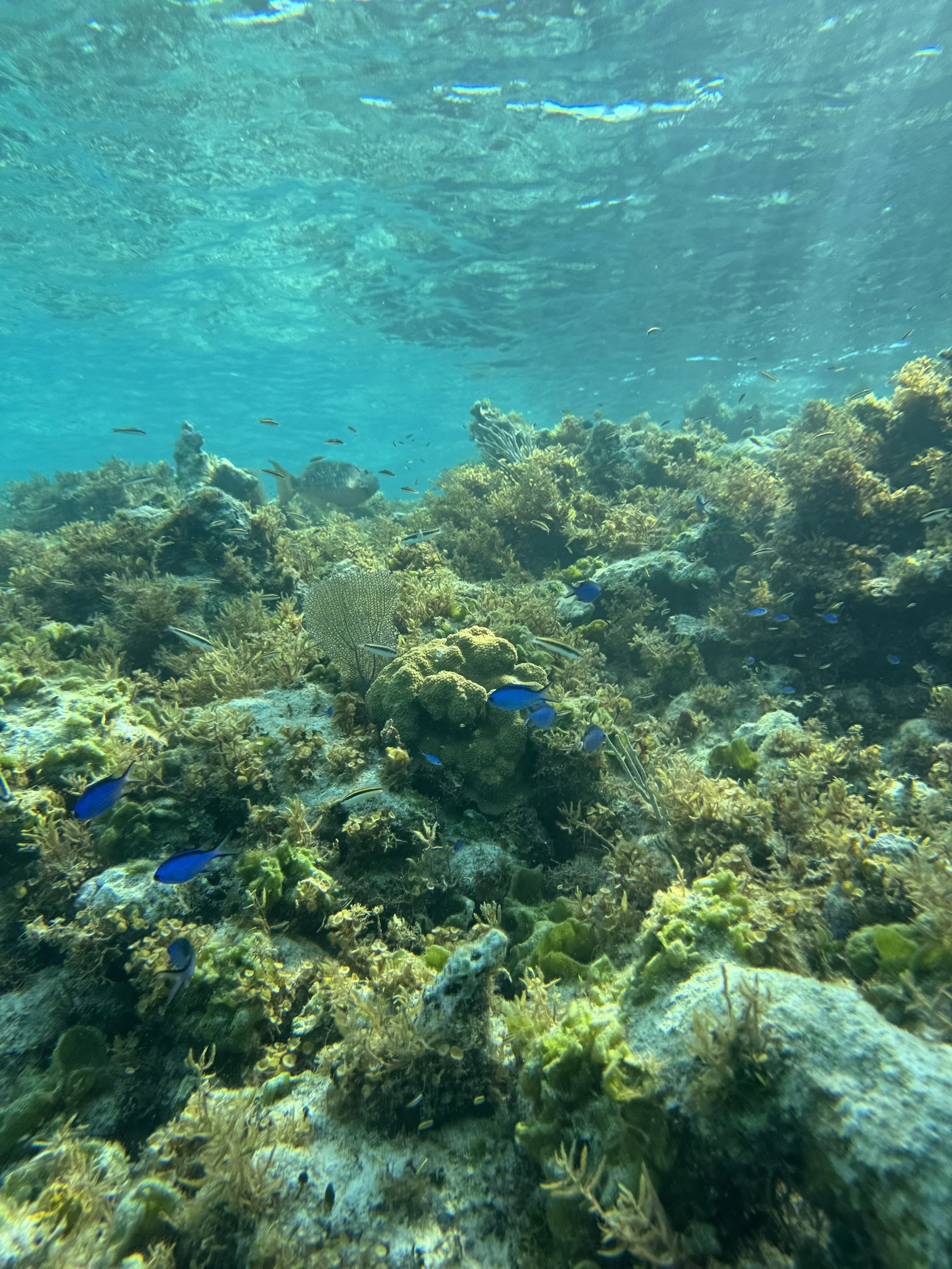
In the afternoon, Peter climbs the mast once more to check the rigging. As he does so, he catches the wonderful scent of barbecued pork. Later in the afternoon, we find out why. Doug has barbecued a nice piece of pork for the crossing and invites us on one last snorkelling trip. We briefly explore another reef teeming with colourful fish. Unfortunately, we don’t get to see the sharks that Carolyn spotted.
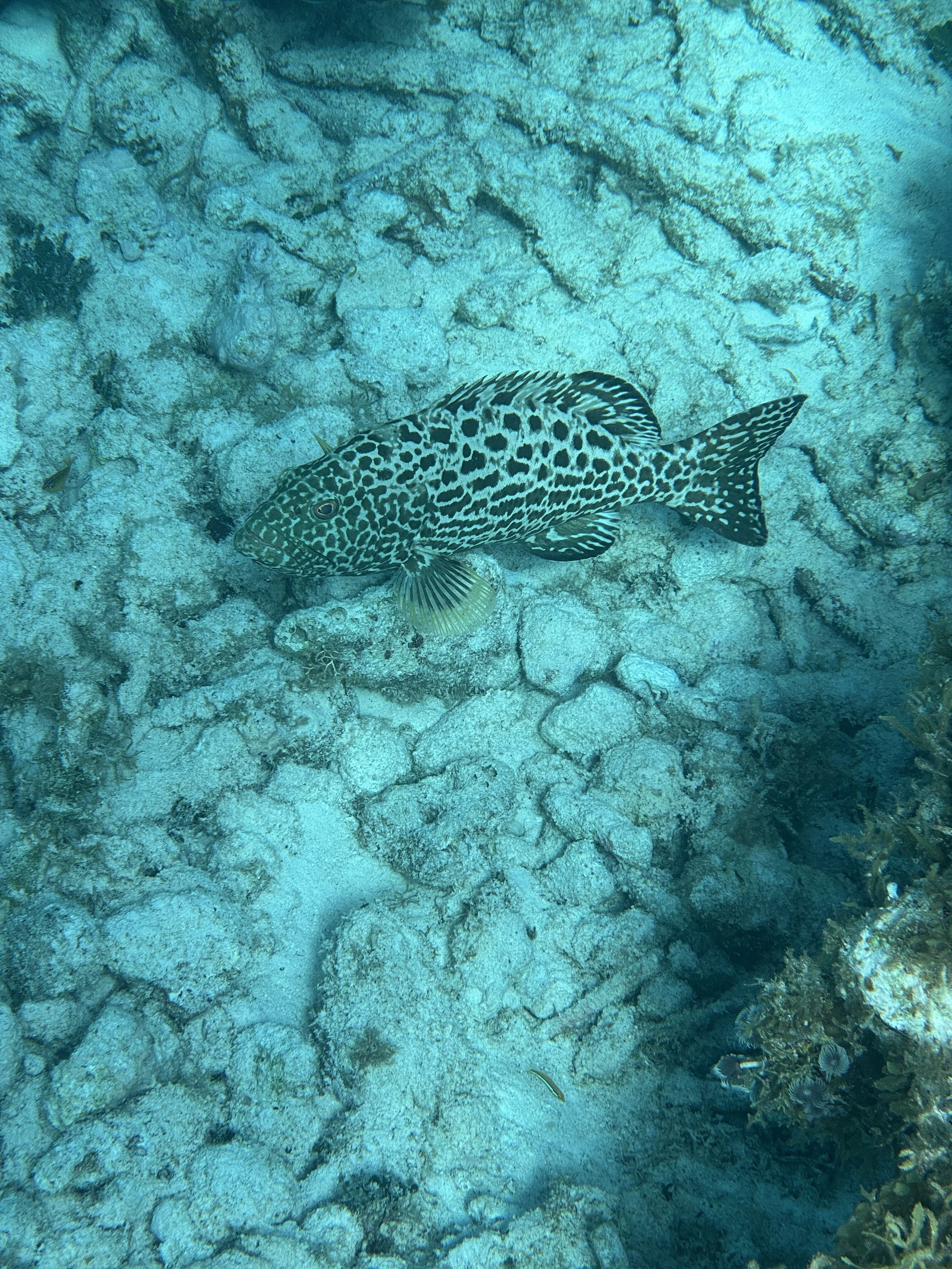
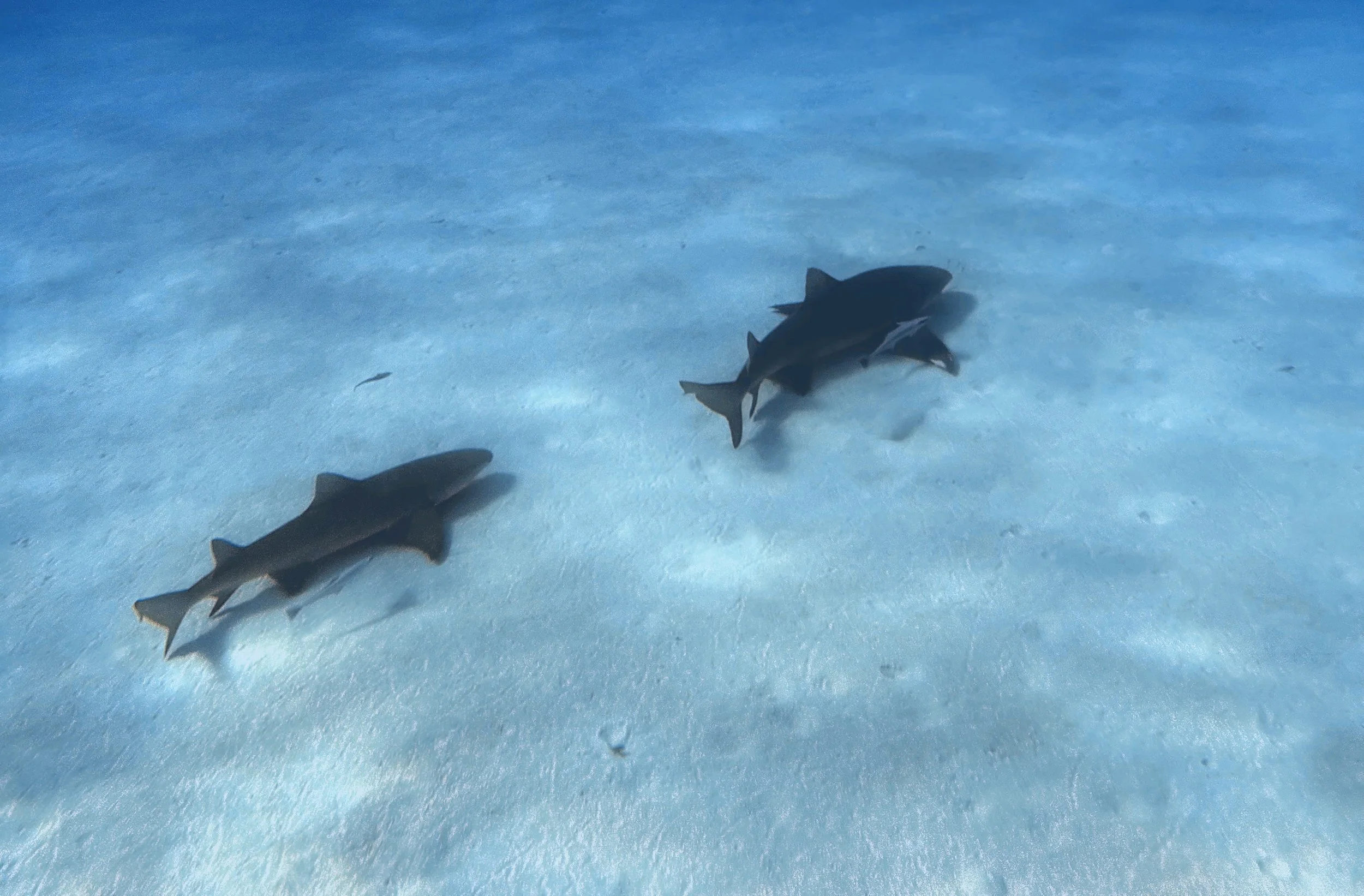
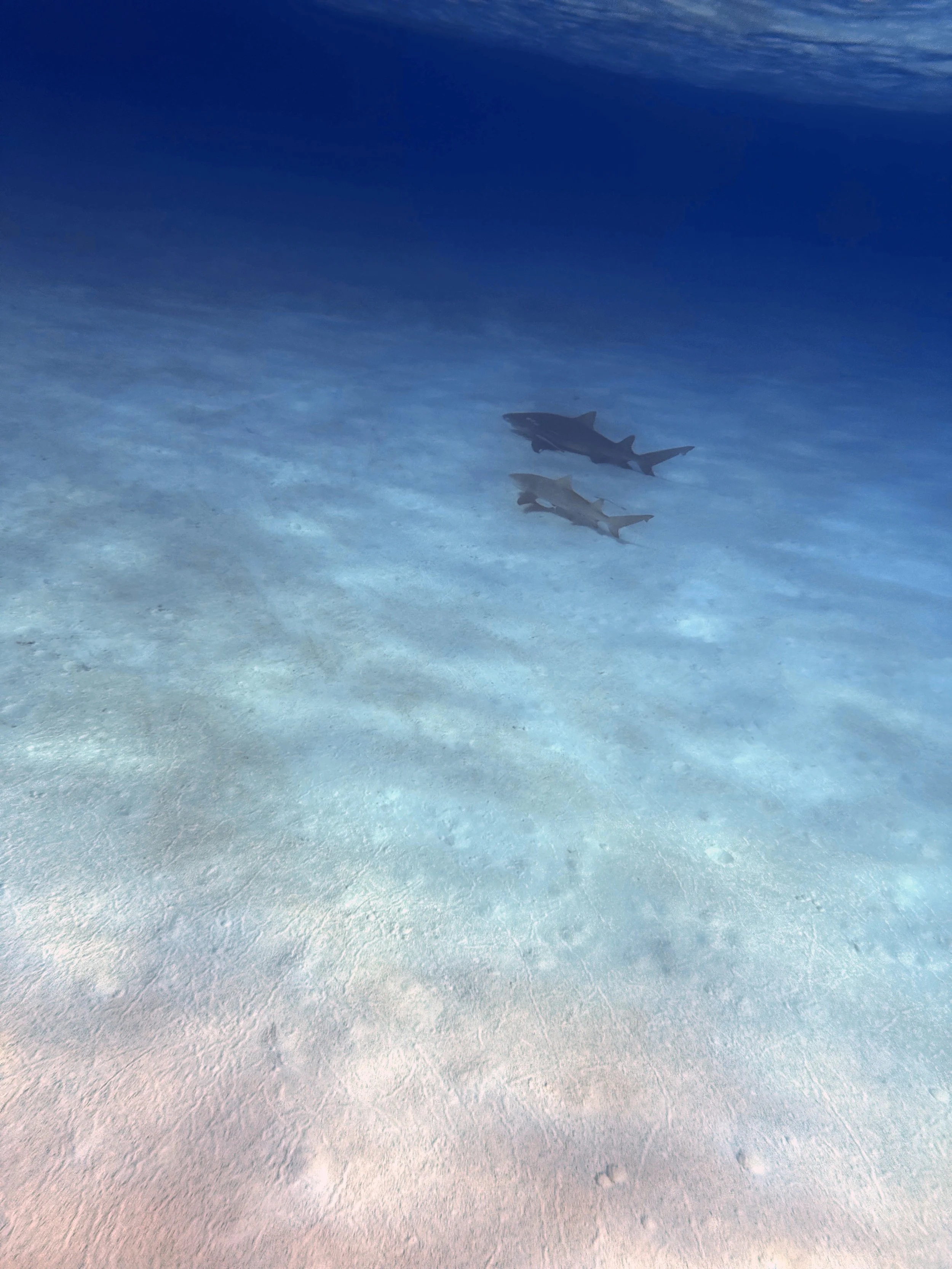
Back at the boat, just as we’re having a shower, Ines suddenly shouts: “Sharks!” The camera is still lying there, ready to go, and after a frantic second attempt to put the snorkelling mask on properly this time, we’re in the water. There are two sharks – a decent-sized one and a smaller one, escorted by shipwreck remains. They swim leisurely along the seabed, turn off, glance over curiously for a moment as there’s a splash and I look at them, before swimming on. In the swimming-pool-like water, I manage to take some good photos and a video, and we identify them as lemon sharks.
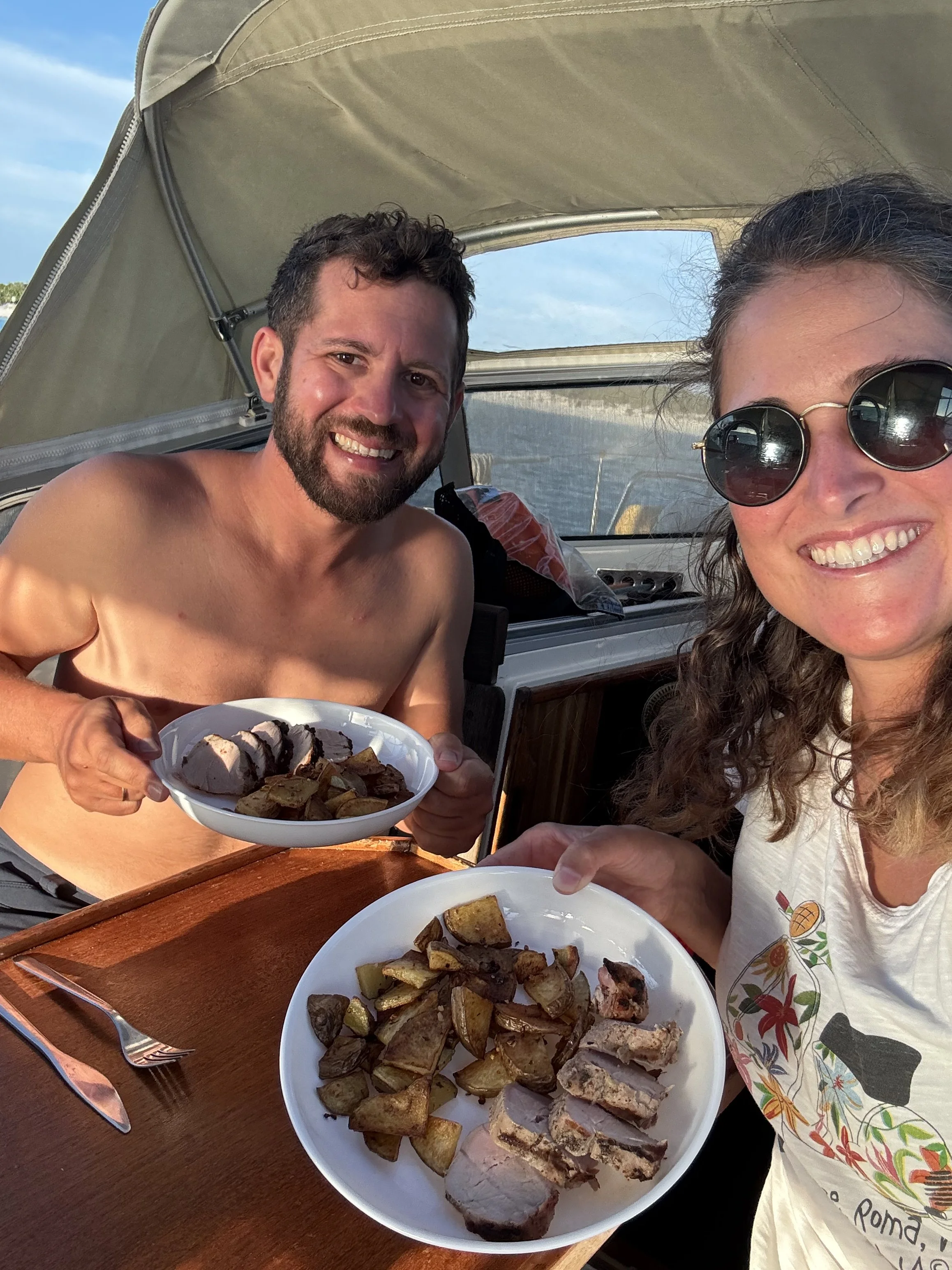
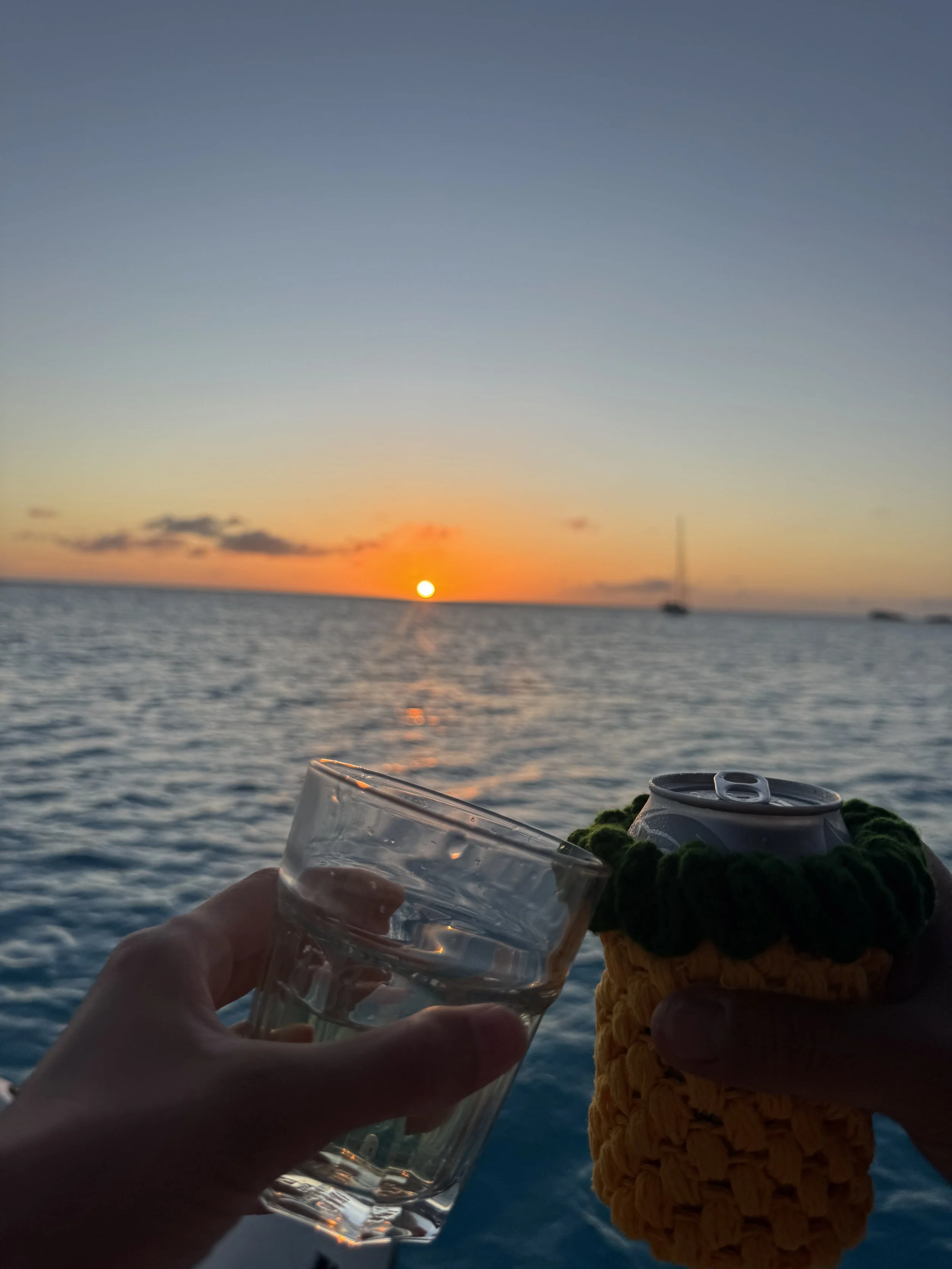
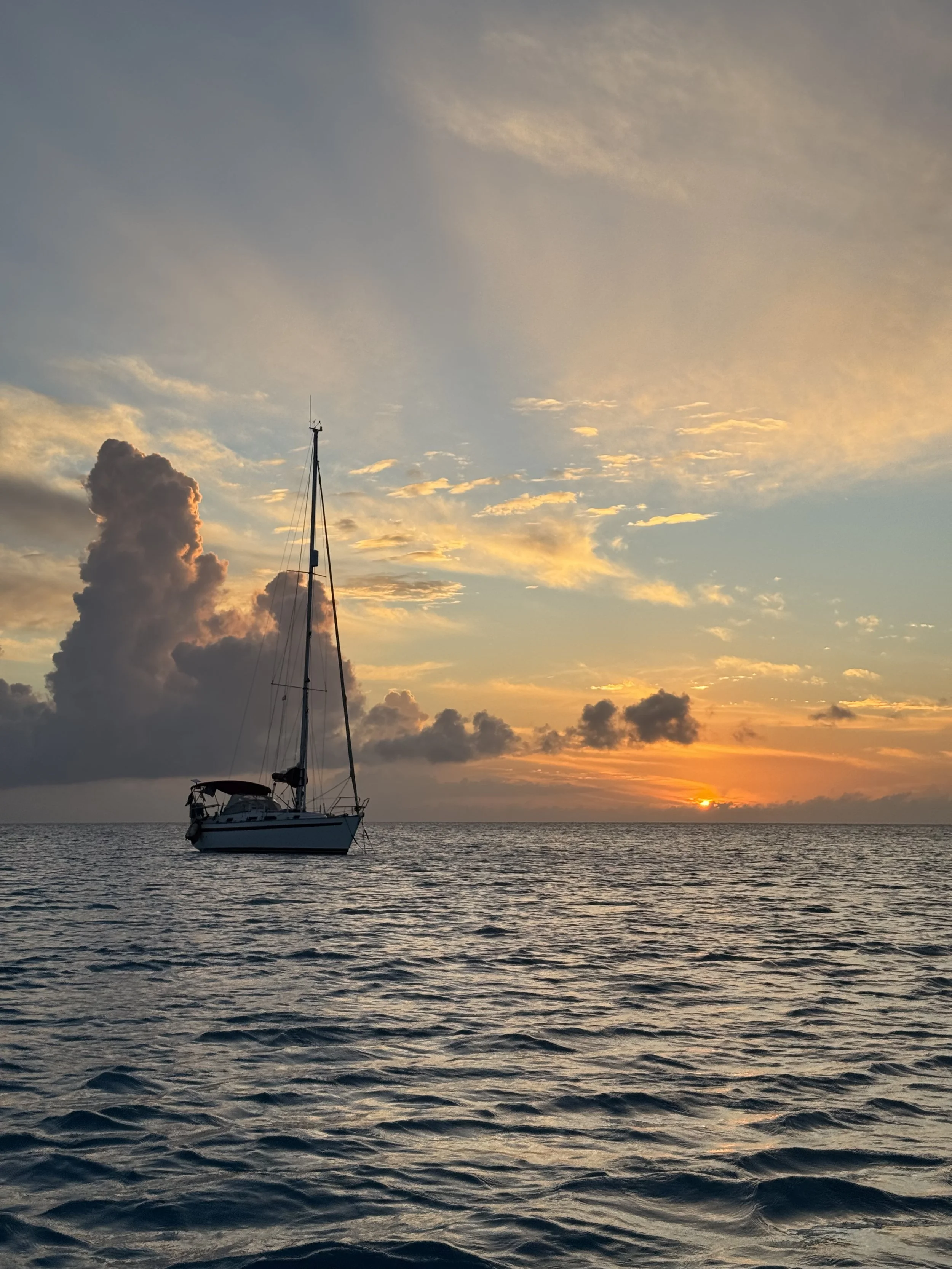
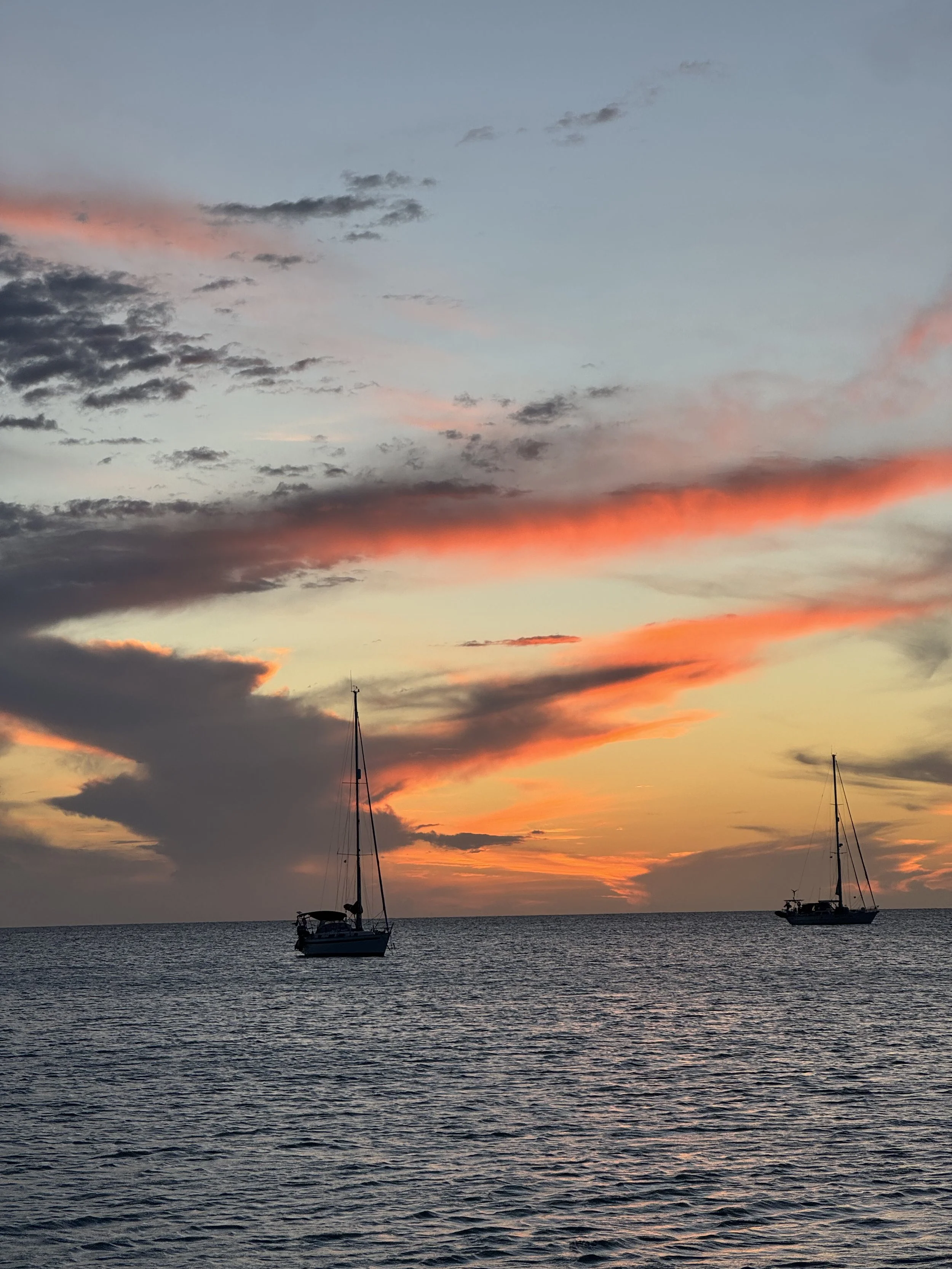
For dinner, we sample some of the delicious pork, served with mashed potatoes. Afterwards, we enjoy a picture-perfect sunset. It will be our last Caribbean sunset for some time.
The next day, we say goodbye to our dear friends over a cup of coffee and, after a short final stroll along the beach, set sail for Bermuda.